The Paris 20K keeps drawing the crowds after 47 editions
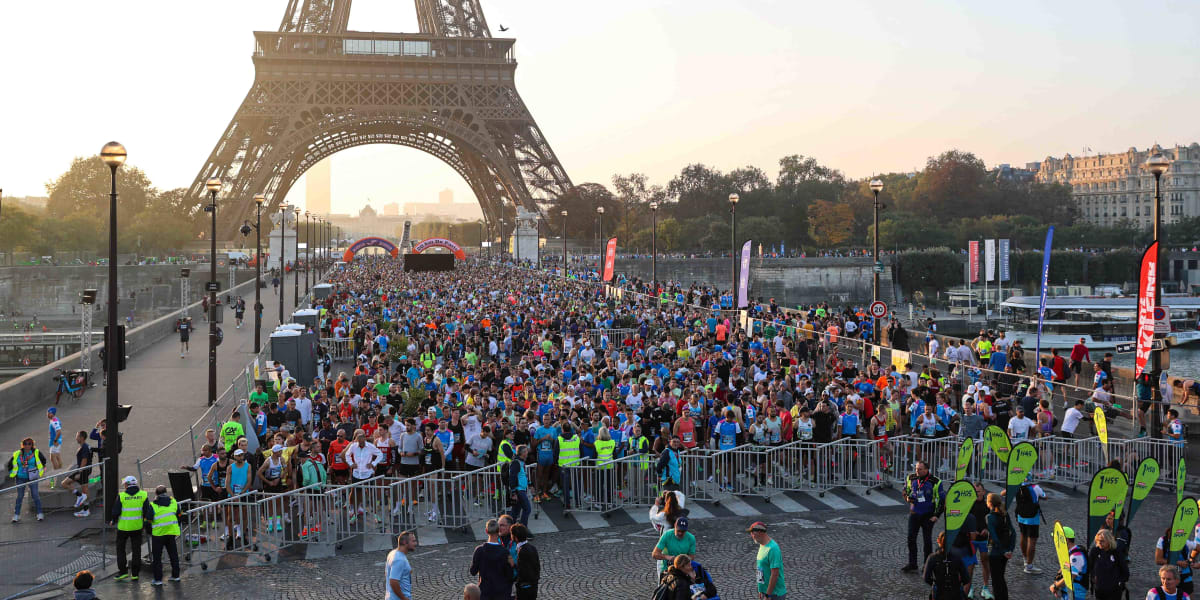
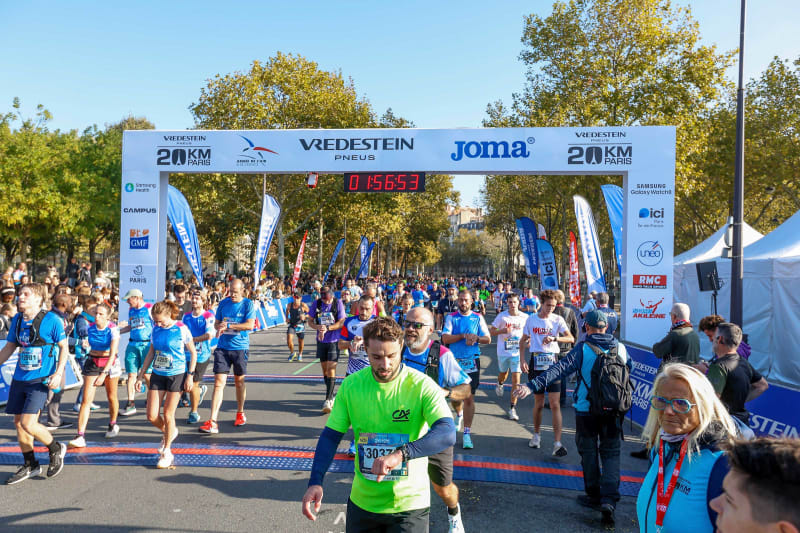
For its 47th edition, the Vredestein 20 km de Paris, where the race “blooms with every stride”, once again brought out the crowds in force. Nearly 33,000 participants, including around 100 para-athletes, lined up on Sunday, October 12, beneath the iconic Eiffel Tower.
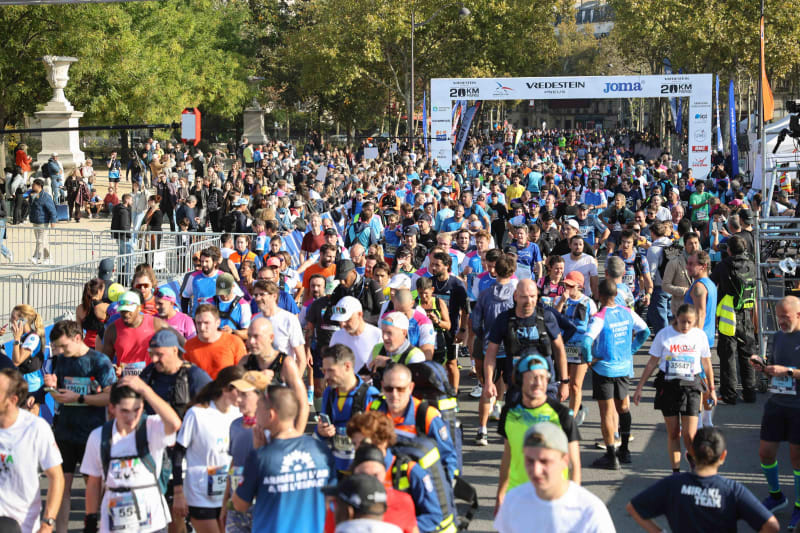
At 8:50 a.m., under a bright morning sun, the 82 para-athletes set the festivities in motion as they headed off from the northern end of Pont d'Iéna. Ten minutes later, around 100 elite runners followed, determined to be the first to cross the finish line on the Champ-de-Mars. After that, no fewer than 60 waves of around 500 runners set off at two-minute intervals, easing congestion on the course and allowing everyone either to enjoy the route or race in the best possible conditions. An exceptional setup also allowed those who wanted to follow the race live between 8:30 and 10:30 a.m. on Ici Paris Île-de-France, as well as on the Facebook pages of our fellow outlets Stadion, France 3 Paris Île-de-France and Vredestein 20 km de Paris. More than 1,200 volunteers were mobilized to help the event run smoothly.
Not a half marathon, yet a runaway success for 47 years
Registrations had already sold out by May. The enthusiasm has been there since the race was created in 1979, driven by several factors. “Simplicity and friendliness are at the heart of the race, and our whole team works to make sure it runs smoothly,” explains Benoît César, who has been race director for nine years. At the time, when the event was launched jointly by ASCAIR (Association Sportive et Culturelle de l'Air) and Michel Jazy, the silver medallist in the 1,500 m at the 1960 Rome Olympics, around 8,000 runners were already packed onto the roads, and especially the Parisian pavements, to enjoy a route through the heart of the capital's architecture.
The date has a direct impact on entries. “It's the perfect time to get back into shape. Temperatures are better in October than at the Paris half marathon in March,” says a member of the SNCF finance department's management team. The distance, however, could put some runners off, both because of its length and because it comes close to half-marathon distance without quite reaching it. “Honestly, you can't really tell the difference. If you know your half-marathon pace, you just take five minutes off. By the end, you're happy there's one less kilometre,” adds his colleague.
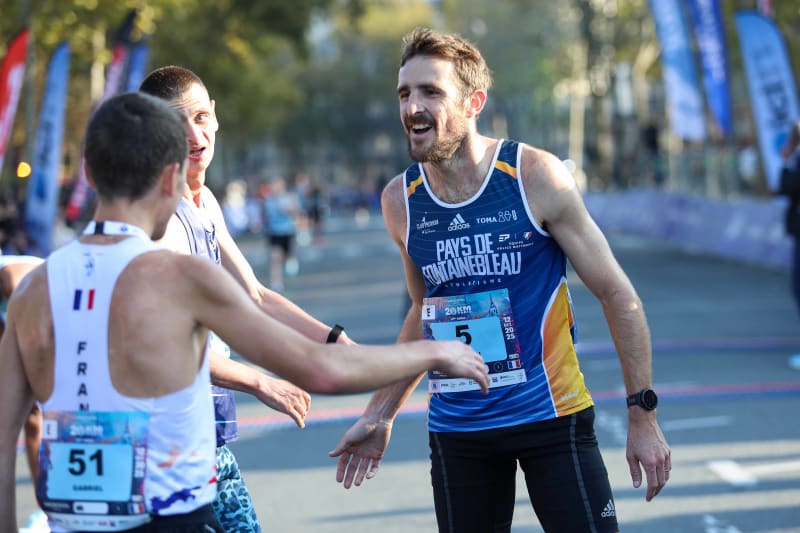
Mathilde Sénéchal, the 2025 French marathon champion, finished sixth on Sunday in yet another appearance and adds: “It's always nice to tell yourself that when you reach 19K, there's only one kilometre left.” Florian Carvalho, who had already reached the podium at Paris–Versailles two weeks earlier, was not particularly bothered by the issue: “It's all in your head. It's still the effort of a half marathon. Everyone can test themselves and see where they stand. The depth of the field is exceptional: I finish in about 1:02, nowhere near the front, with loads of French runners ahead of me!”
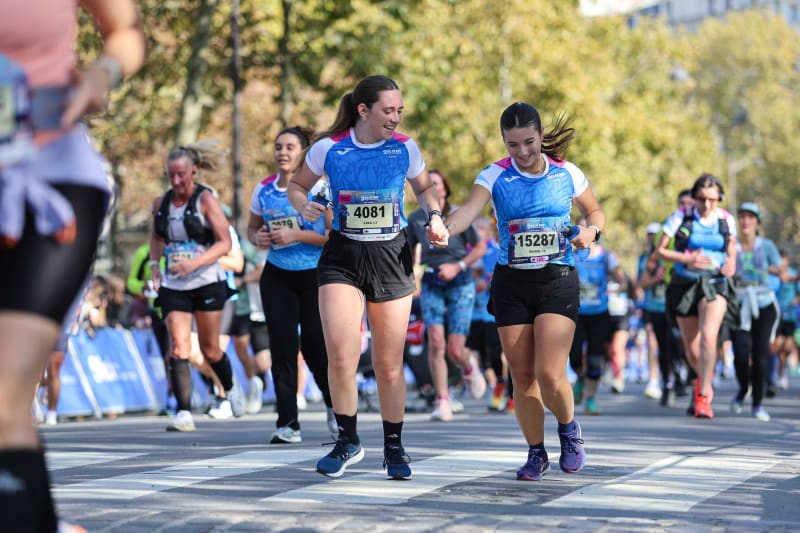
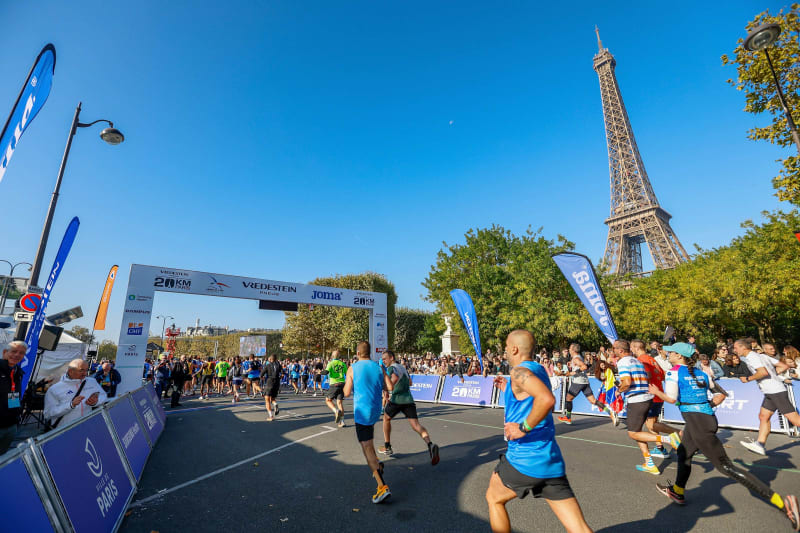
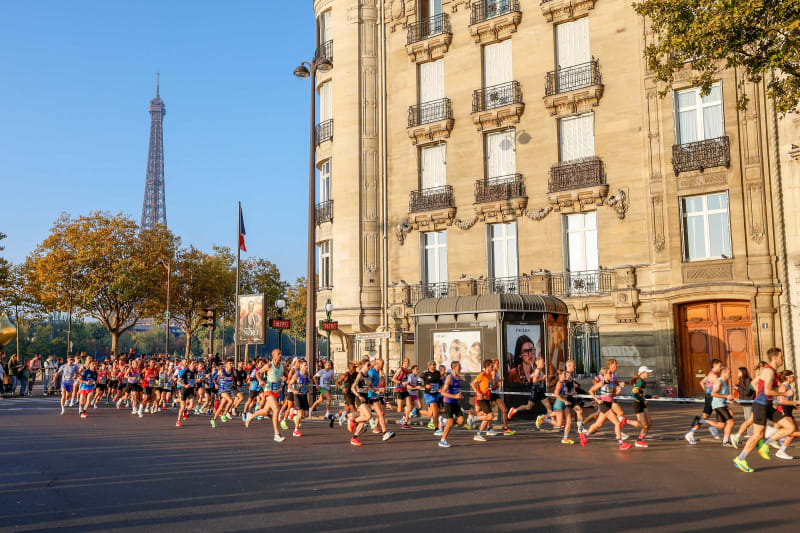
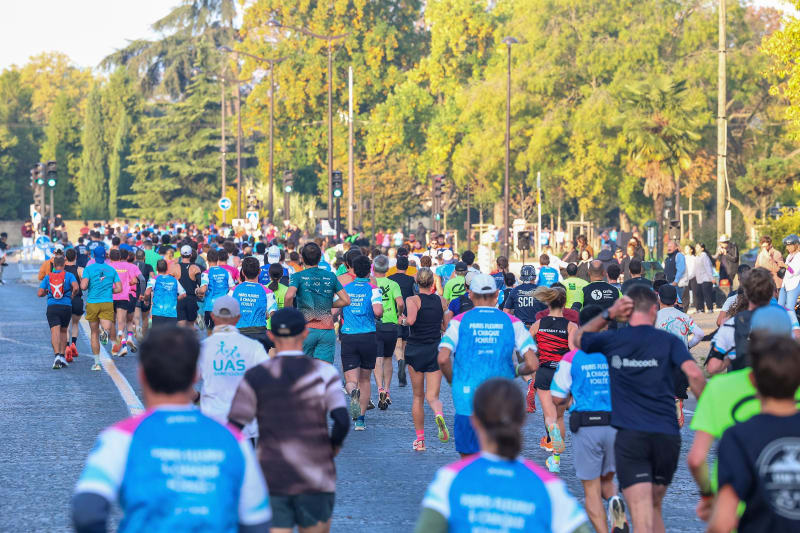
A postcard-perfect course that still delivers
The current course became official in 2002, when it was measured and certified by the FFA. Earlier records therefore do not count, which may be a blessing in disguise: the steep start on the old route was far from ideal for anyone chasing a fast time. In 2016, the association, which had become the Club des 20 km de Paris, an organisation dedicated to running and managing the event, decided to make the course faster while retaining its royal setting. The route no longer goes through the Trocadéro or up the false flat: runners now follow the right-bank quays, reach the Étoile via Avenue Marceau, descend towards the Bois de Boulogne, then bring their Sunday long run to a spectacular finish on the Champ-de-Mars, just steps from the famous Eiffel Tower, overlooking a district transformed for the race. Historic? Absolutely.
“This has been my favourite race for at least ten years!,” says regular Cécilia Buffeteau, who finished in 1:24:51. I ran this race before I even did my first half marathon! It's beautiful: the course, the season, and every year there's sunshine. It's a fast route despite the tunnels, and the organisation is great: you don't wait around in the corrals. At the Paris half marathon, it rains, it's cold, and the course is less of a wow. It's less prestigious than this one, and there are far fewer activities.”
Electric atmosphere from start to finish
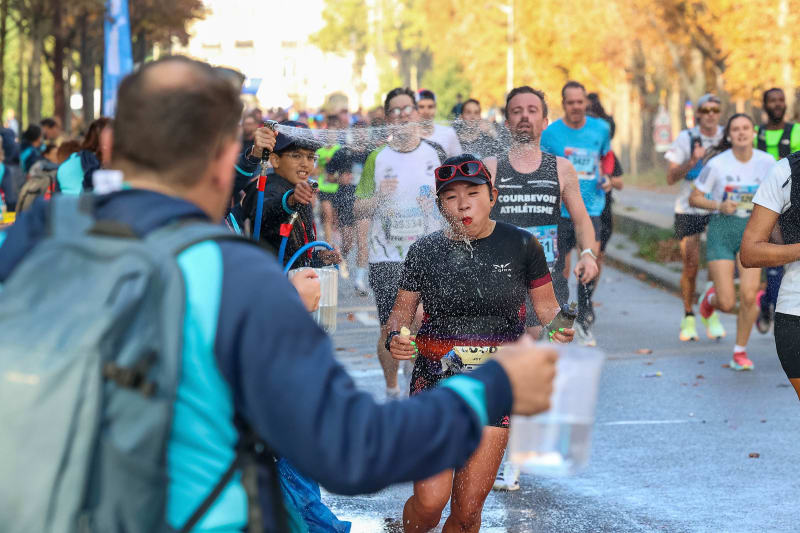
The supporters were out in force all morning: banging on the barriers, shouting, cheering, playing music and holding up signs, each more inventive than the last. Some spectators even ran from one point to another to support their favourites at close quarters. Célia Tabet, who finished fourth, says: “I never switched off from start to finish because there were people cheering at every point!” Mathilde Sénéchal, who is also sponsored by Puma, adds: “We were never isolated, and that helps you stay focused throughout the race.”
The exuberant first French finisher at the 2025 Paris Marathon, Lorena Méninguan, was equally enthusiastic: “I had a few little mishaps, so I had to stop for a moment (laughs). My time was a little slower than last year, but my pace was better! When you reach the quays, the atmosphere gives you an incredible boost!” Anaïs Quemener, who finished tenth in 1:09:15, agrees: “All that cheering gives you a lift. I fed off it, and off Ta gels! I was a little apprehensive about the start because it always gets a bit crowded. I even finished a little faster than I expected!”
That fervour attracts runners from all over France, including Amiens native Élodie Bellettre, who refused to miss the event despite a difficult week: “I was this close to going to hospital because COVID had completely wiped me out. I didn't run on Tuesday, I rested and then eased back into it. This race is absolutely crazy! I love it and recommend it to everyone.” Even Florian Carvalho, who had recently finished third at Paris–Versailles, used the atmosphere for his weekly long run: “I came with a different goal. It was more of a quality long run as preparation for the European Cross Country Championships (Lagao, Portugal, December 14). You can't target 1,000 things at once, especially at my age. But whatever happens, it makes for a good long run.”
This has been my favourite race for at least ten years! I ran this race before I even did my first half marathon! It's beautiful: the course, the season, and every year there's sunshine.
An impressive para-athlete field
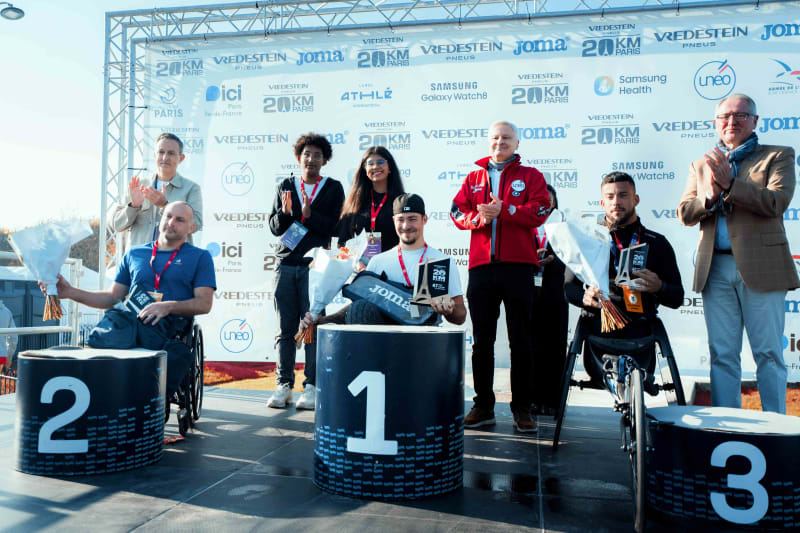
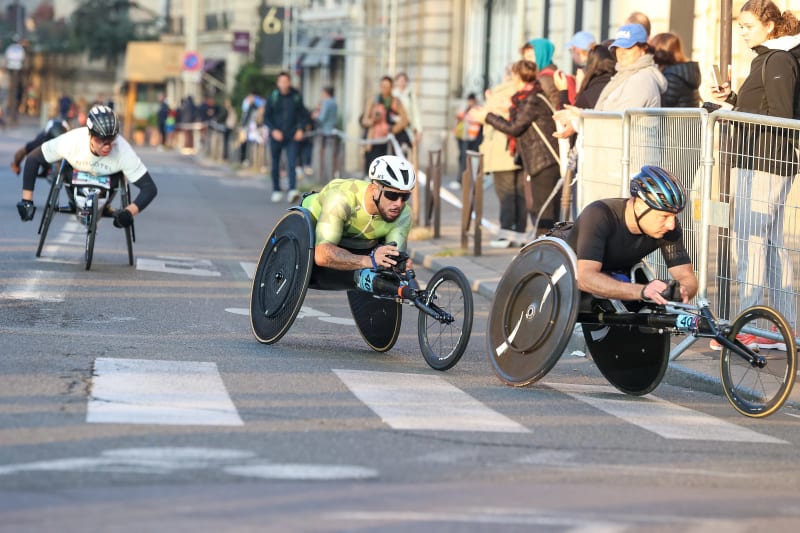
The 47th edition of the Paris 20K drew an exceptional field of para-athletes, with 82 athletes recorded on the start line. Among them, 16 wheelchair racers, including eight elite athletes, warmed up from first light before setting off at exactly 8:50 a.m. The race featured several big names, including Thiebaut Daurat, the 5,000 m world silver medallist, who narrowly beat Julien Casoli, a six-time Paris Marathon winner, along with other athletes from across Europe. The winner, who travelled from Gers to claim victory in 47:56, had endured a turbulent night: “They lost my front wheel at the airport! I spent the night without sleeping. Luckily, a friend lent me one at the last minute. During the race, my wheel was coming loose, so I had to tighten it twice and chase back to rejoin the race.”
The elite field featured five men and three women, underlining the event's international reach. In the women's race, Ireland's Shauna Bocquet, eighth in the 5,000 m at the Paris Paralympics, dominated ahead of Italy's Rita Cuccuru, winner of the 2024 Paris Marathon, and France's Nadège Monchalin. A special mention, too, for the Parisian cobblestones: undeniably charming, but treacherous for wheelchairs travelling at nearly 35 km/h.
The para-athletics category also included 17 ambulant athletes and 24 blind runners accompanied by guides, including Clément Gass, a leading figure in adapted sport. Several visually impaired runners, guided by volunteers, said they were delighted with the experience, often returning year after year. That includes Arthur Le Compte du Colombier, lining up for the fourth time: “I had a tougher time of it this year, but the organisation is improving and everything is smoother! Here, the guide gets a free race bib.” Ramos Martins, meanwhile, runs “for the fun of it”, accompanied by Marie Tempe, whom he met through the Courir en duo association, “to take her along on all his rubbish challenges and have fun.” “The organisation is incredible. We were ten minutes ahead of schedule, and there were even reserved changing rooms and toilets,” she says.
Blind from birth, Clément Gass, a 38-year-old statistical engineer, held the world record for an independent marathon by a blind runner, with a time of 4:04 set in 2019 at Cernay-la-Ville in the Yvelines department. A true enthusiast, he has covered up to 250 kilometres per week in the Vosges mountains, often training alone. For him, running has always been the only sport to offer complete freedom. In 2015, he developed a GPS app adapted to his needs, allowing him to navigate without a guide. He used that app on Sunday, along with a lightweight reinforced white cane to avoid physical and human obstacles, and ran an impressive 1:38:01. He had set out aiming for sub-two hours. Respect.
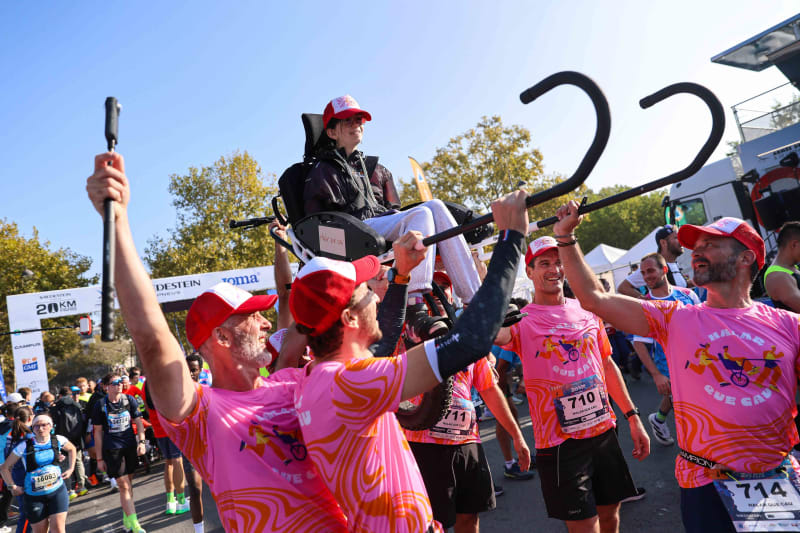
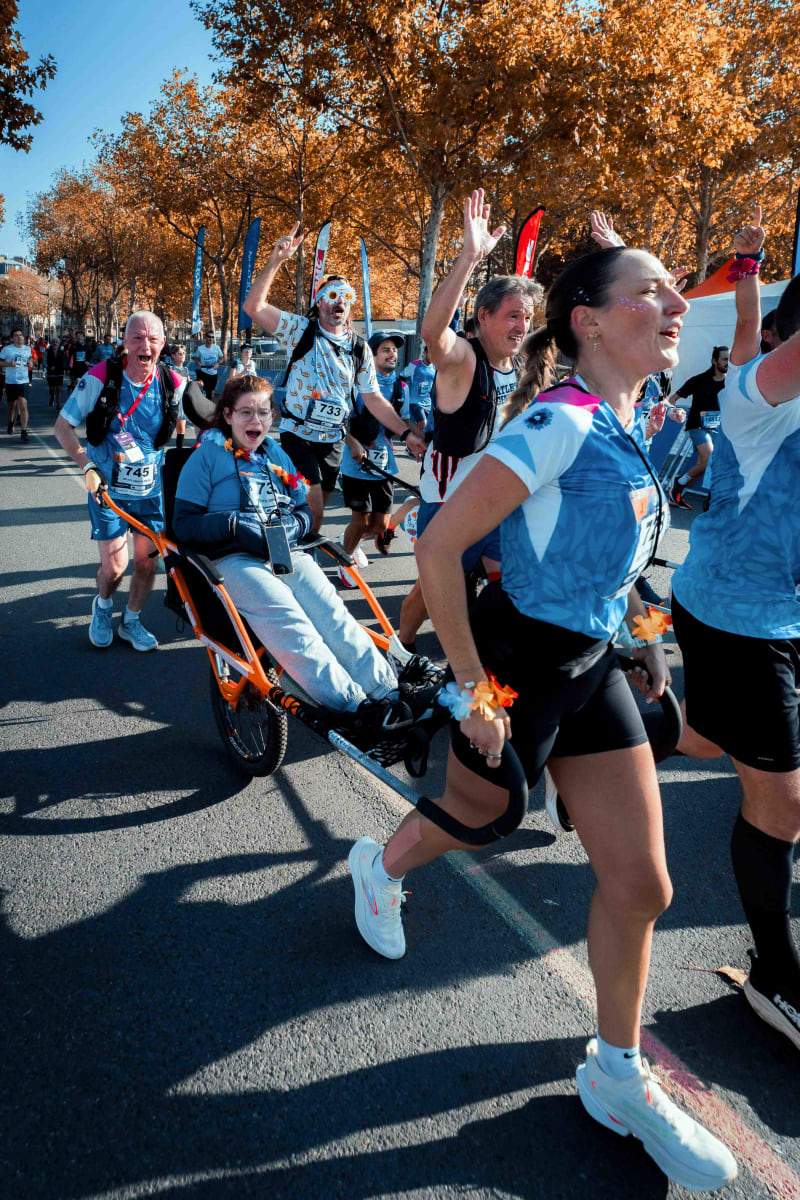
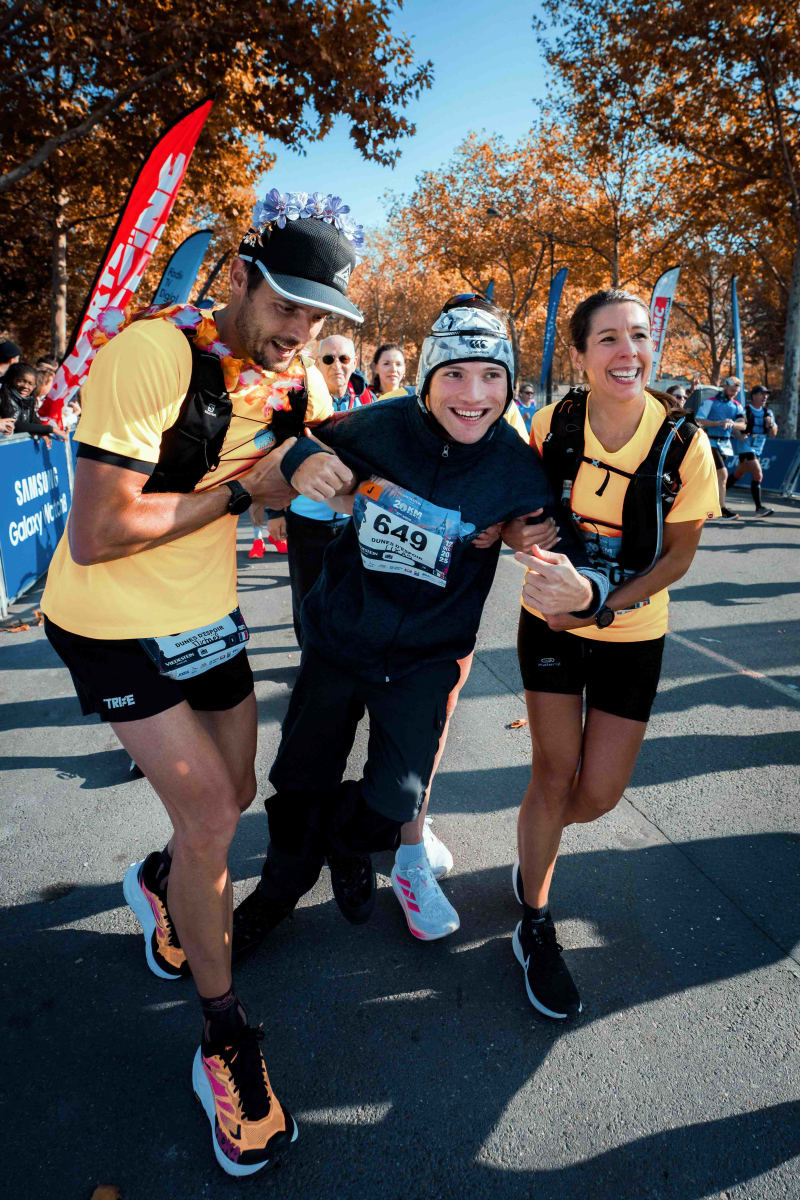
Finally, around 40 joëlettes were counted, including two teams put together by the organisers. Léonie Cheney, 14, experienced the race through her association Halar Que Cau (“Keep moving forward”, in Gascon), which travelled from Bayonne: “It was great! I took loads of photos and sent them to my friends.” The association, created for Léonie, enables people with disabilities or reduced mobility to take part in races. “We wanted to share a moment with her, discover Paris and have a great time. We always have fantastic moments together,” says Pierre-François Lassalle, one of the pushers and a member of the association.
Another organisation, À pas de géant pour Maya, also took part with two teams. Made up of around 100 runners, it organises about ten races a year, allowing 20 to 30 people with disabilities to take part. “It's a little harder physically, but easier mentally. It's good to give your time and share these moments. Two-thirds of French people have already done a race… why shouldn't they?”, asks Léopold Domange, one of the association's guides.© STADION-ACTU
A new hydration system divides opinion
The new system at the water stations has not yet won over either the elites or the newcomers, but it is intended to make the event more environmentally friendly. For Lorena Méninguan, adapting remains tricky: “It's fine for a half marathon, but it's not very practical for a marathon. I filled my soft flask beforehand so I wouldn't have to stop, because at our pace that's not possible. Fortunately, you can get away with not drinking too much for an hour-long race.” Cécilia Buffeteau also had to deal with the new feature, which runners still need to work into their rhythm: “It's not easy. I hardly drank anything, whereas I usually take cups or bottles. I had my soft flask, but it's difficult to get it out without losing time or choking on it. We haven't developed that reflex yet; we'll have to learn it. I think it will become standard, but it's not established yet.”
The same went for Elodie Bellettre, who ran 1:17:57 and was also thrown by the system: “At one point I was carrying my soft flask, then I had to put it away because I got a stitch. You stop, and then you have to manage to get going again. Next year's Paris Marathon won't be for me. I can't see myself running with everything on me.” Although they did not stop to refill their flasks, several water stations were available all along the course. Runners remain divided, but according to the organiser, they will have to get used to the new setup, which “is a first, but athletes need to know how to fuel and hydrate independently.” Paris City Hall requested the removal of plastic bottles. “It's the rule, and we have to accept it,” he explains. There was no shortage of hydration, however, with seven aid stations scheduled along the course, “which is no small thing,” he points out.Women are gaining ground
With female participation rising from 38% to 42% this year, and male participation edging down from 62% to 58%, the Vredestein 20 km de Paris is becoming a genuinely more gender-balanced event, a change worth highlighting. The rise in women's participation is no doubt partly explained by the inclusive nature of the event, which strongly encourages women to take part. New to the running scene, Pauline Champavert completed her first 20K that morning.
She explains: “I was influenced by a friend who ran a lot. Seeing her train made me want to try. Then, once I started, I realised I could improve. It's a bit awful at first, but once you're moving, it's so great to be carried along by everyone!” The desire to take on a personal challenge certainly plays a part, but promoting a healthy lifestyle and sport as a source of wellbeing also helps keep the race popular among the 13,000 women who crossed the finish line this year. “It's true that when I started ten years ago, there were fewer groups to join. Now they're very easy to find, and that helps people get started and keep going,” adds master athlete Marie-Claire Vernet.The 47th edition of the Paris 20K once again showed that on the capital's roads, achievement is shared as much as it is raced. Through solidarity, inclusion and passion, the 20K remains an ode to collective effort.
✔ Find all the results from the Vredestein 20 km de Paris.