
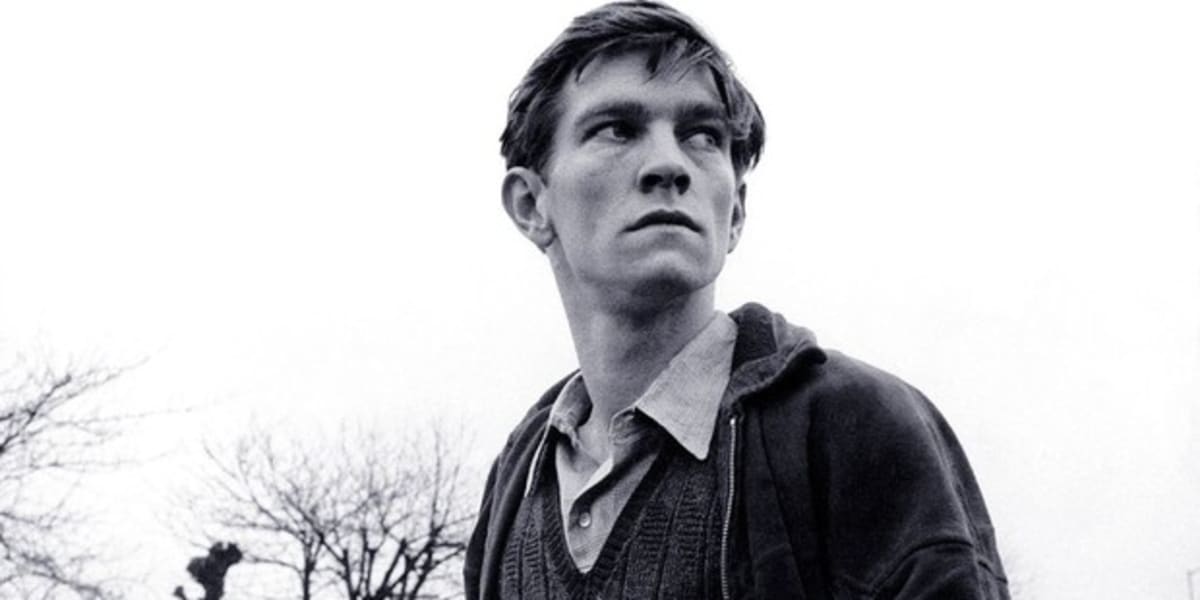
 © capture d'écran du film La solitude du coureur de fond
Running culture: The loneliness of the long-distance runner
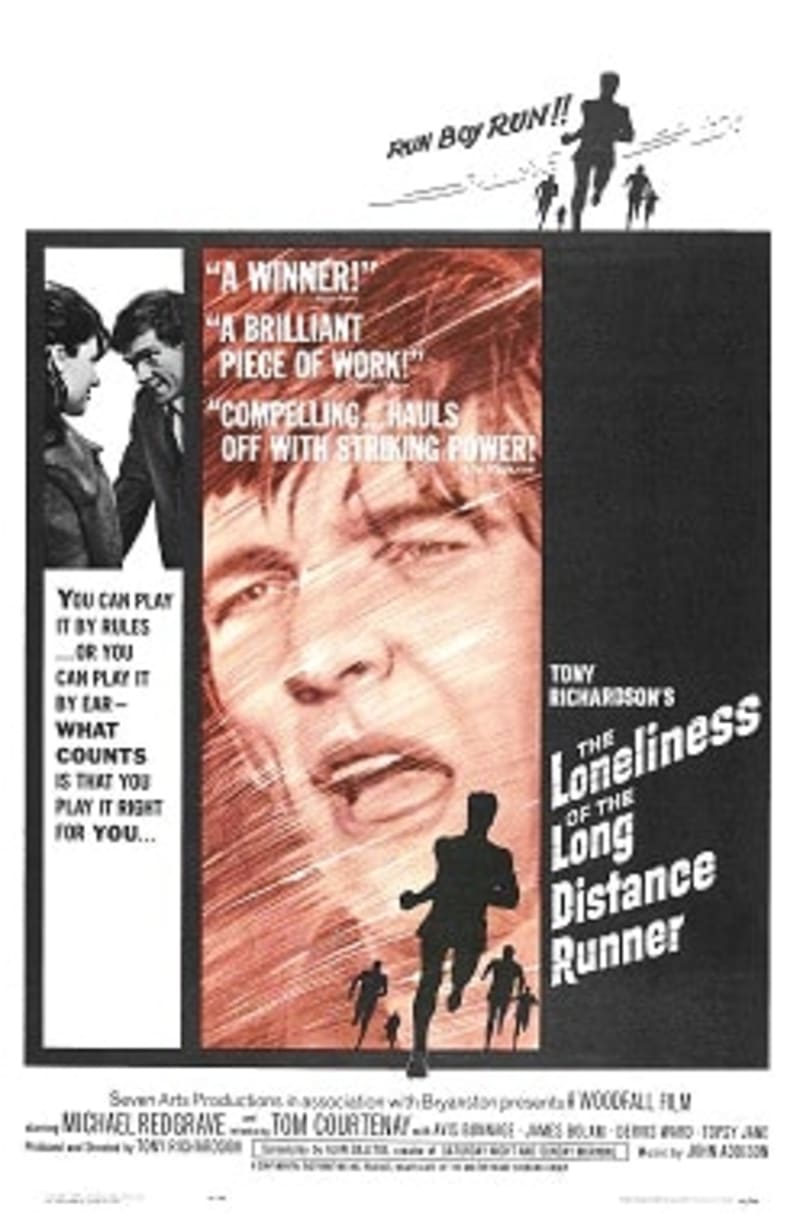
In 1962, Tony Richardson brought Alan Sillitoe’s short story to the screen and delivered one of the defining films of England’s Free Cinema movement, The Loneliness of the Long Distance Runner. More than 60 years on, this slice-of-life social portrait of working-class youth remains essential British cinema. The style may feel dated, but the film still hits with real punch.
Some films become “generational” touchstones: they capture a moment so precisely they end up symbolizing an era. That’s exactly what the British film The Loneliness of the Long Distance Runner, released in 1962, has become. Set against the backdrop of a Britain in cultural upheaval, Tony Richardson tells the story of Colin Smith, a working-class kid from Nottingham sent to a borstal after a burglary. Gifted over distance, he turns into the institution’s sporting poster boy, proof, in their eyes, that the system can “straighten out” young rebels. There are echoes here of A Clockwork Orange by Stanley Kubrick, at least in that idea of control and conditioning. The film takes aim at the petty bourgeoisie and at institutions more broadly. One scene says it all: a little over an hour in, the two leads watch a political speech on TV with the sound off, laughing at the sight of a powerful man rendered harmless, “switched off.”
It’s also a snapshot of the moment when postwar disillusionment starts to spread across Europe. On screen, Italian neorealism is in full stride, the French New Wave is breaking through, and in England it’s the era of Free cinema and the British New Wave. Cultural movements fueled by a youth increasingly fed up with the rules and the rule-makers. Richardson’s film leans hard into realism and plants itself firmly alongside England’s working class.
The British New Wave, England’s own new wave
When The Loneliness of the Long Distance Runner hit British cinemas in 1962, English film was in the middle of a revolution. Since the late 1950s, a group of directors, including Tony Richardson, had been trying to break away from a studio system seen as bourgeois and fake. They shot in the streets, worked with real locations, and the camera often moves with a rough, untamed energy. Running is the hook here, but it also points to how sport can be co-opted by a certain class. During long training sessions, Colin Smith replays his life in his head: poverty, his father’s death, social contempt, petty crime as an escape route. In this film, running is less a social badge than a space of inner freedom, something it still gets reduced to far too often. The running sequences cut against jagged flashbacks and inner monologues that track the character’s state of mind. Available on plenty of streaming platforms, the film has aged, but some scenes are still a blast. And the ending has become legendary: on the verge of the finish line, Colin deliberately stops and lets his rival win. He chooses freedom over victory.
Alan Sillitoe, the voice of England’s working class
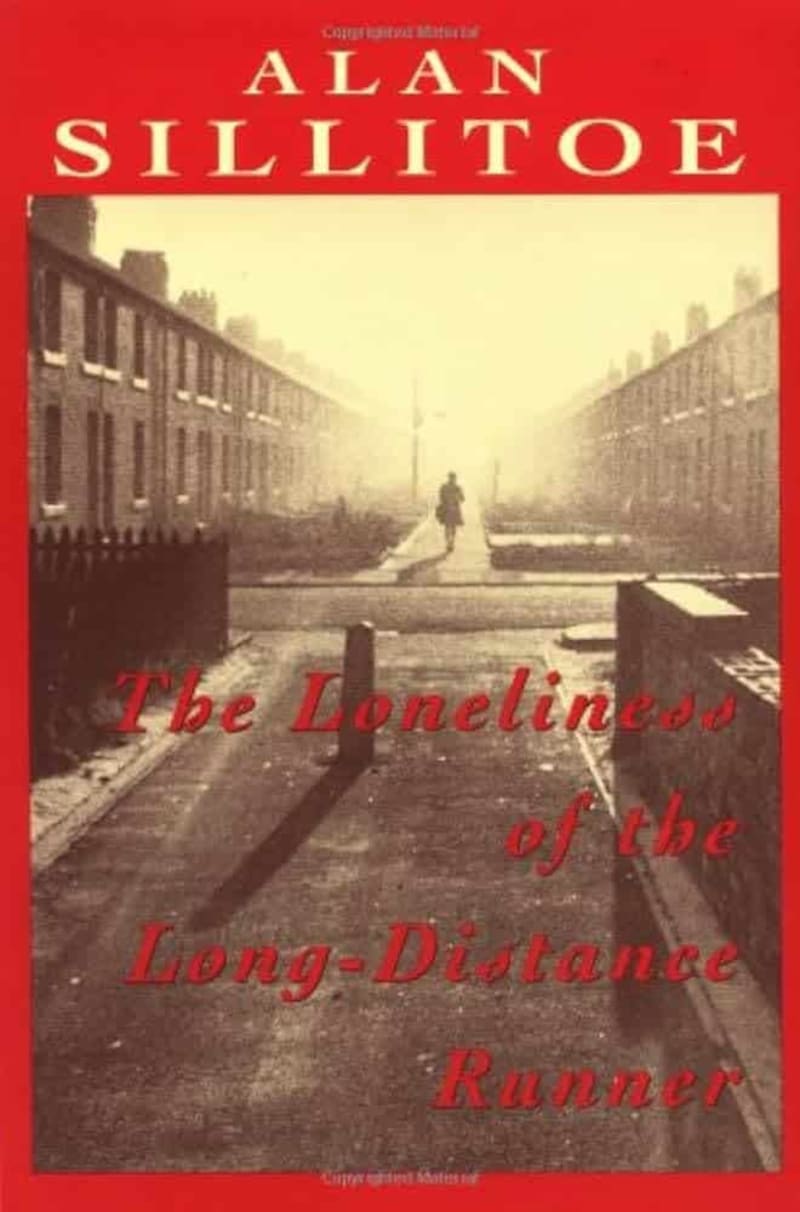
The film gains depth once you look at the story behind Alan Sillitoe, author of the 1959 short story The Loneliness of the Long Distance Runner. Born in 1928 in Nottingham to an extremely poor working-class family, Sillitoe grew up in an England shaped by unemployment, war, and stark inequality. His father worked in a bicycle factory, while the family lived on the edge. Early on, Sillitoe developed a sharp awareness of class that would feed his entire body of work. After leaving school at fourteen, he worked in a factory before joining the army. It was during a long recovery from tuberculosis that he began to write. His own experience runs through his stories: Nottingham’s working-class streets, social frustration, economic violence, and hostility toward institutions form the core material of his literary world. In 1958, Sillitoe broke through with Saturday Night and Sunday Morning, a novel quickly recognized as one of the foundational texts of modern British working-class literature. It was adapted for the screen in 1960. That success paved the way for The Loneliness of the Long Distance Runner, published in a short-story collection.
A generational manifesto
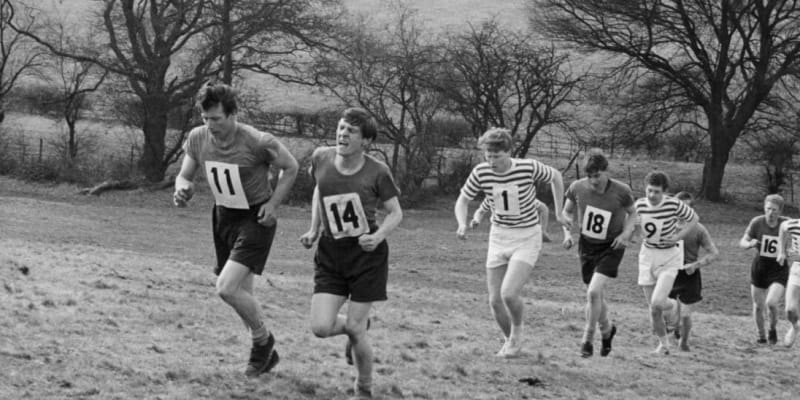
From the moment it came out, The Loneliness of the Long Distance Runner became a phenomenon, even if it never matched the box-office pull of big productions. It found its audience among intellectual circles and European cinephiles. Tony Richardson emerged as one of the leading figures of a generation determined to show a different England: factories, working-class estates, and young people with no future on offer. The film would go on to influence directors in the same lineage, from Ken Loach to Shane Meadows (notably the brilliant This in England). Colin Smith (number 14 below) quickly became an icon of rebellious youth. Before the student movements of the late 1960s, he already embodied a refusal of traditional hierarchies and a deep distrust of institutions of every kind. The film also marked the big-screen debut of Tom Courtenay, whose career would later take off. In 2001, he was knighted by the Queen of England.
Some might see a certain irony in that...
More articles

Ron Hill, Half a Century Ahead of Strava
Champion and data pioneer Ron Hill kept meticulous training logs from 1956 and ran at least a mile a day for 52 years.
Thu, September 10, 2026
From greeks to hippies : the history of jogging
When did the ancient practice of running evolve into jogging, now embraced by more than half a billion people around the world (including over 12 million in France)? Let’s take a look back in time, or rather, over our shoulders.
Thu, December 5, 2024