

Winter Run Training: Cross-Training Activities to Keep You Moving
Gloves, beanies, windbreakers, thermal tights... When winter bites, even the hardiest runners can have second thoughts. So why not train indoors and mix things up with other sports? Several activities let you escape the cold while building qualities that carry over to trail running.
Swimming and aqua jogging

Yes, there is the hassle of getting changed, followed by the uniquely awkward experience of pulling on a flattering swimming cap. And yes, there is that gentle chlorine smell that clings to your skin long after the shower. The pool is still a great ally for runners, allowing you to train not just out of the rain, but in the warmth. You can swim normally, preferably front crawl or backstroke, or try aqua jogging, a discipline requiring plenty of motivation and a healthy disregard for what other people think. We will leave you to discover the joys of a flotation belt and jogging “in suspension” in the water, waving your arms and legs without making much forward progress... It may look ridiculous, but it is seriously effective!
The benefits
Swimming and aqua jogging are low-impact activities, with no impact or “rigid” point of contact. Your joints will thank you.
Swimming builds upper-body strength, an area runners often neglect.
- You can do genuine interval sessions in the water. One tip: leave a bottle at the end of the lane, because thirst soon sets in when you are swimming hard.
The drawbacks
Swimming endless lengths can feel painfully monotonous.
The logistics can be a nuisance, from packing all the gear (swimsuit, cap, goggles, towel, shower gel and perhaps a pull buoy, kickboard and paddles) to the unavoidable time commitment (more than an hour before travel time) and, worst of all, the red rings goggles leave around your eyes...
How often
Once or twice a week, or even three times if the weather makes running genuinely unbearable!
Mountain biking

Like road cycling, which is also useful in winter but less practical because you get cold quickly unless you live in a warmer region, mountain biking is ideal for cross-training. It complements running, and trail running in particular, while taking pressure off the joints by eliminating impact, unless you end up having to run alongside the bike!
The benefits
On hilly terrain and trails, mountain biking is the two-wheeled version of trail running. It develops strength endurance, uphill power and the ability to read the terrain.
Long rides are ideal for building an aerobic base, which is often a winter priority.
Pedalling works the lower body and core, both of which are valuable for running.
You can do all kinds of sessions on a mountain bike: intervals, fartlek, long rides and more.
The drawbacks
The price of a decent mountain bike can quickly get out of hand. Consider buying second-hand.
A basic level of technical skill is essential for riding on even moderately rough trails.
How often
Once a week or every day, anything goes!
The indoor trainer
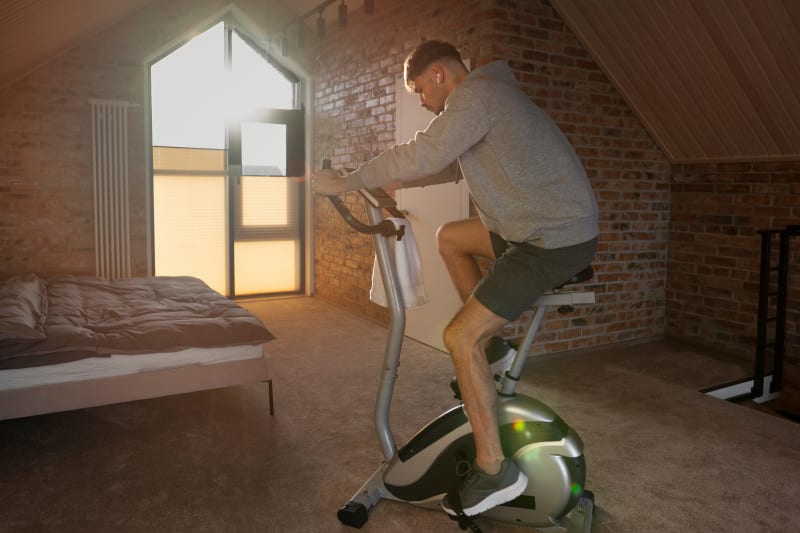
The indoor version of cycling, the turbo trainer lets you make the most of your training time while targeting specific qualities. It is often said that one hour on the turbo is equivalent to two hours on the road. Perfect for getting your heart rate up and torching your legs without leaving the warmth! There are several types of indoor trainer: a proper stationary bike, like those found in gyms; a basic trainer used with your own road bike, requiring only a change of rear tyre; and a smart trainer, also used with a road bike but with the rear wheel removed.
The benefits
Indoor cycling has the major advantage of sparing your joints. It is also a valuable ally during injury or rehabilitation.
In a short session, one hour is enough for a highly effective workout, the turbo lets you train hard and, if it has a power meter, with precision.
You can vary your interval sessions by working on cadence, power and strength. The trainer can also serve as a warm-up or cooldown for an indoor strength session. Or you can simply spin easily without changing intensity, in which case you will want a good film.
Pedalling without going anywhere is a great workout for the mind.
The drawbacks
Pedalling without moving an inch can feel horribly boring. To avoid cracking after 10 minutes, watch a video, listen to a podcast or ride with a virtual platform such as Zwift, Bkool or Kinomap.
An indoor trainer takes up a fair amount of space, and mounting and removing the bike every time can be a chore.
The high-end models are fairly quiet, but cheaper, less sophisticated trainers can be quite loud. Not ideal for the rest of the family... or the neighbours!
You sweat heavily on an indoor trainer, so make sure you drink plenty.
How often
Once a week or every day, it is all possible. It depends on how well you tolerate pedalling without going anywhere.
Cross-country skiing

Often regarded as the sport demanding the greatest aerobic capacity, cross-country skiing, whether classic or skate, develops the upper body while working on coordination, balance and core stability. You can obviously do endurance outings, but interval sessions similar to those used in running are also an option. It is a great way to keep training through winter while breathing in the clean mountain air.
The benefits
Cross-country skiing is ideal for runners because it calls on many of the same qualities as running.
Anything goes on cross-country skis: long outings to build aerobic endurance and varied interval sessions.
Cross-country skiing is more accessible than ski touring, technically, in terms of equipment and financially. The cost of the gear and lift pass remains reasonable.
Cross-country skiing is available in almost all of France's mountain ranges.
The drawbacks
You obviously need to live in the mountains, or at least somewhere with enough snow. The alternative is to book one or more training camps during the winter.
Cross-country skiing requires a little learning, and a few hours with an instructor are well worth it, as well as some equipment, although it is far cheaper than ski-touring gear.
How often
As often as you run, so every day if you want!
Snowshoeing
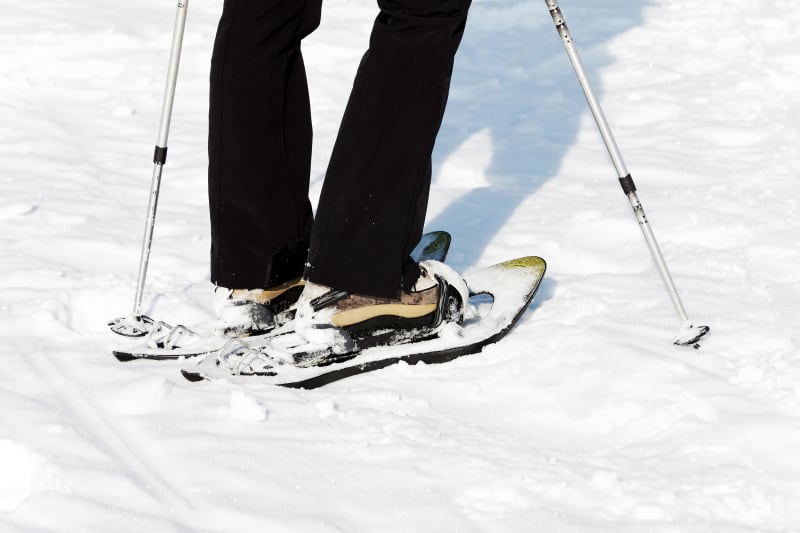
Snowshoes may have a slightly old-fashioned image, but they have plenty going for them. They are essentially the winter equivalent of summer hiking, with added equipment. Lightweight, flexible models allow you to run in deep, fresh snow. Using poles adds valuable upper-body work.
The benefits
Used for sport, snowshoes come close to the demands of running and trail running, allowing you to venture onto both marked trails and off-piste terrain. You work your cardio and endurance, while powder snow delivers a serious strength session.
Snowshoes let mountain dwellers get out into nature without struggling through the snow in running shoes.
The drawbacks
There are not many snowshoe models designed for running, and they represent a modest investment, around €200.
Running in snowshoes requires you to adapt your stride and accept a fairly bulky accessory on your feet. You will either love it or hate it.
Naturally, regular practice is reserved for those living in areas with sufficient snow.
How often
Two or three times a week without a problem, alternating with the indoor trainer and treadmill.
Strength and conditioning

To run well, you need to do more than simply run: you need to run well. Strength and conditioning is an essential ally for improving running technique and overall performance. When winter brings short days and bitter cold, general and specific conditioning can feel like a miracle solution. There is no need to freeze in the rain or darkness; you can fit an effective cardio and strength session into your living room.
The benefits
Strength and conditioning is an integral part of a runner's training and helps prevent injuries.
It can be done anywhere and at any time, including in the living room in the middle of the night, often without any equipment.
Repeating a conditioning circuit several times can replace an outdoor session.
The drawbacks
Some people may struggle to get motivated. To resist the irresistible pull of the sofa, follow an online session or organise a group workout by video call. You can also make conditioning fun by challenging the whole family: who can hold the wall sit the longest? Who can do the most burpees in one minute?
Some exercises must be performed correctly to avoid injury and get the intended benefit. It is worth checking your form by trying them in front of a mirror first.
How often
Two sessions a week throughout winter, gradually increasing the difficulty of the exercises.
At the gym
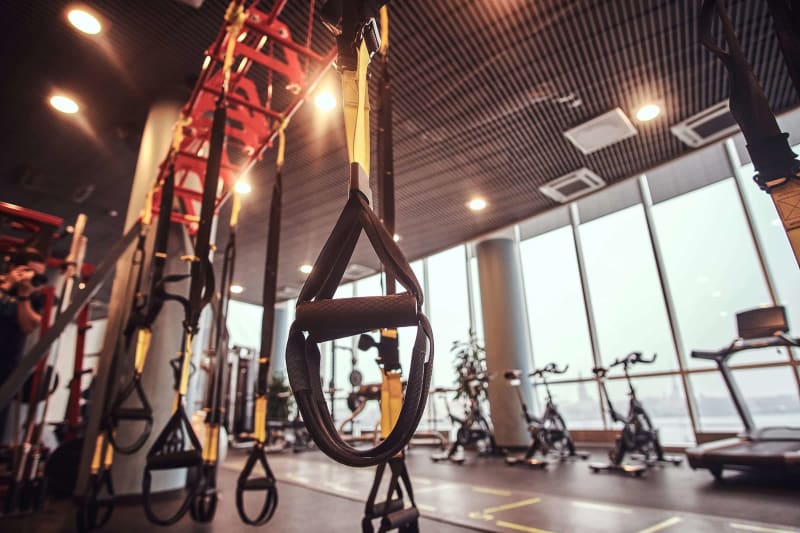
The gym is a world of its own: treadmills, ellipticals, bikes, leg presses, rowing machines, aqua biking, RPM, CrossFit, Pilates... Among all these options, runners can choose activities that develop cardio and strength, but they can also explore disciplines that improve flexibility, breathing, coordination and proprioception. You may want to avoid the most hardcore form of bodybuilding, the kind focused on gaining muscle mass by lifting inhuman weights and downing egg whites!
The benefits
The variety of activities lets you vary both the demands on your body and the enjoyment. There is no monotony, and the presence of other athletes, or a coach during a class, can give motivation a boost.
The gym lets you train, including running on a treadmill, in the dry and warmth at almost any hour of the day or night.
The wide range of equipment, especially strength equipment, lets you do weighted conditioning rather than relying solely on bodyweight exercises. Take care to perform each movement correctly, or you could hurt yourself, particularly your back.
The drawbacks
The bill can be steep. Gym memberships are sometimes expensive, so make sure you will go regularly or each session can quickly become costly.
Some people love exercising in a busy gym, while others hate it. The atmosphere is particular to each facility, so try one or two sessions and decide whether it suits you.
How often
Two or three times a week, varying the activities.
Winter is a great opportunity to try other sports, break up your routine, reduce injury risk and develop physical and mental qualities that will help your running. Choose the disciplines that appeal to you and that are practical where you live.
More articles

Strength training: the runner’s secret weapon
Strength training is essential for runners: run stronger, run better and stay injury-free.
Wed, September 9, 2026

Bigorexia: everything you need to know about exercise addiction
Fri, January 16, 2026

ASICS x Intersport: Point Zéro, an inside look at the build-up to the 2026 Paris Marathon
On January 14, ASICS and Intersport hosted a “Point Zéro” event in the French capital focused on preparation for the 2026 Paris Marathon. Sports workshops and a conference shaped the day, which was organised to mark the unveiling of the GEL-CUMULUS 28 in an exclusive colourway for Intersport.
Thu, January 15, 2026