
@Margauxlifestyle is rewriting the rules for women in sport
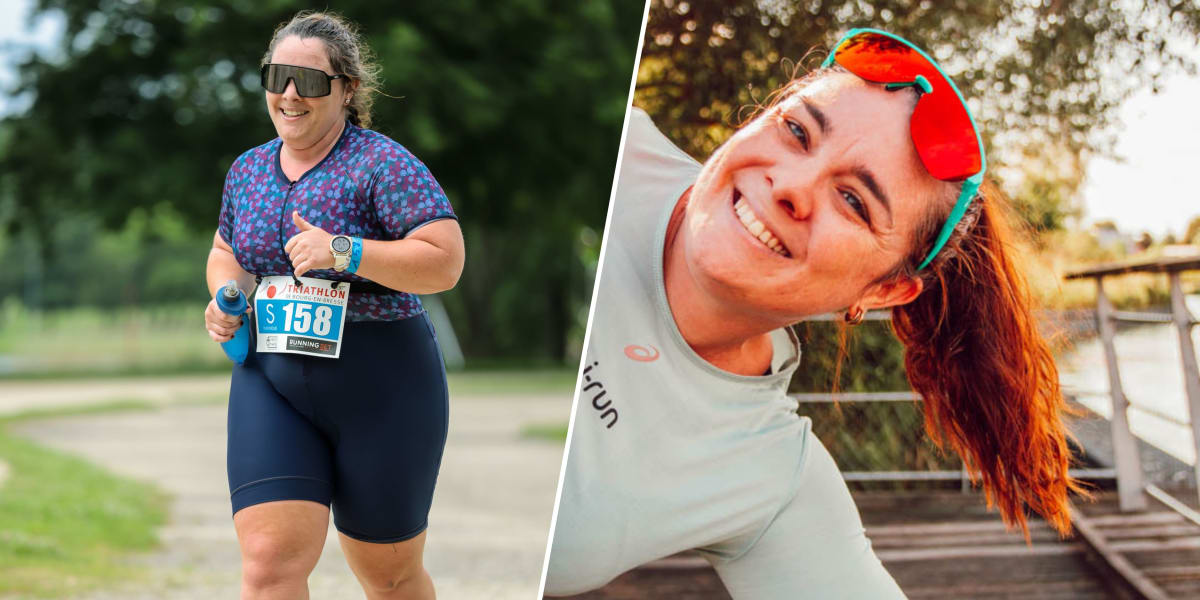
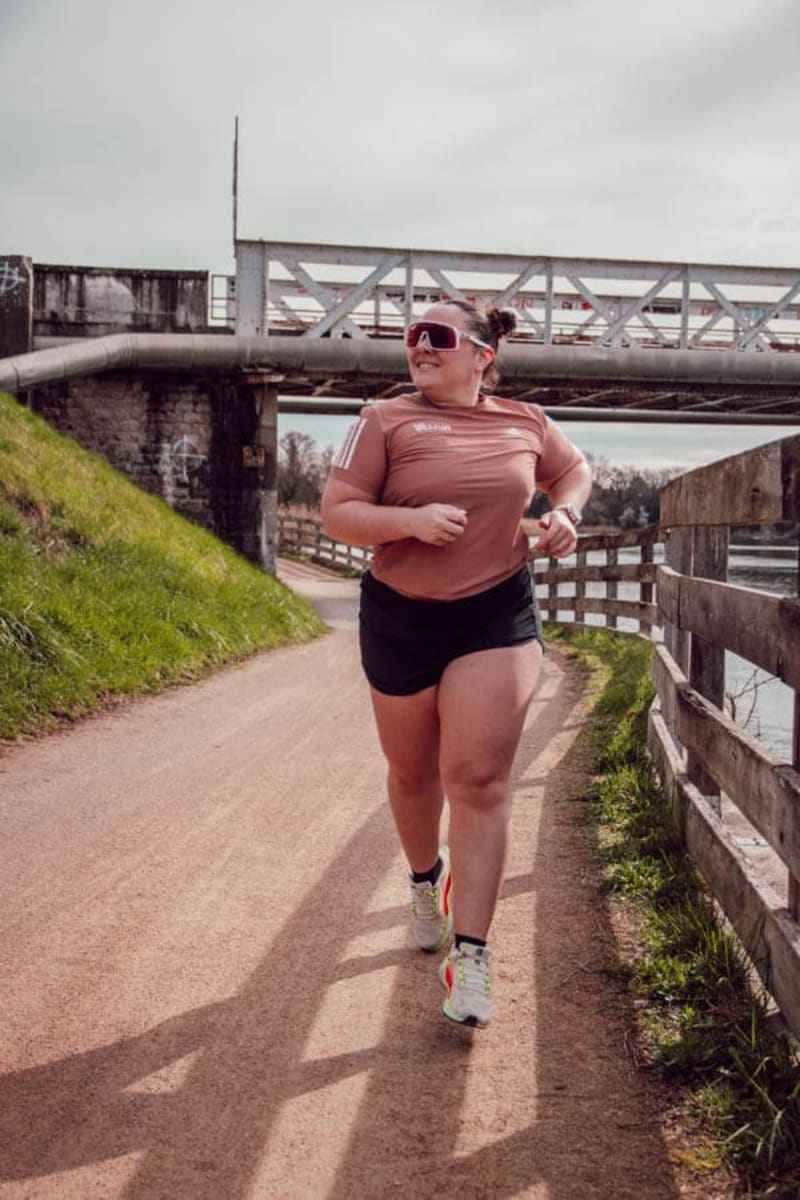
A size 42 athlete with a rare presence on social media, Margaux is challenging the image of the perfect female athlete. Women make up 85% of her audience across all platforms, and many see themselves in her unconventional journey. More than her story, it is her outspoken stance that offers hope and reminds women never to give up.
✓ Interview with @Margauxlifestyle, who tells us about her rise on social media, how she overcame personal challenges and how she turns moments of doubt into inspiration for her followers. Above all, Margaux is a voice that resonates and a model of resilience in a world where the image of women in sport is still too often boxed into a single ideal.
You have a growing influence, with several hundred new followers every day. How did you come to hold such an influential position?
Right now, it’s happening gradually. A few of my Reels are doing really well! I opened my Instagram account around 2014, then started my blog in 2015. I posted instinctively, and a small running community quickly formed because running was the trend at the time and everyone followed one another to offer encouragement. I don’t remember the exact dates when I started running, but I bought a watch in 2013. My first official race was the Prague Half Marathon in March 2015, during my Erasmus year, with my mother. That day, I really felt like a runner. I was proud of myself... After that, I improved, lowered my personal bests and even ran the Paris Marathon. Then I gained weight in 2019, which I found very difficult because I didn’t understand why. I kept training regularly, with three runs and two or three strength sessions a week, but the more weight I gained, the more I regressed. I started receiving fatphobic comments. And, because I refused to let people get away with it, I became involved in the fight against fatphobia. I talked about running and being overweight, and tried to shift the way people with larger bodies are perceived.
Contrary to what many people think, it isn’t always down to a poor diet and a lack of exercise. One thing led to another, and I started talking openly about PCOS, a hormonal disorder I have, and weight loss. I quickly found myself in a fairly unique position on social media, because not many people talk about running and being overweight. In the running world, there are plenty of women with amazing times and physiques, which can make it hard for the average female runner to see herself reflected. So I gained followers, sometimes hundreds at a time, sometimes more slowly. Once I reached 25,000, I changed the way I created content, and it’s kept growing ever since. What matters most to me is getting a message across and making sure it reaches the people it concerns. What interests me first and foremost is building a community of women who run and inspire one another.
So it’s rooted in your personal story, which has become universal and gives women something to identify with. Has gaining visibility helped you bounce back from what you were going through?
Honestly, I didn’t necessarily think about it at the time. I think it did, even if it happened naturally, mainly because I refused to let myself be pushed around by people who insulted and belittled me without knowing me, my fight or all the effort I was putting in. At the time, I really needed to prove to the world that no, I wasn’t eating badly and I did exercise. Gradually, women began to see themselves in my story, and that helped create a group, a sisterhood.
Today, when it’s time to go for a run, it’s a pleasure. It’s my own bubble, a moment suspended in time when my brain switches off and I can simply enjoy the moment .
What made you take up running in the first place? And what still motivates you today?
At first, it was a way to blow off steam. I couldn’t stand sitting on a bench anymore. I was a bundle of nerves. I used to be a gymnast, so it was tough! At that point, my mother, who was in her fifties, could run for an hour chatting with her friend. My ego wouldn’t accept that. I persevered. I told myself that if my mother could do it, so could I. I realised that the more I ran, the calmer I felt. It made me feel good, so I carried on. It was after the Prague Half Marathon that I really fell in love with running. Today, when it’s time to go for a run, it’s a pleasure. It’s my own bubble, a moment suspended in time when my brain switches off and I can simply enjoy the present. I put on my music and take in the scenery. I have three or four routes I like to run from home. Living in Lyon, I enjoy discovering new places when I have a long run planned.
How do you deal with online hate and all the negativity that comes with it?
At first, I took it very badly. Now, I delete, block and don’t even think twice. Sometimes I use it because it gives me content ideas. It’s almost become a source of inspiration. These days, it doesn’t affect me directly anymore.
 © photo credit
 © photo credit
 © photo credit
 © photo credit
 © photo credit
Tell us about your work. What does it involve, and what does it mean to you?
I’m a content creator in the broadest sense. I create content for myself as well as on a freelance basis for brands and businesses. I’m really in a growth phase as an influencer, but it’s still only the beginning. I don’t want to sound pretentious, but to me, being where I am already feels huge. 45,000 followers is more people than live in my hometown, Agde. I’m kind of like, “wow!” But by influencer standards, it’s still relatively small.
Your lifestyle seems completely shaped around your work. How does that feel day to day?
At the moment, I’m enjoying it. I especially value the freedom to manage my own schedule, even though it can be intense. I have to fit in training, various appointments and, above all, find time to work. It’s all very well being here, there and everywhere, but I still need to get my own work done and meet my deadlines. It can be a real puzzle, but being self-employed means I can adapt my training and go for a run during the day. I like sharing what’s happening in my life as an athlete. It’s normal to post a sweaty, red-faced story, even if I do still pay attention to the camera angles. You have to find a balance. There’s a bit of a distortion: because I only talk about sport, some people think that’s all I do. I try to reassure the women who follow me, many of whom have family commitments, when they say, “How do you manage it? I don’t have time.” Just because I only show sport doesn’t mean it’s all I do. You simply don’t see the rest.
What does a typical day look like for you? More broadly, how do you organise a week around sport, appointments and work?
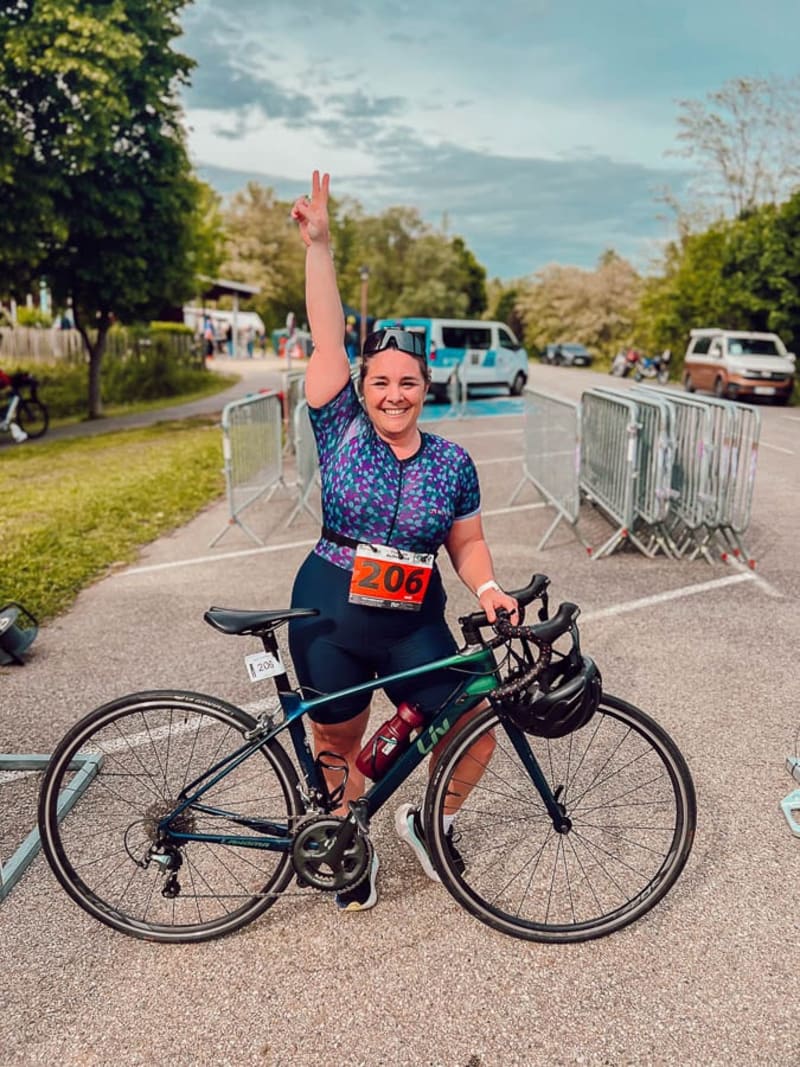
My typical days are always changing. What is certain is that I train six days out of seven, sometimes twice a day, and work seven days a week. Everything is mixed together, my personal life and my work. I’m single with no children, and I wouldn’t necessarily be able to live this way if I were in a relationship with a family. I’ve been training for four years in triathlon, and I also do strength training and dance. I’m often on my own for running and cycling. I work with a swimming coach because I learned to swim very late due to ear problems. I can’t say I really knew how to swim. My front crawl was a mess and I couldn’t swim 25 metres without getting out of breath. At 29, I joined the Rillieux triathlon club and started taking lessons. I would have struggled to stick with it without a woman at the same level as me. We shared plenty of laughs for a year despite all our difficulties. We felt like dead weight, but we had fun together, and that helped me keep going!
How do you train for running day to day?
At the moment, I alternate between speed sessions and long runs. I don’t do much interval training because I’m not a fan. I never train with the group because my pace is slower than everyone else’s. These days, my main goal in road races is simply to finish, because I sometimes struggle to beat the cutoffs... and sometimes I don’t.
Do you often run into followers at sporting events? What do those encounters mean to you?
It happens. I’m still just as uncomfortable, because asking someone you meet in the street for a selfie is something I associate with celebrities. And I’m not Beyoncé. When people tell me they admire me or that they’re fans... I still haven’t got used to it, because as far as I’m concerned, I’m just an ordinary woman who exercises and gets quite loud when someone disrespects her. When, thanks to my advice, they stop wearing cotton joggers, no longer feel ashamed to run in shorts or sign up for their first race... That’s what makes me proud: that they dared to do it and had a great time. The problem is that many are afraid, don’t feel they belong, carry a heavy mental load, and would need to rethink the dynamic within their relationship to free up time. Sometimes it takes a huge amount of inner work just to go for a run, whereas for men it seems completely unremarkable. They don’t question themselves, unlike women, who have an endless list of doubts.
Can we say that your account is activist in nature, since some people see themselves in your fight?
When I see the reaction to my latest Reel about an athlete’s body, it clearly is. It’s not often that something takes off like that. I don’t know whether you can call it “success”, but it passed 300,000 views in less than 48 hours. I’ve never had that kind of start. Two or three of my Reels have passed the million mark, including the latest one, which made me laugh when I realised. In it, I call out everyday examples of fatphobia in sport, which restrict access to sport for people in larger bodies. It reached a million views. That’s huge!
What message do you want to convey by regularly discussing the challenges that body shape can create when choosing sportswear?
From a size 42, which is my size, it becomes more difficult to find sportswear that is both suitable and attractive. I’m not always struggling, but I can’t shop everywhere. There are certain things I need to watch out for, especially to avoid chafing between my thighs. It isn’t a question of weight but of body shape, and it comes up constantly. It drives me almost crazy: I’ve talked about it everywhere and created content to make it visible, yet I still get asked about it two or three times a day. So I bring it up almost every week... a bit like plus-size sports bras, actually!
Margaux is more than an influencer. She is a powerful symbol of perseverance and transformation. Through her story, she shows that it is possible to redefine the image of women in sport, far from imposed standards. By sharing her challenges, victories and moments of doubt, she gives her community a space built on authenticity and sisterhood. Her approach is both personal and universal, encouraging every woman to push herself, claim her place and refuse to be defined by other people’s expectations. Following Margaux means embracing a journey in which every step, even the hardest, becomes a victory.