
Antoine Sénéchal is chasing a marathon and a new lease on life
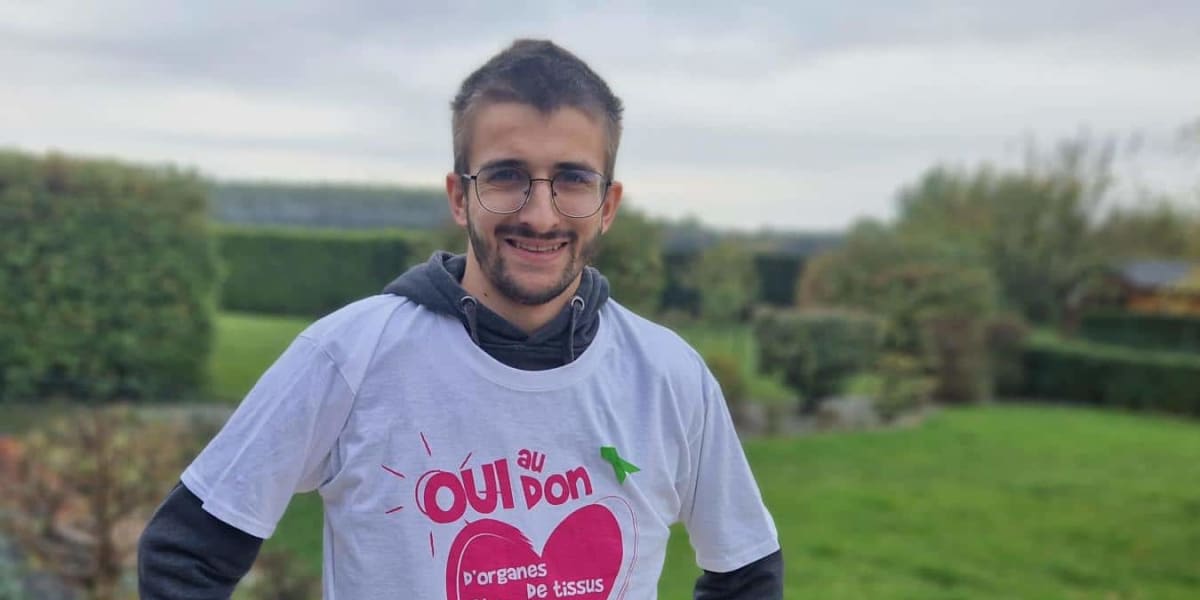
At 17, Antoine Sénéchal received a new heart. Eight years later, he is preparing to take on a challenge that once seemed beyond his reach: running a marathon. More than a performance goal, he wants to show how a transplant can open the door to a new life.
A new heart, a new runner. One more entrant in the great marathon adventure. But Antoine Sénéchal will be no ordinary marathoner. Having received a heart transplant in 2018, he is not simply aiming to reach the finish line. More than anything, he wants to recapture the feeling of being fully alive, strong and part of society. To find, in short, the breath of life. Will he lead the way and give hope to other transplant recipients ready to push their limits and take on a sporting challenge of their own?
2018, a new lease on life
Nine years ago, the day before his 18th birthday, Antoine Sénéchal received a new heart. Suffering from hypertrophic cardiomyopathy since the age of 11, he had no choice but to give up sport. “Having to stop playing volleyball midway through the season killed the momentum,” he says. The disease progressed as he grew, leaving him with one option at 17: a heart transplant. From the day it took place, a new life opened up before him. In sporting terms, everything had to be rebuilt: retraining his muscles, returning to physical activity after seven years away, and regaining control of his breathing. Over the past eight years, he has gradually returned to sport at his own pace. “I run, cycle, walk and do strength training,” he explains.
The idea is to show that even as a transplant recipient, you can run a marathon.
A marathon on the horizon
Aware of the demands of the marathon, he has not set a date yet. “Maybe on the tenth anniversary of my transplant,” he suggests. In 2028, then. For now, the priority is to keep progressing gradually, because his “dream of running a marathon one day” is bound to become reality. It is only a matter of time. At present, he can run up to 10 km nonstop. “Right after the transplant, I thought running a marathon would be easy. I played it down a bit. I thought I’d be out of hospital in three months and that six months would be enough to get it done. But I realised that going without sport for seven years had made things much harder on the muscular side,” he recalls.
Before he tackles the iconic distance, other milestones are coming into view, including the World Transplant Games, scheduled to take place in Belgium in 2027. The event brings together transplant recipients with all types of donated organs, and Antoine plans to compete in walking, running and cycling events. To prepare for the first major date on his calendar, he works with a coach and trains alongside a group of people affected by heart conditions who, like him, want to return to physical activity. In Arras, Pas-de-Calais, he trains with the Coeur Santé club, still taking a gradual approach. He is doing so alongside his cookery studies at a lycée, writing his second book after the publication of his autobiography La Vie n’est pas un jeu, media appearances and visits to schools as president of the Association for the Donation of Human Organs and Tissues (Adot 59), where he raises awareness.
The dream of living a normal life
Sport is often seen as a tool for resilience. Through the act itself, its values and the connections it creates, it can help people overcome trauma and rebuild. It is no coincidence, then, that these Games exist, or that Antoine has set himself the goal of covering 42.195 km. For most runners, a marathon is certainly a serious challenge, but one that is achievable with consistent training and a sensible pace. For a transplant recipient, it is a different proposition. Not impossible, though. “The idea is to show that even as a transplant recipient, you can run,” he says. There’s a sense of redemption in knowing that I wasn’t able to do sport for so long, and that I could now run a marathon. There’s something grand about it.” The distance takes on a symbolic dimension, almost becoming a kind of holy grail. It is difficult to reach, all the more so after a heart transplant, but it carries a message far broader than sporting performance alone. Paris would be the perfect setting to deliver it: “Look, transplants work! Let’s come together around organ donation, because it can give people the chance to live and return to sport.”
One thing is certain: if Antoine makes it to the end of the ultimate distance, he will be happy and proud. And he will have every right to be.