
Attila takes on HexaTrek to fight cystic fibrosis
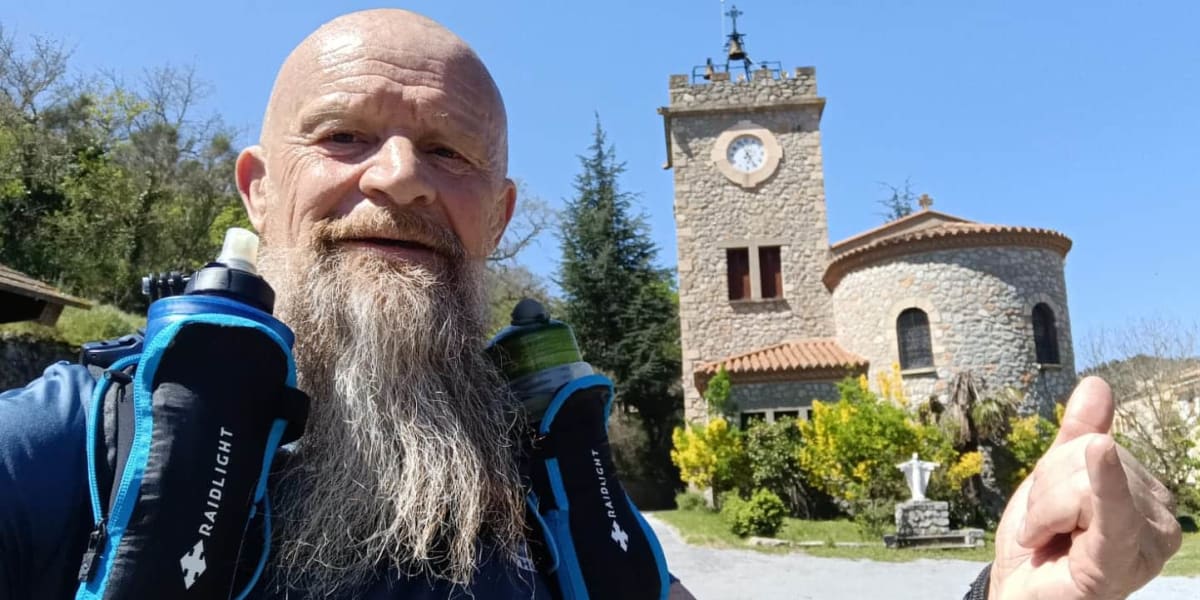
This year, Vaincre la mucoviscidose celebrates its 60th anniversary. Thierry Danzin, better known as Attila, is turning 60 too and wanted to keep supporting an organisation he has backed for several years. On Sunday, June 1, the former paratrooper will throw himself not out of a plane, but into the 50-day HexaTrek. Quite a challenge. Here’s his story.
“ Attila ” is no stranger to ambitious challenges. Back in 2021, he crossed Iceland alone from north to south, regularly facing extremely hostile conditions. Nothing seems to faze the former serviceman, who now works at a secondary school in southern France. In 2022, he completed a solo there-and-back traverse of the Pyrenees with flying colours. This year, to mark the 60th anniversary of Vaincre la mucoviscidose, founded in 1965, Thierry wanted to go big and shine a light on the cause, while fighting this genetic disease in his own way (Thierry’s fundraising campaign for the organisation).
Thierry, when did you start taking on these challenges?
I’m a former serviceman, retired since 2007, but I’ve stayed active. I run in the morning before work. I’m not really a race-bib runner, partly because of the costs involved. In 2020, I was chatting with some friends and they egged me on to take part in MiL’KiL, a 1,000 km endurance race across France. I do a bit of running, so I said, “go on then”, and very quickly I thought about linking a cause to the challenge to give it more meaning. I knew a family whose daughter has cystic fibrosis. I went to see them and offered to include them in my challenge. They agreed, and we’ve even become friends since. That’s where it started, with a run across France. I needed a challenge, so I did it alone, unsupported, and mostly self-sufficient. For MiL’KiL, I had a small cart carrying all my gear. The same applied in Iceland and the Pyrenees (editor’s note: completed in 2022). I came up with the idea of taking on HexaTrek in 2024 and started preparing. You do need a minimum level of preparation to complete a challenge like this. I’m not a professional, but I try to train like one.
What did that specific preparation involve?
From January to early April, I followed a fairly precise training plan. I ran every day, between 50 and 60 kilometres, to get my legs ready for the demands of HexaTrek. I also worked on recovery and sleep, because I don’t sleep much… I didn’t really know much about nutrition and hydration, so I worked on that too. I’m lucky to work at a school that trains students for BTS qualifications in dietetics and nutrition (laughs). I took advantage of that! They can advise both older people and athletes. I listened to their advice. I even became their guinea pig! It helped me a lot. I’m a little better prepared than I was for my previous challenges. Since the second week of May, I’ve reduced my training load so I don’t arrive at the start exhausted.
I came up with the idea of taking on HexaTrek in 2024 and started preparing. You do need a minimum level of preparation to complete a challenge like this. I’m not a professional, but I try to train like one.”
How did the idea of HexaTrek come about?
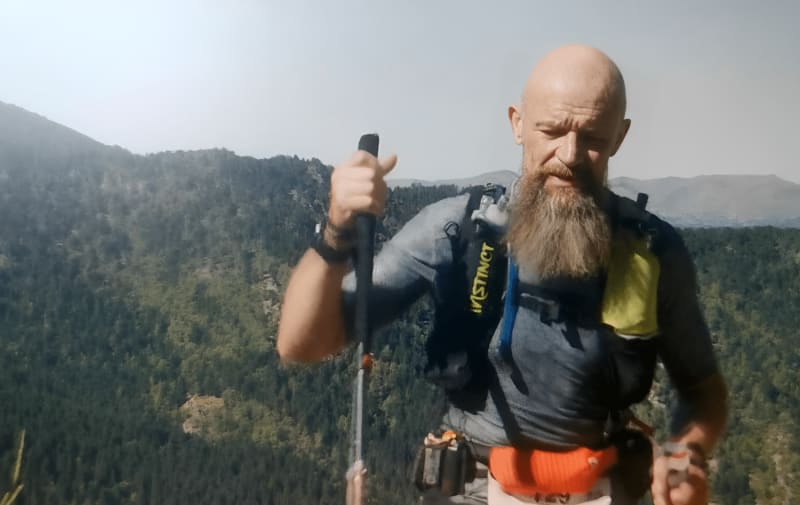
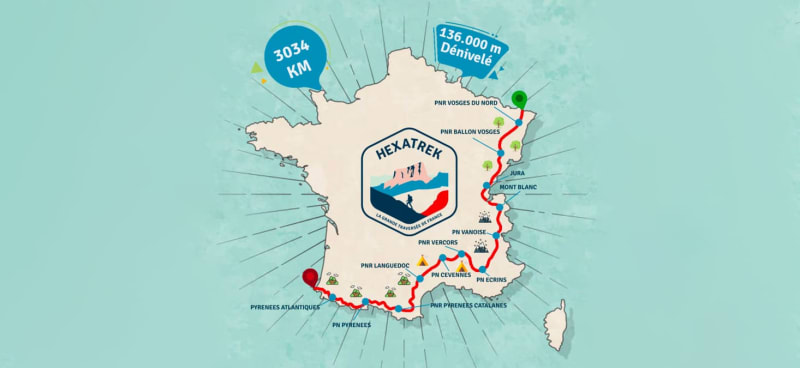
Last year, after my there-and-back traverse of the Pyrenees (1,700 km and 80,000 metres of elevation gain), I was looking for a new challenge. To mark the organisation’s 60th anniversary and my own 60th birthday, I wanted to do something special. We have a country we don’t necessarily know that well, so I didn’t look abroad. A group came up with HexaTrek, linking 47 long-distance trails and crossing 14 national parks… When I looked into it, I thought, “why not?” It starts in Wissembourg, in Bas-Rhin, and finishes in Hendaye in the Basque Country, passing through all the major French mountain ranges.
How are you feeling with just a few days to go?
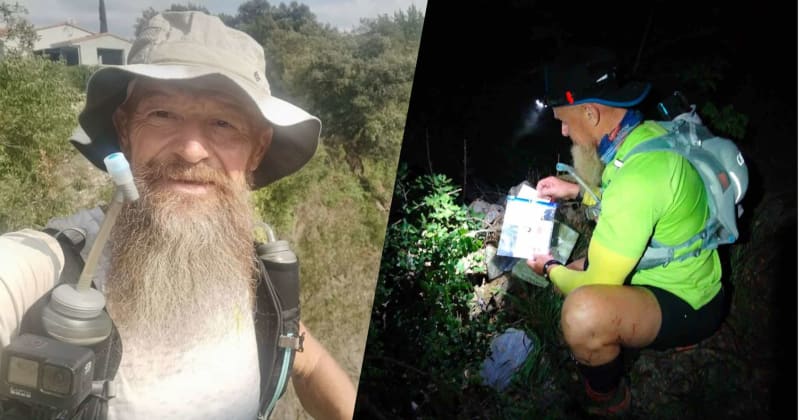
I’m in my own little comfort zone because I know myself and I know how far I can go. I’m setting off alone and unsupported, with a 6-kilogram backpack (excluding water) and the bare minimum of kit. I’ll sleep outdoors most of the time so I don’t eat too far into the trip’s budget. I want as much money as possible to go to the organisation. My days will be long. I’m very excited to get going, although there’s a little apprehension too… Experience has taught me that there are always unexpected problems. That apprehension will make me stay alert and avoid doing anything stupid. I’m not setting off blindly, let’s put it that way. The weather or my body can always throw up surprises. In the Pyrenees in 2022, I ended up with a blister covering the entire sole of my foot. Luckily, I met a Spanish pharmacist who mixed up a healing ointment for me in an hour. It worked, and I was able to get back on the route and finish in 11 days. That’s part of what makes these challenges so beautiful: the people you meet.
Where does the nickname Attila come from?
(laughs) I know Attila brings some pretty harsh images to mind. There’s the saying, “Where Attila goes, the grass never grows back”. That image of the conqueror works for me. You can see the metaphor this way: I see cystic fibrosis as a formidable opponent. It highlights the need to act urgently and raise awareness around me of this invisible disease, which, I should point out, is still fatal, even though medicine has made progress. People with cystic fibrosis are now living longer. I know families whose children are now having children of their own and making plans, something that simply wasn’t possible before…
Read more
✓ Support Thierry Attila’s campaign on the Vaincre la mucoviscidose website
✓ Follow the HexaTrek adventure on Instagram from June 1.