
Exclusive: Elliott Heath unveils the Nike Victory Elite FK
 © NIKE
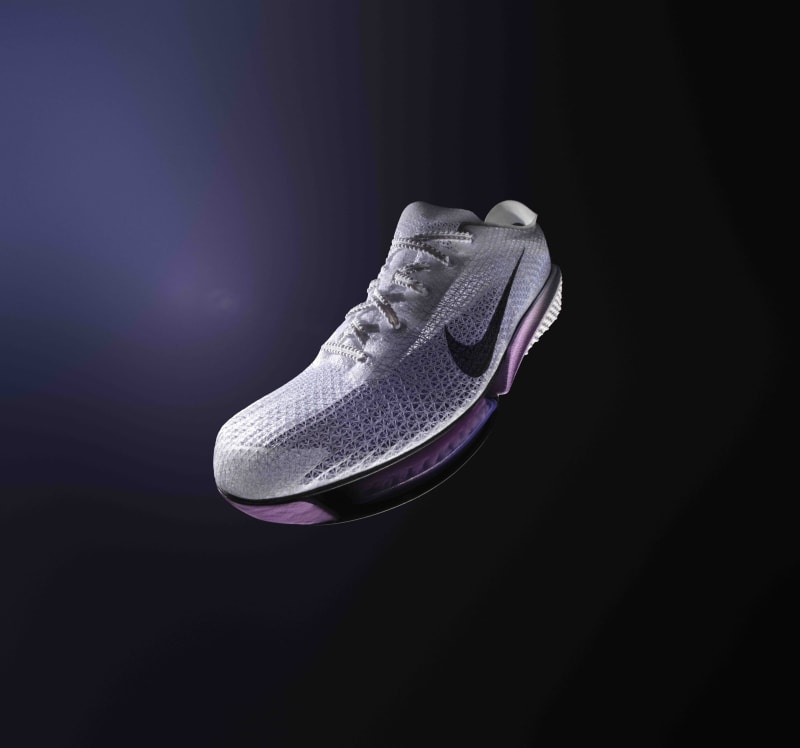
In Paris’s 10th arrondissement, Elliott Heath, a former professional athlete now working as Nike’s running footwear product manager, gave us an in-depth look at the Nike Victory Elite FK. Faith Kipyegon will race in this extraordinary pair on Thursday, June 26, from 8 p.m. at Stade Charléty, chasing a historic target: breaking the symbolic four-minute barrier for the mile.
✓ Granted exclusive access to the showroom for the “Breaking 4” project, our journalist got a close look at these innovative spikes, strikingly light and impossible to miss.
Could you introduce us to the Nike Victory Elite FK? What are its main innovations compared with the Victory 2?
The Victory Elite FK is the latest evolution of the Victory Spike line, but with a completely new approach and an entirely reworked design. The Victory has always been the fastest shoe for the mile, and Faith has worn Victory spikes throughout her career, going back to 2012 and even earlier. But this model is a complete reinvention of the shoe, much like Faith has redefined what is possible over the mile.
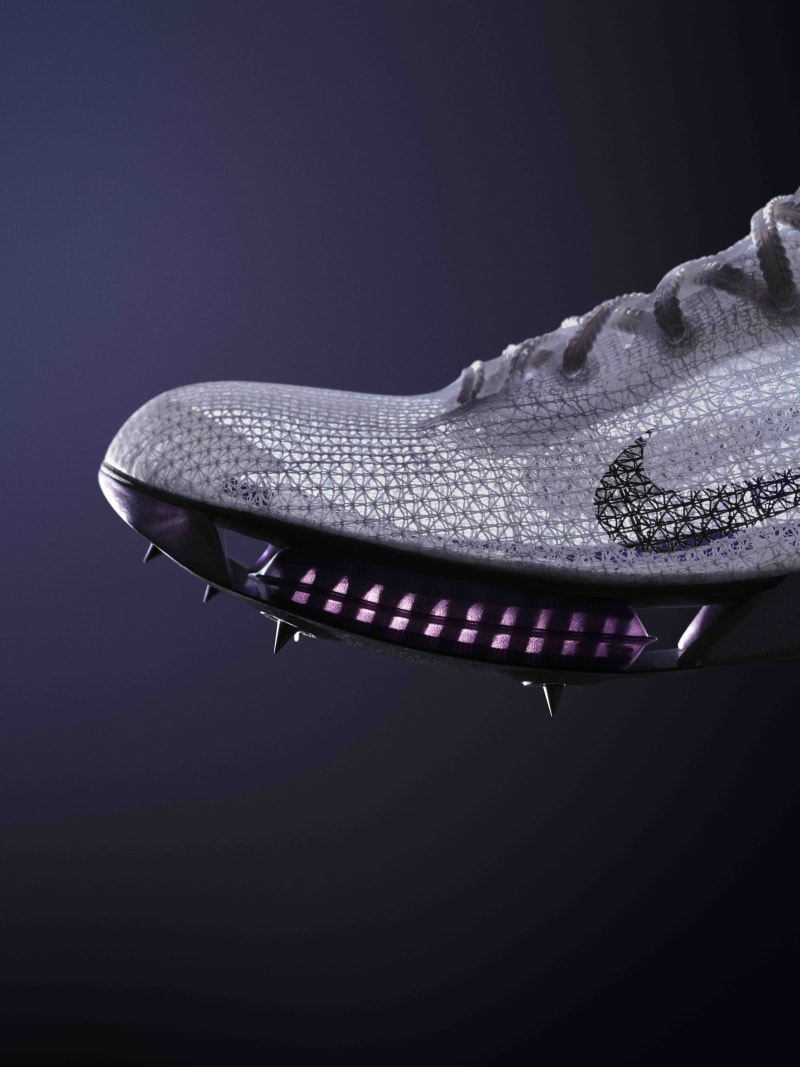
There are a few key differences between the Victory Elite FK and the Victory 2. First, the core of the shoe, or its air unit, is slightly thicker. It is the tallest air unit we have ever put into a pair of spikes, while still staying within World Athletics rules. This thicker air sole is excellent at storing and returning energy, with a very high level of efficiency. If you think about Faith as a runner, she generates a lot of force, and our goal is to return as much of it to her as possible. The air unit stores that energy and sends it back efficiently.
 © NIKE
This model was designed with one very specific goal: helping Faith Kipyegon break four minutes for the mile. How does the shoe redefine the way middle-distance spikes are developed?
I think the goal with this shoe was to create the best possible shoe for Faith. Even without considering the symbolic four-minute mile barrier, it was first and foremost about focusing on Faith as an athlete. We built the shoe around the exact shape of her foot to ensure a perfect fit. Every test, every adjustment to the stiffness, structure and traction was made according to Faith’s precise feedback. I think some of these ideas will influence the spikes of the future, and even training shoes. And I’m sure Faith will be very proud of that.
“ Every test, every adjustment to the stiffness, structure and traction was made according to Faith’s precise feedback. Everything in this shoe is Faith’s work.
How involved was Faith Kipyegon in developing these spikes?
Everything in this shoe is Faith’s work. With the previous version of the Victory, Faith was the athlete most closely involved, but other athletes contributed as well. For this particular shoe, Faith is the only athlete who has been directly involved. Every aspect of the shoe was therefore designed for her.
Which of her comments had the biggest influence on the design? And how were her feel for the shoe, her stride and her running style reflected in the technical choices?
At first, Faith said, “I don’t know. My Victory 2 is perfect. I don’t see how we could make a better shoe.” But after we asked her a few more questions, she said, “Okay, I think there are two things. If we can make the shoe lighter, and if it can offer more propulsion, more bounce, more energy.” In terms of weight, we cut more than 30% from the Victory 2 to create this new pair of spikes. And the air unit, bounce and energy return have all been improved in this model.
 © NIKE
 © NIKE
 © NIKE
 © NIKE
 © NIKE
 © NIKE
 © NIKE
 © NIKE
 © photo credit
 © NIKE
 © NIKE
 © NIKE
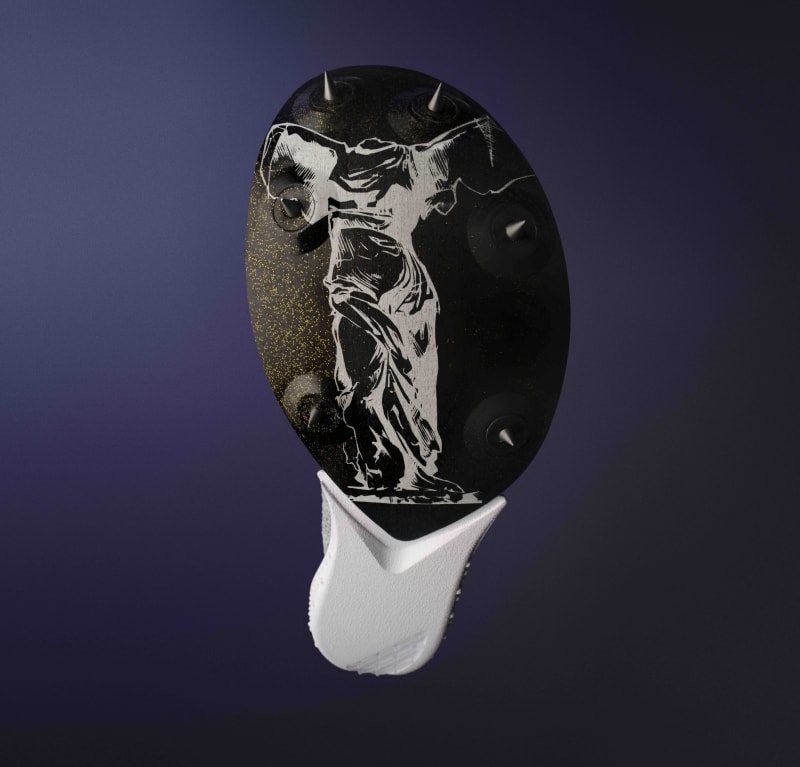
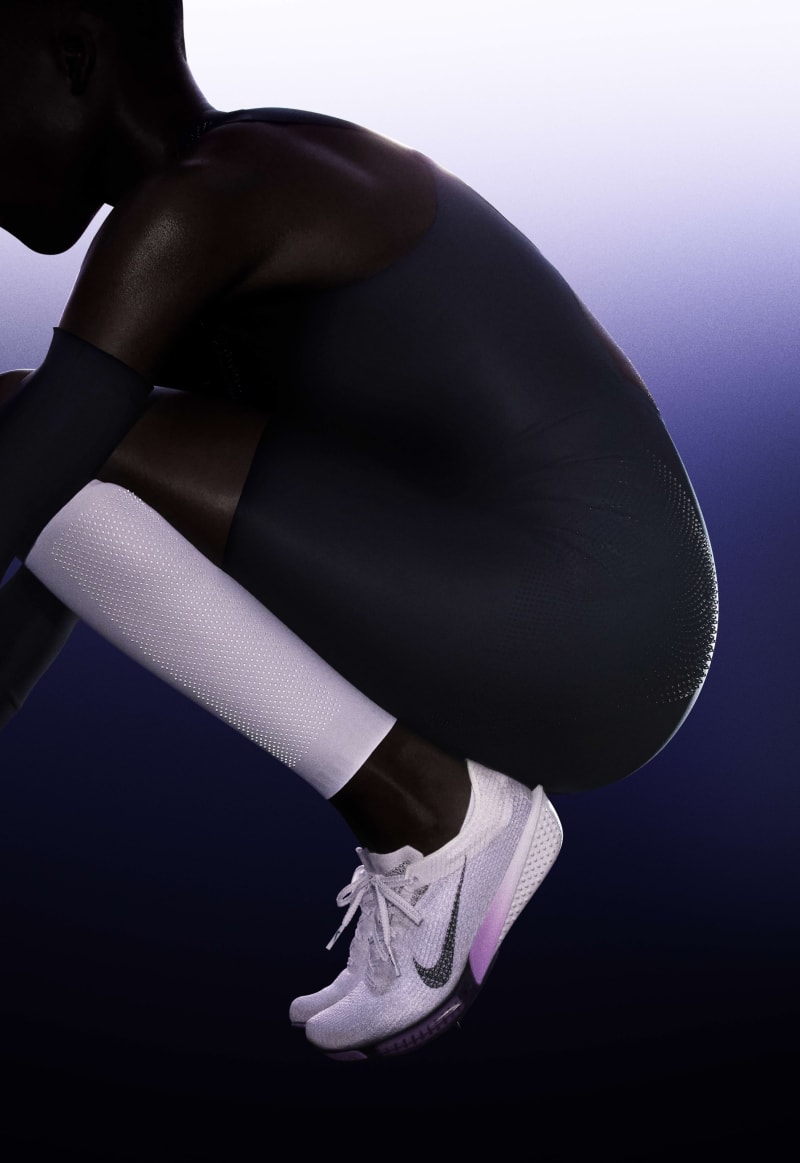
The Victory Elite FK weighs just 85 grams, 25% less than the Victory 2. It features an ultralight carbon-fiber plate and six titanium spikes. How did you cut so much weight while maintaining propulsion, traction and stability?
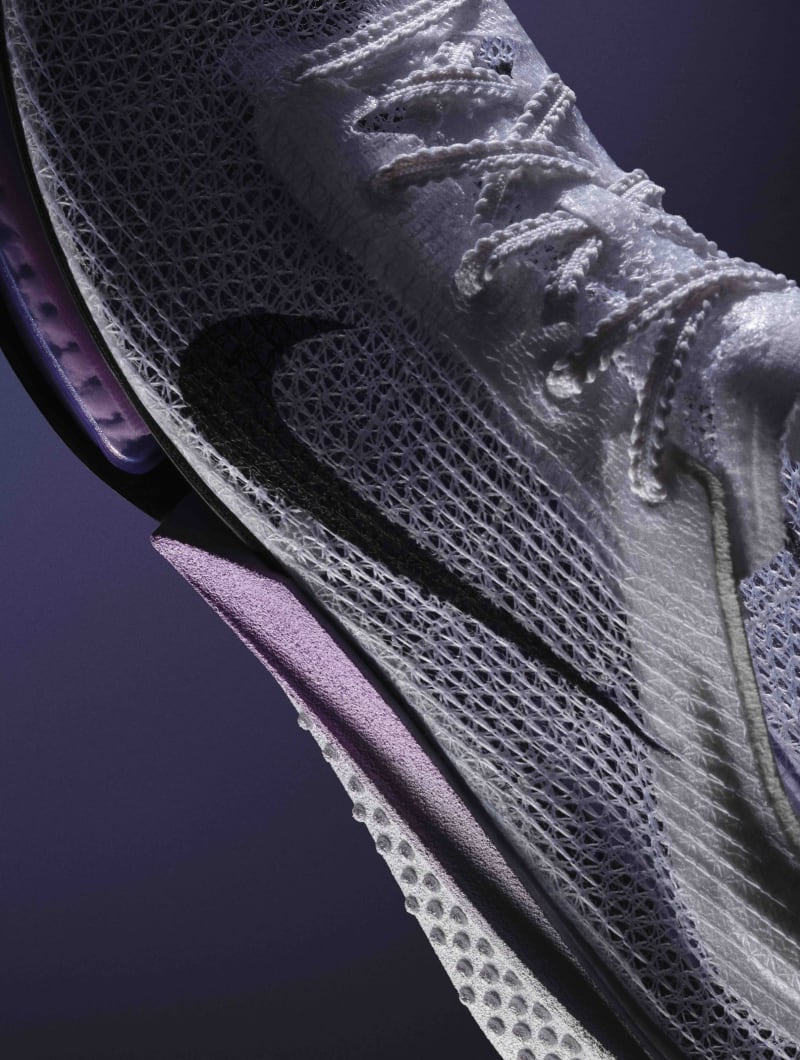
Yes, we had to reduce the weight across several components. A large part of the weight savings came from the upper. As I said, it weighs about as much as three paper clips, so it is incredibly light. Lightening the upper alone saved more than 10 grams.
Then there is the plate, which was another key area for reducing weight. The Victory 2, like most spikes, typically uses an injection-molded plastic plate. This one is made entirely from carbon fiber. That makes it not only stronger and lighter, but also thinner, with less material.
This shoe was developed specifically for the Breaking 4 project. Does this kind of highly targeted development point to a new approach to product creation at Nike?
I don’t think it created a new approach. I would say it brought a lot of energy to an approach Nike has already demonstrated in the past. Whether it was the Breaking 2 project with Eliud Kipchoge or other initiatives, whenever an athlete is pursuing a major goal, I’m very proud to be part of a team and a company that supports them in that pursuit.
There are obviously elements specific to Faith and to the fact that she is the only athlete taking part in this project. But more broadly, I hope we will continue doing this kind of work with other athletes, in ways that are right for them. We will support them in a way that makes sense for them. This particular project is entirely focused on Faith, but supporting athletes as they pursue hugely ambitious goals is the best model for sport.
I think this is the lightest shoe we have ever made. But it is also the most powerful shoe we have ever created.
Can the Nike Victory Elite FK be considered the most advanced pair of middle-distance spikes ever designed?
Yes, I think so. It is the lightest shoe we have ever made. But it is also the most powerful shoe we have ever created. It was designed for the most powerful athlete. I don’t think there has ever been a pair of spikes that draws so heavily on the past while introducing so many new ideas and innovations at the same time.
What are the technical reasons for using six spikes instead of four, and what are the benefits?
That was Faith’s request. She preferred having six. The four spikes also provide traction through other parts of the plate. With six spikes, because titanium is so light, we can use it in more locations while removing traction from other areas. Traction therefore does not depend solely on the spikes, but also on what we call secondary traction. With the Nike Victory Elite FK, there is no secondary traction, only the spikes. The spikes are a little smaller: we have six small spikes instead of four larger ones with secondary traction. In fact, we started with fewer. Then, depending on the athlete’s different training environments and whether the track was wet or dry, we wanted to make sure there was enough grip.
Will this model remain exclusive to Faith Kipyegon?
We’ll see. For now, the shoe has not been approved. It meets the legal requirements, so we can submit it for approval as part of future development. But we are already thinking about how the lessons from this shoe could be incorporated into the development of the next generation of spikes, perhaps next year or for the 2028 Los Angeles Olympics.
Are you considering adapting it for other elite athletes, or even developing a more widely available version inspired by the Victory Elite FK?
I think there will be another version. Again, we’ll see which insights from working with Faith are worth keeping, or how these changes could be adapted for other specific athletes. But in this case, the work was more than enough to focus entirely on Faith.
Elliott Heath will see you tomorrow evening from 6 p.m. at Stade Charléty for a major event in world athletics. The Kenyan, a three-time Olympic 1,500m champion, will take to the blue Paris track wearing the Victory Elite FK, a pair whose name refers to the expression “ fastest known”, but above all to her own name, which enters the history books a little further with every achievement: Faith Kipyegon.