
Louis Derrien’s Mission: Running for Mental Health
 © Pierre Papet
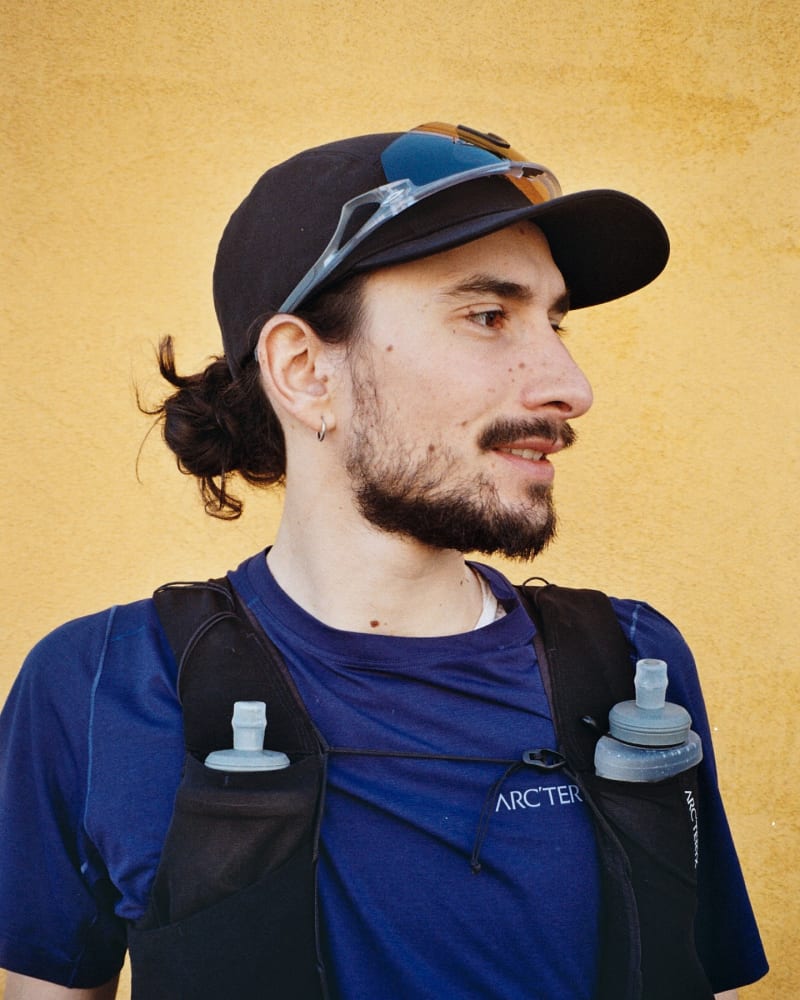
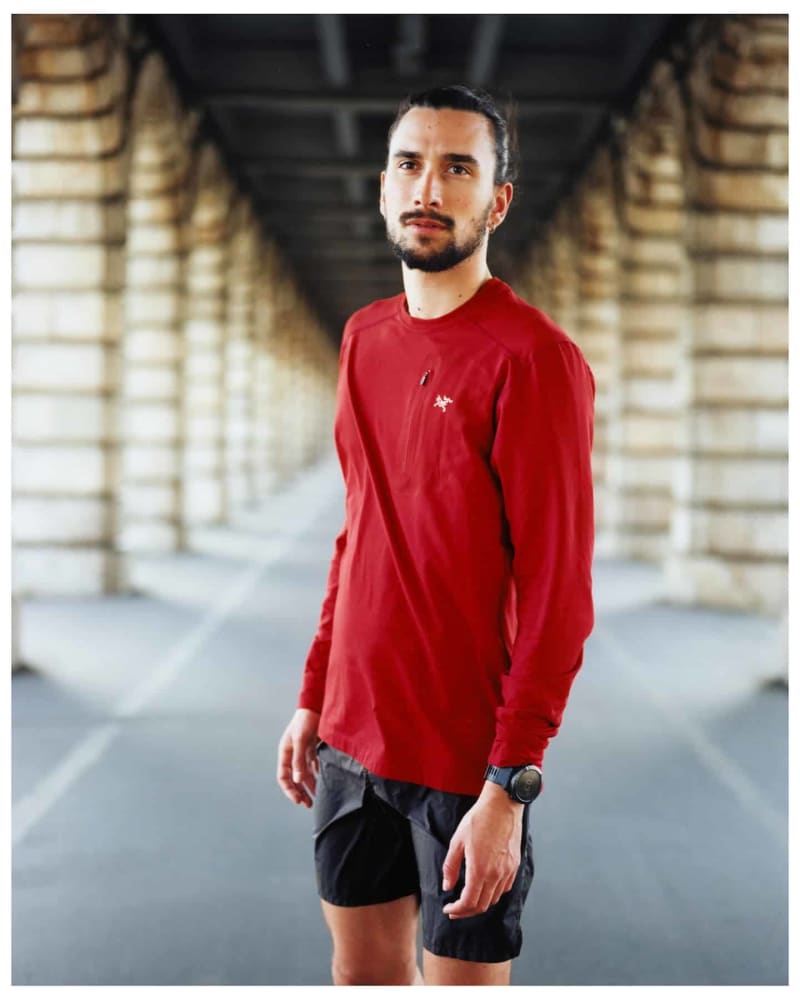
The start is fast approaching. In less than a month, Louis will embark on an extraordinary journey through the region where he grew up and across the mountains of France. 130 marathons in 150 days: an outrageous challenge he has spent months preparing for, driven by a determination born from tragedy. On June 15, he will attempt the impossible in tribute to his brother Simon, who lived with mental health issues and died last year.
Courir pour Toi, a promise made good
The project was born last year, shortly before Simon died, and is above all a way of keeping his memory alive. “Simon was an incredible person who gave so much and had been living with this illness for several years without ever being defined by it,” Louis begins. Simon lived a normal life despite an illness that sometimes took up too much space. “Most of the time, when it left him alone, he was able to be completely free of it. During crisis phases, he managed to cope by relying on those close to him and on the resources he had sought out, but it wasn’t enough. ”
For Louis, running became an outlet, a way to keep moving forward. One step at a time. “Those were moments when I could breathe and take the time to reflect. It was out of love for his brother that this amateur runner took on an extraordinary challenge. “I promised him I would do something impossible to show him how much I loved him. The goal was to show him that everyone was inspired by his fight. At least, I was. ” Louis still hoped, at that point, to see him get better. But Simon died before he could keep that promise. And it was out of that tragedy that what came next took shape. “I couldn’t accept that people like my brother could die in indifference, or that society could accept this kind of situation. I wanted to continue his fight. I decided to keep my promise. We used to find running boring. Today, I find it calming.”
Louis never felt alone in the wake of the loss. Because although his story is personal, it resonates with everyone. “At some point in our lives, we all go through the ordeal of losing someone we love. I wanted to anchor my brother’s death deeply in my life in a positive way. Rather than choosing anger, I tried to find a way to move a cause forward, so that other people living with what Simon went through could benefit from the help he inspired. I needed to find meaning in this completely paradoxical and tragic situation. ” The project became his way of facing grief, creating meaning and transforming pain. “When you go through a tragedy, there are three options. You either collapse. It becomes your reason for living and an excuse for everything. Or you overcome it. That’s the path I chose: turning it into something stronger.” Through this challenge, Louis keeps his brother alive in people’s memories. “It’s my way of cheating death, because Simon exists whenever I talk about him. More and more people are hearing his story. In the end, he is less dead than he was on the day he died.”
 © Agathe Bondil
 © Agathe Bondil
 © Agathe Bondil
 © Louis Lepron
A family powered by sport
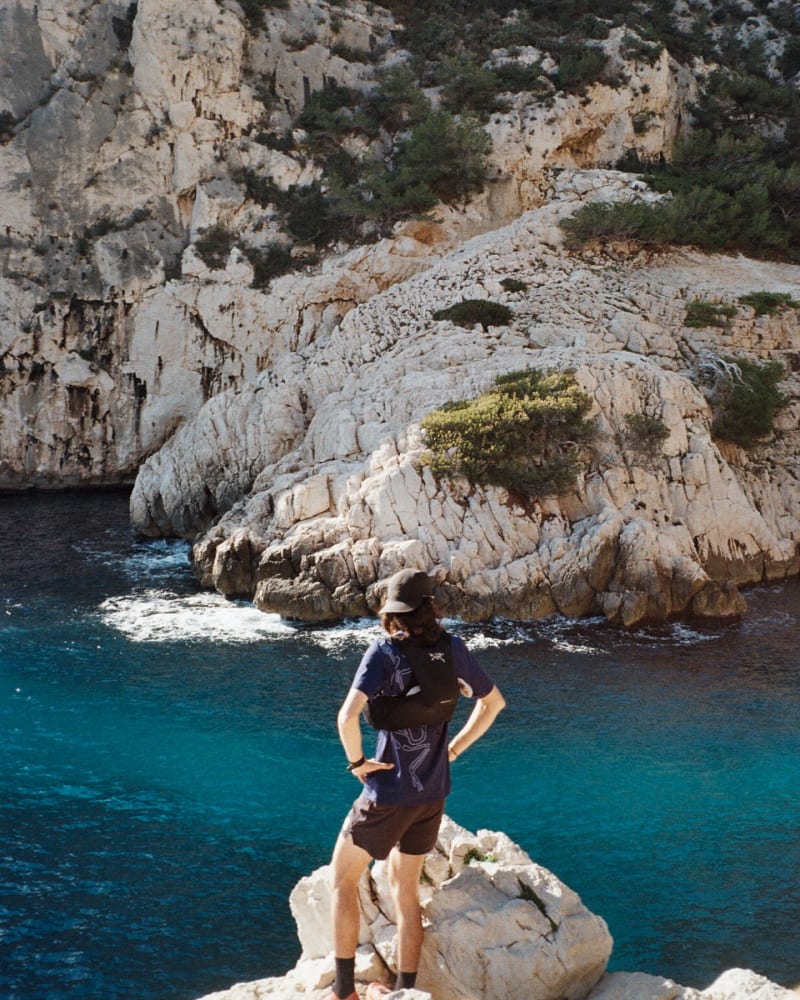
Sport was a driving force in the family, and this athletic adventure is bringing everyone together again. “We’ve always done a lot of sport, to share moments together and create memories. We spent time outdoors, hiking, cycling and climbing ,” Louis says. Cycling is his comfort zone. Running demands the opposite: self-denial, hard work, the real thing. “It seemed unbelievable to me. But at that point, I needed to work hard, to be unable to lie to myself or cut corners. On a bike, once you reach the top of a climb, you can sometimes coast. You get moments of respite, whereas running doesn’t give you that.” Today, Louis doesn’t know where Simon is, but that hardly matters. What counts, is that the love he has for him and the memory he carries of him “live on incredibly strongly”. Louis draws strength from them: “I’m going to keep making him shine, as he did when he was alive, and keep him alive in the most positive way possible among the living.”
“What happened to Simon is serious, because we let people die when we could save them. It isn’t normal for someone with a diagnosis not to receive appropriate follow-up because, as medical professionals, we consider that person not to be a danger to themselves. Simon was bright, well integrated, and had everything he needed to pull through, but he was swept away because he wasn’t given enough support to fight.
Running to break the silence around mental health
With a committed team behind him, Louis Derrien is preparing to run across France. The goal: break the taboos surrounding mental health conditions, open up the conversation and raise awareness. Every stride carries a message: mental health concerns everyone. His challenge is also a way to raise €100,000 for La Maison Perchée, a community for young adults living with mental health conditions, which he discovered through his sister as the project was taking shape. “When Pauline and I came up with the idea, we wanted to have a very concrete social impact. ” The fundraising target is no small ambition. “If the amount seems high, it’s because everyone can contribute to the project in their own way. If people get involved, they will directly help people affected by mental health conditions receive better care. ”
But beyond the money, it is the message this project will send that matters. First, a message of love: “I’m ready to do something impossible for someone I love and who inspires me. I think that’s true for a lot of people. ” Then a more universal, political one: “When there is popular mobilisation, when people are given a voice in the media, when society wakes up, politicians respond accordingly. That happened with AIDS and ACT UP. This project can genuinely reach the wider public and create an emotional response.” Louis wants to expose the failings of the system, from psychiatric follow-up to the resources made available. He is becoming the voice of everyone left behind by the healthcare system. “What happened to Simon is serious, because we let people die when we could save them. ” A quarterly appointment with a psychiatrist is rarely enough to truly support a patient in need. “It isn’t normal for someone with a diagnosis not to receive appropriate follow-up because, as medical professionals, we consider that person not to be a danger to themselves. ” Simon has become the symbol of the cause Louis is determined to champion: “Simon was bright, well integrated, and had everything he needed to pull through, but he was swept away because he wasn’t given enough support to fight.”
Ready to do the unthinkable
Louis has now spent a year keeping his goal firmly in sight. His demanding, structured training programme is preparing him from every angle for the challenge ahead. “The idea is to have a complete programme alternating between running, cycling and strength training. To improve, I do a few speed sessions, but mainly easy aerobic running, to get my body used to running long distances regularly. ” As his coach Nicolas told him, “the most important thing will be managing recovery properly.”
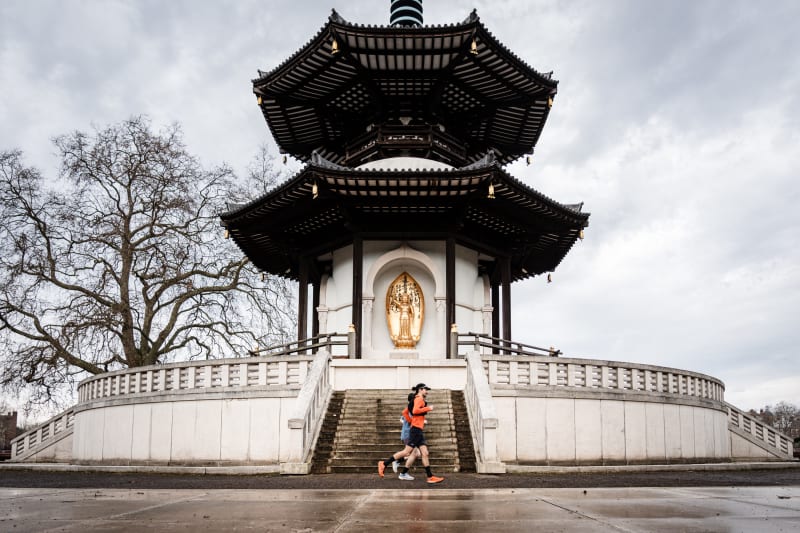
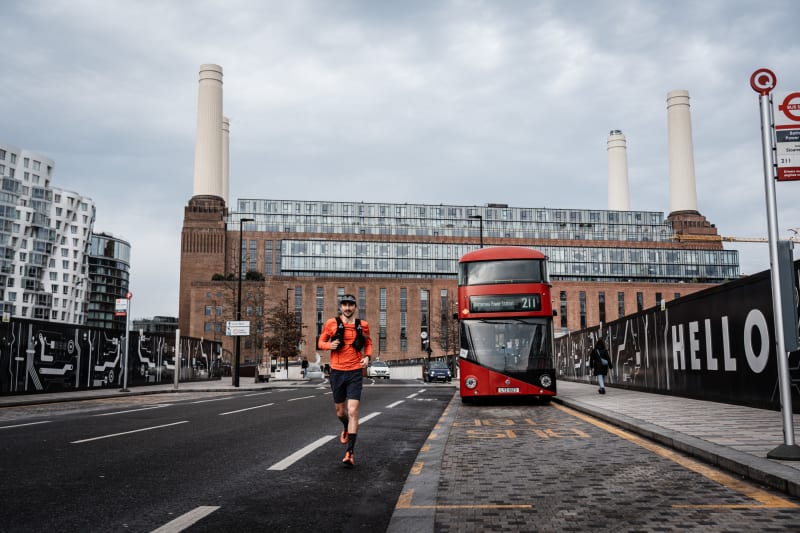
To test his limits, the Lyon native took on a major challenge less than a month ago: Paris–London under his own steam. A kind of “final dress rehearsal, during which he learned not to be too ambitious with the distances planned.” He realised that “planning 60-kilometre stages for the first few days just isn’t viable.” He adds: “It helped me understand myself better and experiment with this kind of effort. ” Before he became this comfortable in his own shoes, the Burgundy native at heart started the Paris Marathon in 2023 alongside Agathe, his partner, who had suggested they sign up. A year later, he returned to the start line alone. “There was a lot of work in between. Still, I wouldn’t trade my 5:21 marathon for my 2:59 personal best in a million years, because I ran it with Agathe, with Simon on the side of the road… We had built that project together.” Far from being focused on the clock, Louis ran to experience it fully. He took on that second marathon to embrace a challenge, set himself goals and enjoy the day. “I ran at a pace I had almost never held before. Seeing how far I’d come was crazy. The endurance base had prepared me for race day. And even though it wasn’t a time trial, I got goosebumps, especially when I thought about Simon.”
A route steeped in meaning
“I’m going to pass through places that mean a lot to my family and me,” Louis explains when describing the planned route. “I’ll be running a lot in the mountains, starting from my parents’ home near Lyon, heading into the Alps and climbing Mont Blanc with my older brother Mathieu, because it’s something we’ve had in mind for a while. Then I’ll go through the Verdon, where Simon and I loved climbing in recent years.” He and Mathieu have already shared an intense adventure with La Trace des Grands, where each played an essential role for the other. The journey will continue through “the Pyrenees, part of Brittany and the Vosges, before heading to Burgundy, where we spent every childhood holiday at our grandparents’ house, and finishing in Francheville, another town near my parents’ home.” For more than a year, Louis has been preparing for this 6,000-kilometre loop, which could easily be described as a trail. “I’ve made a lot of sacrifices, and I’ll finally be able to start on June 15.” To map out the route, he mainly uses Strava, a straightforward app that supports him by making the project visible.
 © Pierre Papet
 © Pierre Papet
 © Pierre Papet
Behind the scenes of a collective feat
To bring this colossal adventure to life, Louis is surrounded by a strong team. His sister Pauline immediately saw herself in the project. Handling logistics and communications, she has been involved since its earliest stages. “Making it possible also meant finding places to sleep, not having to carry the mental load of working out what we would eat that evening, managing media relations… It’s a huge amount of work that I couldn’t do alone. Without her, the risk of failure would be much higher. ”
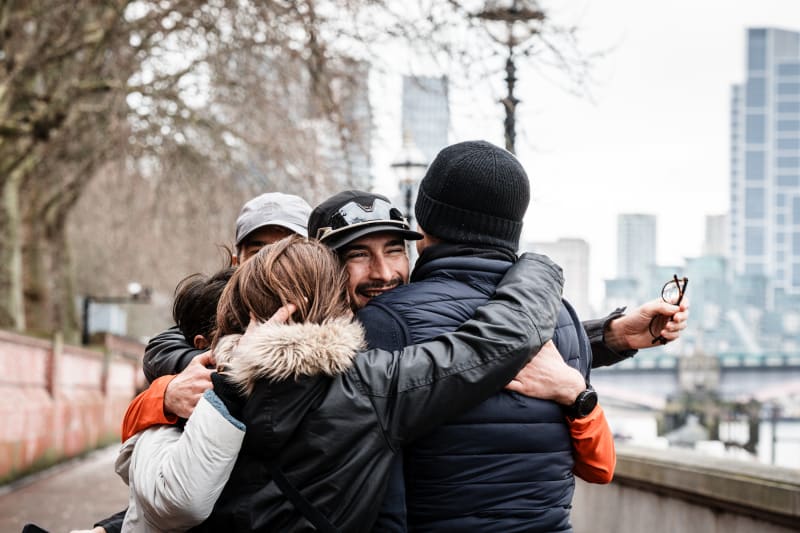
Louis knows it: just weeks before the start, he owes his peace of mind to the people he has brought around him. Nicolas, his running coach, was immediately enthusiastic about the athletic challenge. “He thought it was possible; we just had to put certain things in place to make it happen. ” It was the first milestone that made the dream feel real. Jonathan, whom he met during his Paris–London challenge, has since become his primary doctor. “ He was on duty, but took his lunch break to run a few kilometres with me. We hit it off immediately. I told him I had huge blisters, and he looked after me. Now he helps me a lot day to day.” Around fifteen people will support him throughout the adventure: Léa, his nutritionist; his osteopath Pierre, who “often works miracles when there’s tension”; Camille, his mental performance coach; and many others… “We’ve put plenty of tools in place to help us find resources when things get tough. We’ve already had the chance to test them.”
Finally, a film crew will follow the expedition to make a documentary. Laurine is responsible for coordinating their presence in the field. “We have big ambitions for this film. We’d love to see it screened in cinemas,” says the future adventurer. He knows that reaching the finish will also depend on collective support. “It’s a shared project, belonging to the people who love Simon, to those who care about this cause and want to move things forward.” And he concludes, with a calm mind: “What seemed impossible to me now feels entirely achievable.”
It’s a shared project, belonging to the people who love Simon, to those who care about this cause and want to move things forward.
What more could we wish for this inspiring athlete and campaigner than to see him complete this unique adventure? Follow him day by day on social media, and don’t miss the exceptional documentary that will tell the story of this human journey, where the impossible becomes real.