
Mehdi Frère after adidas 10K Paris win: “Thank you to those who stood by me and supported me. To the others, I forgive you”

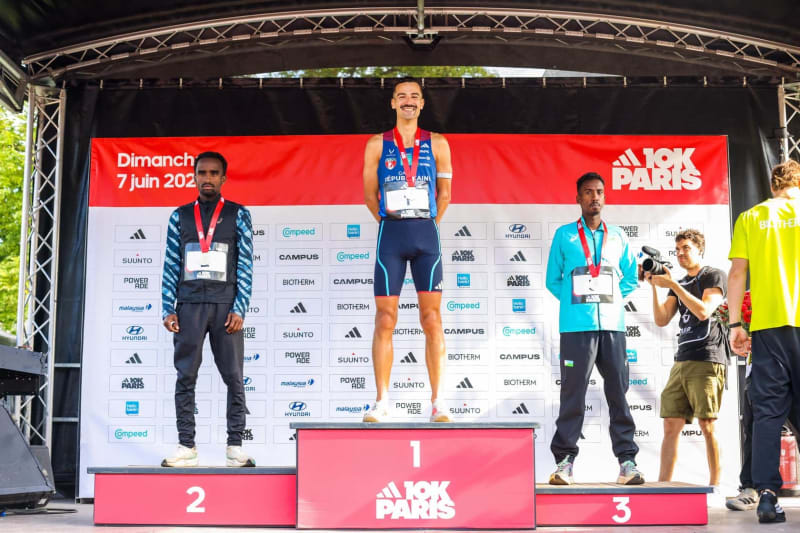
A winning return for Mehdi Frère. Suspended for two years after three whereabouts failures, the Frenchman won the adidas 10K Paris solo in 28:11. A statement performance from the 29-year-old marathoner, who has finally closed the chapter on two years away from competition. Now he has set his sights on the Los Angeles 2028 Olympic Games. Interview.
Mehdi, a superb win on Sunday. How did it feel to return to the streets of Paris?
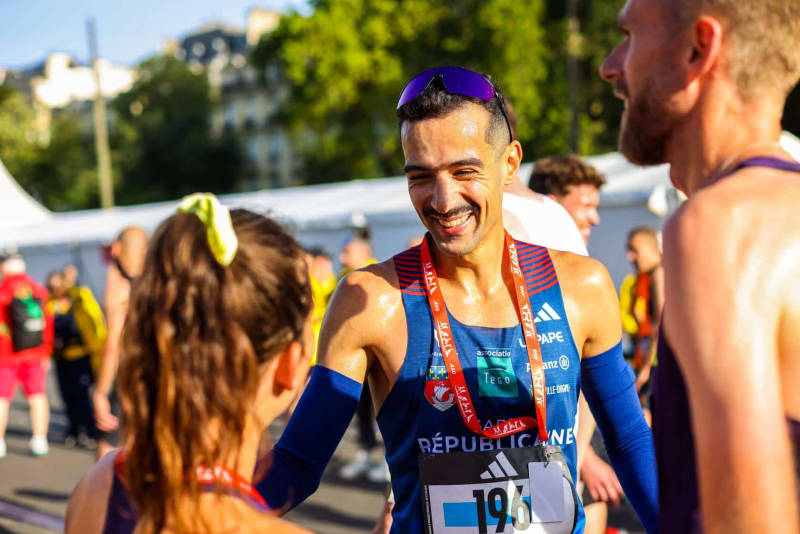
It was obviously a special moment, and therefore an emotional one, but I experienced it in the best possible way. Everything came together. We had a postcard setting, beautiful weather, a stunning sunrise over the Trocadéro and no wind. It was cool, but just the right kind of cool. You couldn’t have asked for better. And then, most importantly, the crowd was incredibly warm. The racing conditions were perfect, and I felt at home on a course I already knew because I had run this race several times before. Honestly, I think I imagined this race a hundred times, and in the end it was a thousand times better on race day.
Did you feel good too?
Yes, absolutely. I wanted to push and see what I had in the tank because it had been a while since I’d gone head-to-head with other runners. I’ve done a lot of running behind a bike over the past few years, so this time I wanted to test myself and play around with the course, which was tricky because of all the changes of pace, but do it on my own, without the bike and relying solely on my own sensations.
 © ASO
© ASO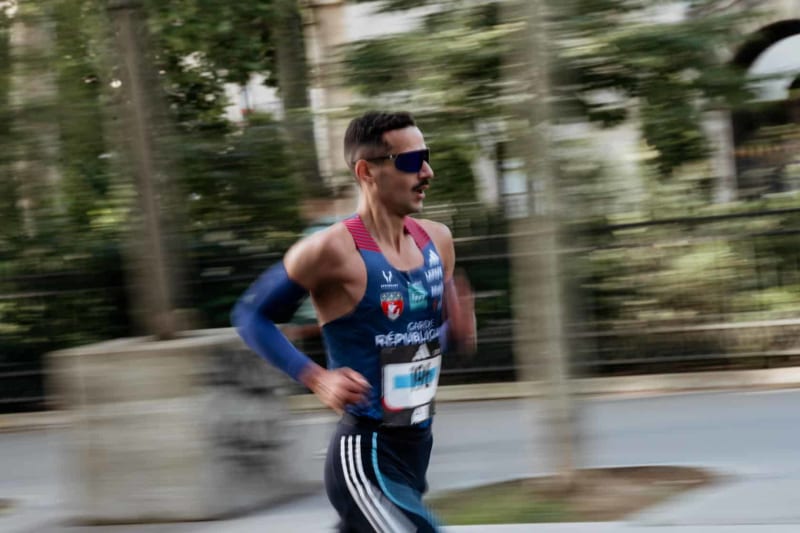 © ASO
© ASO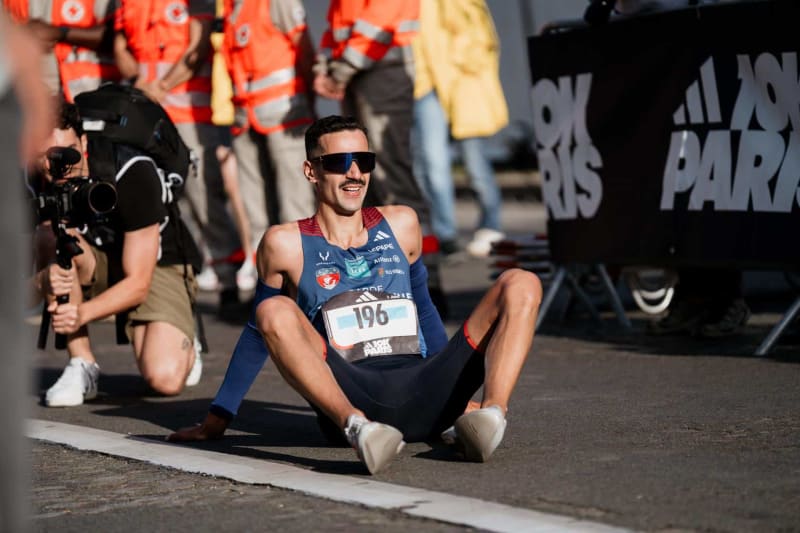 © ASO
© ASOThis race was packed with emotion and symbolism. Is this the start of a new chapter in your career, or would you describe it differently?
That’s a good question. Let’s say it’s almost like a second career starting because my status is different now. I’m something of a controversial athlete, with the label of someone who has been suspended, and I’ll have to live with that. I made mistakes that I have to acknowledge. I’ll inevitably have to deal with doubts and questions, but that’s okay. Athletics is a sport I do for myself, and running is an activity I pursue for myself. I can look myself in the mirror, and I’ll move forward with that. Despite everything, the crowd’s response was hugely positive too. We’re going to try to make this second part of my career different, and better. I’m better supported now than I was before, and more professional. Better late than never, as they say. At almost 30, I want to say that the same mistakes won’t happen again, and we’ll try to move forward.
What will you focus on as you embark on this new phase of your career?
First, I’ve learned that you can’t build a career without a solid support team. You can’t do everything on your own. I tried, and it didn’t work, so now my partner handles all the logistics, anti-doping whereabouts and administration, race management, and she also paces me. From a sporting point of view, my career will once again focus on the marathon because I think there are still some great things to achieve. We were left wanting more in 2024, and there are some big goals to pursue over the marathon distance. I don’t think I’m finished yet, and I still want it.
It was a colossal professional mistake not to take my whereabouts obligations seriously. I can only blame myself.
The marathon keeps evolving. Do the sessions you completed over these two years suggest that you’ve maintained the level needed to dream big over the distance?
Yes, we did a cycle that looked a lot like marathon training, with specific sessions we could use as benchmarks, and we believe my level is better than it was before. I think the standard has risen, but I’ve evolved with it. Now I have to live up to it because athletes are coming through, and new competitors have entered the picture. Emmanuel Roudolff-Levisse ran a magnificent 2:05 in Paris and will have to be reckoned with. Valentin Gondouin and Félix Bour are coming through too, so I imagine we’ll soon need to run 2:04 or even 2:03 to stay at the top of French distance running. That’s a level I hope to reach fairly quickly.
 © ASO
© ASOYou hope to reach that level fairly quickly. Are the signs encouraging?
I can feel great, but training is still only training. Competition is the real test. The trial sessions have been very reassuring in that respect. I think I can say that I’ve never been this good, despite the difficulties and the suspension. I also feel that I’m reaching maturity over this kind of distance. I’ve made progress, so we can hope that I’ll clock very encouraging times from my first outings over distances close to the marathon.
The decision to return to running was made around March or April 2025. It took me more than six months to get back to it, which isn’t surprising. It was a shock.
You’re back in competition, with some people still suspicious of you. How are you dealing with that?
I’m the first and only person responsible. I had whereabouts failures, not no-shows. That needs to be made clear. I committed them, so I can’t blame the anti-doping authorities for choosing the sanction they imposed. Of course, I’m not objective if I think the sanction was harsh. It’s true that athletes in similar cases have probably received six months less, or perhaps a year less. They decided that my offence was serious given my experience and level of competition. They surely had good reasons for thinking that and imposing the sanction, and I respect it.
We always tend to tell ourselves that something is unfair. I prepared for the Paris Olympic Games, but ultimately I’m solely responsible for the situation I found myself in. I’ll have to own it and move forward. I have no resentment towards either the anti-doping authorities or members of the public who may be suspicious of me. As an elite athlete, we’re responsible for the credibility of our sport. It was a colossal professional mistake not to take my whereabouts obligations seriously. I can only blame myself. I don’t hold it against people for having suspicions or making negative comments on social media from time to time.
Your close circle was invaluable during those two years. Was there ever a point when you wanted to give it all up?
The question came up mainly at the start of the suspension. The Olympic Games were approaching, and I was living in a city hosting events. I’d leave the house and see the Paris 2024 Olympic Games everywhere. I’d walk down the street and see the banners, so it was obviously an extremely difficult time. I withdrew from the sport and distanced myself from all of it. I stopped running for a while, and I did wonder whether I should start again. My support network was hugely present for me, but they didn’t want to push me either. It had to be my decision. And I have another life too, as a gendarme.
My partner assured me that she would support whatever I wanted to do. She said: “If you just want to focus on being a gendarme and devote yourself to that, I’ll support you and we’ll do it. And if you want to return to sport, I’ll help you as best I can.” I had an incredibly supportive circle around me. They gave me time to make the decision, and we let the pain gradually fade. I decided to return to running around March or April 2025. It took me more than six months to get back to it, which isn’t surprising. It was a shock.
It must have been difficult to start training again while knowing that competition was still a long way off?
I learned a lot because I had time to listen to a lot of podcasts. When you run alone, you put on music, and eventually you get tired of listening to music, so you switch to podcasts to pass the time. There was no one to talk to, apart from my partner, who accompanied me by bike for some sessions. I learned to cope with the solitude of a distance runner for a year and a half, because six months were spent away from training. It was a particularly long year and a half, but in the end it was an experience I needed to have: spending a lot of time talking to myself, refocusing on my surroundings, and learning to run alone. It was an interesting experience, and it probably did me good, but I’m happy to leave it behind now.
I might have gone to the 2021 Games, and in the end that wasn’t my fault. I might have gone in 2024, but that was my fault. So now, in 2028, I have to go. I really have to go.
Have you stayed with the same club?
My licence was frozen during my suspension. That restriction ended on June 4, and I immediately re-signed with my club, my former club Pays de Fontainebleau Athlé, which was a huge source of support and with whom I had remained in close contact. It felt completely natural to return to them and continue the journey where it had stopped.
A new marathon adventure is beginning for you. How have you seen the event evolve over these two years, particularly with Sabastian Sawe and Yomif Kejelcha breaking two hours in London last April?
As a fan of the distance before becoming a competitor, I watched it with stars in my eyes. We knew the two-hour barrier would fall one day. Sadly, it was supposed to be the late Kelvin Kiptum who would be the first to break it. But seeing two athletes break that mythical barrier in the same race in London, and then seeing the third-place finisher also break the world record, despite only finishing third, was simply fantastic. It’s incredible to see our sport continuing to evolve, with further technological innovations. It does make your head spin a little to see the heights these times are taking us to, but I find it exciting. Now the Europeans have to keep pace, because the Africans have moved even further into the stratosphere. We’ll have to stay in the race.
From a national perspective, I’ve also watched with admiration as the French have closed in on the time I ran in 2023 (2:05:43 in Valencia) and Morhad Amdouni’s time (French record: 2:03:47 in Seville in 2024). Emmanuel Roudolff-Levisse has shown that he can probably run 2:04, if not faster, fairly soon. I love watching him. I was one of his first fans after seeing the performance he produced on a course as difficult as Paris. I’m excited to see this generation coming through for 2028, and I hope I’ll be a good rival for them and live up to the level they’ve reached.
Now that I’ve shown I can still put one foot in front of the other, perhaps we’ll be able to contact some races and possibly get invited to marathons in the autumn.”
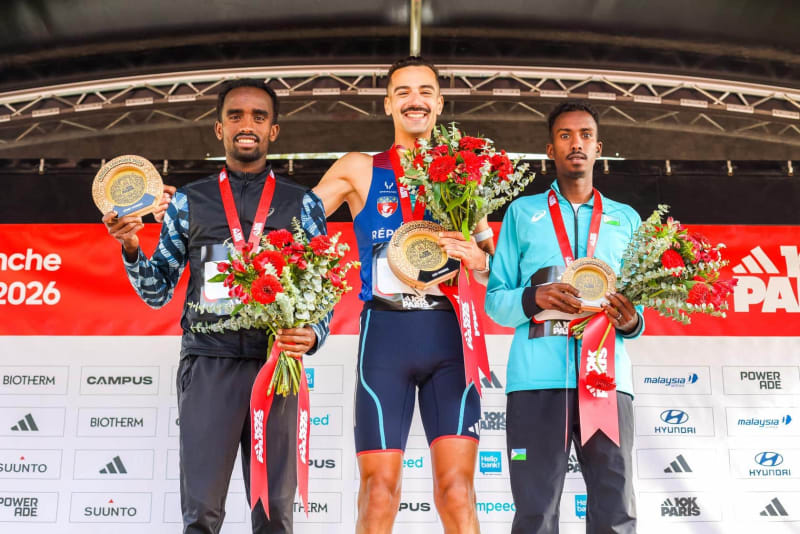 © ASO
© ASOThe 2028 Los Angeles Olympic Games are your main goal
Of course. I might have gone to the 2021 Games, and in the end that wasn’t my fault. I might have gone in 2024, but that was my fault. So now, in 2028, I have to go. I really have to go. The years are passing, and I think 2028 is the right time. By the following Games I’ll be 36, and I think at some point my partner will tell me she’s had enough of accompanying me by bike during training sessions and that we have other things to do. So the question of retirement will come up fairly soon after the next Olympics.
After this impressive return in Paris, what’s next?
Next weekend I’m running the Langueux 10K. In Paris I wasn’t far off breaking 28 minutes, and it came down to the climb up the Champs-Élysées. We’ll try to do it in Langueux, hoping the race suits me. Then there’s the aim of running a marathon in the autumn. But while I was suspended, I wasn’t allowed to have a proper manager or representatives to get me into races. Negotiations with race organisers will begin. I was also waiting to have a performance to put forward to my manager, so he could contact organisers. Now that I’ve shown I can still put one foot in front of the other, perhaps we’ll be able to contact some races and possibly get invited to marathons in the autumn. There are some great marathons, and summer is the track runners’ season. It’s less my thing. So will we race on the track and try to qualify for the elite field? Maybe, maybe not. It’s less of a priority. The idea is really Langueux, and then enjoying the summer, with a possible marathon build-up afterwards.
Mehdi, to wrap up, what message would you like to send everyone after your winning return?
I want to send a message, and it’s going to be very, very simple: “Thank you to those who stood by me and supported me. To the others, I forgive you.” To have made my return on Sunday, I feel like I’m on cloud nine. It’s not as if I’m new to athletics, but it’s the first time I’ve come back from a suspension. I didn’t expect it to be such a pleasant moment. Once again, I was pleasantly surprised by the crowd’s response and by how the race unfolded. Moments of happiness in athletics are rare. I’m simply going to embrace this one and enjoy it for as long as possible. It feels so good. It would have been hard to imagine a better return.