
“Okay, athletes”: behind the scenes with Baptiste Cartieaux
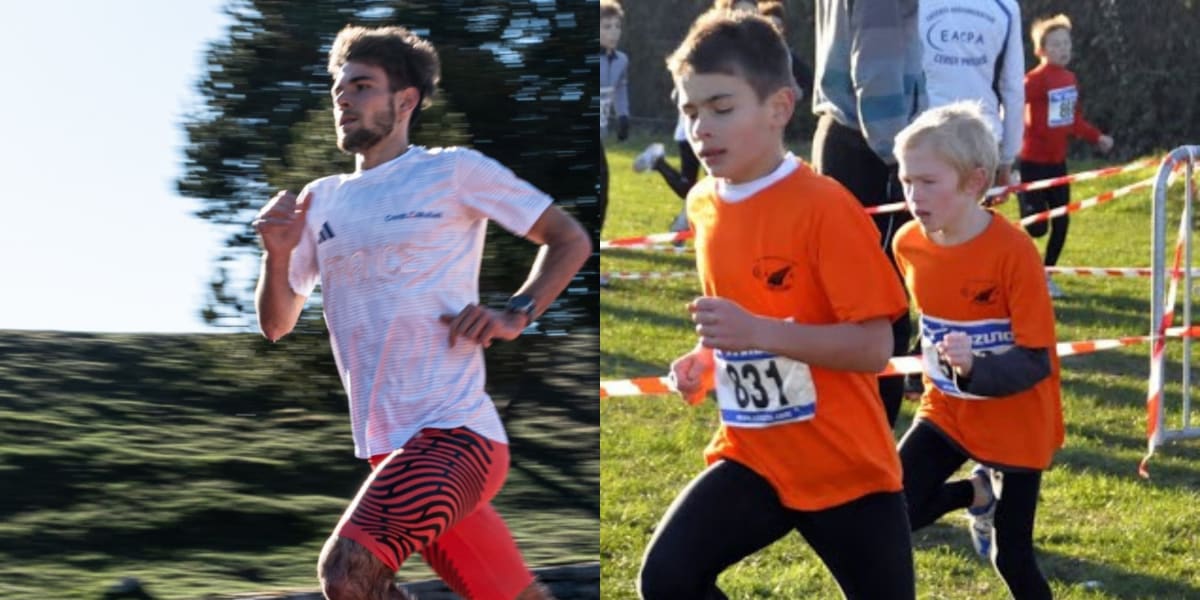
From his early days split between mountain biking and athletics, Baptiste Cartieaux stood out from his peers. In 2019, he and his training partner and cameraman Lucas Vivin began sharing the behind-the-scenes reality of their athletics competitions on the Syblo YouTube channel. Their content quickly attracted viewers across generations, encouraging them to keep going. Today, Baptiste wears many hats: a multi-medallist on the international U23 scene, a versatile athlete and a regular competitor on the French Duathlon Grand Prix, where he recently made the podium.
✓ An interview with @Baptiste.Cartieaux, who tells us about his journey as an athlete and the YouTuber profile he has built over the years. Alongside Lucas Vivin, they share videos of their training, sporting adventures and impressive performances on their Syblo YouTube channel.
It has now been seven years since you uploaded your very first mountain biking video. Others followed before you began seriously documenting your races. Can you take us through how the project has evolved, from that first video to today?
Before YouTube, Lucas, my longtime sidekick, and I were already making quite a few videos. We started out filming humorous videos together, but never posted them. At some point, I decided to give it a go because it seemed a shame not to share anything. I started talking about mountain biking because I had built my own bike around a Chinese frame. Nobody had really documented that kind of project, and it gave me a way into YouTube.
Lucas quickly offered to help me make the videos. We thought it would be fun to tell the story of our races too. I had already moved away from cycling a little to focus on athletics. And athletics was easier to film. At first, we just filmed talking to camera, with very little footage from the events. These days, it’s almost automatic: Lucas comes to every competition, sometimes with another friend who helps film. Over time, we raised our game. Now we even use onboard cameras.
Lucas Vivin is your regular cameraman. Can you tell us more about how you met?
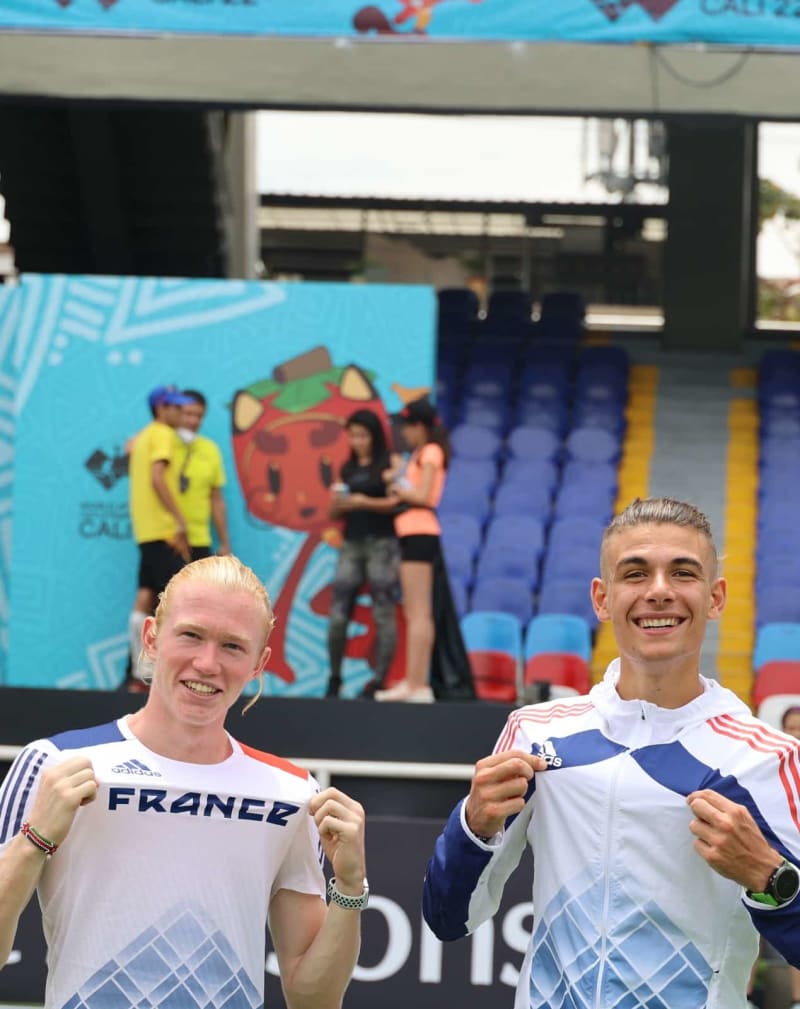
He’s part of the same world, but we don’t do exactly the same event. He focuses on shorter distances and runs the 400m. We didn’t meet at the club, but at school, in Year 4. In fact, he was the one who made me want to try athletics. In the youth categories, we often battled it out in cross country. Then our profiles diverged. He went into sprinting, while I moved towards endurance. And we’re both still here today. We were even selected together for the 2022 World U20 Athletics Championships in Cali. Sharing that experience with him was incredible. It’s quite a closed-off world, so making it there together was crazy. Since then, we’ve been training seriously in the hope of earning another selection together like that, and I’m glad I can count on him.
When it comes to video, we sometimes swap roles, but most of the time he’s behind the camera and I’m in front of it, because I run a lot more than he does. A sprinter’s season is much shorter. With longer distances, you can race all year, whether on the track or on the road. That’s why he appears a little less often on the channel, but he’s always there.
I grew up in a fairly sporty family. My parents ran marathons, and my grandfather still runs four times a week at over 70. Whether you realise it or not, that has an impact.
You seem to have found running relatively easy from a young age. How do you explain that?
These days, I’m almost a professional athlete, in the sense that I put myself through some fairly substantial training loads. I grew up in a sporty family, and that inevitably plays a part: when your parents exercise, when you see them heading out for a run or a bike ride, when the food at home is balanced, it all helps. If you eat rubbish, performing becomes much harder. I was always surrounded by that mindset, but I was never pushed. That’s important to say. My parents ran marathons. My grandfather still runs four times a week at over 70, which shows how important sport is in our family.
I liked winning and I was prepared to work for it. The more the years passed, the more I enjoyed running. My training increased with me: at first, I only ran on Tuesdays with Philippe, my coach. The following year, Mondays were added, then Tuesdays, Thursdays and Sundays the year after that… Now I train almost every day, often twice a day. I have more of a cyclist’s build; I’m fairly “heavy” for a runner. That’s another reason I enjoy duathlon, even though it remains a discipline that doesn’t get much attention.
What I like is the constant work: training in the right zone, not running yourself into the ground, but still improving. You also have to hold up mentally, because psychological fatigue can creep in quickly. Ultimately, it’s all about adjusting the dials properly so you can perform over the long term.
How do you deal with failure?
For me, failure is simply a necessary step towards improvement. I always try to do my best, and if it doesn’t work out, so be it. I’m good at keeping things in perspective. If it didn’t happen today, it’ll happen another day.
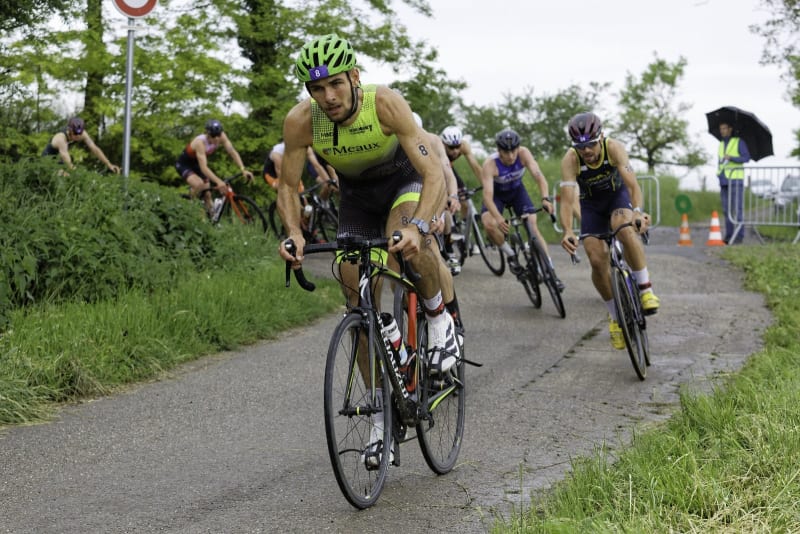
You now train with EACPA. How does the group work day to day, and what role does your coach, Philippe Favreau, play in your progress?
We’re a good, well-structured group, with each athlete following an appropriate programme. Philippe sets out a general framework, but as competitions approach, things become more individualised. He isn’t my first coach, but he took me on as soon as I moved up to middle-distance running. I made the “jump” in Year 7, into his group. At the time, I was the youngest. I knew I was performing well for my age group.
In winter, we all line up for cross country, so we train together quite a lot. Our sessions are broadly the same until the track season. Philippe is still the one running the show. Even though he’s retired, he comes in every day. He’s the one who keeps the group alive. If he stopped coming tomorrow, the dynamic would probably disappear.
The club is going from strength to strength. I was lucky to join at the right time, when there was already a great energy in place. EACPA invests in us, and we have an indoor facility for winter training, which makes a real difference. Last year, we finished runners-up in the French Club Championships. This year, we’re determined to do it again, or even go one better and win the title!
What does your training week look like?
We’re at the club almost every day. It helps us maintain a social connection and spend time with our friends. I often say that if I chose athletics over cycling, it’s partly because of my club. We all come to train and perform, and that creates a real sense of momentum.
As for me, I often train twice a day. Usually an easy run or a short session in the morning. Alongside that, I’m studying sports science. I completed my third year, and now I’m starting another degree, this time in sports management. I organise my timetable myself to some extent. The first three years weren’t adapted around training, but this year I did an internship at my club, which has made my weeks lighter. It gives me more time to train, recover and work on other projects. The downside is that exams are harder to deal with when you don’t attend many classes.
What is it that makes you love running?
I think I’m someone who needs to move. If I couldn’t run one day, I’d clearly have far too much energy. Sport helps me clear my head and meet people, and I also enjoy pushing myself and testing myself against others. What I particularly enjoy is being able to tell the story of my training and races. Sharing is part of my practice. A lot of people tell me they started running after watching my videos. That makes me happy, because I feel it can inspire people and spark new ambitions. And honestly, if I didn’t have that element of passing things on, maybe I would have quit at certain points. There are periods when motivation drops and fatigue sets in. Documenting it all gives me an extra source of motivation.
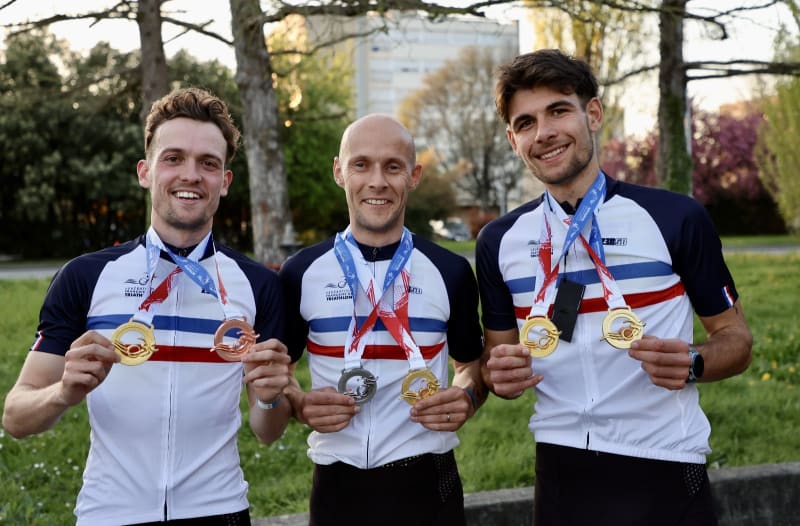
Congratulations on winning the French U23 title and finishing fourth overall at the French Duathlon Championships! Your coach talks about a return to your “DNA”. Can you explain what he means by that?
The season has been really positive overall. I’ll remember some great races and the consistency of my performances, but I know there are still things to fine-tune. Maybe I’ll specialise one day. For now, though, as long as there are athletics selections within reach, that’s where I’m focusing my attention. This year, I realised I might be able to earn an elite duathlon selection. That’s why I raced the first three rounds.
I’m going to run the 3000m at the Interclub Championships. The aim is to win a medal, but it won’t be easy. We don’t have any outstandingly fast athletes, but we’re very consistent as a team, which means we manage to pick up places. As always, there’ll be a video. I make one every time!
What is your next scheduled race? Will it feature in a future video?
After that, I’d like to qualify for the European U23 Championships. It’s my final year in the junior categories, so I’m going to give the 10,000m a shot at the French Championships on 24 May. The qualifying standard is 29:13, and you also have to finish in the top two. I should be able to do it, but the finishing position isn’t entirely up to me. If I manage to qualify, I’ll focus on other distances to build my speed and try to put together a strong performance at the Europeans. If it doesn’t happen in that race, I may try to qualify over another distance, giving it everything I have. There are a lot of athletes this year, so you have to earn your place. We’ll see, but I know I’ll be racing the 5000m in Maison-Lafitte on 7 June.
Do you feel a certain pressure to perform in your races while also producing your video?
Pressure? Yes and no. Either way, I want the best result possible, which is why I train so much. I’m lucky to have magicians who manage to capture everything. Last Sunday, I tried to delegate Lucas’s role because he was running in the first round of the Interclub Championships, and I saw just how much Lucas has learned on the job. In that kind of role, he can handle himself better than genuine professional camera crews.
When I go to a competition, I’m really there to work. I have a huge amount to manage. Interviewing the athletes after the duathlon takes me at least an hour. But you have to make that time. In the end, it brings the event to life. My teammates often want to get straight back on the minibus, and I tell them “five minutes”, when in reality I’ll be an hour!
Do you think performing consistently increases the interest of your community?
That’s my main goal: always managing to stay at the sharp end. When you’re racing at the front, it’s much more interesting, and easier for my team to film. Live coverage is usually focused on the leaders. If you start drifting into the pack, or even further back, the footage becomes harder to find. And above all, the story is much more compelling to tell at the end because there’s always the possibility of a win!
Authentic and driven, Baptiste has won a broad audience of running fans drawn to his sporting challenges and powerful human stories. His determination to improve and genuine desire to share make him a distinctive voice on YouTube, where sport meets lived experience.