
Pierre Destailleur’s “Enraciné” project: 20 marathons in 23 days to raise awareness of soil health
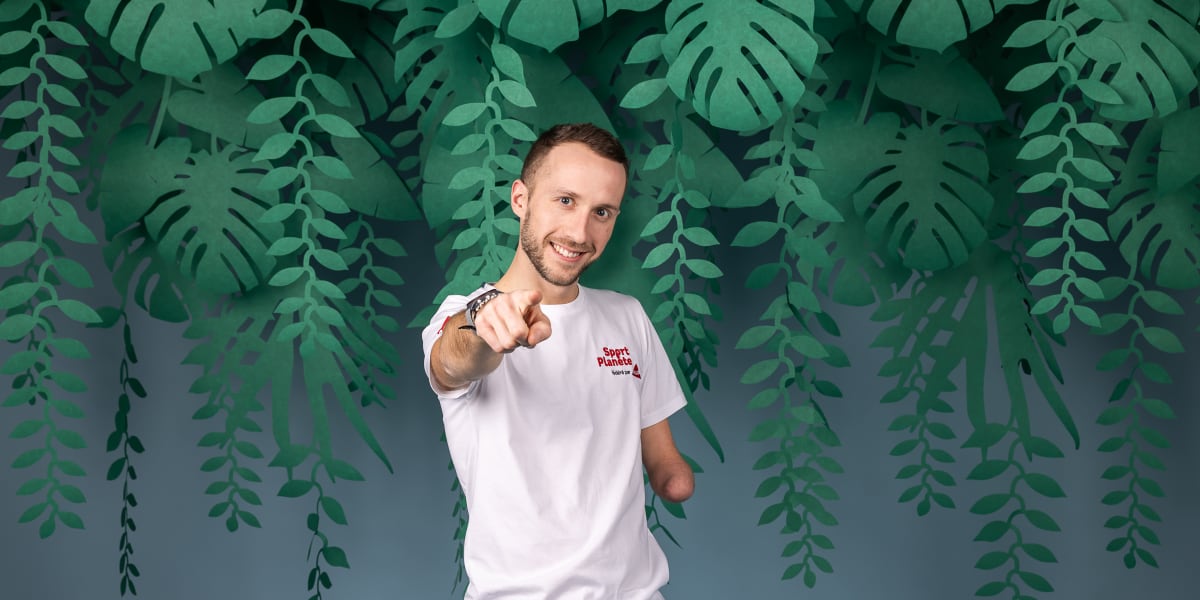
At 32, Pierre Destailleur is taking on an extraordinary challenge: “Enraciné”, a sporting and environmental adventure designed to raise awareness of soil health. A member of the Sport Planète movement, this endurance adventurer is preparing to cover more than 800 kilometres by running a marathon a day for 23 days, from Lille to Orléans, with a notable stop in Nancy. The eco-conscious odyssey gets under way on 16 September. A run in service of the planet, and one that promises to be as inspiring as it is thought-provoking.
Can you tell us about your sporting background?
I’ve been involved in sport in one way or another all my life. I have a disability and am missing my left forearm. I started out playing tennis for 10 years, and managed to serve using my residual limb. I spent 18 years trying to forget about my disability. Then I moved into football, which was already easier, and finally running. I took part in para triathlon and realised that I didn’t have the same abilities as everyone else. Today, thanks to the structures available in France and the Paralympic Games, I’m proud to be a person with a disability.
What is the goal behind this adventure?
The aim is to meet a range of people involved in the issue, including scientists, local authorities, citizens and farmers, and discuss the challenges surrounding land use. There will also be a scientific focus on the functions and ecosystem services provided by soils. The idea is to take a broad look at the issues involved. Using sport to carry this message is also a message in itself. Ultimately, success would mean raising awareness among decision-makers so they have all the information they need to communicate positively about the subject and ensure its long-term future.
Was there a particular moment that made you want to get involved in protecting soils?
I became interested in soils because I’m an agronomist. It’s a passion of mine. I went through a period of eco-anxiety when I realised what the data was telling us. Studying the subject helped me. But taking action was essential. The problem is that we don’t always know how to act. After spending four years involved with my association and considering a career change, I still felt paralysed without any concrete action. This project has given me a new energy. Taking on this adventure suits me because I’m always looking for new stories to tell. I couldn’t have hoped for a better partner than Uni-Vert Sport, which promotes the idea of one health shared by people and the planet.
You’ve chosen to run a marathon a day, an extraordinary physical challenge. What made you aim for such an intense format?
I chose to run a marathon a day so I can cover 40 kilometres while promoting a slower pace and meeting people involved in the issue. The goal isn’t performance. It’s to show that you can simply run as a means of getting around, while highlighting these challenges and proving that a person with a disability can take on this kind of challenge.
Running a marathon a day is some challenge, isn’t it?
Of course. I’ve already run 100 kilometres and a few marathons, but never so many in such a short space of time. I believe it’s possible because others have done it, such as Nicolas Vandenelsken, who ran more than 110 marathons back to back. I’ve planned three rest days, either to recover or to meet people involved in the project. I’ve set myself a start and a finish. Since I only have one arm, I’ve planned to use a sports stroller so I can remain independent and get everywhere I need to go.
How are you preparing for the project?
I’m using OpenRunner to plan my routes, taking both distance and safety into account. Most of the roads are protected, but I’ll be passing through towns, so I’ll use lights if I’m running early. I’m aware of the risks. It also provides an opportunity to highlight local authorities’ initiatives, such as protected cycle paths and pedestrian crossings. Now that my route is mapped out, I’m getting in touch with people involved to tell them about the project and highlight the issues that concern them. I’m planning to pass through Nancy, home to the University of Nancy-Lorraine, which specialises in soils, Orléans, where I’ll meet people from INRAE and AFES, and Bure, where I’ll meet key figures in the field.
As well as running a marathon every day, you’re planning to meet people along the route. Your days are going to be pretty full! What will they look like in practice?
I’m allowing five to six hours for each marathon. If I’m injured one day and have to walk the 40 kilometres, I’ll give myself considerably longer. I’ll wake up at 6 a.m., set off at 7 a.m. and arrive in the early afternoon, giving me time to recharge and meet people involved in the project. I’m planning to stay with local residents. I’ve been contacting mayors and sports clubs, and the feedback has been fairly positive. In smaller towns, I’ll meet citizen groups, schools and sixth-form students. I’d like to produce six short videos featuring people I meet in the larger towns and cities, such as Troyes, Reims and Nancy, so they can be used after the adventure in talks and to raise awareness among young people.
Do you have a budget for your adventures?
Yes. My main costs are the short videos and the methodological guide, as well as equipment, including the sports stroller, which costs around €500. Each project receives the same budget, paid to our respective associations. I’ve also budgeted for the communications apprentice at my association. Along with the volunteers, she helps me contact the people involved in my project. Enraciné is my project, and it takes up my weekends and evenings, but I’m not carrying it alone. That’s the strength of the collective.
Pierre Destailleur hopes to raise awareness as widely as possible, because soil health remains an issue that is largely unknown to the general public.
Follow his progress day by day on Instagram (@Pierre_enracine) and learn more about soil-related issues on LinkedIn (@Pierre Destailleur). You can also watch videos highlighting local groups and organisations working to protect soils.
At 32, Pierre Destailleur is taking on an extraordinary challenge: “Enraciné”, a sporting and environmental adventure designed to raise awareness of soil health. A member of the Sport Planète movement, this endurance adventurer is preparing to cover more than 800 kilometres by running a marathon a day for 23 days, from Lille to Orléans, with a notable stop in Nancy. The eco-conscious odyssey gets under way on 16 September. A run in service of the planet, and one that promises to be as inspiring as it is thought-provoking.
Can you tell us about your sporting background?
I’ve been involved in sport in one way or another all my life. I have a disability and am missing my left forearm. I started out playing tennis for 10 years, and managed to serve using my residual limb. I spent 18 years trying to forget about my disability. Then I moved into football, which was already easier, and finally running. I took part in para triathlon and realised that I didn’t have the same abilities as everyone else. Today, thanks to the structures available in France and the Paralympic Games, I’m proud to be a person with a disability.
What is the goal behind this adventure?
The aim is to meet a range of people involved in the issue, including scientists, local authorities, citizens and farmers, and discuss the challenges surrounding land use. There will also be a scientific focus on the functions and ecosystem services provided by soils. The idea is to take a broad look at the issues involved. Using sport to carry this message is also a message in itself. Ultimately, success would mean raising awareness among decision-makers so they have all the information they need to communicate positively about the subject and ensure its long-term future.
Was there a particular moment that made you want to get involved in protecting soils?
I became interested in soils because I’m an agronomist. It’s a passion of mine. I went through a period of eco-anxiety when I realised what the data was telling us. Studying the subject helped me. But taking action was essential. The problem is that we don’t always know how to act. After spending four years involved with my association and considering a career change, I still felt paralysed without any concrete action. This project has given me a new energy. Taking on this adventure suits me because I’m always looking for new stories to tell. I couldn’t have hoped for a better partner than Uni-Vert Sport, which promotes the idea of one health shared by people and the planet.
You’ve chosen to run a marathon a day, an extraordinary physical challenge. What made you aim for such an intense format?
I chose to run a marathon a day so I can cover 40 kilometres while promoting a slower pace and meeting people involved in the issue. The goal isn’t performance. It’s to show that you can simply run as a means of getting around, while highlighting these challenges and proving that a person with a disability can take on this kind of challenge.
Running a marathon a day is some challenge, isn’t it?
Of course. I’ve already run 100 kilometres and a few marathons, but never so many in such a short space of time. I believe it’s possible because others have done it, such as Nicolas Vandenelsken, who ran more than 110 marathons back to back. I’ve planned three rest days, either to recover or to meet people involved in the project. I’ve set myself a start and a finish. Since I only have one arm, I’ve planned to use a sports stroller so I can remain independent and get everywhere I need to go.
How are you preparing for the project?
I’m using OpenRunner to plan my routes, taking both distance and safety into account. Most of the roads are protected, but I’ll be passing through towns, so I’ll use lights if I’m running early. I’m aware of the risks. It also provides an opportunity to highlight local authorities’ initiatives, such as protected cycle paths and pedestrian crossings. Now that my route is mapped out, I’m getting in touch with people involved to tell them about the project and highlight the issues that concern them. I’m planning to pass through Nancy, home to the University of Nancy-Lorraine, which specialises in soils, Orléans, where I’ll meet people from INRAE and AFES, and Bure, where I’ll meet key figures in the field.
As well as running a marathon every day, you’re planning to meet people along the route. Your days are going to be pretty full! What will they look like in practice?
I’m allowing five to six hours for each marathon. If I’m injured one day and have to walk the 40 kilometres, I’ll give myself considerably longer. I’ll wake up at 6 a.m., set off at 7 a.m. and arrive in the early afternoon, giving me time to recharge and meet people involved in the project. I’m planning to stay with local residents. I’ve been contacting mayors and sports clubs, and the feedback has been fairly positive. In smaller towns, I’ll meet citizen groups, schools and sixth-form students. I’d like to produce six short videos featuring people I meet in the larger towns and cities, such as Troyes, Reims and Nancy, so they can be used after the adventure in talks and to raise awareness among young people.
Do you have a budget for your adventures?
Yes. My main costs are the short videos and the methodological guide, as well as equipment, including the sports stroller, which costs around €500. Each project receives the same budget, paid to our respective associations. I’ve also budgeted for the communications apprentice at my association. Along with the volunteers, she helps me contact the people involved in my project. Enraciné is my project, and it takes up my weekends and evenings, but I’m not carrying it alone. That’s the strength of the collective.
Pierre Destailleur hopes to raise awareness as widely as possible, because soil health remains an issue that is largely unknown to the general public.
Follow his progress day by day on Instagram (@Pierre_enracine) and learn more about soil-related issues on LinkedIn (@Pierre Destailleur). You can also watch videos highlighting local groups and organisations working to protect soils.