
Romane Lemière: “Pleasure comes before performance”
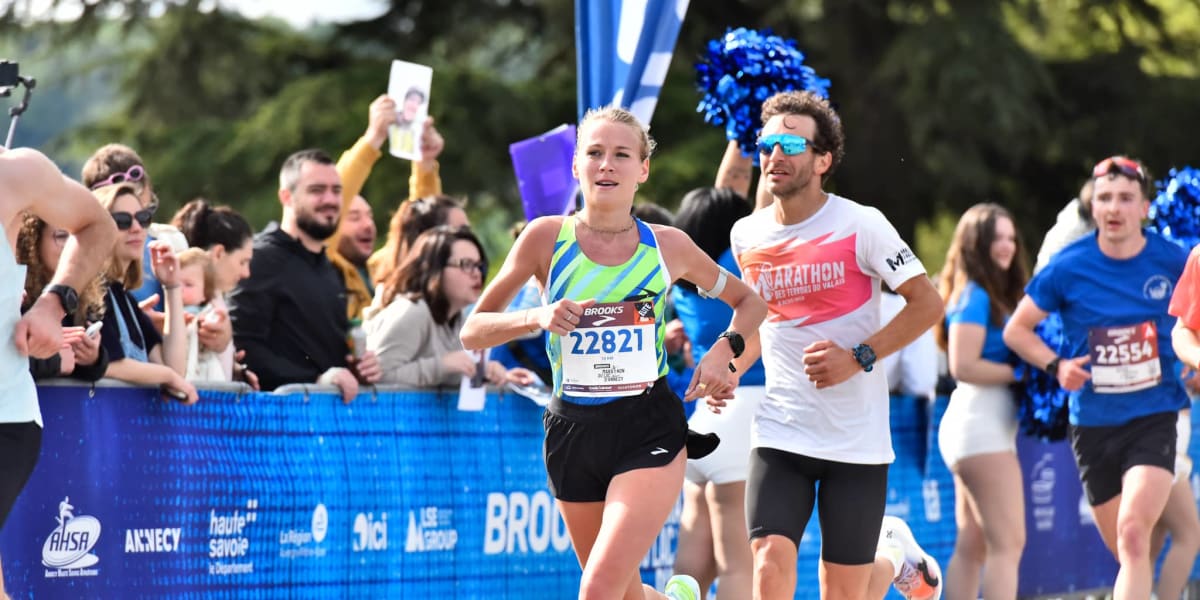
After publishing her first book about anorexia, Romane Lemière, known as @runromane on social media, began writing a second one last March. In Mon Running plaisir avec Romane, the coach shares a wealth of advice and tips to help runners improve while looking after themselves, both mentally and physically. This marathoner, whose personal best is 2:44:42 in Berlin in 2022, now has more than 86,000 followers and champions one thing above all: the joy of running.
Romane, what did you hope to achieve with this book?
I wanted to help all runners, but beginners in particular, by giving them all the advice they need to take up running and answer the questions that naturally come up when you are starting out.
How are you feeling today?
I’m doing much better now. I went through some very difficult times: severe anorexia, followed by depression and intense social anxiety. All of that made it difficult to continue my studies, so I didn’t follow a conventional path. But when I look back, I’m happy to have come through it and overcome everything. Things are finally falling back into place. It took a lot of patience.
I listen to myself more than I used to.
What are the three things this several-month break from running taught you?
I won’t hide the fact that, at first, the enforced break caused by my injury was very difficult to deal with. It was actually one of the reasons I became depressed, because sport had been my lifeline. Running was my only social activity. So when I had to stop, I had to learn how to live differently. It was good to realise that there was more to life than running. Running is still just a sport. It’s supposed to be enjoyable.
You’ve kept a running journal since 2019. How does it help you?
My first coach asked me to keep a journal and write down how I was feeling. When I’m going through a period of doubt or stress, or when I’ve missed a session, for example, looking back through it reassures me and reminds me that I’ve run good times despite missing workouts. The journal gives me a record of the work I’ve put in, and when I lose confidence, it’s a good way to see my progress.
 © Victor Barcus
 © Victor Barcus
 © Victor Barcus
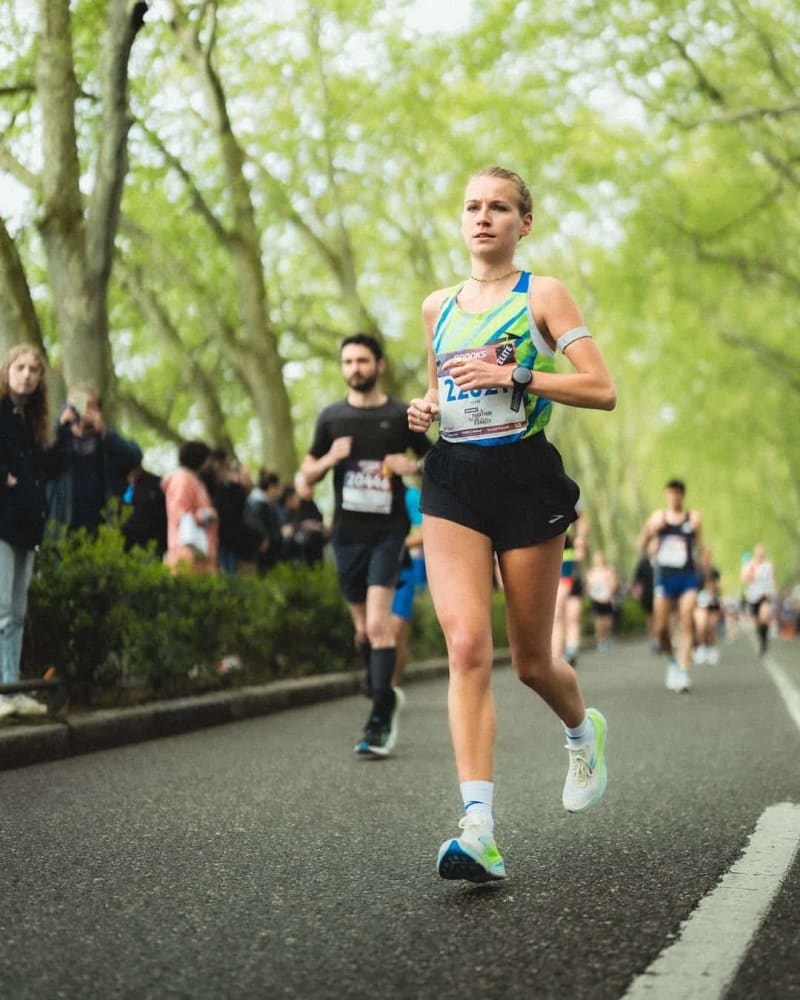 © Victor Barcus
You say Anaïs Quemener inspires you. Why?
She has always inspired me, even before she became well known. I met her at a race where she finished just ahead of me, and that’s when I started following her on social media. I discovered her story with cancer and her return to the highest level. I saw a bit of myself in her: she went through some very difficult periods and held on to running. I love the energy she gives off and her resilience. And she’s also an extraordinary runner, so of course she’s incredibly inspiring.
Are social media harmful to runners’ physical and mental health?
As with anything, there’s good and bad. On the positive side, social media are a goldmine: you can find plenty of advice. But you also need to take a step back from all that content, because some of it can make you feel guilty. I know that when I see women running every day and posting great times, I automatically compare myself and feel useless. That can lead to overtraining and sometimes increase the risk of injury. It cuts both ways.
Has your own experience with injury changed the way you approach your Instagram account?
Yes, it has. I think I used to promote the idea of “always more”. I loved showing that I was running huge mileage and constantly challenging myself. I don’t want to put that message across anymore. I’ve experienced the consequences through my injuries, and I really don’t want to project that image to the people who follow me. Now I want to show the enjoyment of sport.
What has changed in the way you train?
I listen to myself more than I used to. Before, I followed the training plan blindly. Whether I was in pain or not, whether I felt like running or not, I went out. Now I listen to my coach, and as soon as I feel pain, I ease off. These days, I run when I feel like it. I like training this way because I feel better in both my head and my body.
If you could give just one piece of advice, what would it be?
I’d say: “Do things for the pleasure of it.” If you act because you want to, that’s the key to staying in tune with yourself.
Which races are you planning to run?
I’m going to run the MCC on 25 August at the UTMB. It’s a 40 km race with just over 2,000 m of elevation gain. It’s a real challenge for me and a change from what I’m used to, but I’m excited to take it on. After that, I’d like to return to road racing. I’m thinking of running the 20 km de Paris in October, Marseille-Cassis at the end of October, and perhaps a marathon this winter. I’d like to return to that distance with less pressure than before and more enjoyment.
Who was the first person you gave this book to?
My little sister, because she always supports me in my projects, and I coach her too. So it seemed only natural to give her the first copy.
With “Mon Running plaisir avec Romane”, Romane Lemière has written a sincere, compassionate book that reflects who she is. Combining practical advice with personal revelations, it reminds us that running doesn’t have to mean chasing performance at all costs. Her resilient journey offers another way to run: freer, gentler and happier. A valuable read for anyone who wants to put pleasure back at the heart of every stride.
➜ Mon running plaisir avec Romane, Editions Leduc, March 2025, €19.90