

If Europe has Valencia and Berlin, the U.S. has Chicago. Every October, the Windy City pulls in tens of thousands of runners from around the world with one goal: a PR on one of the fastest marathon courses on the planet. You don’t just come here to tick off a star on the Majors circuit, you come to chase the clock. Because as legendary as New York and Boston are, neither can match Chicago for pure speed. The course is flat and quick, but as you’ll see, a few very real traps still catch out anyone who shows up without a plan. So what makes Chicago so fast? Here’s a closer look at the history and the course of the Chicago Marathon.
An institution born twice (1905, then 1977)
Chicago’s marathon story goes way back, more than 120 years. Before the marathon was even an official discipline, the local Illinois Athletic Club staged its first marathon in 1905. Back then, the race was roughly 40 km (25 miles). The standard 42.195 km distance wouldn’t be made official until after the 1908 London Olympics. Until then, every marathon had its own distance, and Chicago’s course looked nothing like today’s loop that starts and finishes in Grant Park.
The event disappeared in the early 1920s, then the modern marathon finally returned to the Windy City on September 25, 1977, under the name Mayor Daley Marathon (a tribute to Mayor Richard J. Daley). That year, 4,200 runners started, 2,128 finished, and the winners ran 2:17:52 (Dan Cloeter) and 2:50:47 (Dorothy Doolittle). Today, it’s a different universe. The race has gone global, sits at the heart of the running world, and is now part of the Abbott World Marathon Majors. In 2026, the 48th edition is expected to welcome more than 55,000 runners. It’s become a can’t-miss date for anyone who wants the full big-city American marathon experience, and to take a real shot at a new personal best on a seriously fast course.
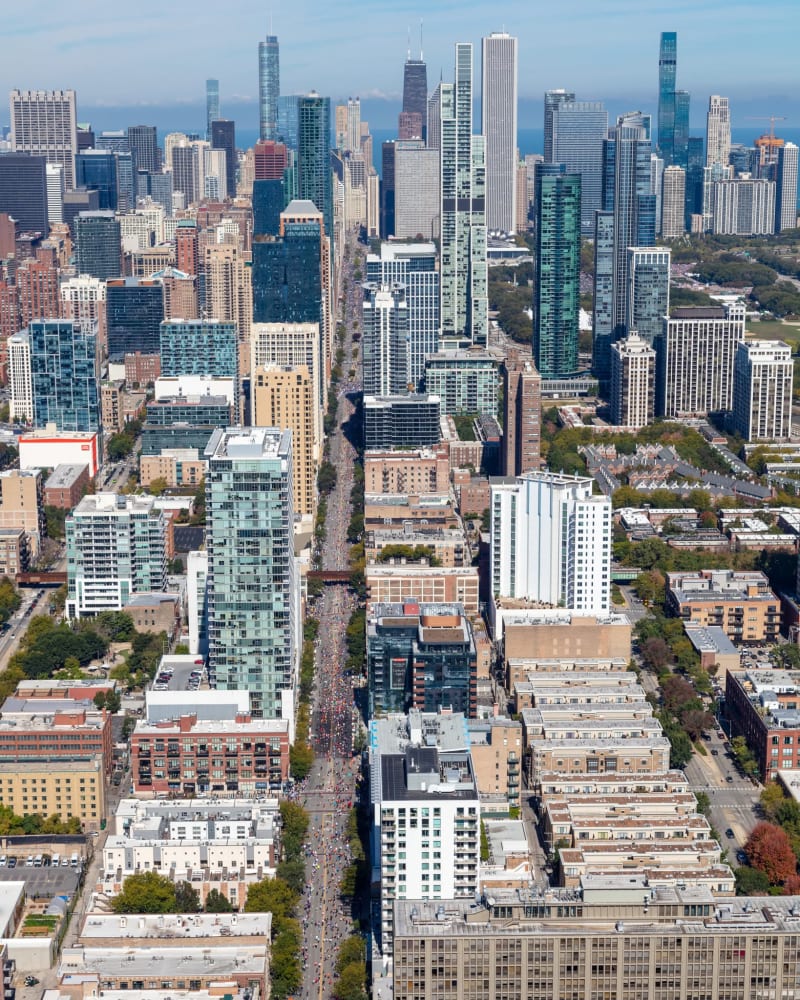 © Bank of America Chicago Marathon
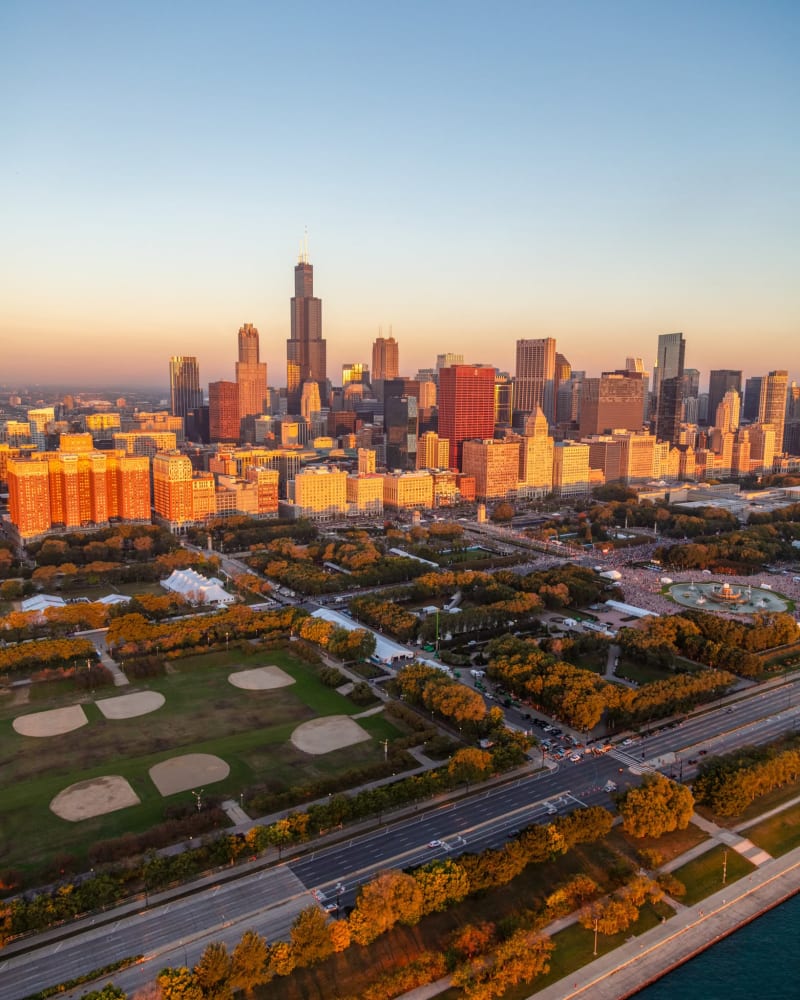 © Bank of America Chicago Marathon
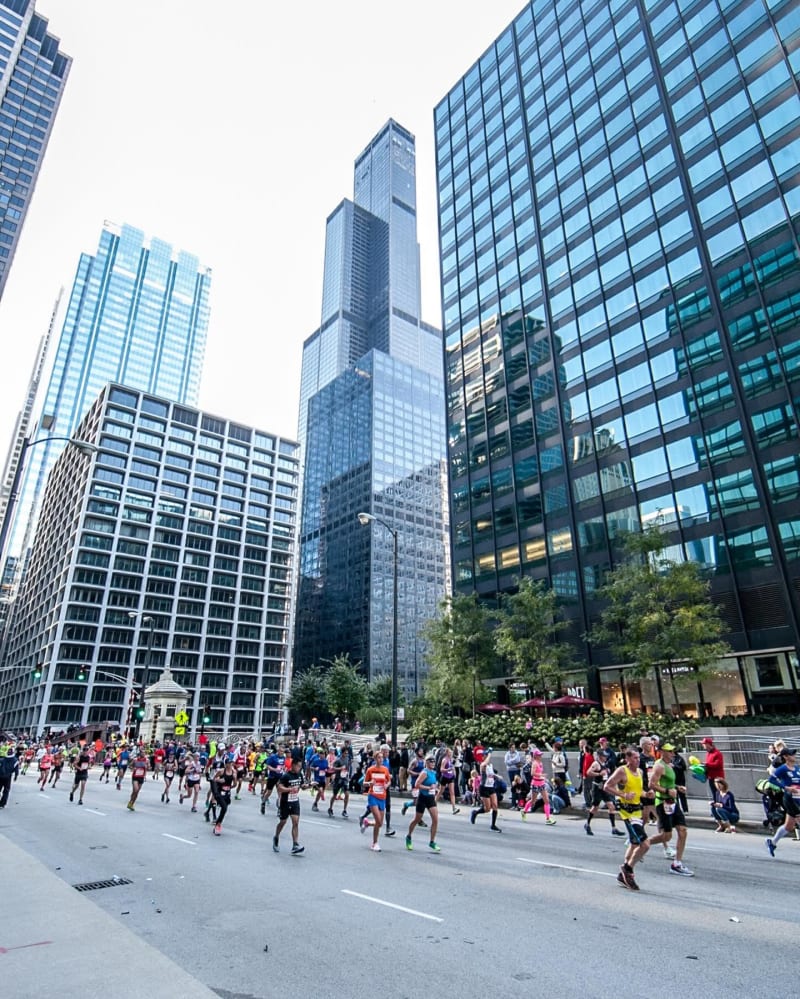 © Bank of America Chicago Marathon
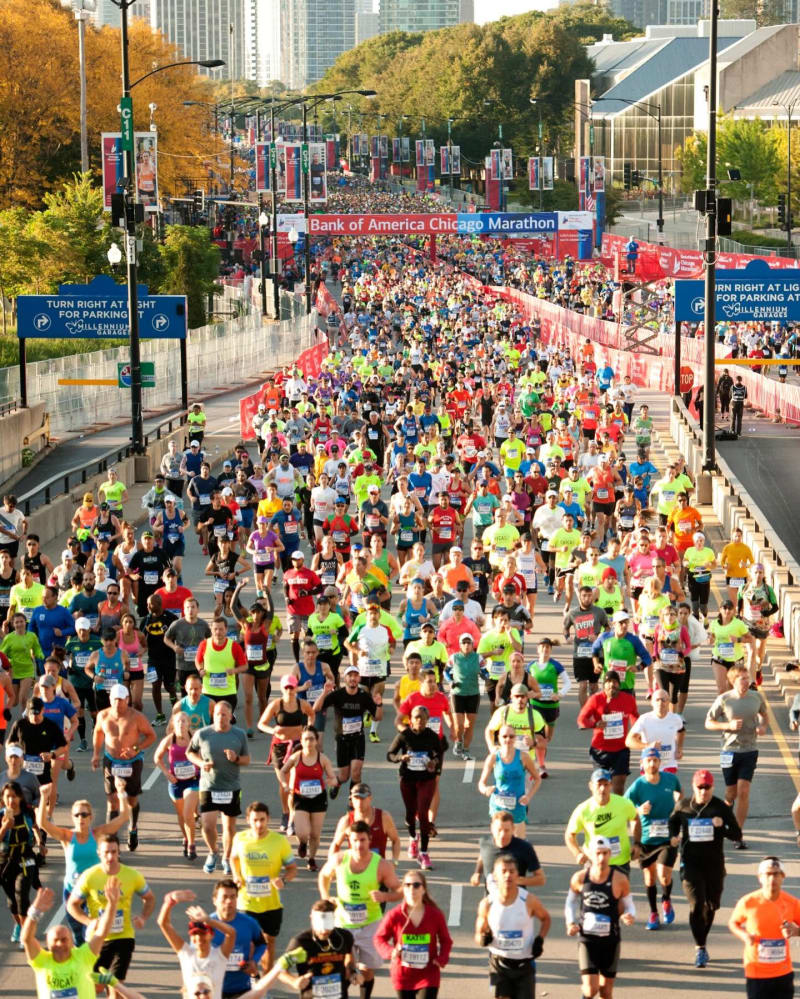 © Bank of America Chicago Marathon
 © Bank of America Chicago Marathon
 © Bank of America Chicago Marathon
Chicago and the Abbott World Marathon Majors
The Chicago Marathon has been part of the World Marathon Majors since the circuit was created on January 23, 2006, alongside Boston, London, Berlin and New York (the five founding members). Tokyo joined in 2013, Sydney in 2025, and more recently Cape Town, bringing the total to eight Majors today. So yes, if you’ve been in that club from day one, the reputation is real. Chicago has two huge assets: it’s fast, and it’s a Major. For runners, that means serious prestige and an event that runs like clockwork, with top-tier organization standards under World Athletics (Platinum Label). It’s also why the very best in the world keep showing up here.
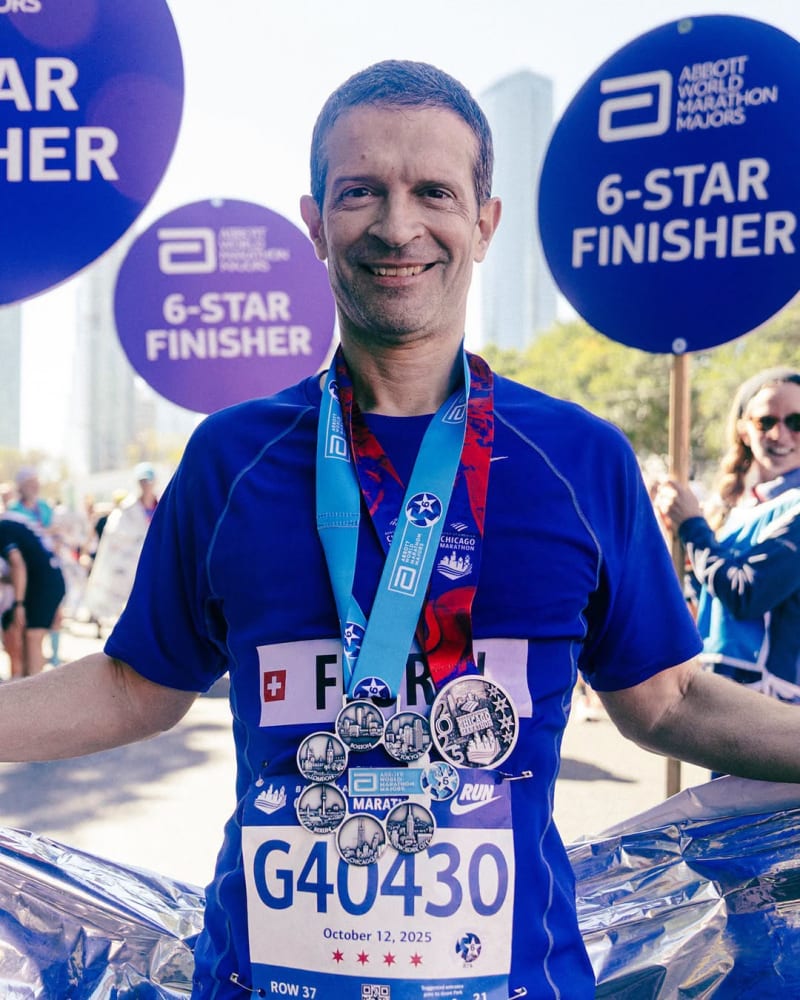
But the Majors aren’t just an elite thing. They’re also, and maybe above all, a full-scale running experience for tens of thousands of amateurs worldwide: the same course, the same day, right behind the best marathoners on the planet. The holy grail is the Six Star medal, awarded to runners who finish the six original Majors (more than 23,000 had earned it worldwide by the end of 2025). In Chicago, that buzz is very real. The race sits in the top five biggest marathons in the world, with hundreds of thousands of applications each year for roughly 55,000 bibs. Runners travel from everywhere to live something special, and it often ends with a PR here. Here’s why.
 © Abbott World Marathon Majors
Why is Chicago so fast?
Elevation gain : Let’s get straight to it. To judge how fast a course can be, the first thing to look at is total climb across the full distance. In Chicago, it’s just 74 m over 42.195 km. In other words: dead flat. That number makes perfect sense. Chicago, the third-largest city in the U.S., sits on the shore of Lake Michigan, on an ancient glacial lakebed that’s as flat as a pool table. Head up any skyscraper and you’ll see it immediately: there’s basically no relief on the horizon.
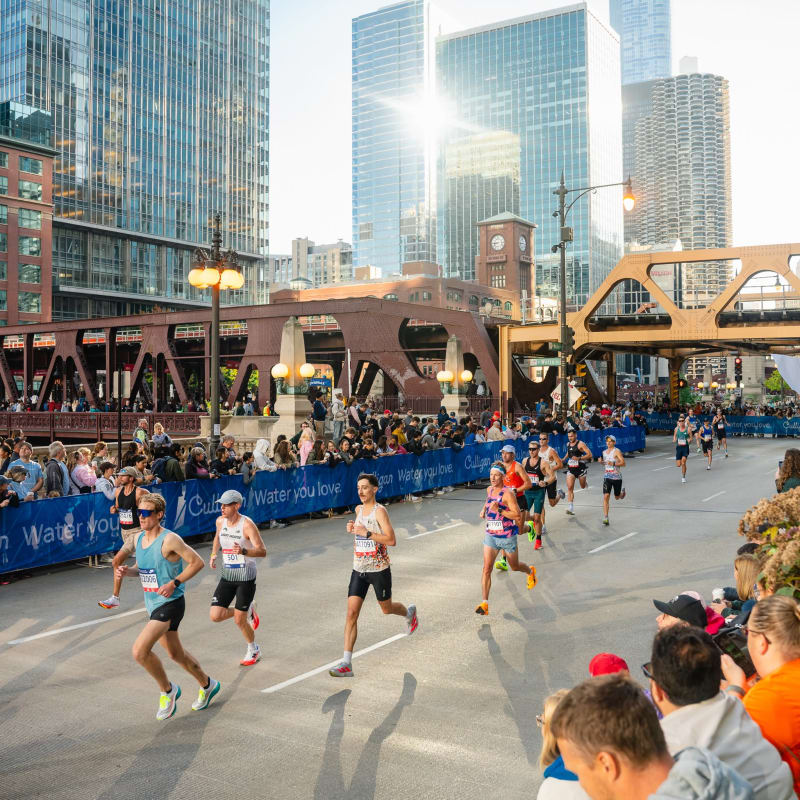
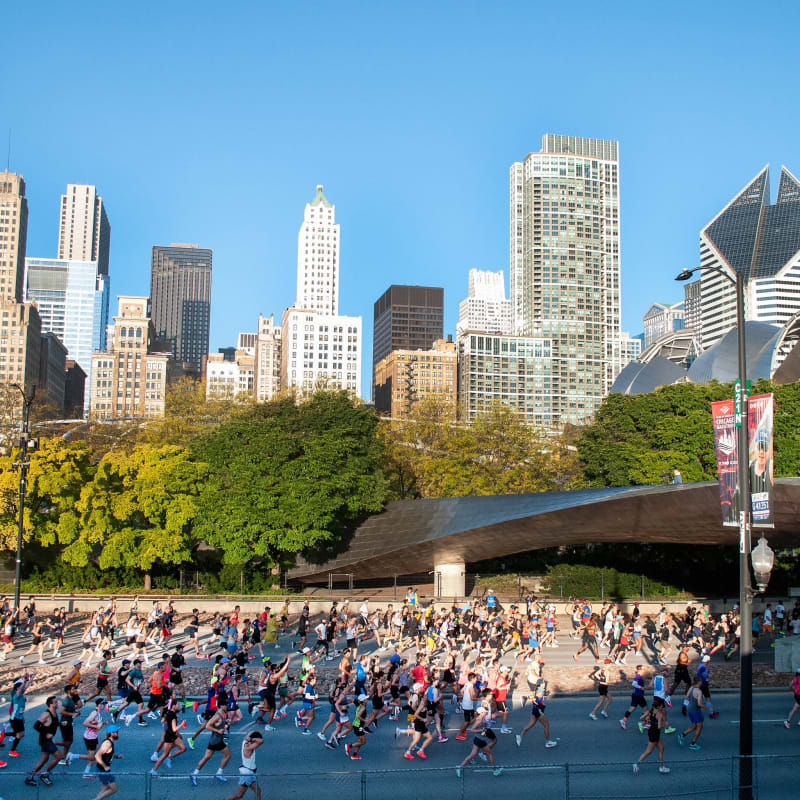
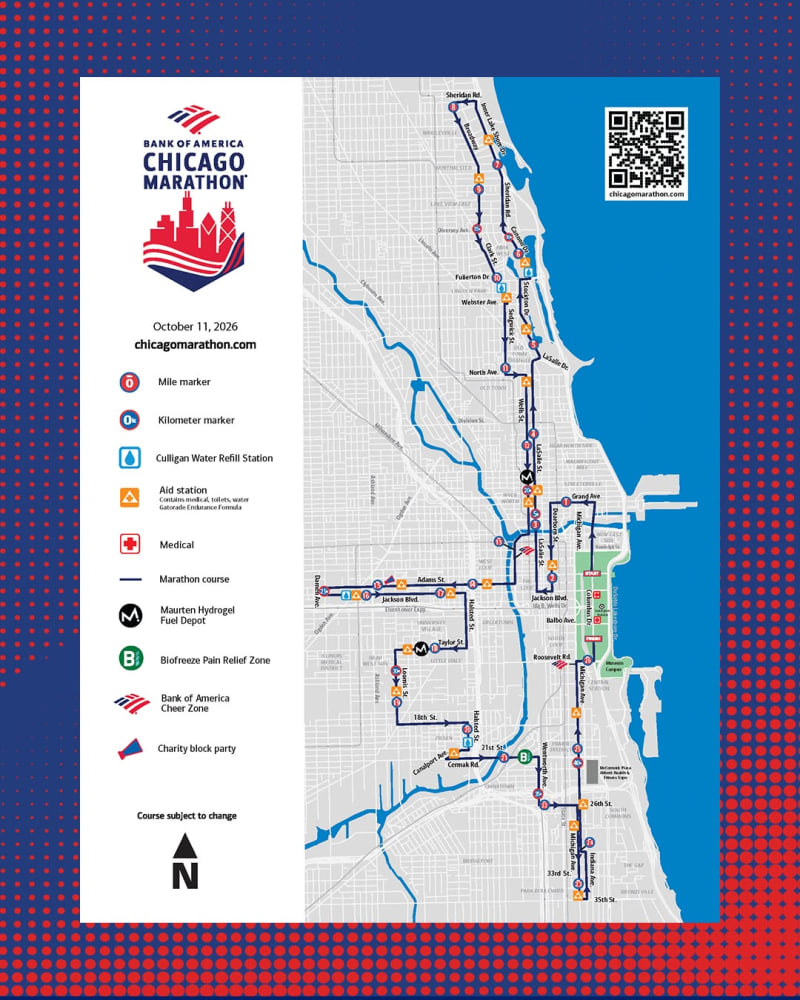
The course : The route weaves through the city in a huge closed loop, with the start and finish in Grant Park at almost the same elevation. Long straightaways, wide roads, only around twenty turns across the whole course (often double that in marathons of similar size): it’s a wide-open runway and the perfect setup for locking into pace, without the constant surges and rhythm changes tougher courses force on you.
The weather : This factor can be almost as decisive as the layout itself. Chicago is run on the second Sunday in October, a date chosen specifically for cool, typically stable temperatures... typically. Because the race’s history is a reminder that nothing is guaranteed: in 2007, record heat (31°C, the hottest in the event’s history) forced organizers to stop the race midstream. In 2021, runners also dealt with a sunny edition and temperatures between 21 and 26°C. So yes, Chicago is usually great for fast times (around 10°C to 15°C), but even on one of the quickest courses in the world, nothing is ever a given.
 © Bank of America Chicago Marathon
 © Bank of America Chicago Marathon
 © Bank of America Chicago Marathon
 © Bank of America Chicago Marathon
 © Bank of America Chicago Marathon
The course, sector by sector
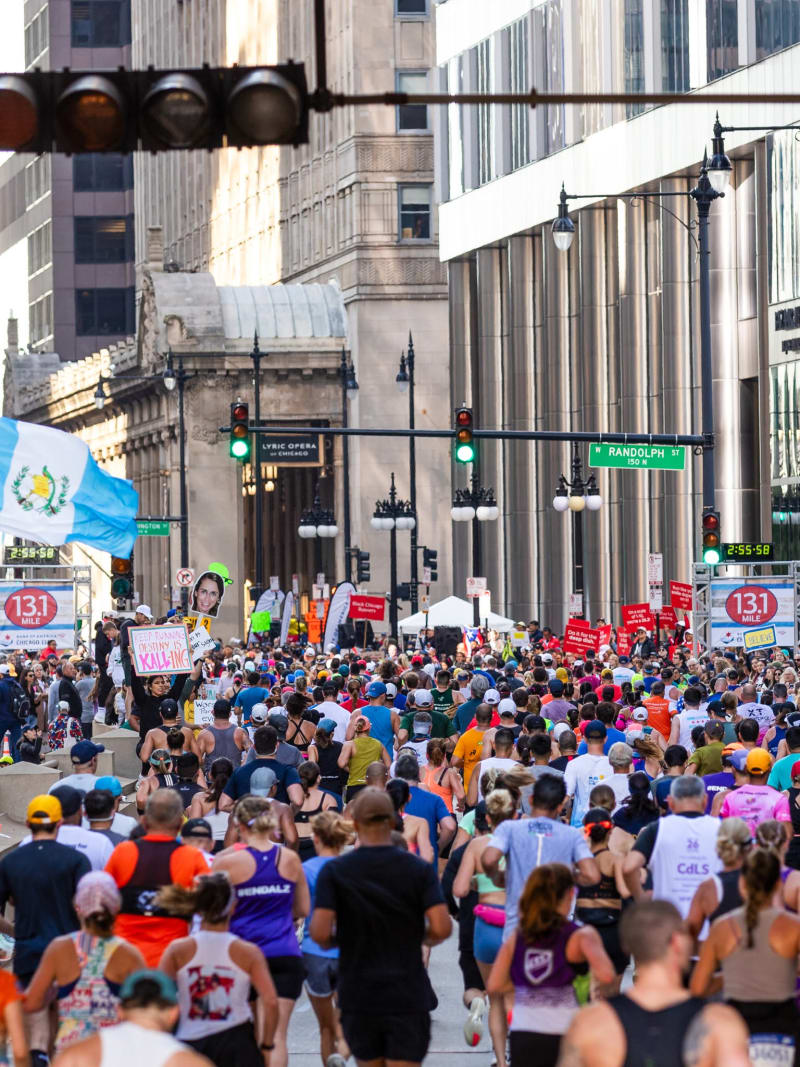
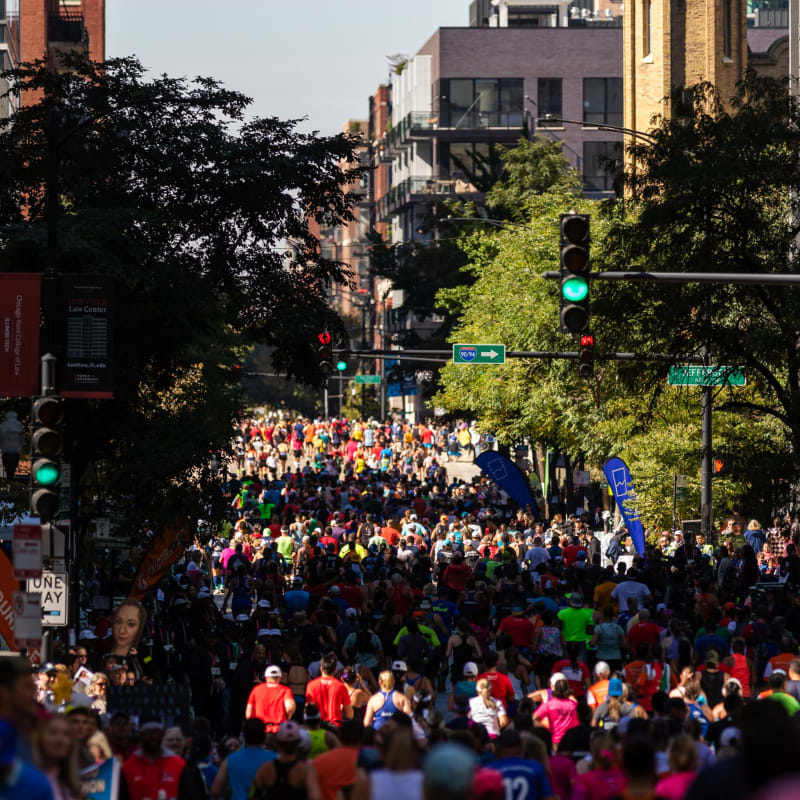
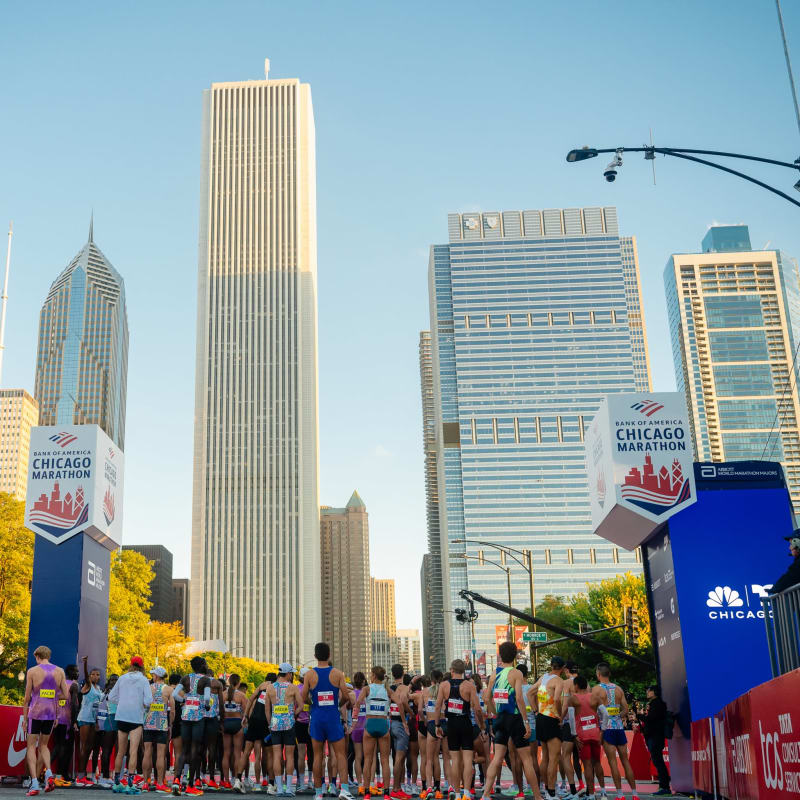
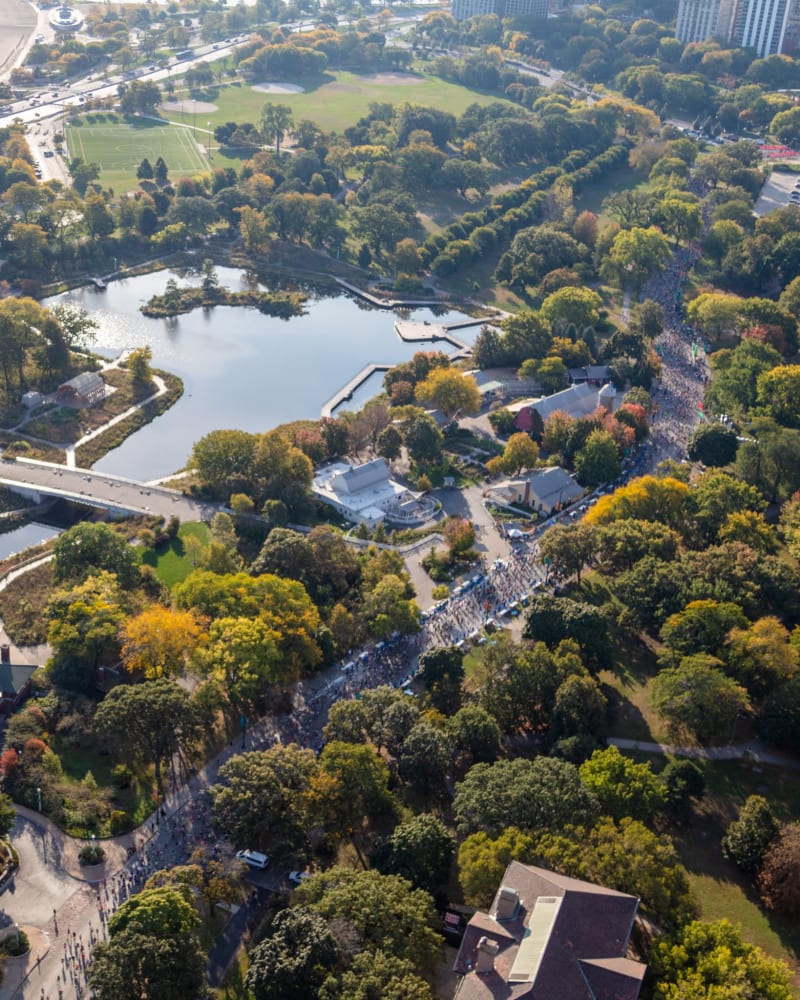
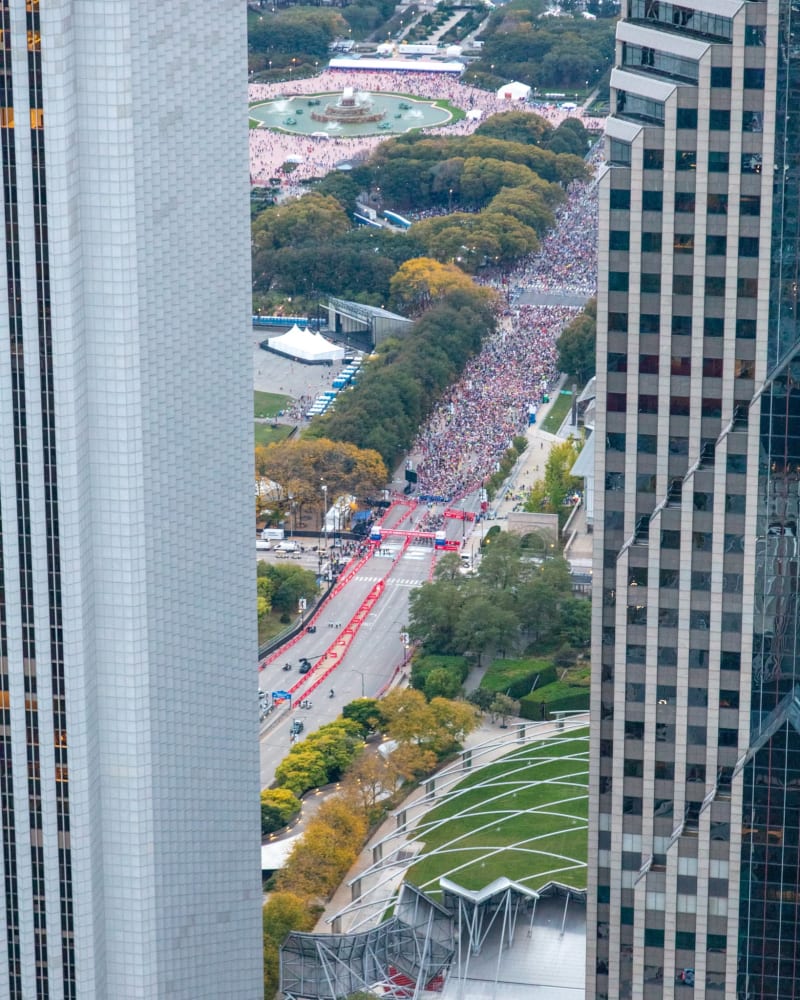
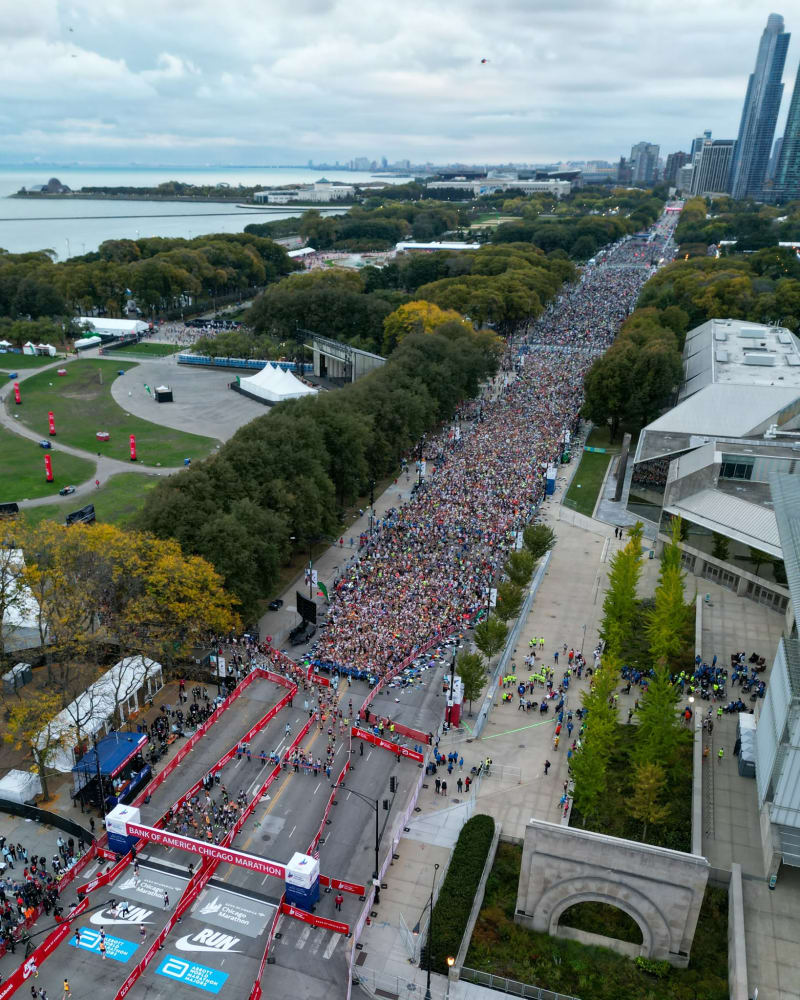
Chicago is also a race packed with stories and character, taking runners through the city’s neighborhoods. The start in Grant Park, after the national anthem echoes through the heart of the Loop, feels like an all-American show: runners stack up a few steps from Cloud Gate ("The Bean"), then launch between the Loop’s skyscrapers with hundreds of thousands of spectators roaring along the route. The crowd is so tight and so loud in the opening miles that the trap is obvious: getting swept up and going out too fast. In Chicago, the marathon’s golden rule matters even more than usual: start controlled and don’t get carried away.
The course then cuts through 29 neighborhoods, each with its own flavor: from the electric energy of Boystown to the aromas of Little Italy and Pilsen, via the pageantry of Chinatown, where the drums and the iconic “Chinatown Gateway” deliver one of the most memorable mental turning points of the day. For an event this big, there are also quiet moments. After halfway, the route pulls away from the center and the crowds thin out, suddenly. It’s a feared lull for anyone who’s run Chicago before, where your head can matter more than your legs. Then comes the shift: back toward Downtown, with the skyline and the outline of the Willis Tower reappearing on the horizon, a sign the finish line isn’t far now.
 © Bank of America Chicago Marathon
 © Bank of America Chicago Marathon
 © Bank of America Chicago Marathon
 © Bank of America Chicago Marathon
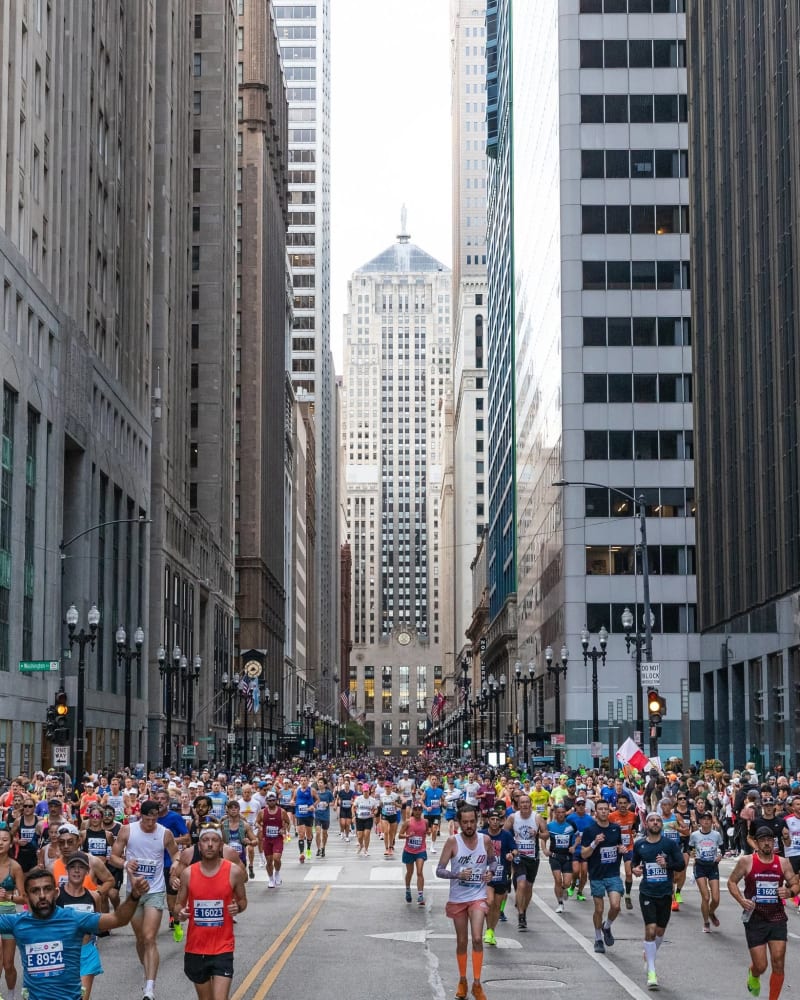 © Bank of America Chicago Marathon
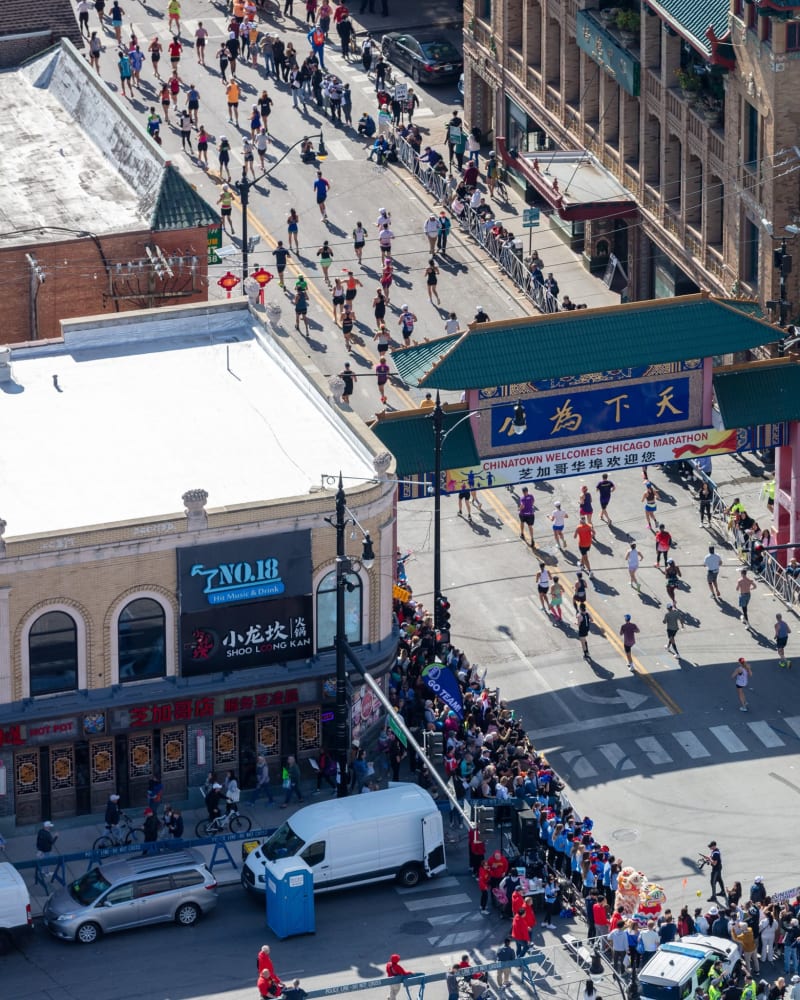 © Bank of America Chicago Marathon
Sector | Kilometers | Neighborhoods | Key points |
Start | 0-2 | Grant Park, The Loop | Start near Cloud Gate ("The Bean"). Skyscrapers can throw off GPS. Riverwalk, Wrigley Building. The course’s high point is reached as early as km 5-6. Huge atmosphere with the famous “wall of sound” and a very dense pack. Risk No. 1: going out too fast. |
North | 3-13 | River North, Gold Coast, Old Town, Lincoln Park, Lakeview, Wrigleyville | Lincoln Park Zoo. Warm vibe in Wrigleyville, the Cubs’ neighborhood. Old Town can be exposed to wind depending on the day’s conditions. |
Boystown | 13-15 | Northalsted (Boystown) | One of the liveliest stretches: bands, tons of spectators, nonstop energy. |
Back downtown | 15-21 | Bucktown, Wicker Park/West Town, Ukrainian Village/East Village | The route drops back toward the center; skyscrapers can still mess with watch GPS. A loud, lively halfway point near the river. |
Out of the Loop | 21-26 | West Loop, Greektown, Little Italy/University Village, Pilsen | This is where the day can be made or lost: the crowd drops off hard after the half. Much quieter, fewer spectators. Pilsen (the Mexican neighborhood) gives a real lift before Chinatown. |
Chinatown | 33 | Bridgeport, Chinatown | A late-race psychological marker: drums, the Chinatown Gate, dense crowds. A classic Chicago moment. |
The quiet stretch | 34-37 | Armour Square, IIT, Bronzeville, South Loop | The emptiest section for spectators, with heavy sun exposure. At that point in the race, some runners call it “the desert crossing.” |
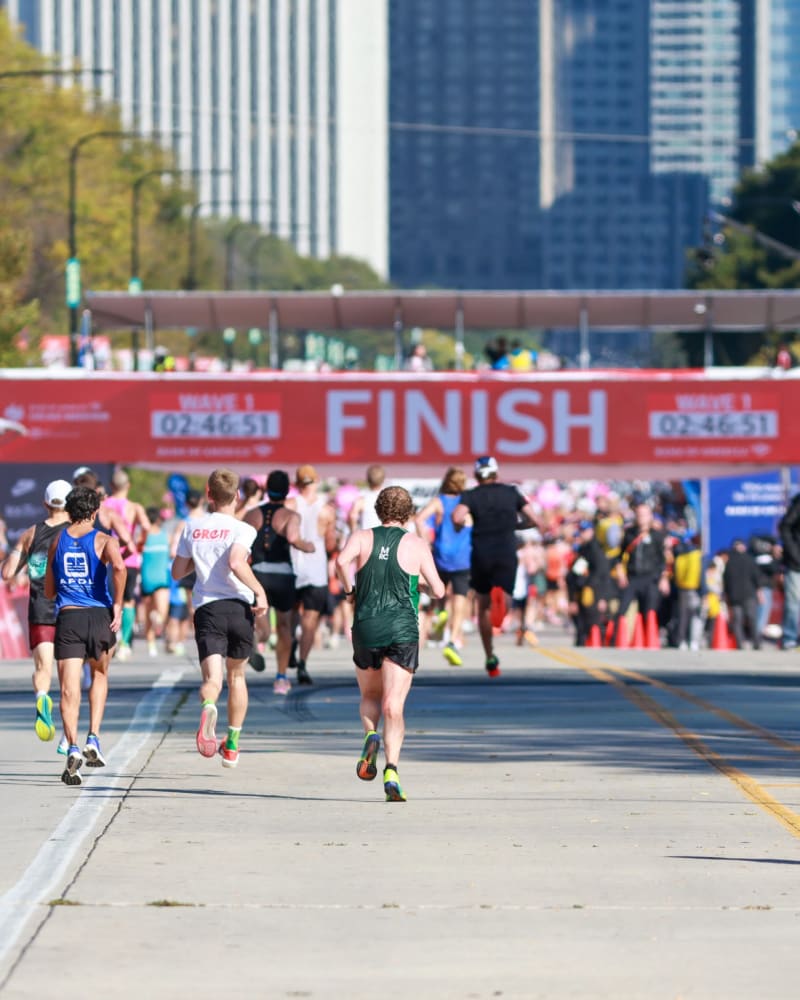
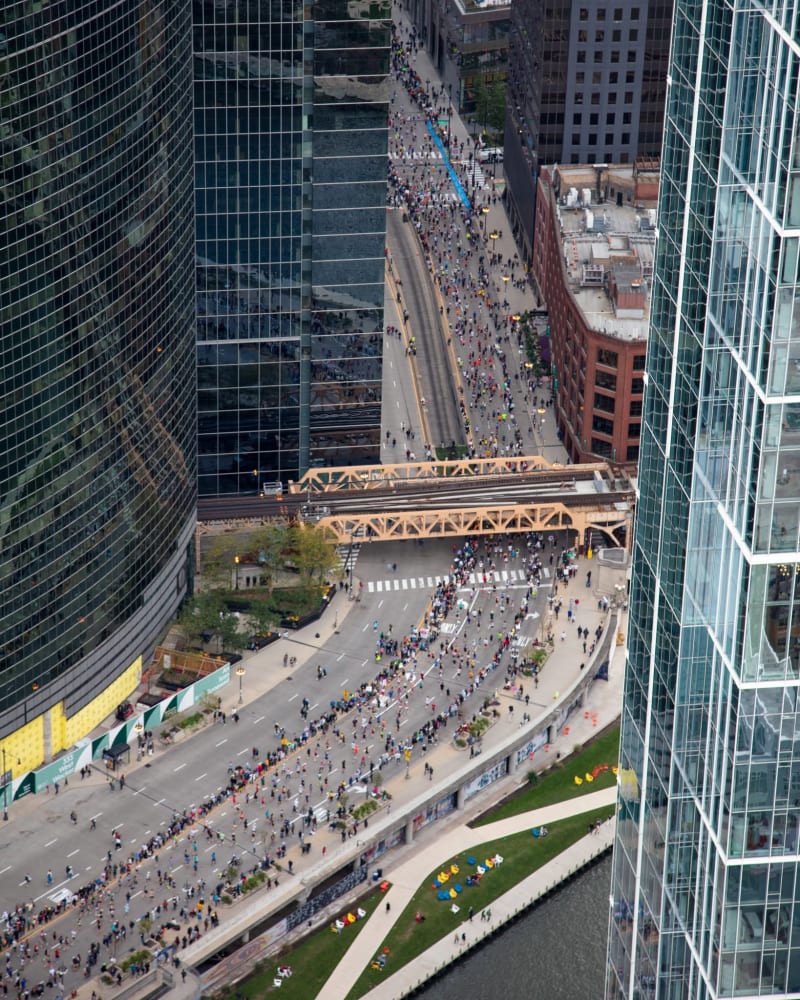
Final run-in | 37-42,2 | Michigan Avenue, South Loop, Grant Park | The Willis Tower comes into view and signals the finish is close. The crowds flood back on Michigan Avenue and Columbus Drive all the way to the line. A small rise over the railroad tracks 500 m from the finish, nicknamed Mount Roosevelt. It’s only about 1%, but at that stage your legs will swear you’re climbing a mountain. |
 © Bank of America Chicago Marathon
Seven world records have been set in Chicago
Chicago is a perfect billiard table, and the elites know it. Seven world records have been set here, including the most recent one in 2024. Kenya’s Ruth Chepngetich ran 2:09:56 (a world record that still stands despite her doping suspension handed down five months after the race).
Year | Athlete | Time | Category |
1984 | Steve Jones | 2h08’05 | Men |
1999 | Khalid Khannouchi | 2h05’42 | Men |
2001 | Catherine Ndereba | 2h18’47 | Women |
2002 | Paula Radcliffe | 2h17’18 | Women |
2019 | Brigid Kosgei | 2h14’04 | Women |
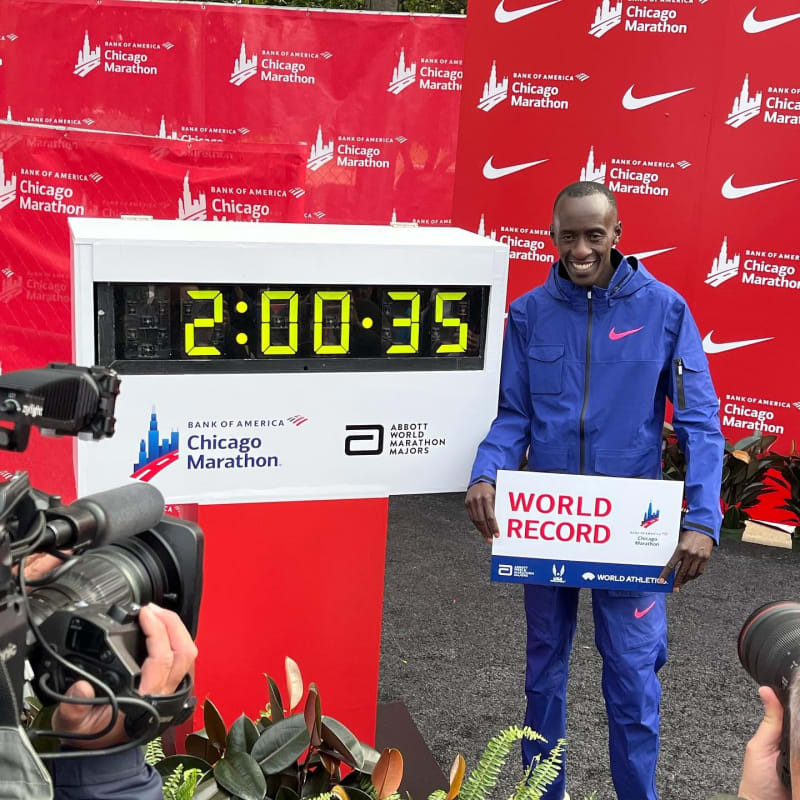
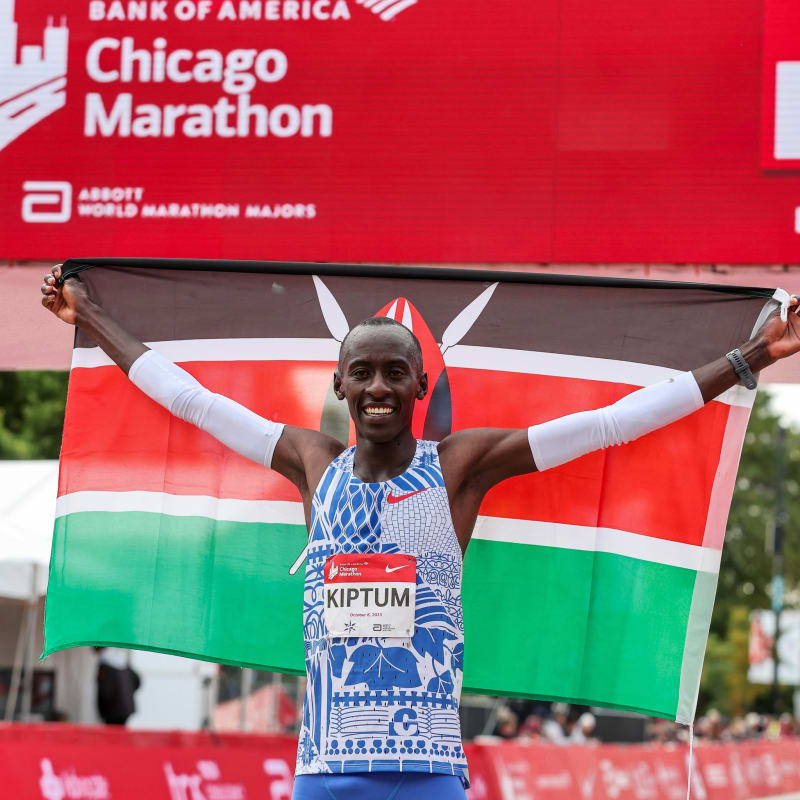
2023 | Kelvin Kiptum | 2h00’35 | Men (current course record, former world record) |
2024 | Ruth Chepngetich | 2h09’56 | Women (world record still in force) |
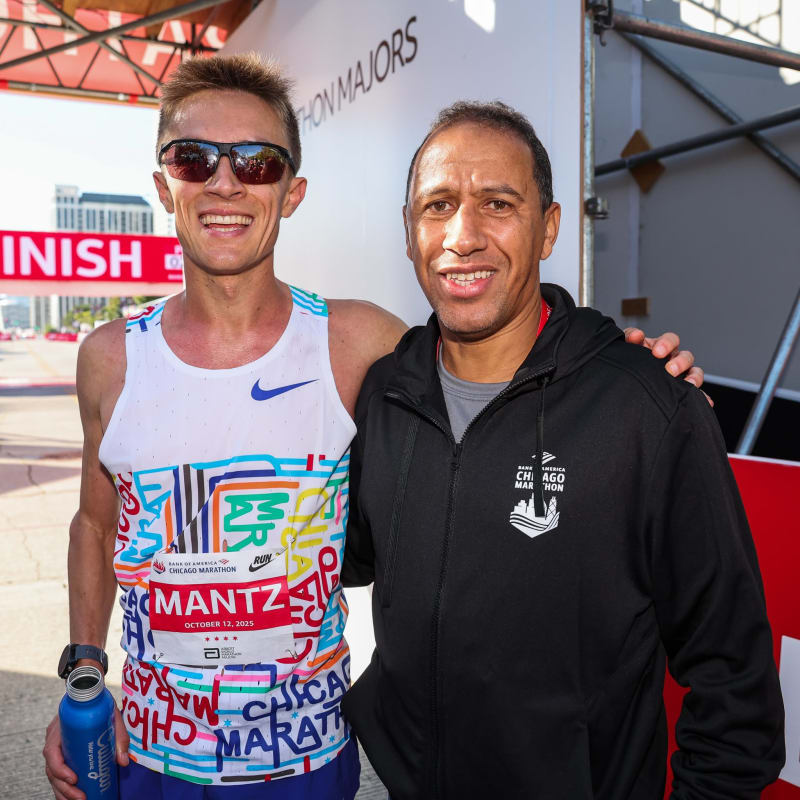
It’s also worth noting that both current U.S. national records were set on the streets of Chicago:
Emily Sisson 2h18’29 (2022)
Conner Mantz 2h04’43 (2025)
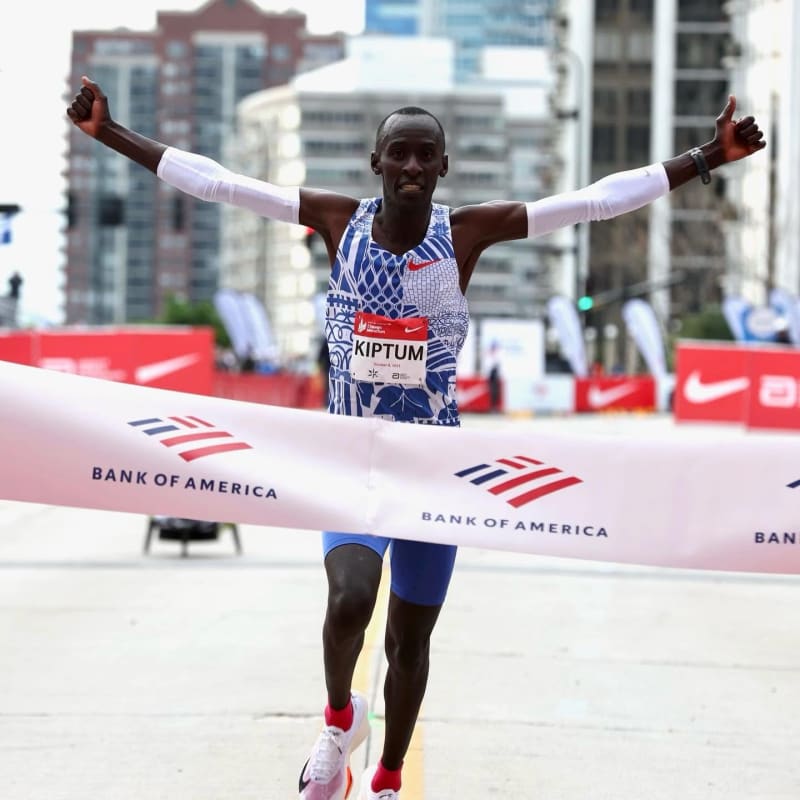
You’ve got it: in Chicago, fast times aren’t an accident. A pool-table-flat city, a route built for steady pacing, usually ideal weather, and incredible density. Seven world records. Both current U.S. records. For the elites, the numbers speak for themselves. And for everyone else, it’s the same story: runners who stick to the golden rule and don’t light it up too early often leave Grant Park with a new PR. In 2026, the 48th edition is already shaping up as one of the deepest in the race’s history, with sub-2 in the crosshairs...
➜ Find all the Chicago Marathon info on Finishers.com