

Racing Tourism: The Runners Who Plan Their Holidays Around Races
Beach holiday or marathon on the other side of the world? For racing tourists, the answer is simple: run first, explore afterwards. They don’t choose destinations for the palm trees or golden sand, but for the long straights, cobbled streets and unexpected climbs that bring each city to life. From sunrise in San Francisco to cultural stopovers in Athens, every mile becomes part of the journey, and every marathon offers a different way to discover the world.
Table of contents
- Why are there so many racing tourists?
- More choice than ever: new, original and often underrated destinations
- Who are they? As varied as the courses they run
- “The more photos and videos we see, the more we want to go”
- A thriving business built around running and travel
- Run the world: a new relationship with travel
Piña coladas, golden sand and palm trees stretching as far as the eye can see? Not for racing tourists. Well, not before or after they’ve knocked out the 42.195 km of a more or less exotic marathon. These runners don’t travel to lounge around. They travel to string together miles on foreign roads, turning every marathon into a full immersion in the soul of a city. Between cobbled streets, unexpected climbs and hot tarmac beneath their trainers, every race becomes a unique way to discover a country. Run the San Francisco Marathon at sunrise, follow it with brunch in the Mission District, then head off to a game that evening: far removed from all-inclusive packages, these getaways combine physical effort with discovery. Every marathon becomes a deep dive into the soul of a city, and Martin Leroy, co-founder of House of Runners, has noticed it too. “ I often look at Instagram, and a lot of bios say ‘I travel to run.’ It sums up the phenomenon well: a new way to discover a city.” In this context, every stride becomes a vehicle for memories, and every straight stretch an opportunity to soak up a different culture.
Why are there so many racing tourists?
This isn’t just a passing trend. It’s a groundswell. The concept appeals because it combines purpose, escape and lasting memories. After the Covid years, the desire to move, make the most of life and take a chance exploded. Many people reassessed their priorities, choosing to invest in experiences rather than possessions. And what could be more powerful than a marathon on the other side of the world, experienced as both a personal challenge and a shared adventure? For others, racing tourism, more commonly known as run tourism, becomes a source of motivation: running a local marathon is one thing; running in Tokyo is a promise of discovery, a goal that fires you up and shapes the entire year. “Today, you can really see people travelling for that reason, for Boston, Sydney or New York. Before, we would go sightseeing and then run. Now it’s run first, then sightseeing,” says Martin Leroy, before Ludovic Valentin, head of LVO, confirms it: “ A lot of people simply want to live the experience, whatever the time. Performance is secondary for some, but discovery remains essential.”
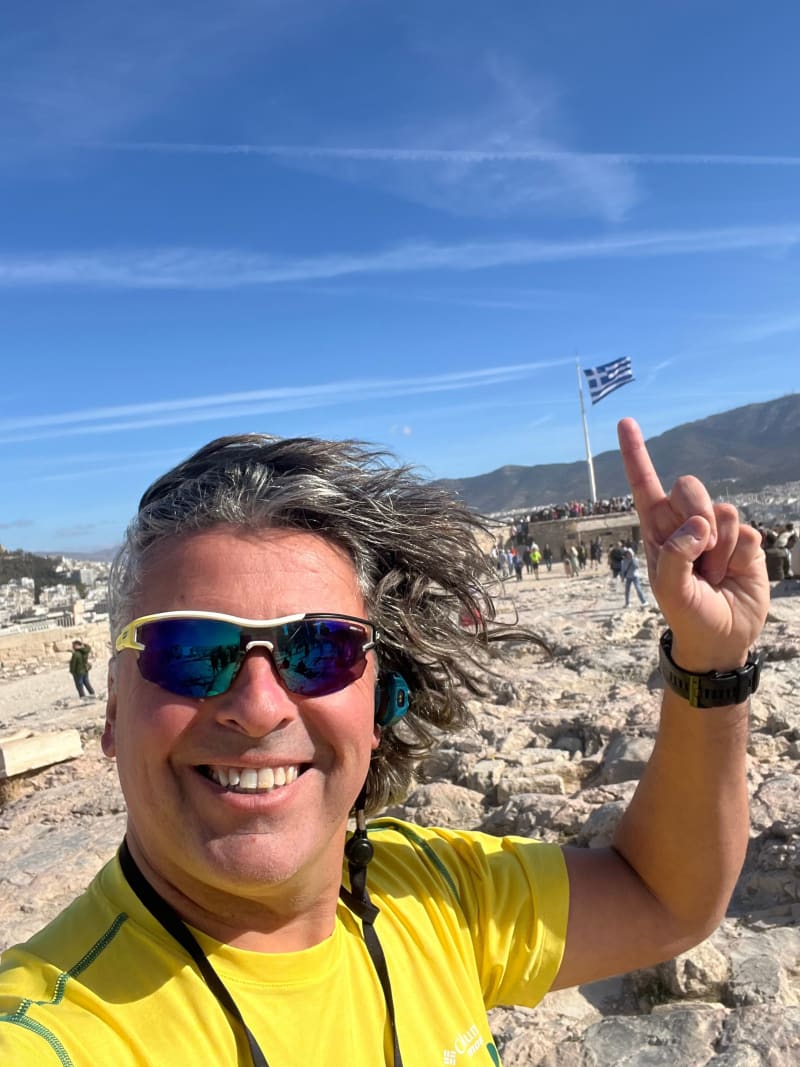 © Christophe Martimort took advantage of the Athens Marathon to stop and take plenty of photos © Photo supplied by Christophe Martimort
In an age when everything moves quickly and trips can start to look alike, a marathon offers a more involved form of travel: you don’t fly over a city, you run through it. You don’t stay in your hotel room. You take in the atmosphere, hear the cheers and feel the energy of the locals. “ I never travel just for the race, says Christophe Martimort, who has been combining racing and travel for many years. I always arrive at least a day early and stay afterwards to enjoy the place. To me, a marathon is a trip in its own right.” Every turn brings a new memory. Accessibility also plays a key role. Taking part in a race abroad has never been easier, thanks to booking platforms, low-cost airlines and specialist agencies. Organising a marathon outside France has become almost as easy as booking a weekend in Deauville. The race that left the biggest impression on this hospital heritage manager took place in Greece. “ In 2024, I went to run the Athens Marathon and booked through a tour operator. Everything was organised: the race bib, a visit to the Acropolis and even a cruise to three Greek islands the next day. It was a chance to combine sport and tourism with my wife Christiane, who joins me on some of these trips.” By combining the Athens Marathon with a visit to the Acropolis and a cruise around the Greek islands, Christophe turned the race into a genuine cultural and sensory journey. This trail enthusiast will now head for the French Riviera on 27 September to take on the Roubion – Nice by UTMB (111 km), once again embodying the spirit of run tourism: for him, running is about more than physical effort. Every stride is an excuse to discover the local heritage and enjoy a complete experience in which sport and tourism complement each other.
More choice than ever: new, original and often underrated destinations
For a long time, travelling runners focused on a handful of major classics. Today, racing tourism has spread to a wide range of destinations, some surprising and, above all, a world away from home. Guillaume Catrice, creative director at Digitrail, knows just how much the way people choose races has changed. “ Some people choose their destination before they even think about the race. They want to discover the city and the country, and the race becomes an excuse, a framework for their adventure.”
 © Stadion Actu
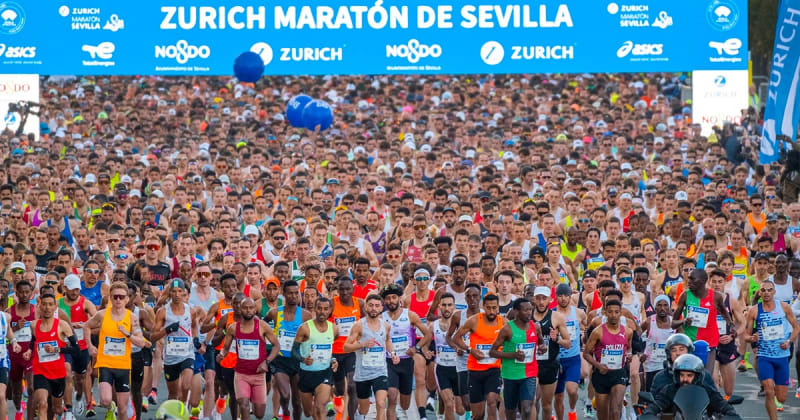
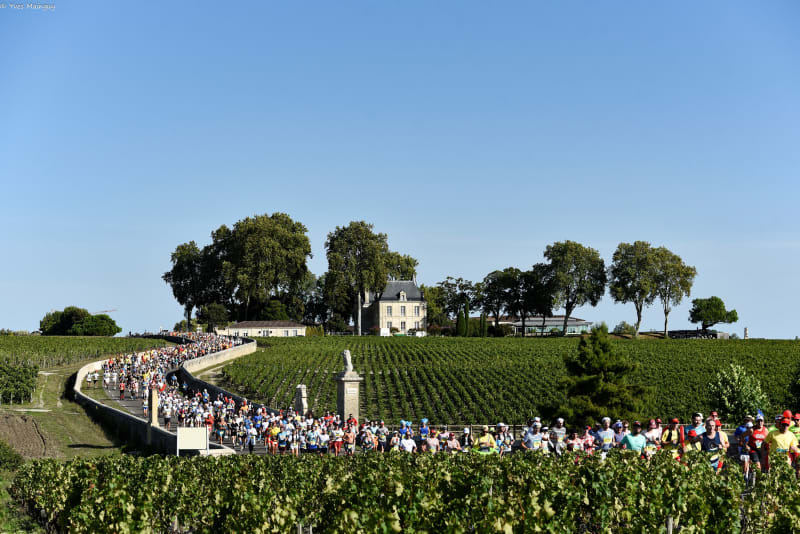
Who would have thought that the Seville Marathon would become one of the fastest in Europe, that Ljubljana’s race would win runners over with its warm welcome and friendly atmosphere, or that Pyongyang, unusual as it is, would feature on the list of some intrepid travellers? Many cities now use their race to establish themselves as tourist destinations in their own right. Tallinn, Copenhagen, Gdansk, Bordeaux, Muscat and Valparaiso offer distinctive courses, an authentic atmosphere and plenty of reasons to extend the trip after race day. Even the most extreme marathons have found their audience: a polar race in Greenland, the Mount Fuji Marathon and the Great Wall Marathon in China.
Who are they? As varied as the courses they run
There’s no standard profile for a racing tourist. The phenomenon reaches far beyond the usual stereotypes. You’ll find seasoned marathoners who rack up fast times and tick off major races like other people collect trophies. But they’re not the only ones.
“We don’t always run to set a record. A lot of people simply want to live the experience, soak up the atmosphere and make memories.”
Guillaume and his partner Laura sum it up perfectly. “ We don’t always run to set a record. A lot of people simply want to live the experience, soak up the atmosphere and make memories.” Many arrive wanting to experience their first major race in a setting that inspires them. Others take the slow-run approach, camera in hand and a smile on their face, with no pressure. Some run in groups, with friends, partners or family, turning the marathon into an excuse to organise a group trip. Sport creates the bond, travel strengthens it, and some even take turns: while one person runs, the other explores, and vice versa.
“The more photos and videos we see, the more we want to go”
Without Instagram, Strava and YouTube, run tourism probably wouldn’t have taken off in quite the same way. These platforms fuel the desire, provide inspiration and give these adventures a tangible presence. Martin Leroy has seized the opportunity to establish himself in the sector. “ We help runners, content creators and brands tell the story of these experiences. The social dimension is essential because it creates a snowball effect: the more photos and videos we see, the more we want to go.” Influence has become a key driver of racing tourism, turning each race into a global showcase for both the city and the event. “ We brought six or seven international profiles to the Paris Marathon. The idea is for them to share their experience and attract an international audience the following year,” Martin explains.
Running influencers have emerged, building audiences around their sporting adventures, filming races on GoPros and sharing logistical headaches, highlights and advice. Run tourism has become content in its own right, making others want to follow suit. Strava helps extend the experience: you follow your friends around the Rome course, congratulate your cousin on their half marathon in Dubai, and compare pace profiles and elevation gains. Even after the race, the adventure continues.
A thriving business built around running and travel
The rise of running holidays hasn’t gone unnoticed. Specialist tour operators, sports agencies, airlines, hotels: an entire ecosystem is developing around these travelling runners. “ International races often require logistical support, explains Ludovic Valentin. Specialist agencies allow runners to focus on their race and enjoy the experience.” Some cities have no hesitation in using their marathon as a tourism draw: Prague estimates that its marathon generates more than €15 million in economic impact, while Valencia is banking on its race to boost the city’s image. “ It’s an international dynamic, Leroy insists. We also work with people from abroad who are looking for race entries to the Paris Marathon or events in France.”
“I see run tourism in three stages: before the race, with the preparation; the race itself; and afterwards, when you spend several more days enjoying yourself, carried along by the dopamine.”
The services these runners seek go well beyond a race entry: support, logistics, accommodation, sightseeing and shakeout runs are all designed to keep their energy focused on race day. “ Performance comes from arriving as fresh and focused on the event as possible, with everything else taken care of,” Leroy says. Racing tourism has now become a structured economic model that benefits agencies, organisers and cities. “ This communication and amplification dynamic helps develop participation in sport and brings new people into running,” he adds. The phenomenon has also caught the attention of specialist media. Finishers, a reference point for tracking major races, is seeing a genuine surge in overseas entries, proof that run tourism is becoming a lasting part of runners’ habits.
 © Marathon des Châteaux du Médoc 2025 © AMCM/Mainguy
Run the world: a new relationship with travel
Racing tourism is therefore establishing itself as a new way to travel: active, structured and immersive. “ I see run tourism in three stages, Christophe Martimort explains. The preparation beforehand, the race itself, and then the aftermath, when you spend several more days enjoying the destination, carried along by the dopamine. Run tourism is about living a great adventure in the broadest sense. There’s the race, of course, but above all you need to enjoy everything around it. ” It’s a reminder that running abroad isn’t just about clocking up miles. It’s about living an experience that starts long before the starting line and continues well after the finish.
You don’t need to be an elite marathoner to enjoy it: 10Ks, half marathons and relay races all follow the same principle, offering a different way to see a place. “Today, we don’t travel somewhere by chance anymore,” says Guillaume Catrice. The race gives the trip structure and a purpose, and lets you experience a city differently.” At a time when mass tourism is increasingly criticised, these sporting trips offer a more human and responsible alternative. You run, explore and breathe it all in. And you return home with much more than a tan: an experience, a medal and a little piece of the world in your legs.
More articles

Night races: why does everyone want to run while everyone else is asleep?
From Glow Runs to low-key trail races, night running is taking off, offering a more festive experience and a different relationship with the clock.
Thu, September 10, 2026

Kenya, the distance-running powerhouse in a country where running is king
How Kenya became distance running’s powerhouse, from Kipchoge Keino to Eliud Kipchoge and the generations shaped by its unique culture.
Thu, September 10, 2026

Running Tattoos: When a Finish Becomes a Work of Art
Race memories in ink, from marathon finish times to GPS traces, with tattoo artist Agathe Cossement on the risks and precautions.
Thu, September 10, 2026