
From Roland-Garros to the Road: When Tennis Players Take on the Marathon
 © Archives N. Mollo
Chasing a ball, then chasing a time: for many former tennis players, the transition to marathon running is anything but obvious. And yet the mental demands, physical discipline and appetite for a challenge are remarkably similar. Several big names have already made the switch.
As Roland-Garros and its new stars Carlos Alcaraz and Jannik Sinner head into their second week, Marathons.com took a closer look at the unlikely relationship between the yellow ball and the 42.195 km we hold so dear. On paper, tennis and the marathon seem worlds apart: explosiveness versus endurance, head-to-head competition versus solitude, quick-fire points versus prolonged effort. But underneath, they have far more in common than it might seem. “Running a marathon is a bit like playing a five-set match,” reckoned Paul-Henri Mathieu, the French finalist at the Paris-Bercy tournament in 2002. “You go through every emotion, manage your energy and deal with the highs and lows.” For him, the taste for hard work didn’t disappear when his career ended. It simply found a new outlet. The same goes for Russian Marat Safin, a former world No. 1 and co-coach of his compatriot Andrey Rublev during the Paris Grand Slam, who said he had always been drawn to disciplines where you are alone with yourself: “No opponent, no coach to help you, just you and your legs. That’s what excites me about running.”
The call of the road for tour regulars
This attraction isn’t limited to the pros. Camille, a former 15/2-ranked player and now a keen half-marathon runner, experienced the transition as a liberation: “I put my racket down after an injury and started running without a goal. But I quickly found sensations that reminded me of tennis: the idea of progression and self-control. And honestly, it feels good not to have someone across the net to beat.” For many former players, running becomes a refuge. A way to keep challenging themselves without outside pressure. Gustavo Kuerten, a three-time French Open champion, explained in an interview with a Spanish media outlet that he ran regularly to recenter himself: “Tennis is incredibly demanding mentally. Running is the opposite. You enter a kind of mental void and tune in to your breathing.”
A well-honed physical foundation
You don’t have to start from scratch when you’ve spent your life training on court. When it comes to marathon matches, the Nicolas Mahut-John Isner match, famous as the longest in tennis history at more than 11 hours at Wimbledon, immediately comes to mind. The American joked in an interview with ESPN: “I’ve never run a marathon, but after that match against Mahut, I think I have a pretty good idea what it feels like.” They have the endurance. The discipline, too. What are they missing? “Sometimes, it’s simply the desire to hurt for that long,” smiles Maxime, a Paris-based coach who has worked with several former tennis players looking for new challenges. “But once they get a taste of it, they usually line up for official races very quickly.”
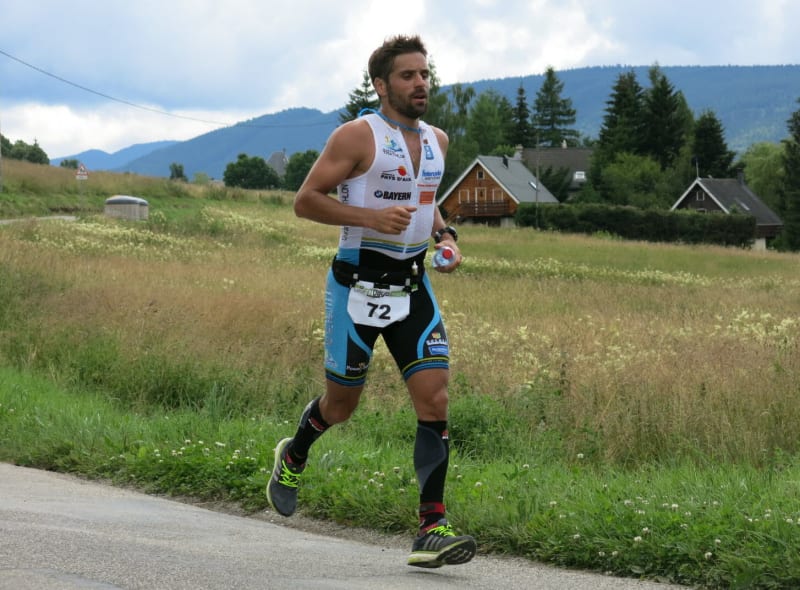
That’s the case for Amélie Mauresmo, the current director of Roland-Garros, and Arnaud Clément, both passionate runners. Now based in the Basque Country, the former world No. 1 has run several marathons, including Biarritz, where she finished an impressive second among the women in 3:16:41. She also owns a personal best of 3:14:13, set at the San Sebastián Marathon in 2022. Her move into running shows the continuity of the commitment and discipline she developed on the tennis court. Her compatriot, the 2001 Australian Open finalist and former captain of France’s Davis Cup team, has also found a new outlet in running. In an episode of the “Course Épique” podcast, he explained how running allowed him to maintain regular physical activity and recapture sensations similar to those he experienced in competition.
Some are getting into it while still competing
Running isn’t just attracting players who have retired from the tour. Gaël Monfils, still active and the king of entertainment at Porte d’Auteuil, occasionally shares his runs on social media. “Running helps me escape,” Monfils admitted. “It’s not the same intensity as tennis, but it works my cardio in a different way.” Stan Wawrinka also seems tempted by the marathon one day. “What I look for in sport is pushing beyond my limits. I found that on the court, but I think I could experience it in a marathon too. It’s another form of battle.” Novak Djokovic, who sometimes runs as far as 20 km during his training, recognizes that it’s another way of handling the decisive point. Except that instead of a down-the-line backhand, it’s a final straight to absorb with every ounce of your strength. Then there’s the relationship with the crowd, the love of ritual, the surge of adrenaline at the start or when stepping onto the court.
Running with #RG18 ball boys and girls before the stadium opened today. Very special tradition in my heart 😄🏃♀️🏃♂️ pic.twitter.com/cz3lldVIKy
— Novak Djokovic (@DjokerNole) June 1, 2018
Two kindred disciplines
One unfolds through rallies, the other through miles. But both demand the same mental toughness. “You’re alone, managing the pain, the doubt and the rough patches,” sums up Camille. Just like on a tennis court, except here you don’t collapse after a winning passing shot, but against a wall at 35 km. Beneath the differences in surface and pace, the same mechanisms come into play: manage the effort, read your body and stay on track. In a tennis match as in a marathon, there is always a point when everything starts to wobble. When your legs scream for you to stop and your mind begins to falter. That’s where the gap opens up between the good and the relentless.
The recently retired Rafael Nadal, known for his devotion to routine, could almost find in the marathon the same need to structure the effort and ritualize pain in order to master it. The connection lies in that ability to make your body an ally, even when it is begging to give up. Tennis and running aren’t alike, but they understand each other. They are parallel worlds, sometimes inhabited by the same kind of soul: solitary, resilient, a little crazy and deeply in love with hard work. Small wonder so many former tennis players trade their racket for running shoes without really leaving the playing field behind.
Tennis and the marathon may not be so far apart after all. They speak the same language: sweat, mental strength and pushing beyond your limits. Sometimes, all it takes is putting down the racket to hear the call of the asphalt. Could Djoko be next?