
Grand Raid du Finistère celebrates its third edition
 © Grand Raid du Finistère
The Grand Raid du Finistère is no ordinary race. The event was born just after Covid, in 2020, when a runner asked François Hinault, now the race organiser, whether he fancied running around the Crozon Peninsula. Hinault agreed, then decided to open the adventure to anyone interested. Around 50 curious runners took on the two available distances, 140 km and 57 km. The start and finish were held... in François Hinault’s mother’s garden. The concept was simple: runners could set off whenever they wanted between 5 and 6 p.m., following a GPX track. Today, the field is 100 times larger. For the third edition, taking place on September 19 and 20, 2,000 participants and 300 volunteers are expected.
François Hinault, the founder of the Grand Raid du Finistère (GRF), is an ultrarunner himself. Through the event, the Breton, who lived in Telgruc-sur-Mer for 20 years, hopes to showcase the natural treasures of his home territory. For him, the GRF is a powerful way to push beyond one’s limits. His mission is to combat sedentary lifestyles, something he also promotes through his podcast, “L’instant Outdoor.”
The organisers want to offer runners a different kind of experience and stand apart from the many races held across France. Several formats are available, both solo and as a relay. Solo runners can choose the GRF166 (166 km, 3,700 m of elevation gain), the GRF92 (92 km, 2,100 m of elevation gain), the GRF56 (56 km, 1,200 m of elevation gain) or the GFR18 (18 km, 300 m of elevation gain). The relay option, Le Relais à 4, covers the full 166 km, split between four runners over 38, 37, 36 and 55 km. Relay runners face the same race conditions as solo competitors.
Breton landscapes at every turn
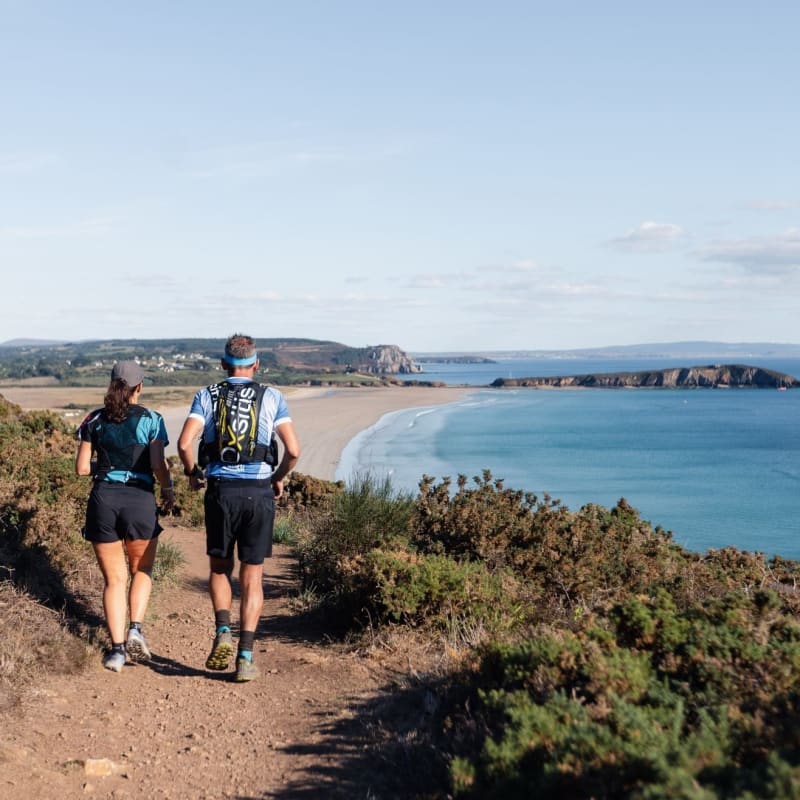
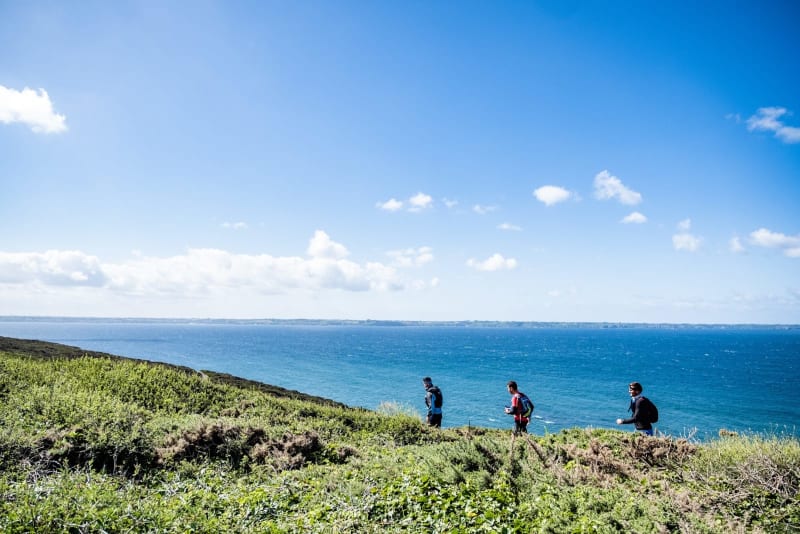
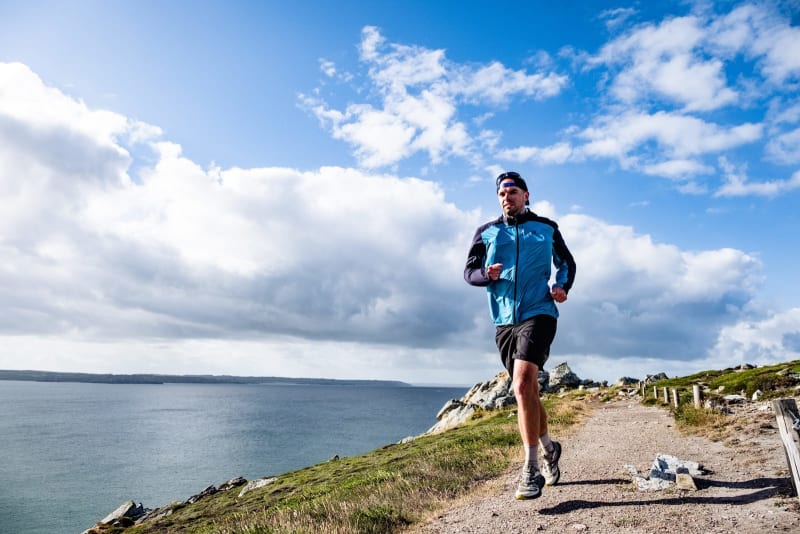
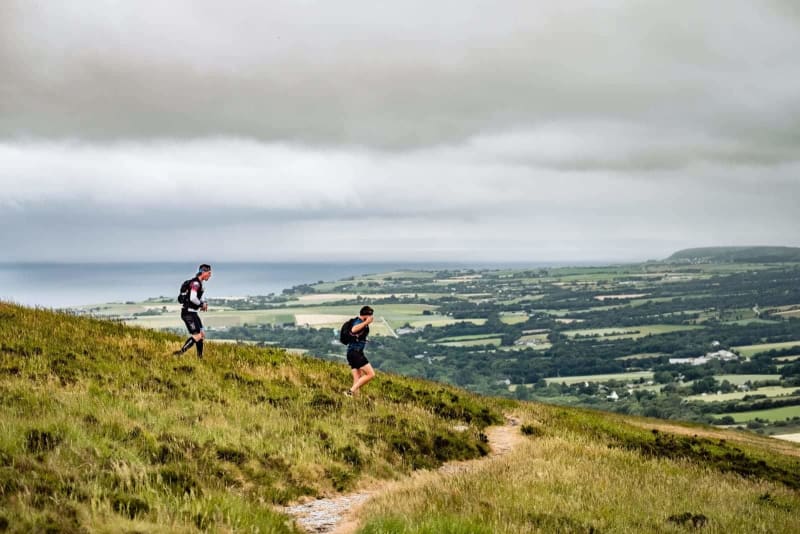
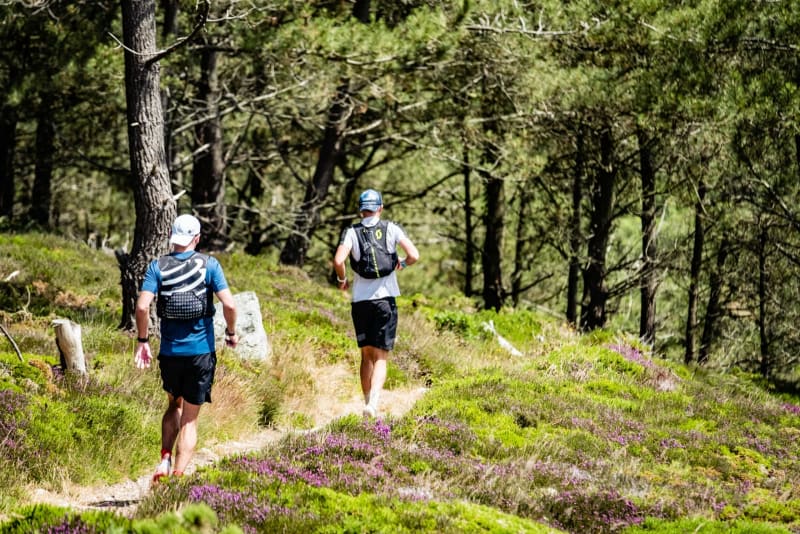
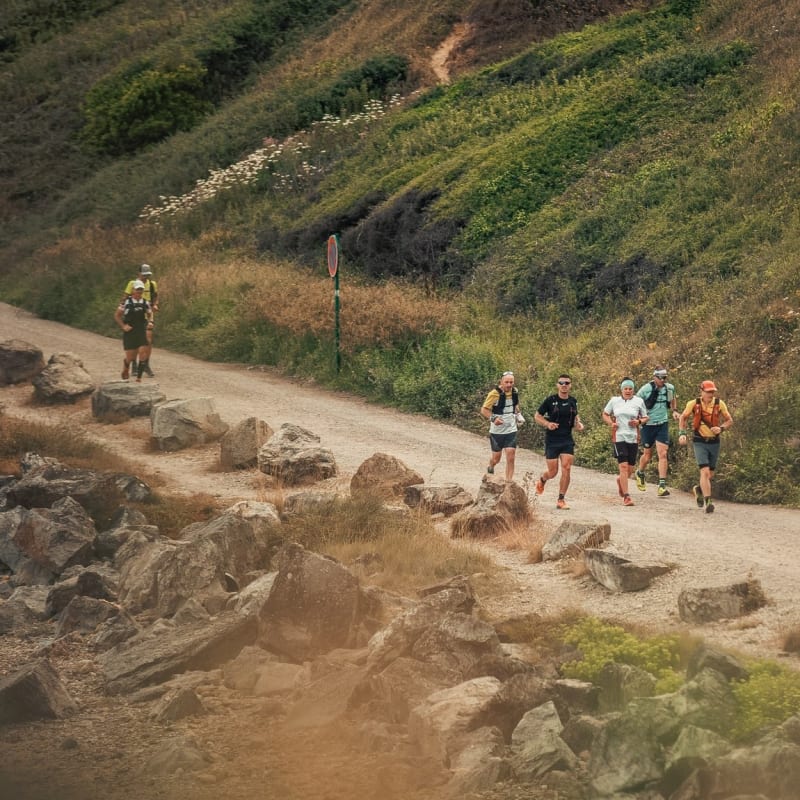
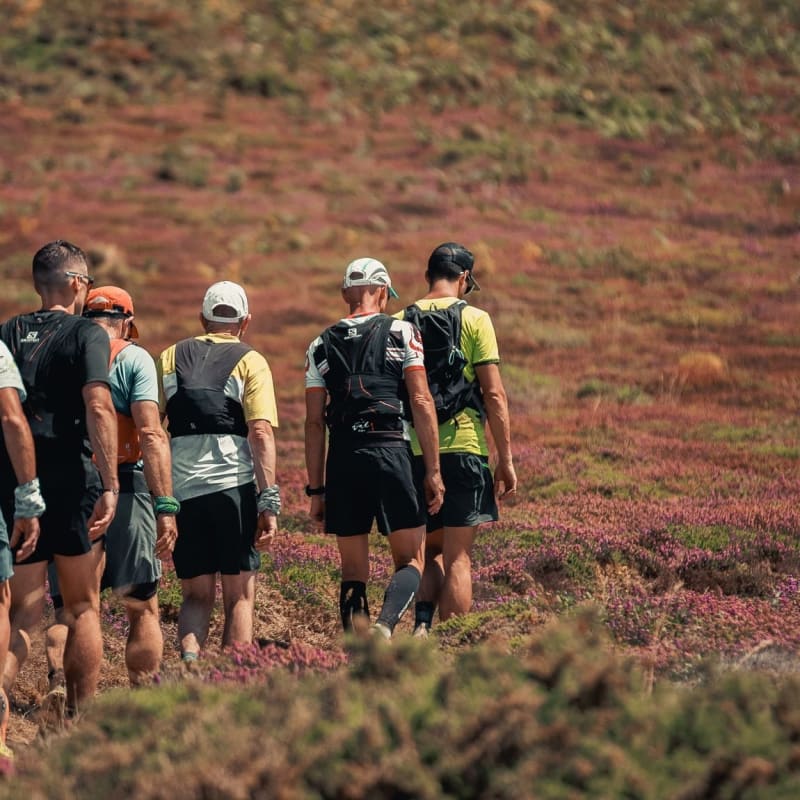
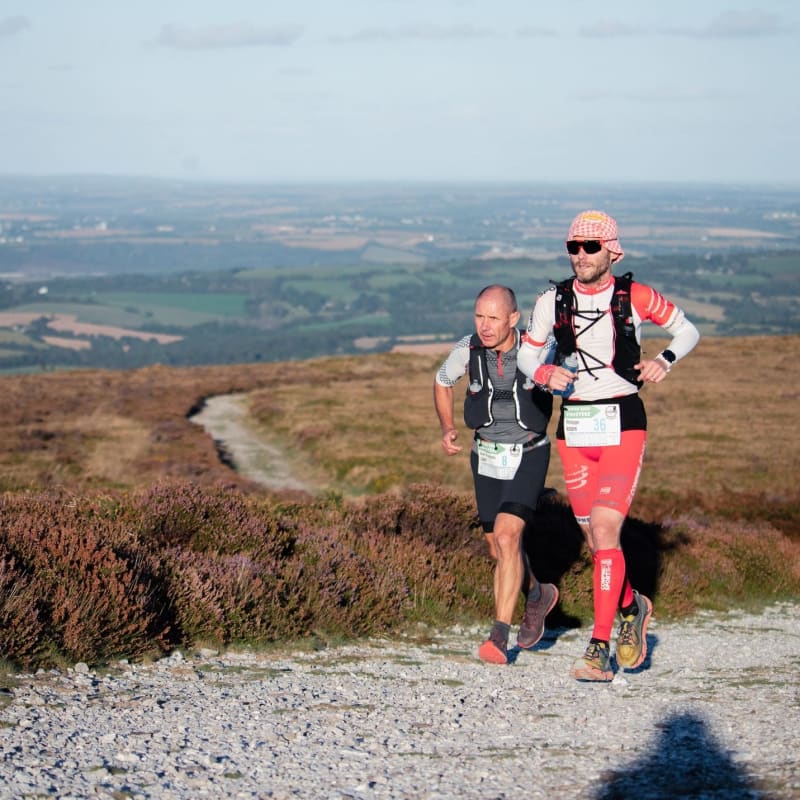
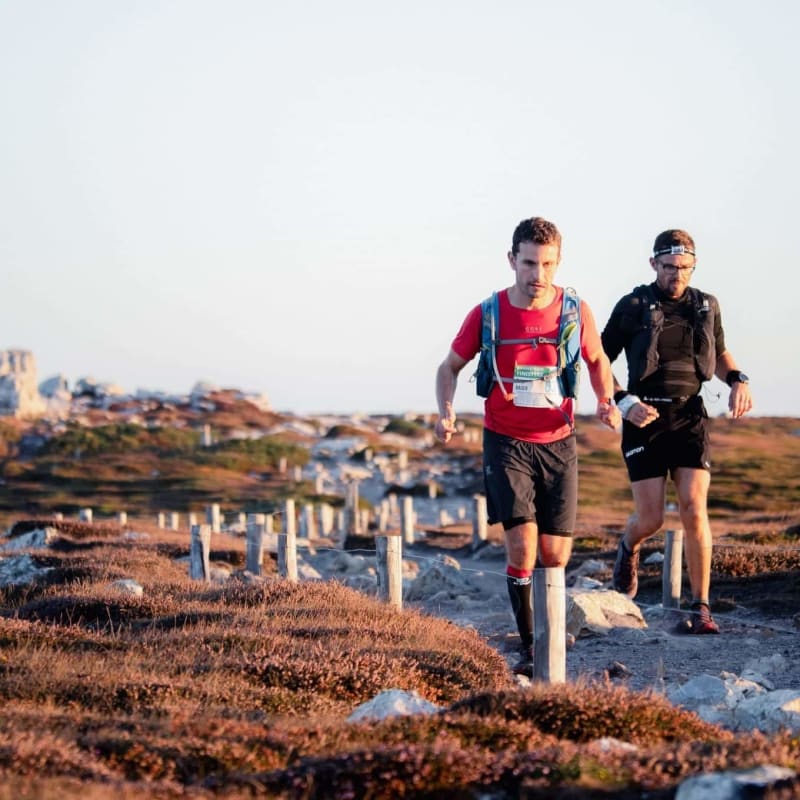
With cliffs, coastal paths and woods overlooking the sea, the route is spectacular. It crosses 12 municipalities, with most of the course running alongside the ocean. Runners must also climb Ménez Hom, rising to 330 m and marking the highest point on the route. This section comes at sunset, when the panoramic view across the peninsula is at its best. The most determined runners then descend into the night towards Brest harbour and Pointe des Espagnols. The trail follows a long stretch of coastal path, taking in standout landmarks including Pointe de Pen-Hir, Cap de la Chèvre and Virgin Island beach. The section from Cap de la Chèvre to Morgat, around kilometre 140, is probably the toughest and most technical part of the course. Every distance except the 18 km uses this section on the way to the finish. Since runners follow a GPX track on their watch, 29 checkpoints are set up along the long course.
What makes the GRF different? According to the organiser, it is “an organised off-road adventure with full safety cover, more an adventure than a job.” François Hinault describes it as a “personal challenge” rather than a “race against the clock.” The cut-offs are generous, although the longest distance has a 31-hour limit.
In 2024, Lucas Tanné won the GRF166 in 19:10:55. Jérémy Treguer (19:29:01) and Aurélien Garreau, (19:51:45) completed the podium. In the women’s race, Angélique Cariou was fastest in 23:49:40 (13th overall). Myriam Gallet (25:43:46) and Cristina Anghel finished second and third in the women’s standings, respectively.
 © Grand Raid du Finistère
 © Grand Raid du Finistère
 © Grand Raid du Finistère
 © Grand Raid du Finistère
 © Grand Raid du Finistère
 © Grand Raid du Finistère
 © Grand Raid du Finistère
A genuinely eco-conscious trail race
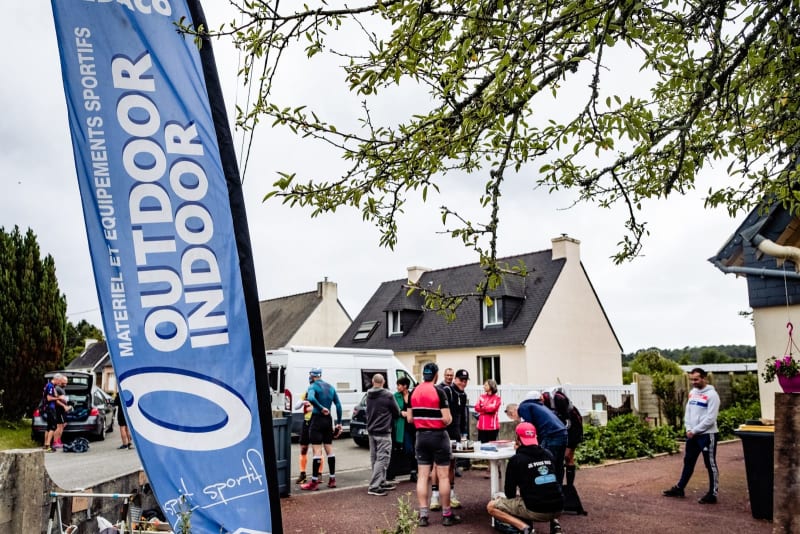
The Grand Raid du Finistère is not looking to increase its number of race entries every year. François Hinault explains: “Since transport accounts for 80% of an event’s carbon footprint, we cap the number of runners at 1,500.” Other measures are in place to protect the environment. The Crozon Peninsula is a protected area, so poles are banned to help prevent trail erosion. There is no course marking either. A shuttle network is provided, and the organisers have limited the time runners can spend on the trails at night to avoid disturbing wildlife. There are no aid stations, apart from water, to reduce food waste. Bases are set up at various points along the route so runners can access their own food, packed in their bags.
This year, the event is taking its environmental commitment further with an impact study based on observations made during the races, discussions with those involved in designing and managing the event, and information shared through the website and communications materials. Every participant is also invited to complete a satisfaction survey to help improve the event. This celebration of sport was designed alongside local organisations including the National Forestry Office, Natura 2000, Armorique Regional Nature Park, the Conservatoire du Littoral and local environmental protection groups. The trail is therefore part of a genuinely eco-conscious approach.
“The GRF will never become a mass race welcoming thousands of runners. The event was born in a garden, with a barbecue shared at the finish. We want every runner to feel part of that family atmosphere,” the organisers say.
The entry system is designed to be fair and avoid the injustices of a standard lottery. The Grand Raid du Finistère uses a weighting system: runners who applied this year but were not selected will have twice the chances of other entrants at the next edition. Those who have already taken part will have a 0.5 weighting. It is a fair system, and one that clearly appeals, since every race sold out very quickly.
The GRF will never become a mass race welcoming thousands of runners. The event was born in a garden, with a barbecue shared at the finish. We want every runner to feel part of that family atmosphere.
A friendly, family atmosphere
Activities are scheduled before and throughout the event weekend.
➜ On September 18, from 7:30 p.m., a workshop will be held at the Telgruc-sur-Mer nautical centre: “Running as a woman: listening to your body, pushing your limits and returning safely.”
➜ Children’s races for the local school will take place on September 19.
➜ For the 166 km race, live tracking will be available, with the race broadcast on a giant screen from 4:30 p.m. Spectators are encouraged to head to the summit of Ménez Hom between 7 and 9 p.m. to cheer on the runners as the sun sets.
➜ On September 20, a children’s area will be open all day, alongside an official GRF shop. A 10 km hike and the return of live race coverage will round out the festive weekend. More activities are planned throughout the day, including a brass band from Quimper, Les Zingueur’s Band. A DJ will then keep the evening going until the final participants arrive.
The organisers are particularly keen to recognise their volunteers: “All 2025 volunteers will be guaranteed a race entry in 2026. It is a way of thanking them and giving local people priority.”
 © Grand Raid du Finistère
 © Grand Raid du Finistère
 © Grand Raid du Finistère
 © Grand Raid du Finistère
 © Grand Raid du Finistère
 © Grand Raid du Finistère
 © Grand Raid du Finistère
 © Grand Raid du Finistère
 © Grand Raid du Finistère