
Why the Rome Marathon Is a Race You Have to Run at Least Once
 © Rome Marathon
In Rome, you are not just running a marathon: you are crossing twenty centuries of history. From the Colosseum to the Vatican, the Rome Marathon is a legendary race and a vast open-air museum. The course is fast, the weather is often kind, and everything seems in place for a strong performance. But in this seemingly perfect setting, runners face one particular challenge: Rome’s cobblestones. Charming for tourists, far less forgiving on a runner’s ankles. We took a close look at the course of this truly distinctive marathon.
Rome, a marathon steeped in history
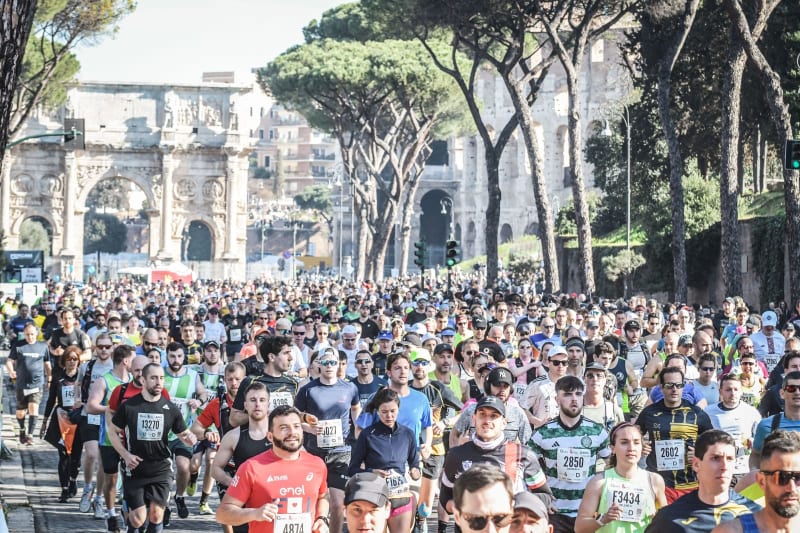
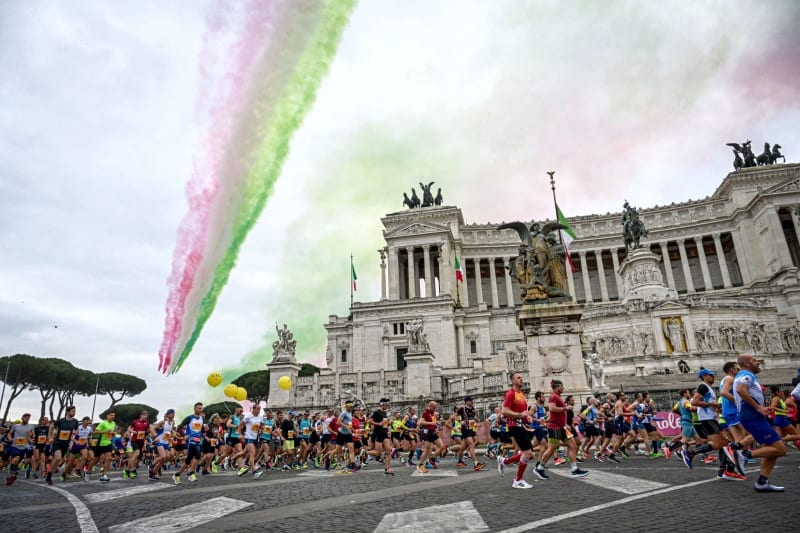
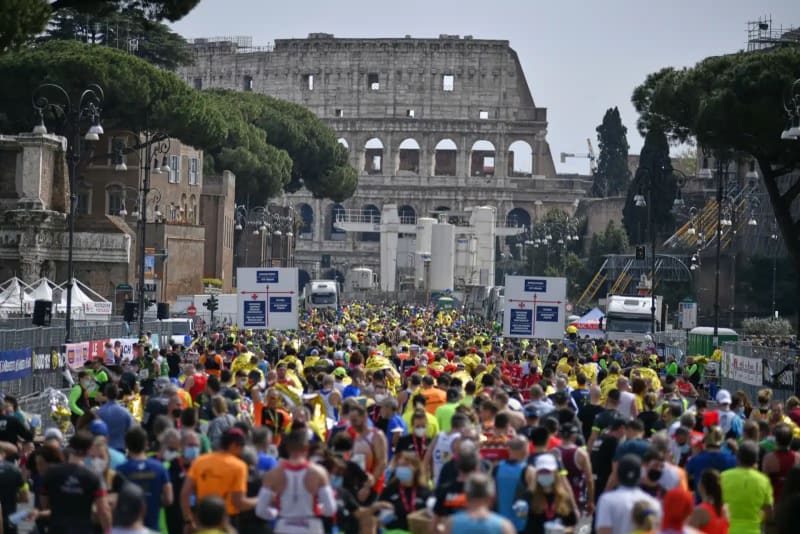
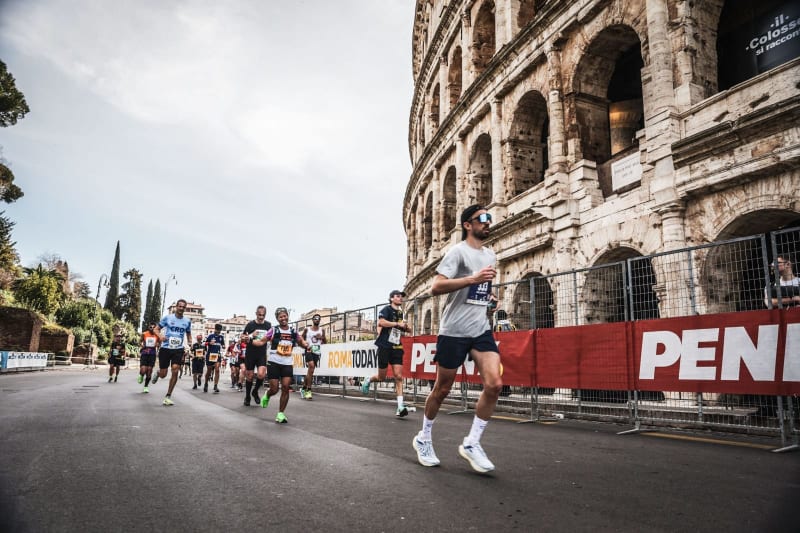
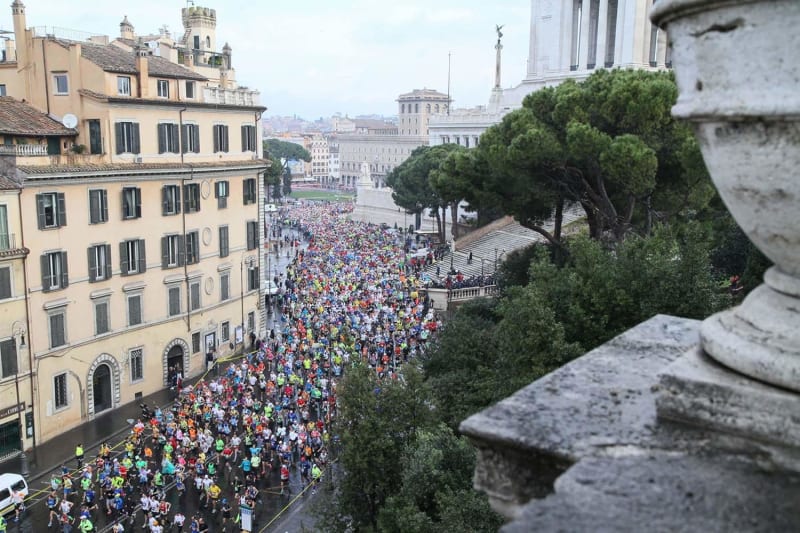
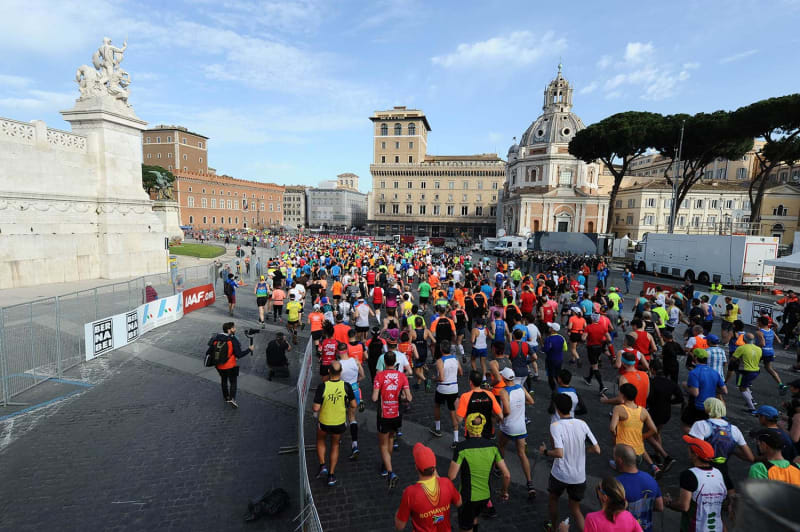
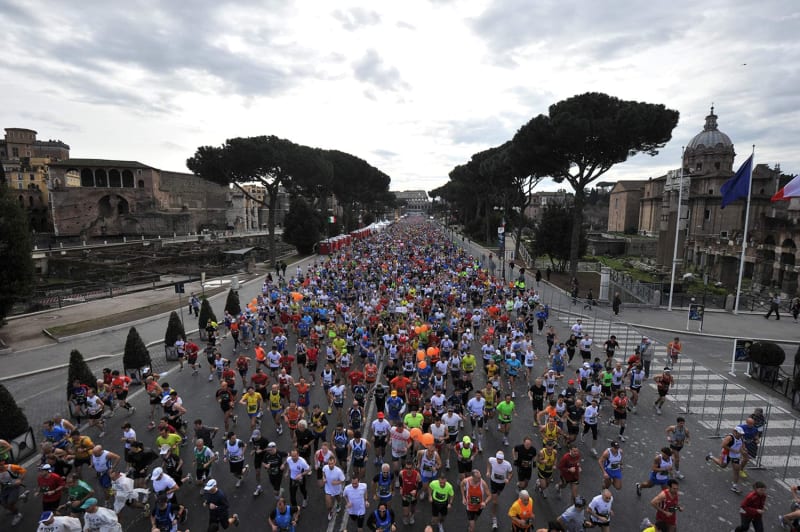
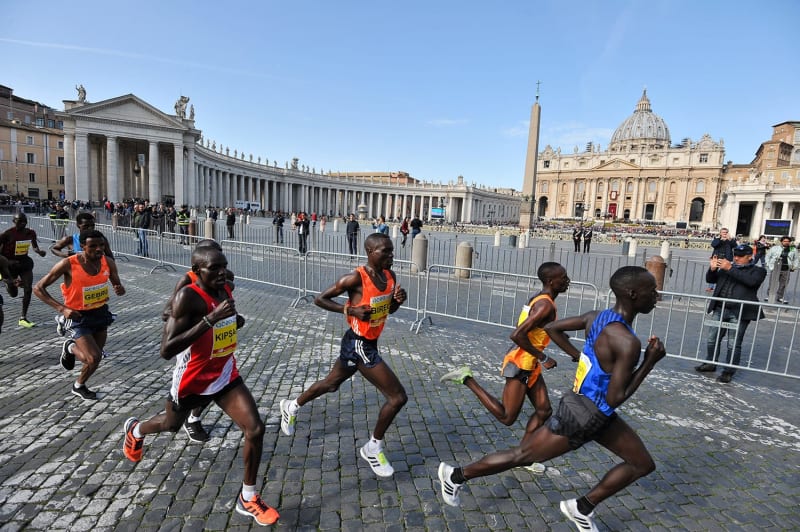
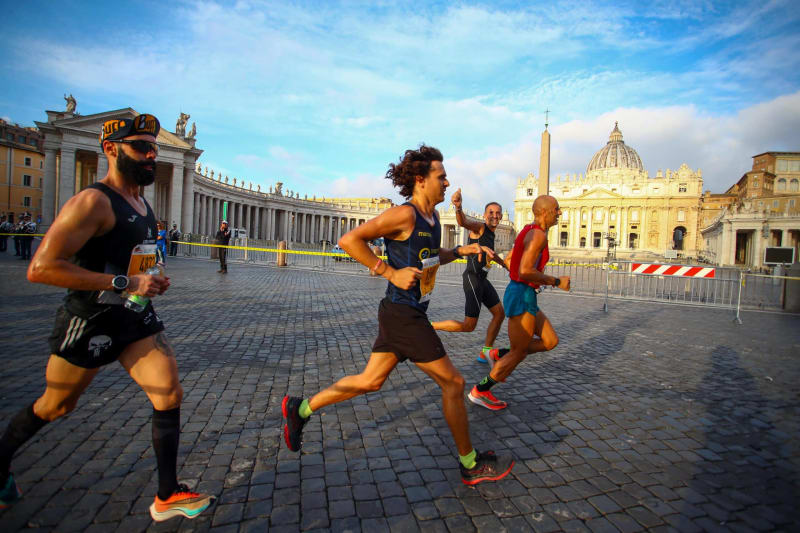
The Rome Marathon is above all about atmosphere. The race starts just a stone’s throw from the Colosseum, and the finish in the Circus Maximus makes runners feel as if they are replaying a scene from Gladiator. It is hard to imagine a better setting for tackling the classic distance. Within a few strides, runners move from the world of ancient myth into the modern chaos of the city, passing grand squares framed by magnificent architecture, narrow streets, bridges and basilicas. Italian charm in all its glory. Hugo, who finished the race in 2023, still remembers it fondly: “Rome was my second marathon. I loved the experience. You reach St Peter’s Square very quickly by running up the Via della Conciliazione, which is closed to traffic for the occasion. It was simply one of the most iconic stretches I’ve ever run.”
Certified by World Athletics with Elite Label status, the race ranks among Europe’s major marathons. Aid stations every 5 kilometres, a great atmosphere in the historic centre and thousands of spectators lining the Tiber. It is a huge celebration for the city. In 2025, more than 50,000 finishers crossed the finish line across the different events, including the 5K, relay marathon and marathon, with 21,000 of them running the marathon distance.
 © Rome Marathon
 © Rome Marathon
 © Rome Marathon
 © Rome Marathon
 © Rome Marathon
 © Rome Marathon
 © Rome Marathon
A course built for a fast time
Better known for its beauty than its records, the Rome Marathon nevertheless offers a fairly fast course. The race records show that it is possible to run quickly through the Italian capital’s streets: 2:06:24 for the men and 2:22:52 for the women. Total elevation gain is around 100 metres, making this a relatively flat course. A few climbs will force runners to adjust their pace during the first half, but nothing particularly daunting. In short, there are no major difficulties to report.
The course can even lend itself to a negative split, provided you do not get carried away too early. Along the Tiber, the long straight sections beside the river make you want to pick up the pace, especially while your legs are still fresh and the city is waking up around you. But experienced runners know the score: in Rome, it is better to save something for the second half so you do not pay for it on the final climbs... and on an unusual feature that gives this marathon its identity.
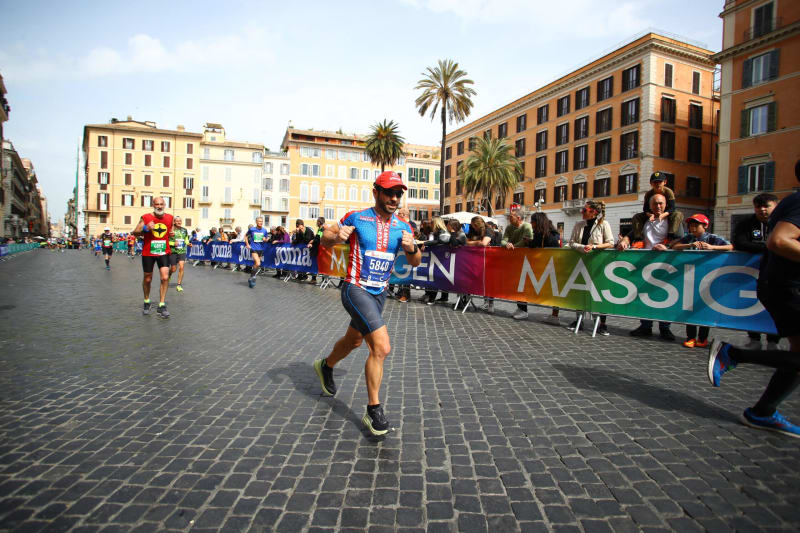
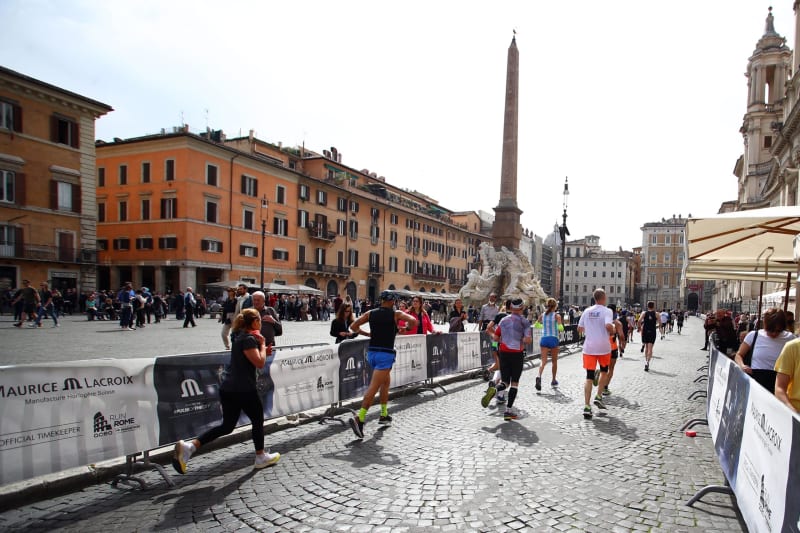
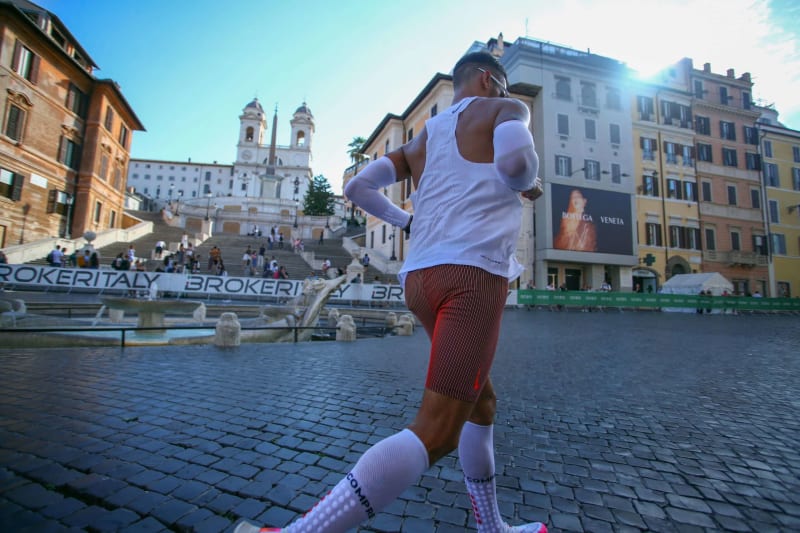
As if the final 12 kilometres of a marathon were not tough enough, the cobblestones appear during the last third of the race, between the 30th and 40th kilometres. The worst possible timing, some might say, just as the legs start to sting and the mind begins to waver.
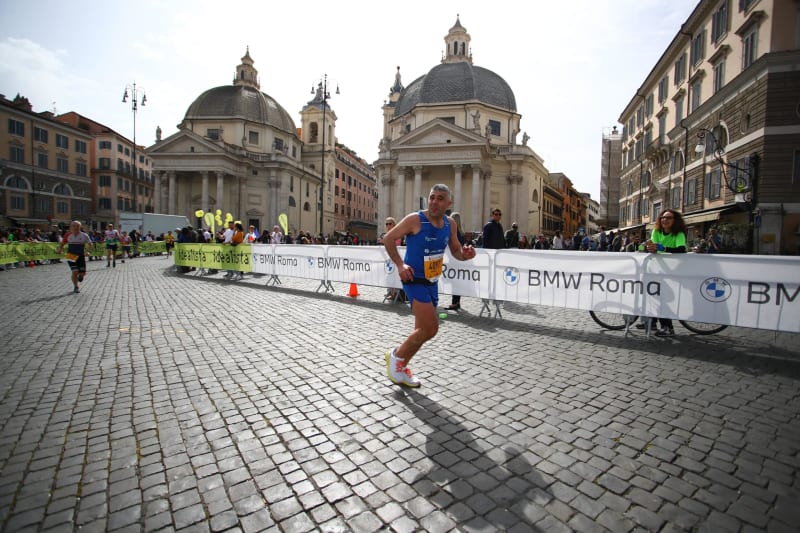
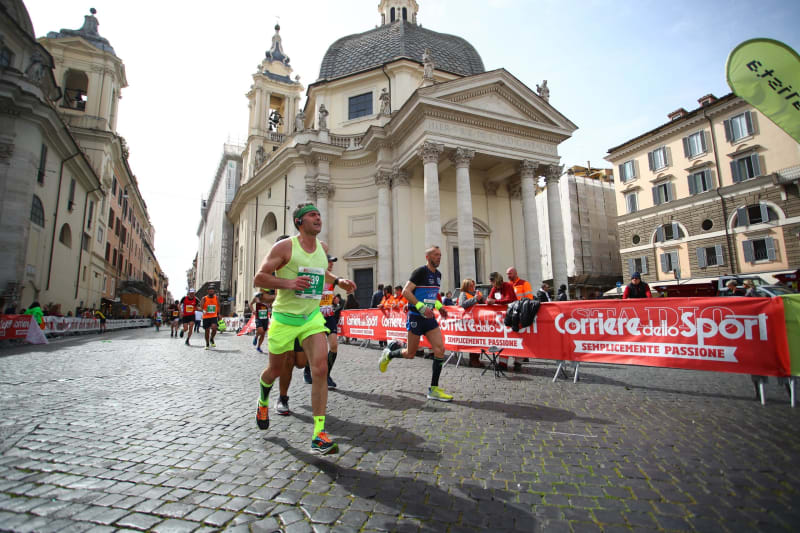
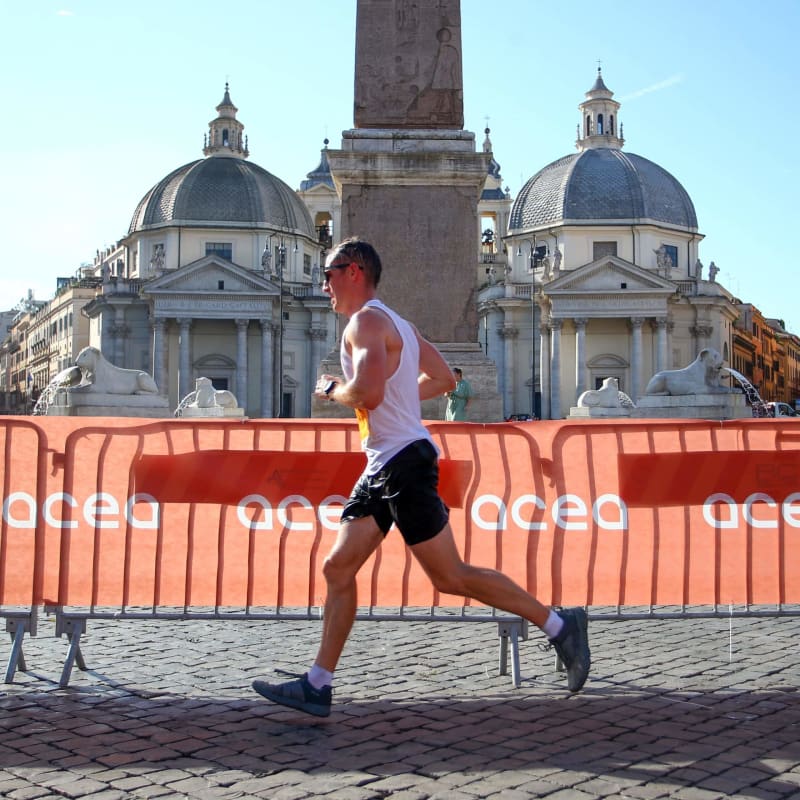
I have great memories of the final 10 kilometres, which take place in the historic centre. I had been warned about the “cobblestone hell”, but in the end they are fairly wide and even, apart from a few more technical sections, including a 180-degree turn near Piazza del Popolo. The closing stretch winds through small streets, and the further you go, the more you feel that you are entering the heart and soul of Rome. It was magical.
Rome’s cobblestones: a technical challenge, but nothing insurmountable
You often hear that cobblestones “break your legs”. That is only half true. In Rome, the cobbled sections account for around 20% of the course, and the surface has been improved in recent years. Modern shoes, with their generous cushioning, absorb vibration better than they used to. But be careful with ultra-light carbon-plated models. On uneven ground, stability matters more than weight.
The real difficulty is managing everything at once. From the 30-kilometre mark, fatigue sets in and concentration starts to fade, yet you still have to control every detail: place your foot carefully, avoid uneven slabs, keep your stride moving, monitor your pace and remember to take on fluids and fuel. That is a lot to handle with a brain already running low on glycogen. But that is also what running in Rome is about: covering centuries of history on foot. These cobblestones, the sampietrini, have seen chariots, emperors and pilgrims pass by since the 16th century. Their name comes from St Peter’s Square, the first place to be paved with them. These basalt blocks, polished by time, are part of the city’s identity, but they can be very slippery, especially in the rain.
On these slabs, it can feel as though you are dancing on your ankles: your stride shortens, you become more cautious, your eyes drop and your back tightens. Many runners ease off slightly, losing an extra five to 10 seconds per kilometre, to spare their joints before picking the pace back up on the tarmac later. For Hugo, the cobblestones look intimidating but are not as bad as feared: “I have great memories of the final 10 kilometres, which take place in the historic centre. I had been warned about the ‘cobblestone hell’, but in the end they are fairly wide and even, apart from a few more technical sections, including a 180-degree turn near Piazza del Popolo. The closing stretch winds through small streets, and the further you go, the more you feel that you are entering the heart and soul of Rome. It was magical.”
 © Rome Marathon
 © Rome Marathon
 © Rome Marathon
 © Rome Marathon
 © Rome Marathon
 © Rome Marathon
 © Rome Marathon
 © Rome Marathon
A finish line rich in history and emotion
After all that effort, the final strides take place in the Circus Maximus, where Romans once watched chariot races and gladiatorial combats. The weapons have changed, but the test of endurance remains the same: you have to hold on to the end. For runners, crossing the finish line among the ruins, in a place steeped in history, is a suspended moment, a blend of pride and emotion that only the Rome Marathon can offer.
Race information
Date: March 22, 2026
Start time: 8:30 a.m.
Edition: 31st edition
Distance: 42.195 km
Elevation gain: Approximately 100 m
Participants: 50,000 runners, including 28,000 in the marathon, representing 120 countries
Course records: Asbel Rutto (2:06:24, 2024) / Kebede Megertu Alemu (2:22:52, 2019)
Race certification: World Athletics Elite Label
The Rome Marathon is not simply about chasing a time. It is also a cultural and historical experience with no equal anywhere in the world. Running between the Colosseum and St Peter’s Basilica, following the Tiber as the sun rises, then crossing the finish line in an iconic setting such as the Circus Maximus to the cheers of the Romans: this is a marathon you have to experience once in your life. Yes, the cobblestones late in the course can add an extra layer of difficulty. But perhaps that is what makes the finish even more rewarding. In a world of races designed solely around performance, Rome holds on to its historical heritage and remains a marathon full of emotion, as well as a genuine journey through time.
✔ Course, registration, results: find all the information about the Rome Marathon.