
Olympic marathon standards for LA 2028 put the bar sky-high
 © CNOSF / KMSP
The whole running world has been waiting for them. Fans, of course, but above all the athletes chasing a place at the Los Angeles 2028 Olympics. World Athletics has finally revealed the qualifying standards, and as expected, they are brutally fast. They mirror a sport where records fall every year. The marathon is hit hardest by the rise in global depth: athletes will have to run times never before required to hit the standard. The road to Los Angeles is now mapped out. Here's a look at the new standards, what's at stake, and what they say about running today.
For a top athlete in any track and field discipline, the Olympics are the holy grail. It's where you have to be. Careers and race calendars are built around this four-year cycle. For marathoners, it's a real balancing act. Given how demanding and punishing the distance is, long-distance runners can't afford mistakes and can only race a few times a year. At peak fitness, athletes often pick two marathons a year, one in spring and one in autumn, to leave enough time to prepare and get weather conditions that favor fast times. And since November 10, we know all the qualification rules for the 2028 Games. Athletes (and their agents) now have all the information they need: 2:05 for men, 2:22:20 for women. One subtlety for the marathon: the qualification window had already been open since November 1.
Questionable timing, a shrinking field
First, it's hard not to question the timing of the announcement. World Athletics did publish it six weeks earlier than for the 2024 Games, but it comes after an autumn marathon season that is already almost over, with Sydney, Berlin, Chicago, Amsterdam and New York all behind us. For athletes who ran their best marathon in September or October, those times won't count. A tough pill to swallow. The problem isn't new, though, and it has actually eased: for Paris 2024, the window also opened on November 1, and marathoners ran seven weeks blind, with no concrete target, until the standards were finally (and belatedly) published on December 20, 2022.
This time, the wait lasted only ten days. It all started on October 21. In a note emailed to agents and representatives of professional athletes, and revealed by the American outlet CITIUS Mag, World Athletics said the qualification window for the 2028 Games would open on November 1. That date falls right on New York City Marathon day, so every performance on that course counts toward the qualifying standards. The time standards weren't necessarily within reach there, given the New York course profile, but the Big Apple remains a key date on the athletes' calendars because they can pick up a lot of ranking points. New York is a top-tier World Athletics race: Platinum Label. And finishing in the top 5 there is the equivalent of having a time under the standard. More on that below.
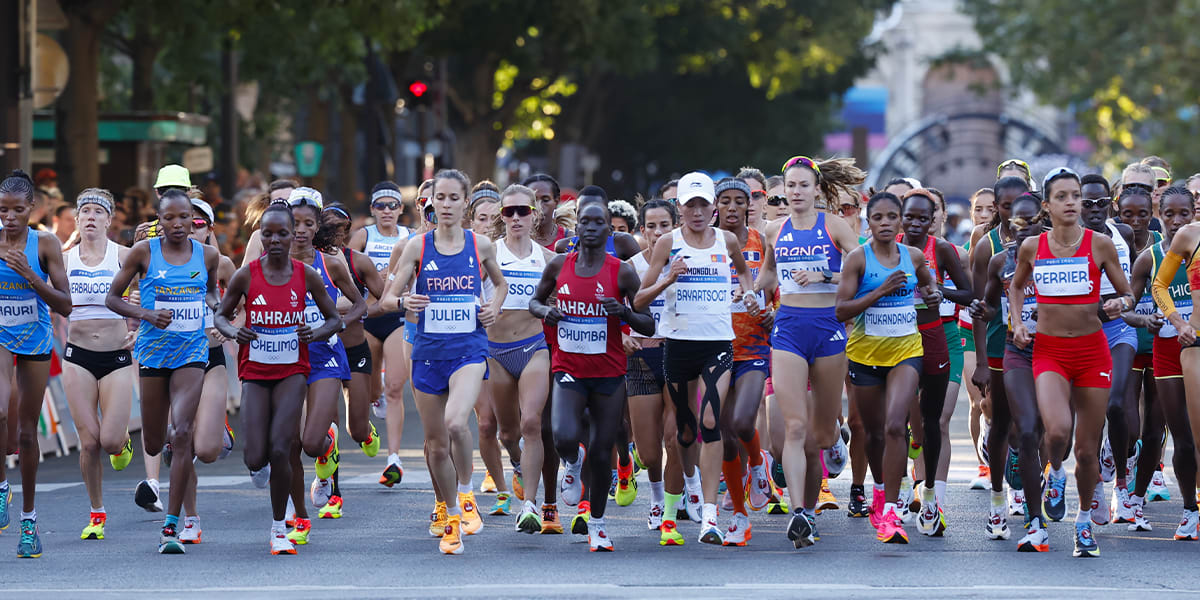
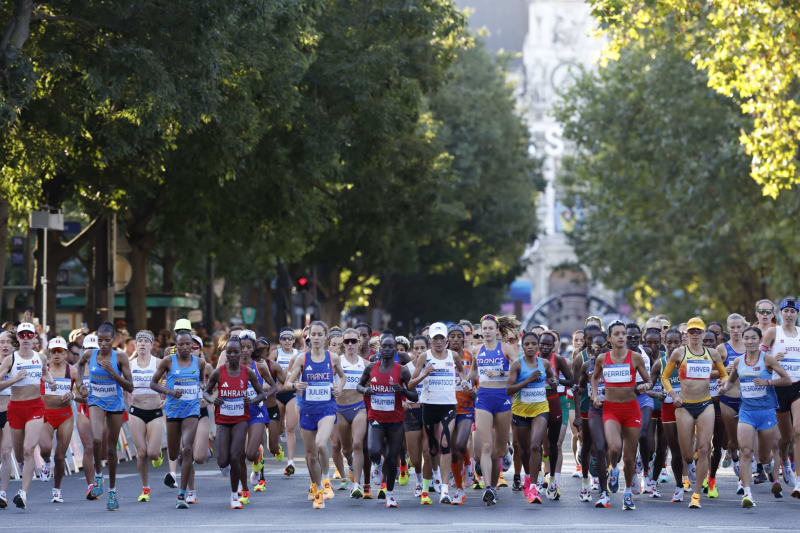
The note included other details, such as the publication of the standards planned for December (they finally came earlier, on November 10) and a cut in the number of marathon entrants, from 80 to 70 per race. A smaller field is surprising when the depth and level of the marathon are rising so sharply. With 70 starters, it would be the smallest Olympic men's marathon since Montreal in 1976, and the smallest women's since Sydney in 2000. Why set an even lower cap when the marathon has never been so popular and the race is held outdoors on wide roads? We found one possible explanation: the IOC kept the athletics quota at 1,810 athletes, as in Paris.
And for LA28, the program adds a new event, the mixed 4x100m relay. World Athletics doesn't say where the 20 marathon spots went, but room had to be found somewhere. It's also worth noting that the 70 spots are a target rather than a strict cap: in Paris, universality places pushed both races over the quota. The cap makes sense on the track, where eight lanes can only hold so many athletes, but on the road it makes much less sense. It penalizes athletes and deprives fans of extra spectacle.
 © CNOSF / KMSP
The LA 2028 standards and the other ways to qualify
Event | Men | Women | Paris 2024 for comparison (M / W) |
Marathon | 2:05:00 | 2:22:20 | 2:08:10 / 2:26:50 |
10,000m | 26:48 | 30:30 | 27:00 / 30:40 |
5000m | 12:50 | 14:34 | 13:05 / 14:52 |
As in previous Olympic cycles, World Athletics has set up two routes into the LA28 Games, with a stated goal: 40% of athletes qualify through the standards and 60% through the world rankings. If more athletes hit the standard than there are spots, only the fastest times are kept, and nobody gets in through the ranking.
Marathon window: November 1, 2026 to April 30, 2028.
Number of spots: 70 men and 70 women.
Spots per country: 3 athletes.
Cut-off date: the top 55 on the filtered "Road to LA" list (three per country) on March 19, 2028 qualify directly. The remaining 15 spots are decided afterward, without affecting those already qualified.
The Platinum route: a top 5 finish in a Platinum Label marathon during the window counts as the standard and puts the athlete at the top of the Road to LA.
The lever for Olympic committees and federations: each national body can reallocate a spot to a non-qualified athlete who has run at least 2:11:00 (men) or 2:29:00 (women) within the window.
How the marathon ranking works: the ranking is based on the average of an athlete's two best performances. Each performance combines time points and placing points. Platinum Label races sit in the second category, just behind the Olympics and World Championships.
Tracking: the Road to LA will go online in the second half of 2027.
For distance events on the track, the 10,000m window runs from December 19, 2026 to June 18, 2028. The 5000m window runs from June 19, 2027 to June 18, 2028. Here too, the level has gone up a notch. The men's 5000m sees one of the biggest jumps in the whole program: 15 seconds faster than for Paris. To put that in perspective, only ten men in the world have broken 12:50 in 2026. France's best this season, Jimmy Gressier, stopped at 12:57 in Paris in June.
Faster, higher… and more weight on the ranking
The standards drop by 3:10 for men and 4:30 for women. That's a huge leap, but it also reflects a trend nobody can ignore. We may be living through the golden age of the marathon. For more than a decade, Eliud Kipchoge ruled the distance with an iron hand. He opened the way for a new generation of talents who are now pushing the limits of what's possible. Sabastian Sawe and Yomif Kejelcha both ran under 2 hours in London this year. Behind them, the depth is staggering, with Jacob Kiplimo, John Korir, and Benson and Amos Kipruto. But the progress is even more spectacular among the women. Ruth Chepngetich's record (still ratified despite her suspension) has come under threat several times, with Fotyen Tesfay's 2:10 debut and Tigst Assefa's incredible 2:11 in Berlin. Behind them, the depth is just as remarkable, with Sifan Hassan, Joyciline Jepkosgei, Brigid Kosgei, Sharon Lokedi, Hellen Obiri...
The new split between qualifiers, moving from 50/50 to 40/60 in favor of the ranking, probably also reflects World Athletics' desire to reward consistency and strong placings in major races rather than a single brilliant time on a fast course. As for how demanding the standards are, the governing body justifies them by saying that in an Olympic year, marathons run 30 to 60 seconds faster than the trends would predict.
No room for error for marathoners
Running under 2:05 or under 2:22:20: that's the new target for athletes eyeing the 2028 Games. But this entry ticket remains reserved for the global elite, the cream of the crop. In Great Britain, for example, no man in history has yet run under 2:05. In France, only Morhad Amdouni has done it, and no Frenchwoman has ever gone under 2:22:20. For most athletes, there is still a chance: the ranking. Their strategy will likely be to pick two prestigious Platinum Label marathons to rack up more ranking points. A good placing in a major race can be worth more than a good time in a smaller one.
With the window now open and fewer spots available than for Paris 2024, athletes will have to choose their next races very carefully. Less margin for error. And in the marathon, things can turn cruel. Only two dates circled on the calendar each year... and the weather on the day can wipe out an entire career plan.
Another point worth stressing: the ranking cut-off date. March 19, 2028 falls before the big April marathons. Those counting on a spring 2028 marathon will only be fighting for the last 15 spots. That points to a spectacular 2027, with the level rising yet another notch. Starting with the Valencia Marathon, just a few weeks away.
Standards set by national federations
On top of the qualification criteria set by World Athletics, each national federation can set its own selection standards. For the previous Games in Paris, the French Athletics Federation (FFA) demanded even faster times than World Athletics, in order to select only the best of the best. In the end, the FFA mostly decided case by case, sending Mekdes Woldu and Manon Trapp but not Morhad Amdouni, even though he had run the standard. For the Americans, the system is very different. USATF holds a "Trials" race with the country's best runners. The rule is simple: the top three finishers get a ticket to the Los Angeles 2028 Games. Each institution has its own selection method, depending on national priorities. But one rule applies to every athlete: you first have to meet the criteria set by World Athletics.
With these new standards, World Athletics has set the bar at the level of the golden age the marathon is living through. For a handful of athletes, 2:05 and 2:22:20 will remain a realistic target. For everyone else, the road to Los Angeles will run through the ranking. A fascinating chapter of the marathon has been open since November 1: eighteen months of chasing a dream time and a spot at the LA 2028 Olympics. Between now and then, every marathon will count, and so will every finishing place. And at the end, a historic start line with just 70 runners. The men's marathon will close the Games on July 30, 2028. Saving the best for last. You'll want to be there.