
Paris-Versailles: Mélody Julien completes the hat-trick as Baptiste Jard wins on his debut
Published on Tue, September 29, 2026

At the 47th edition of the Grande Classique de Paris-Versailles (16.2 km), Mélody Julien claimed a third consecutive title in 55:58, while Baptiste Jard posted the race's fastest time in a decade, winning in 49:05.
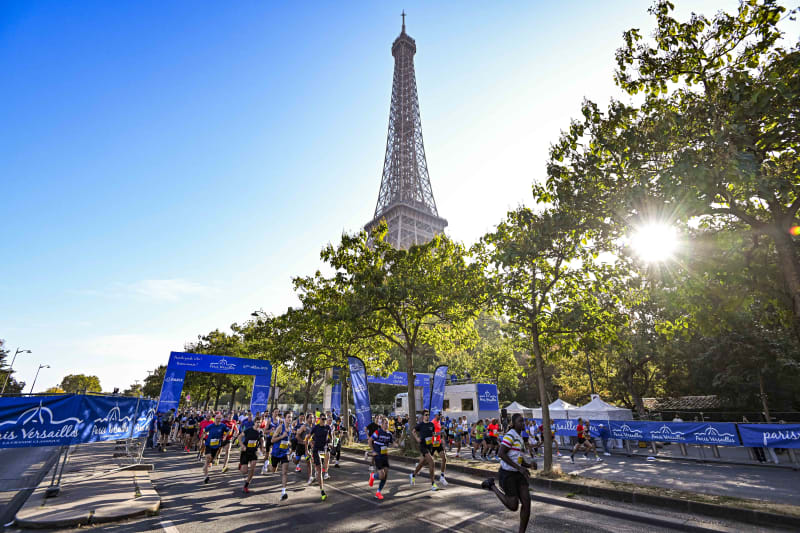
From the capital to the royal city. Some races do not need to change to remain attractive. On Sunday, September 27, under almost summery skies, the Paris-Versailles (16.2 km) once again delivered on its promise: a course everyone knows, a feared climb and, at the finish, two winners who added their names to the Grande Classique's roll of honour.
 © PVA / Icon Sport
 © PVA / Icon Sport
 © PVA / Icon Sport
 © PVA / Icon Sport
 © PVA / Icon Sport
 © PVA / Icon Sport
 © PVA / Icon Sport
 © PVA / Icon Sport
Baptiste Jard, the engineer making his debut
On his first appearance, Baptiste Jard (Décines Meyzieu Athlétisme) left very little for his rivals. The Lyon native won in 49:05, the fastest time recorded in the race in the past ten years. He finished 48 seconds ahead of fellow regional runner Igor Bougnot (Entente Sud Lyonnais, 49:53), who also broke the 50-minute barrier. French trail runner Clément Bruchon completed the podium in 51:38.
 © PVA / Icon Sport
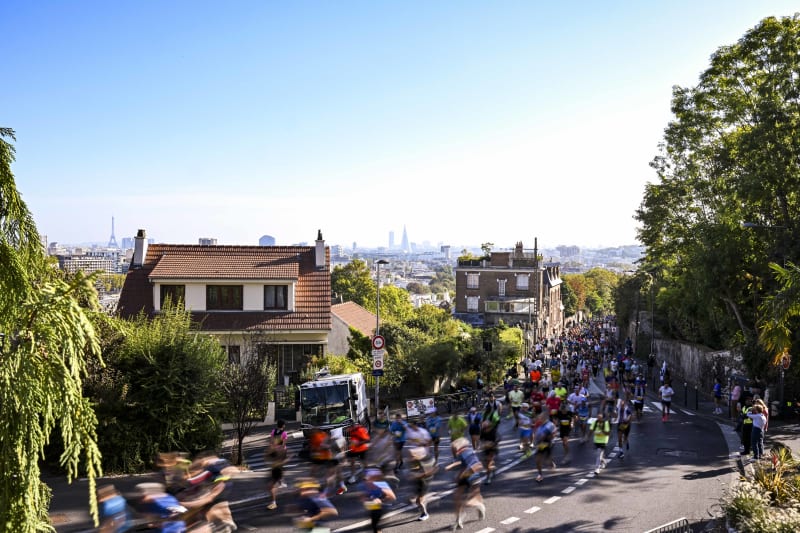
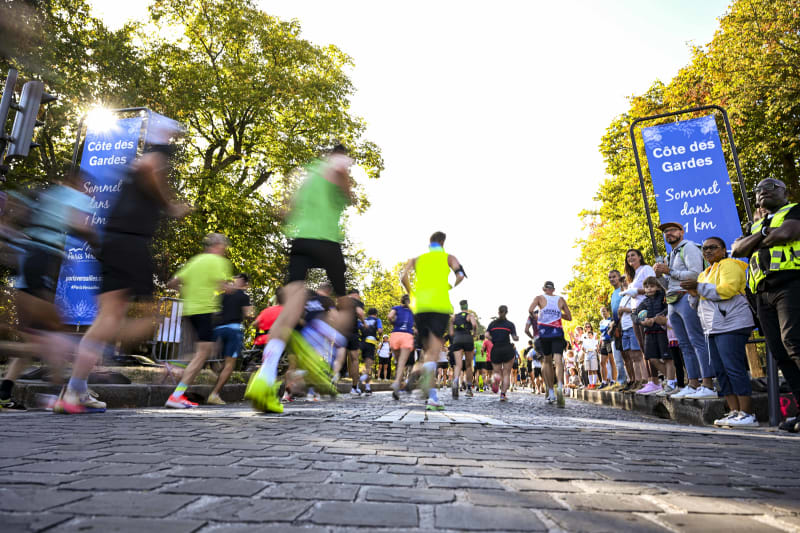
The race was decided on the Côte des Gardes, where Baptiste Jard and Igor Bougnot initially ran shoulder to shoulder. The eventual winner had never raced on a course like this and chose to be cautious before the climb. « It was my first race of the season and I wasn't sure where my fitness stood. I'd never raced on a course like this, so I held back a little before the Côte des Gardes. At halfway, I picked up the pace to drop Igor (Bougnot), then finished in time-trial mode », he said. He added: « I discovered the course and it's great. I wanted to race a classic over an intermediate distance, and Paris-Versailles was perfect for that. »
An industrial engineer who graduated from Insa Lyon, Baptiste Jard has already moved on to his next target. His post-race message on Instagram ends with « time for the final training block before the Valencia Half Marathon », in Spain, four weeks from now. His time is still well off the course record, held by Morocco's Mohamed El Hachimi at 46:04, set in 2009.
Men's standings
1 - Baptiste Jard (Décines Meyzieu Athlétisme): 49:05
2 - Igor Bougnot (Entente Sud Lyonnais): 49:53
3 - Clément Bruchon (SCM Chatillon-Sous-Bagneux): 51:38
4 - Imran Naaji (Courbevoie Athlétisme): 52:36
5 - Damien Monier (Clermont Auvergne Athlétisme): 52:48
Mélody Julien makes Paris-Versailles history
The women's race quickly became a solo affair. Mélody Julien (Association Multisports Montredonnaise) was already alone at the front by the third kilometre, having dropped the other contenders. The 27-year-old Olympian won in 55:58, ahead of Anaïs Quemener (La Meute Running, 56:42), who finished runner-up for the second straight year. Zoé Marques (JF Saint-Malo), fifth last year, completed the podium in 1:01:13.
With her third straight victory, Mélody Julien becomes the first Frenchwoman to complete a hat-trick in the race. Before her, only Kenya's Isabella Ochichi had managed it, from 2000 to 2002. If Julien returns in 2027, she could target the record held by another Kenyan, Myriam Wangari, who won four consecutive editions from 2007 to 2010.
Her time was slower than last year's 53:03. That may be explained by her packed schedule in recent weeks: « I enjoyed it, although I suffered a little on the Côte des Gardes. I'm happy to win for the third time. I've raced several international competitions in a row, including the Mediterranean Games half marathon and, last week, the World Half Marathon Championships. »
Women's standings
1 - Mélody Julien: 55:58
2 - Anaïs Quemener: 56:42
3 - Zoé Marques: 1:01:13
4 - Kelly Zurita: 1:03:06
5 - Marie Potier: 1:03:17
 © PVA / Icon Sport
A course that has barely changed
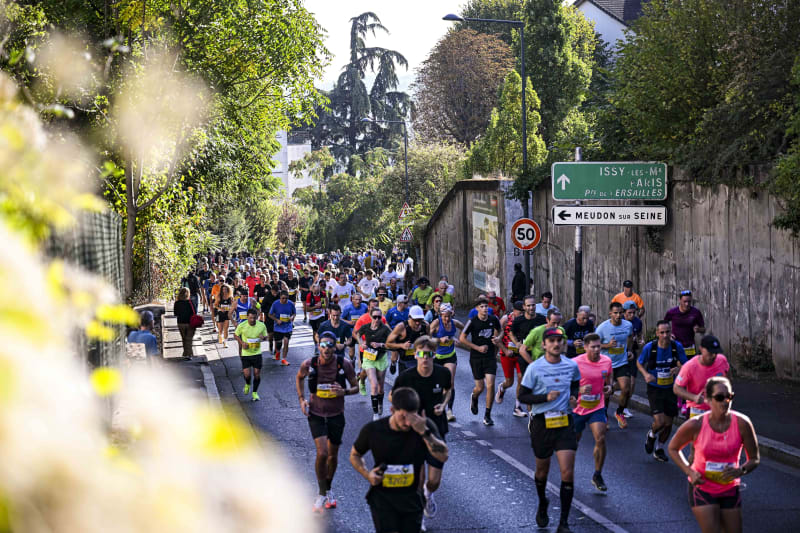
That is probably what makes Paris-Versailles so special: the route has remained virtually unchanged since 1976, and regulars return every year to test themselves against their own times. The first six kilometres along the Seine are flat, then the course becomes more demanding after Meudon, with its main challenge: the famous Côte des Gardes, roughly 2 km averaging 7%, with gradients approaching 12%. The rest of the route features the climb by Viroflay cemetery, followed by the uphill stretch on Avenue de Paris, a deceptive false flat late in the race. Total elevation gain is estimated at 250 metres.
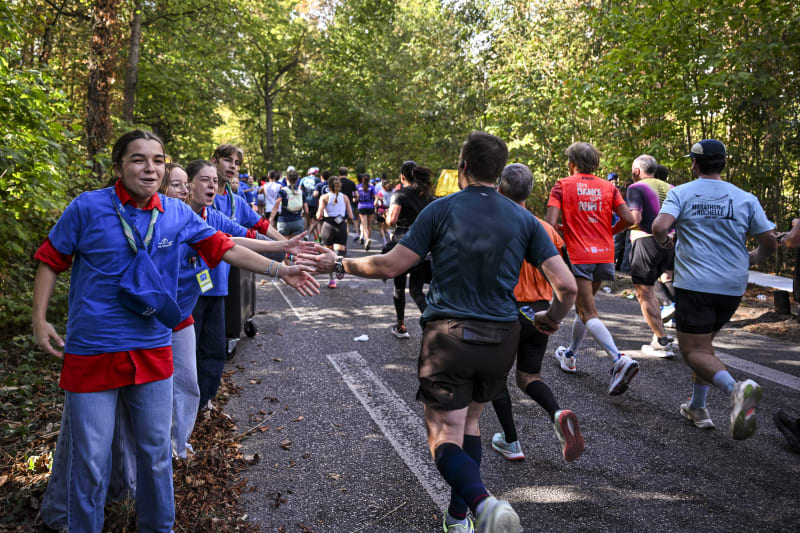
The 16.2 km course passes through seven municipalities (Paris, Issy-les-Moulineaux, Meudon, Chaville, Vélizy-Villacoublay, Viroflay and Versailles), with aid stations at kilometres 5, 8 and 13, plus 23 bands providing music and encouragement along the way.
 © PVA / Icon Sport
A history dating back to 1902
The idea of travelling from Paris to Versailles on foot predates the modern race: between 1902 and 1931, the Racing Club de France already organised the 12.5 km Challenge Lemonnier. Today's event dates back to October 1976, with Hubert Poulot at the helm and 3,000 starters for the inaugural edition. Three years later, Lucien Forsans' Groupement sportif versaillais took over the race, which then grew to 15,000 participants. A dedicated organisation, Paris-Versailles Association, has been running it since 1991.
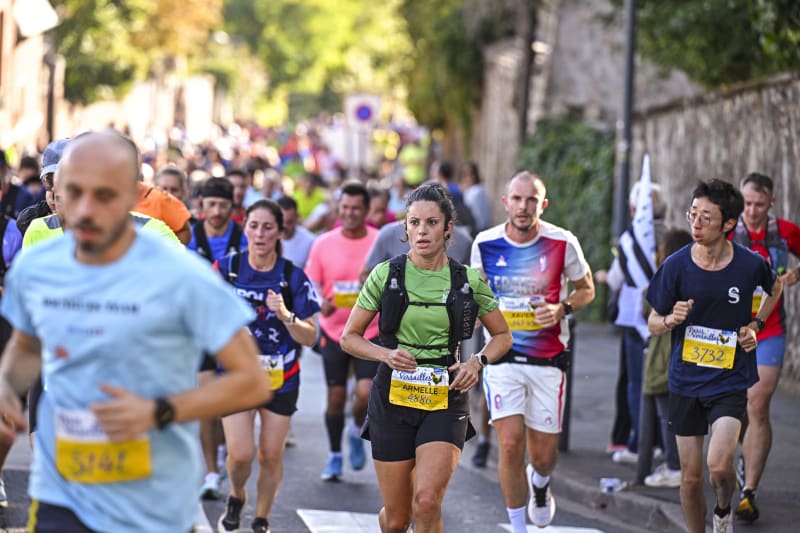
After two cancellations caused by the pandemic in 2020 and 2021, the Grande Classique returned in 2022 and has sold out every year since. Among the roughly 25,000 runners in this edition was a familiar face: Nicolas Sirkis, lead singer of Indochine, reached Versailles in 1:50:38.
See you on September 26, 2027
The 48th edition is already scheduled for September 26, 2027. And demand shows no sign of slowing: the 2026 edition sold out in four days after registration opened on April 11, compared with 50 days for the 2025 edition, making it 12.5 times faster. There is little doubt that the trend will continue next year after a successful 2026 edition.