

Whether you’re new to running, an intermediate or an expert, you may wonder if your four-legged best friend can match your stride and keep progressing alongside you. Here’s what you need to know.
It was almost 10 years ago. Catherine Muffat-Jeandet had just lost her eldest son, Florian, to anti-NMDA receptor encephalitis. She wanted to do something useful. “I decided to set up an association offering dog-walking, canicross, bikejoring and scooterjoring outings…”, she explains. Named Les Canisportifs d’la Yaute, a reference to Haute-Savoie (“we use a lot of the local patois”, she says with a laugh), the dog trainer, who has more than 30 years’ experience, insists that “all family dogs can run”, apart from “brachycephalic breeds”. “They have flattened muzzles, like King Charles Spaniels and French Bulldogs, and narrowed airways.”
“It’s as if I were coaching people”, adds Sébastien Bucamp, who has been into bikejoring for more than a decade. “I apply the training principles I learned as an elite athlete to my companions.” Progress is almost inevitable when training is consistent, “at least three times a week”, according to the behaviourist. “You have to wait several weeks, or even months, before you see results”, she adds. For the civil servant, “getting back into it starts with short distances, 3 to 4 km”. “I also regularly run timed tests on my mountain bike over a 5 km course. A dog that doesn’t lose too much fitness over the summer, its rest period, can improve by around 30 seconds. For one that struggles to get back into training, the gap can be closer to a minute.”
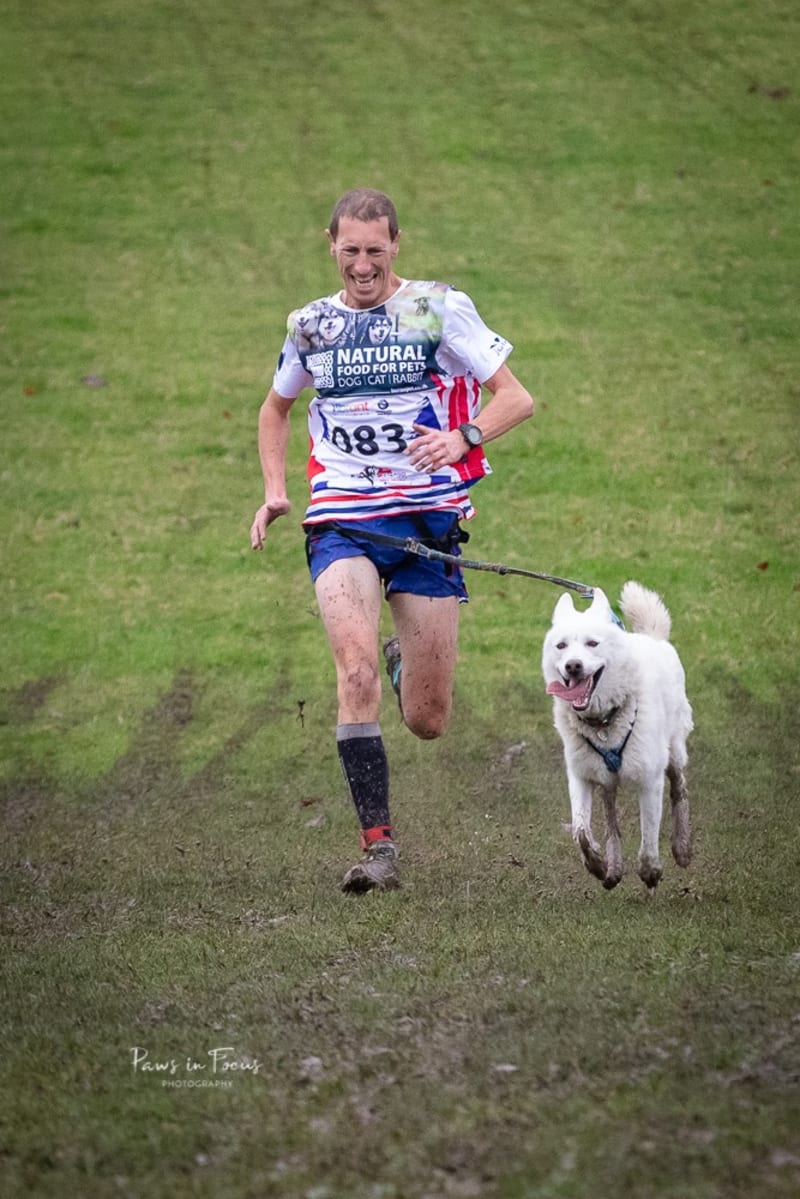 © Paws in Focus
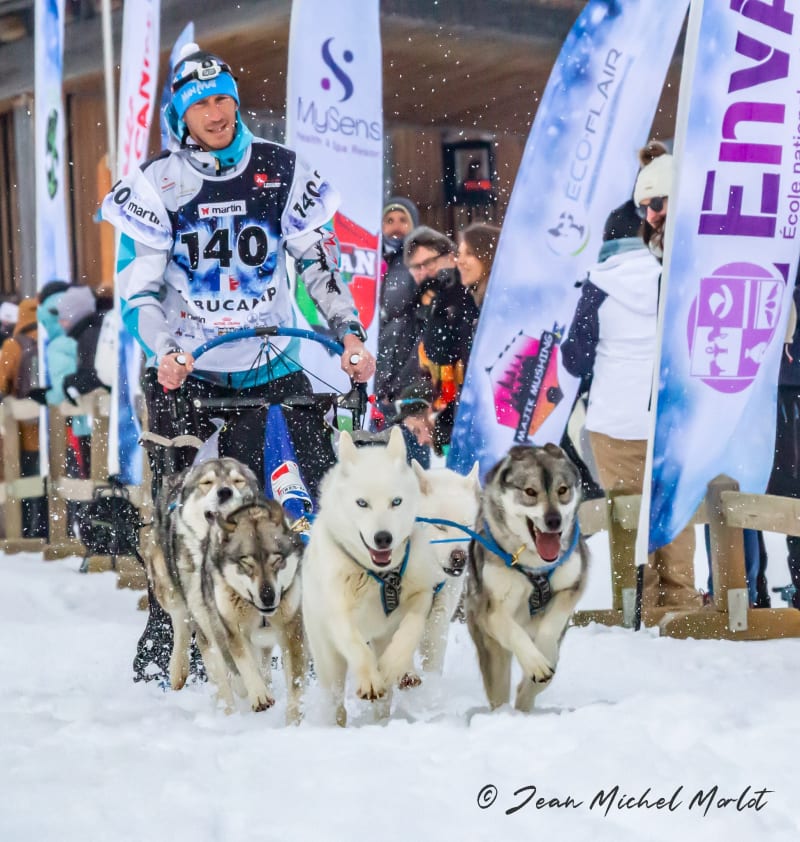 © Jean-Michel Morlot
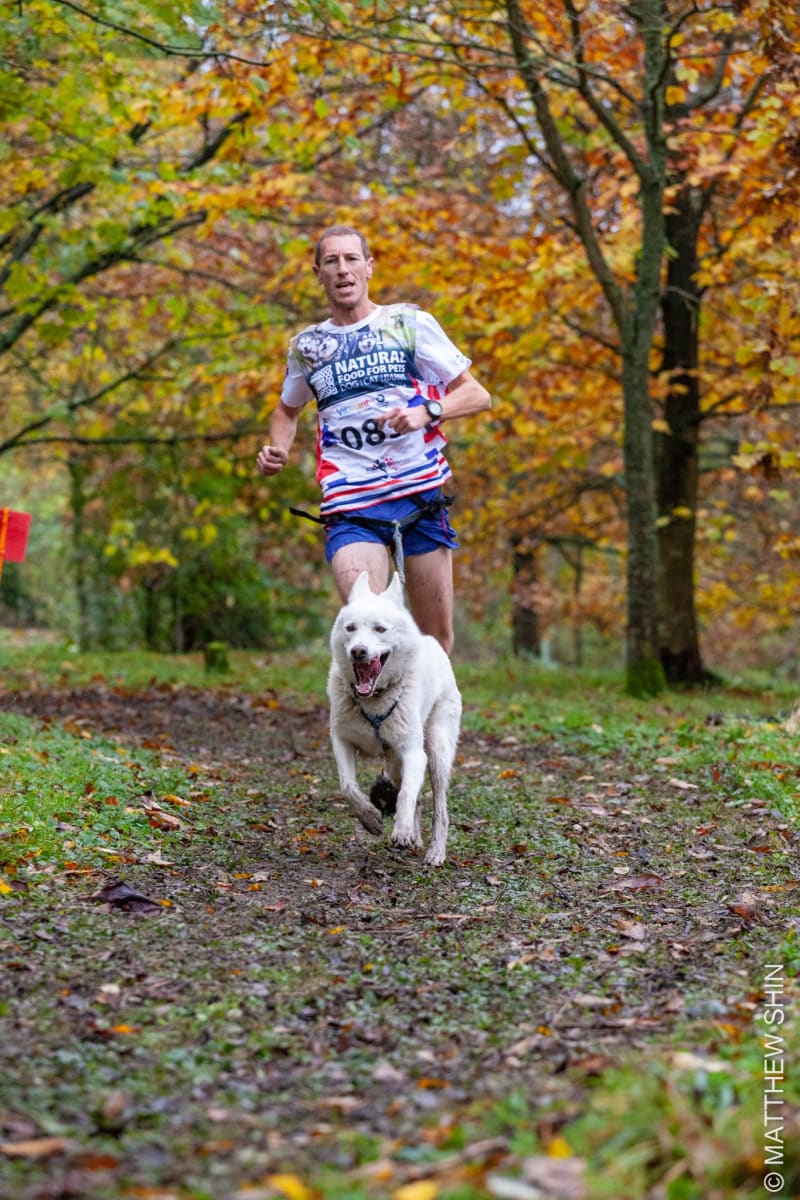 © Matthewshin.photography
The right equipment
A regular competitor at international sled, bike and running events, the forty-something points to “the importance of the psychological side.” “At the 2019 Bikejoring World Championships, my Husky, Nuts, found another gear. Dogs pick up on what we project.” Whatever your level, anything is possible. The canine therapist remembers a formative experience with one of her patients. “She decided to adopt a dog from the SPA to lose weight and get active. She weighed more than 100 kilos. Today, that dog is fantastic!”
This won’t come as news to you: exercise is good for people and for dogs. “They’re much happier. I’ve seen major changes in their behaviour”, she says. But be warned: canicross requires specific equipment. “There are three essential pieces: a harness for the dog, a waist belt for the runner and a shock-absorbing lead.” With all that in place, the fun can really begin…
So, ready to give it a go? Looking for the ideal partner to join you on your runs? No problem, Marathons.com has put together a list, by no means exhaustive, of the 10 best canine companions for getting active!
More articles

Why do some people sweat so much?
Why some people sweat more than others, how sweat regulates body temperature and when excessive sweating is cause for concern.
Wed, October 14, 2026

DNFs in endurance sport: what if they’re not failures?
A DNF is often viewed as failure in endurance sport. But knowing when to stop can also be a rational, courageous choice.
Thu, September 10, 2026

Charity Runs : When Running Becomes a Meaningful Act
Combining your passion for running with supporting a cause you care about is possible thanks to charity races and solidarity bibs – two great ways to give even more meaning to a practice already deeply rooted among enthusiasts.
Fri, June 13, 2025