
AREA 72: Inside Nike’s Paris event for runners chasing performance
 © Marathons
Launched alongside the Berlin Marathon on September 27, Area 72, a nod to the date Nike was founded, attracted seasoned runners and newcomers eager to explore the sport. Marathons.com was there for three days immersed in performance, recovery and community.
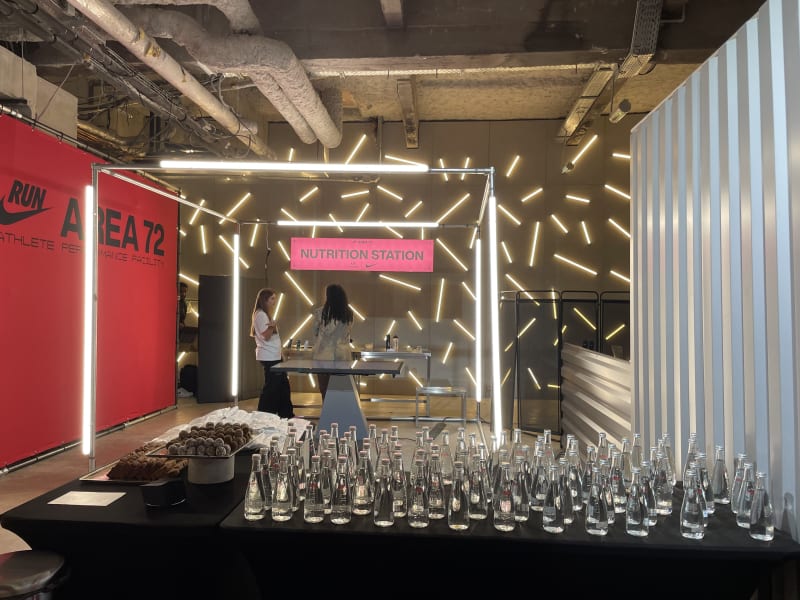
Built around the slogan “athlete, performance, ease” and a space dedicated to both expertise and runner support, the event aimed to be innovative, welcoming and closely connected to the local running scene. Paris-Versailles, the iconic race taking place that Sunday, was a particular focus. Set up in a temporary warehouse just steps from Place de la Bastille, in Paris’s 12th arrondissement, the venue immersed visitors in a warm, intimate atmosphere dominated by red. Different stands offered practical exercises to help participants better understand effort and their own bodies, try the latest footwear from the Swoosh, or enjoy recovery sessions in optimal conditions.
The buzz was palpable as soon as we arrived. That impression was quickly confirmed when a crowd of women set off on a run organised by the Run’Elles collective. Wearing T-shirts bearing the famous Swoosh and the association’s name, and lacing up one of the three featured shoes, Pegasus, Vomero or Structure 26, around 50 runners headed into the Paris streets in a charged atmosphere.
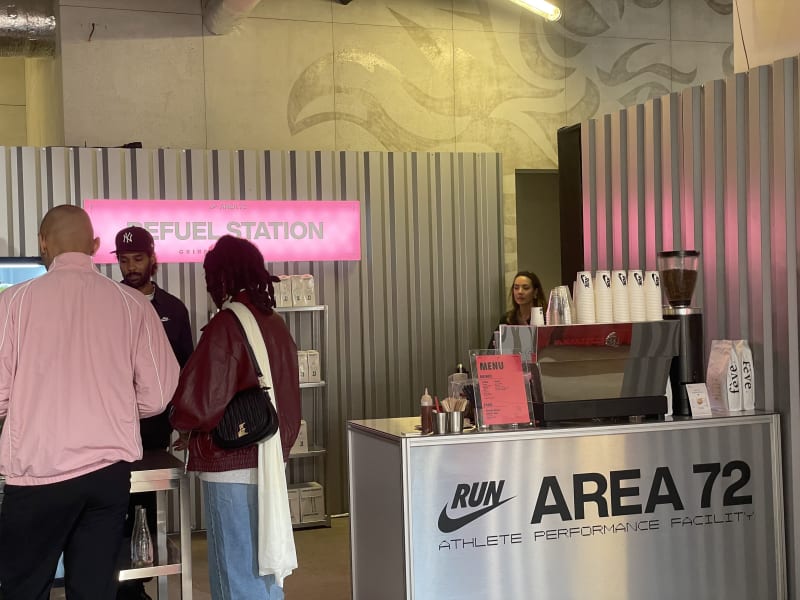
Meanwhile, the event was in full swing. Visitors who stayed behind enjoyed coffee, matcha or fruit juice prepared with care by Lucie Montel, head of the “Refuel Station”, the food area. “We created a menu tailored to runners’ needs, with energy bowls that are ideal before a run, banana bread and an entirely vegan offering,” explained the barista trainer and founder of Grindin’, who brought a touch of “coolness” to the Area 72 experience.
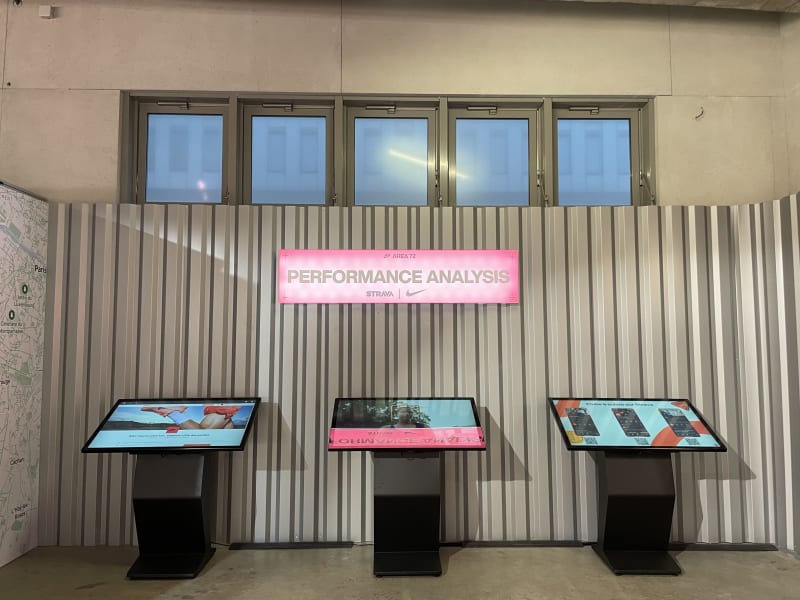
After the food break, it was time to explore the other areas. Just inside the entrance, the “Performance Analysis” zone put the spotlight on Strava, a leading platform for running training plans, and posed a key question: “What do you do with all this data, and how do you analyse it?” The course of Paris-Versailles, the event’s through line, was also given pride of place, echoing the “Just Do It” campaign’s invitation to discover what you are capable of when the going gets tough. Nike’s ecosystem rounded out the experience, showcasing group offerings including Strava, Paris running crew Eightlines, the Blocks League event and the global Strava club.
 © Marathons
 © Marathons
 © Marathons
 © Marathons
 © Marathons
Chasing performance by taking on the famous Côte des Gardes virtually
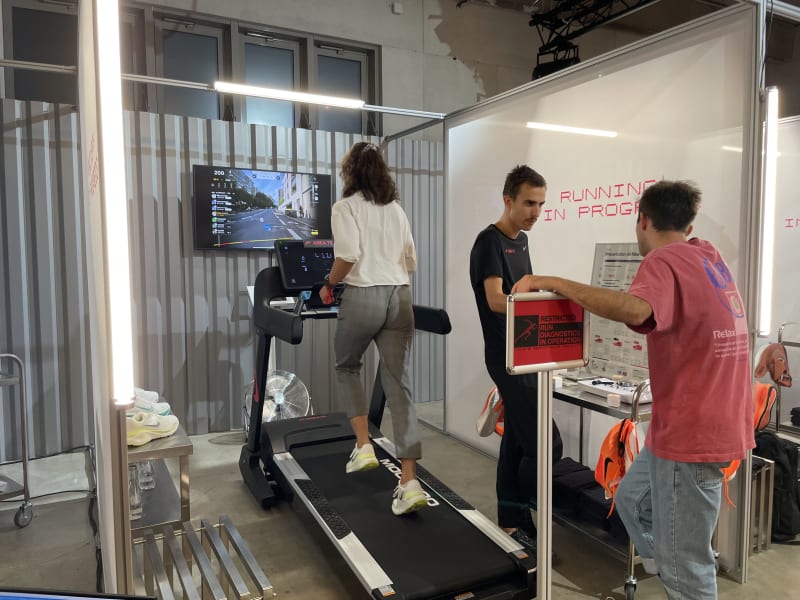
After choosing one of the three available shoe models, each participant could test it on one of three treadmills lined up under the watchful eye of Nike product experts, known as “Ekins” (Nike spelled backwards). The event’s standout feature was its simulation of the famous Côte des Gardes. In a nod to the Paris-Versailles race taking place that weekend, the treadmill incline gave runners the chance to tackle the legendary 2-kilometre climb without ever leaving the venue. A professional timing system recorded each performance, allowing everyone to check their time and ranking over the distance.
Assessing your athletic profile to unlock better performance
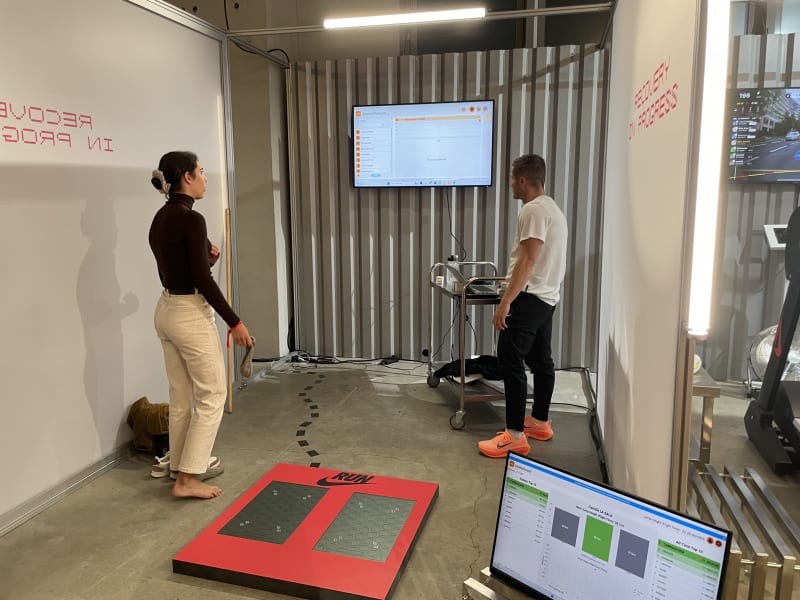
A workshop led by two Nike coaches, Anne-Laure Morigny, a mental performance coach at INSEP, and Enguerrand Aucher, with whom she co-founded Fair Form For Everyone, a company specialising in sports health, helped participants identify their athletic profile: strength-oriented, speed-oriented and so on. Two tests were designed to pinpoint each runner’s strengths and then optimise their training and abilities.
The first assessed joint and muscle mobility by asking participants to sink as low as possible into a squat. The second focused on reactivity and explosiveness, measuring the height of a vertical jump. Performed on force plates, the two tests were a simplified version of a system usually used with elite groups. Using the data collected by the software, the professionals could direct each athlete towards individualised exercises suited to their potential.
Alongside the two coaches, two other professionals supported the process: one responsible for data analysis and the other for observation, adding depth to the overall assessment. “We take a 360-degree view of performance. Our goal is to put athletes in the best possible conditions to push themselves. Here, we offer a very condensed version because a normal session lasts an hour and a half and includes cameras and angle analysis, even allowing us to create a dynamic avatar of the athlete. But the essentials remain: leaving with a better understanding of yourself, individualised protocols and tailored guidance