
Eight weeks to break 50 minutes on the 10K
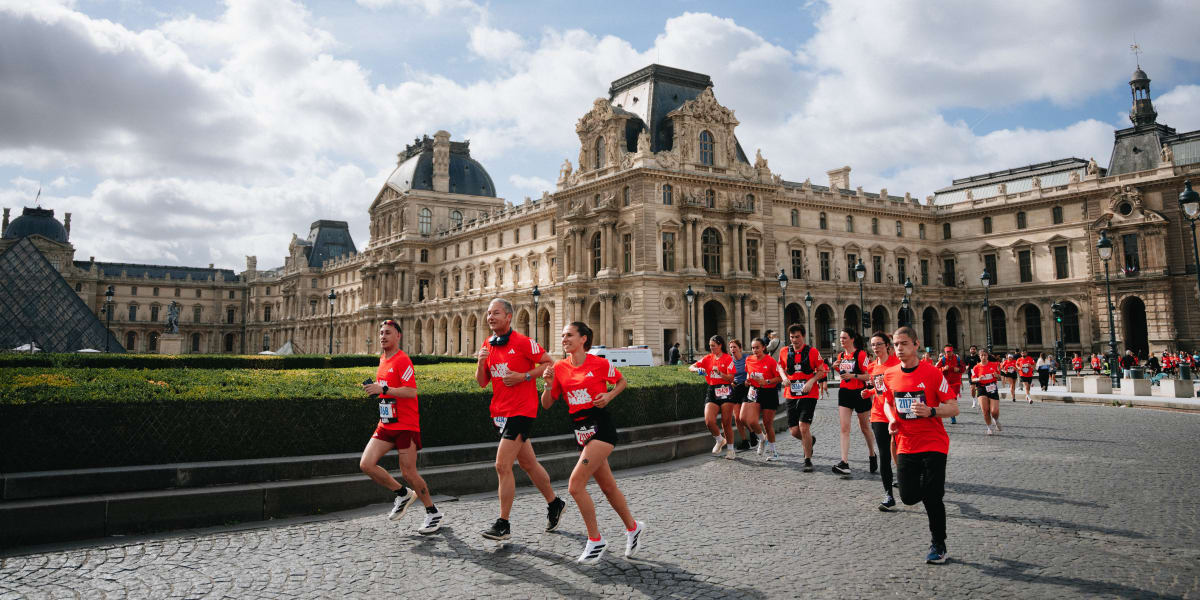 © A.S.O./Quentin Joly
Breaking 50 minutes on the 10K is one of the most common goals for road runners. It means holding 12 km/h, or 5:00 per kilometer, for the whole race. Prerequisites, paces, key sessions and an eight-week plan: here's how to go after that time.
What level do you need to target sub-50?
This plan is designed for runners who:
Have been running regularly for at least six months, two to three times a week
Have already raced a 10K, ideally between 52 and 56 minutes
Can comfortably run an hour at easy pace
As a rough guide, a 50-minute 10K usually corresponds to a VO2max speed of around 14 km/h. If your latest time is over 58 minutes, aim for 55 minutes first. Progress comes in steps.
What paces do you need for a sub-50 10K?
Pace | Reference |
|---|---|
10K pace | 5:00/km (12 km/h) |
Easy run | 6:00 to 6:30/km |
Threshold pace | 5:10 to 5:15/km |
VO2max pace (around 14 km/h) | 1:43 per 400m, 4:17 per 1000m |
These benchmarks are easy to recalculate with our pace calculator if your goal is different.
The key sessions for getting faster over 10K
VO2max
A 10K is raced at high intensity, around 85 to 90% of VO2max. One short interval session a week (30/30s, 400m repeats) raises your top speed and makes 10K pace feel more comfortable.
Threshold and race-pace work
Blocks of several minutes at or just above 10K pace teach you to hold the effort. It's the session closest to race day.
The long run
It stays modest (1 to 1h15), but it builds the endurance that stops you fading over the last three kilometers.
The 10K training plan, week by week
Week | VO2max session | Specific session | Long run |
|---|---|---|---|
1 | 10 x 30/30 | 3 x 5 min at threshold | 55 min |
2 | 8 x 400 m, 1 min 15 recovery | 3 x 6 min at 10K pace | 1h00 |
3 | 2 x 8 x 30/30 | 3 x 1500 m at 10K pace | 1h05 |
4 | 40 min easy run with 6 strides (recovery week) | 2 x 8 min at threshold | 50 min |
5 | 10 x 400 m, 1 min recovery | 4 x 1500 m at 10K pace | 1h10 |
6 | 6 x 800 m, 1 min 30 recovery | 3 x 2000 m at 10K pace | 1h15 |
7 | 8 x 400 m | 2 x 3000 m at 10K pace | 1h00 |
8 | 6 x 30/30, 3 days out | 20 min easy the day before or two days before | Race |
Each session starts with a 20-minute easy warm-up including a few progressive accelerations, and ends with a 10-minute cool-down.
How to run your 10K on race day
Warm up for 15 to 20 minutes, with two or three accelerations. A 10K starts fast, so your body needs to be ready.
Hold 5:00/km from the first kilometer, even if others go out faster. Going out in 4:40 will cost you by the 7th kilometer.
Aim to pass 5K in about 25 minutes, then push on the last two if you can.
What to take away
Sub-50 means 5:00/km, and usually a VO2max speed of around 14 km/h.
One VO2max session and one session at 10K pace a week form the core of the plan.
The long run still matters, even for a 10K.
Pace consistency on race day often makes the difference.
FAQ
Is a 50-minute 10K a good time?
Yes. It's a solid time for an amateur runner, one that takes consistent training, and a symbolic benchmark for many.
Can you prepare for a 10K in four weeks?
If you already run regularly, four weeks can knock off a few tens of seconds by working on pace. For a bigger gain, plan on six to eight weeks.
Do you need to run more than three times a week?
Not essential for targeting 50 minutes. A fourth easy run does help you progress faster if your schedule allows it.