
How to recover after a marathon without spending the next few days creaking
 © ASO / Marathon de Paris
It’s done. 42.195 km on the clock. A long, punishing effort that drained your energy reserves and put your muscles, tendons and joints through the wringer. You feel empty. A little dehydrated, too. However joyful crossing the finish line may be, it’s time to think about recovery, unless you want to spend the next few days as stiff as a Playmobil figure.
The release… and the crash
Did you cross the line looking fresh as a daisy? Not exactly fresh, perhaps, but not completely wilted either? Or are you in a terrible state, dealing with cramps, tears, vomiting and other gastric, muscular and mental delights?… The finish line brings immense relief, but not necessarily total well-being. Your body suddenly stops being pushed to its limits, and the decompression can be just as sudden as it is brutal. Your condition may also tell you something about how you ran your marathon (too fast or too slowly) and how you prepared for it. Listen to your body and take note of everything going on: the information you gather could prove invaluable if you take on another marathon.
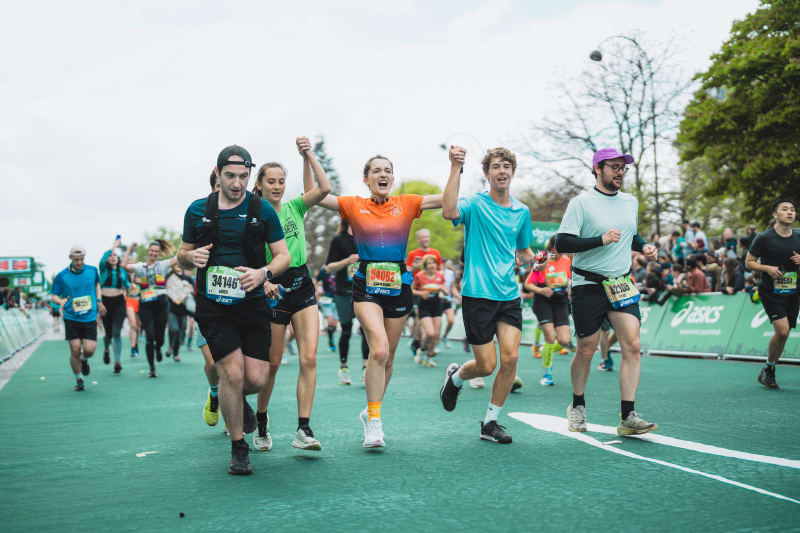
In the minutes after you finish
You may feel like collapsing on the ground, but that’s not the best option. At the finish-line aid station, stick to water, sparkling if possible, and avoid everything else: soda, tea, coffee, orange juice, beer… Steer clear of acidic foods, too, which your digestive system may not appreciate after so many hours of exertion. Just drink water. You’ll have plenty of time to eat once your body has recovered from the effort.
Don’t stand around in your sweat-soaked clothes: cover up as quickly as possible and walk for a good ten minutes, even if it feels like hard work. Gentle movement is the best way to help flush out muscle waste products.
In the 2 hours after finishing the marathon
● Rehydrate with a sugar-rich drink, such as water with fructose or acacia or chestnut honey. If you prefer a ready-made sports drink, check the ingredients carefully: they’re not always ideal.
● Take a good shower, or even a bath. Make the most of it to relax, breathe deeply and get your head back together. Finish with a cold shower, just on your legs if you can’t handle the low temperature over your whole body.
About an hour after finishing your marathon, start snacking on solid food (dried fruit works very well) to replenish the energy stores depleted by the effort.
In the 3 to 4 hours after finishing
● Have your first meal. Try to eat something, even if you’re not really hungry, as this intake is essential for a good recovery. But don’t eat just anything! Avoid fatty foods, red meat, processed meat and alcohol. Instead, opt for fruit and vegetables, carbohydrates such as potatoes, rice, pasta and quinoa, eggs and, if you like, yogurt.
● A nap or some quiet downtime will help you recover.
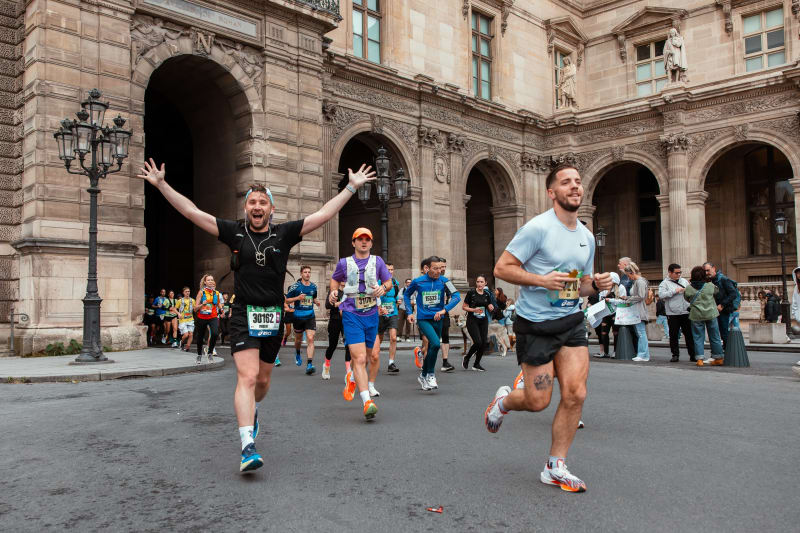
The days after, when everything creaks
Oh yes, we forgot to mention one thing: after your marathon, you’re going to take a proper break! You’ve probably noticed for yourself that the days after the race are rather… how can we put it… sluggish, right? That’s completely normal. After such an effort, your body is exhausted, and it’s letting you know.
➜ The golden rule: respect a rest period
Experts estimate that even a seasoned athlete needs at least 30 days to recover from a marathon. Among marathoners, the usual rule of thumb is one recovery day per kilometre raced, which makes 42 days. In other words, the watchword after your race is: PATIENCE! Don’t rush back into your running shoes after just a few days off. Give your body time to recover from the microtrauma sustained during the race, and use the opportunity to get back to all the things you pushed into the background during your training: having a drink with friends, going for a walk with a friend after work…
➜ Active or passive recovery?
When it comes to recovery, there are two broad approaches:
✓ Passive recovery
● Doing nothing: Simply taking it easy on the sofa is an option, but it’s not exactly the best one!
● Massage: As enjoyable as it is useful. Choose a qualified practitioner, such as a physiotherapist.
● Electrical muscle stimulation: Often used by a physiotherapist, but also available at home with consumer devices. It improves blood flow and can therefore contribute to better recovery.
● Spa treatments: Sauna, steam room, ice bath, hydrotherapy… Gentle, enjoyable methods worth trying!
✓ Active recovery
As the name suggests, you can’t just lie on the physio table and let yourself be pampered. You’ll need to move a little, but never to the point of tiring yourself out: the goal is recovery. Because running more than 40 km on asphalt causes a whole host of muscular microtraumas, non-weight-bearing activities such as swimming and cycling should be prioritised during the two weeks after the marathon. Whatever discipline you choose, it should feel enjoyable and physically relaxing. It’s not time to reintroduce intensity yet: for now, your body needs to rest!
Try not to run during these first two weeks of recovery. In the third week, you can put your running shoes back on for short, easy runs of no more than 45 minutes, and not every day! You’ll find that a little deprivation usually builds desire, and you’ll return to training more motivated than ever!
✓ Marathon calendar in France, here.