
Marathon gear checklist: what to pack before and after race day
 © ASO
© ASOOrganisation is a runner’s best friend. Getting your marathon kit ready is an essential part of race preparation. What you do before and after the race matters just as much as your training and race strategy. Marathons.com has put together a list of the essentials you won’t want to forget as race day approaches, so you can arrive at the start line fully prepared.
Who hasn’t forgotten a pair of socks, some safety pins or a lucky race-day bracelet for an event they’ve been preparing for months? Between the stress and the travel, runners know how unsettling that can be. Forgetting an important item can throw off your race-day plans. So stay sharp: Marathons.com has put together the ultimate checklist of essential gear for before and after a marathon.
The essentials
Quick pre-race checklist: marathon essentials
Race-day shoes
Suitable socks
Warm-up gear and compression socks
Lightweight, breathable technical race kit tested in training
GPS watch
Gels, drink, fuel, flask or bottle, shorts with pockets, race belt or trail pack
Race bib and safety pins
Phone, ID, race licence or PPS
Small first-aid kit
Light gloves, neck gaiter, cap, arm warmers, headband, beanie and sunglasses: adjust according to the weather
Emergency blanket if needed before the start
Creams: anti-chafing, warming and pre-exercise creams, massage oil, Tiger Balm
Let’s start with your shoes. Bring your everyday running shoes for the warm-up, as well as your race shoes. Don’t wait until race day to wear them for the first time: get a few sessions in beforehand to avoid blisters and make sure the pair actually suits you. The same goes for socks. Choose low-cut, quarter or crew socks according to your preferences, and pack several pairs so you can change if needed. Test them over several runs to make sure they work for you. Technical socks with reinforcement in high-friction areas are often a good choice.
In your marathon bag, don’t forget four safety pins, tissues or toilet paper, shower essentials and, if needed, warming cream, pre-exercise cream or anti-chafing cream. Massage oil or Tiger Balm can also help prepare your muscles the evening before and on race day. If it rains, you can rub oil onto your legs to help protect them from the rain, creating a water-resistant layer. Some creams are also designed to help prevent blisters.
The right warm-up gear
Small first-aid items such as plasters, scissors and antiseptic should also have a place in your bag. Remember your ID, race licence or PPS, phone and a means of payment. The day before, prepare your race-day drinks and fuel carefully, and attach your race bib to your shirt. Bring enough water and food for both before and after the race.
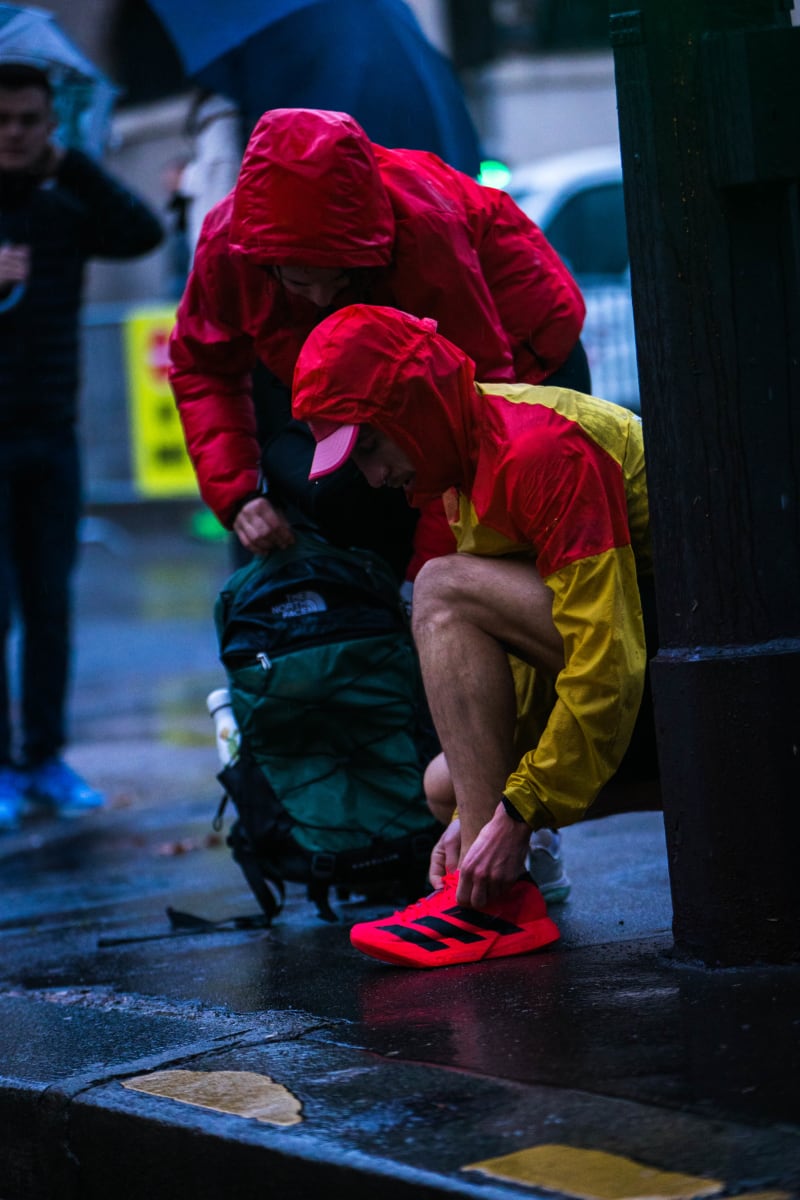
For the warm-up, choose clothing that is warm enough without making you sweat. Wearing leggings or joggers over your race kit is a good way to avoid cooling down too much. Up top, a T-shirt with a waterproof or lightweight windproof jacket, or a zip-up layer, should work depending on the temperature and whether it’s raining. You can wear compression socks in the hours before the start to keep your legs feeling fresher. Many runners bring a large bin bag or an emergency blanket, both useful for staying warm until the gun goes.
 © Emma Bert / Marathons.com
The ideal marathon race kit
When it comes to your marathon outfit, choose technical, comfortable clothing that won’t chafe and that you feel good running in. A singlet, club vest or simple short- or long-sleeved T-shirt: it all comes down to personal preference. If it’s cold, you can also add arm warmers, a neck gaiter and lightweight gloves. These accessories are useful because they keep you warm and can easily be removed during the race. Just don’t overdress. As with your shoes, test your entire outfit and all your accessories before race day.
You warm up quickly once you start running, so shorts or split shorts are suitable year-round unless temperatures are extremely low. For a marathon, choose bottoms with pockets so you can easily reach your gels and flasks. Otherwise, rely on a trail pack or race belt. More and more races are phasing out cups, so remember to bring your own bottles or flasks. And don’t forget your GPS watch to keep an eye on your pace.
Adapt your kit to the weather. In hot conditions, choose lightweight, breathable clothing. If you’re sensitive to glare, sports sunglasses can make things more comfortable. In cold weather, a cap, headband or beanie will protect your head from the elements. A neck gaiter, arm warmers and gloves can complete your kit as conditions change. A cap isn’t just useful against the sun: it also stops rain running down your face.
What about after the race?
Quick post-race checklist: marathon essentials
Warm, dry clothes
Change of shoes and socks
Towel and/or shower essentials
Recovery drink
Solid snack
Once the marathon is over, taking a shower or simply drying off with a towel and changing into warm, dry clothes is essential. Even in summer, you’ll probably feel cold after running, so joggers, a long-sleeved top and a sweatshirt are must-haves. Remember to change your socks and shoes. It’s also the perfect time to rehydrate with a recovery drink and eat something solid to support recovery.
Packing your bag and preparing the right kit are integral parts of marathon preparation. Forgetting something can unsettle you and affect your race. Careful organisation means you can approach race day with confidence and stay fully focused on your goal.