
The 3 fatal fuelling mistakes that can ruin your marathon
 © ASO / Marathon de Paris
Everything was in place: months of training, an impeccable lifestyle, mental preparation and flawless logistics. But one crucial detail was overlooked: fuelling. Far from being an afterthought, it can derail an entire race.
✓ Here are 3 mistakes that can torpedo your race!
‘1 –– Drinking until your stomach bursts
 © ASO / Marathon de Paris
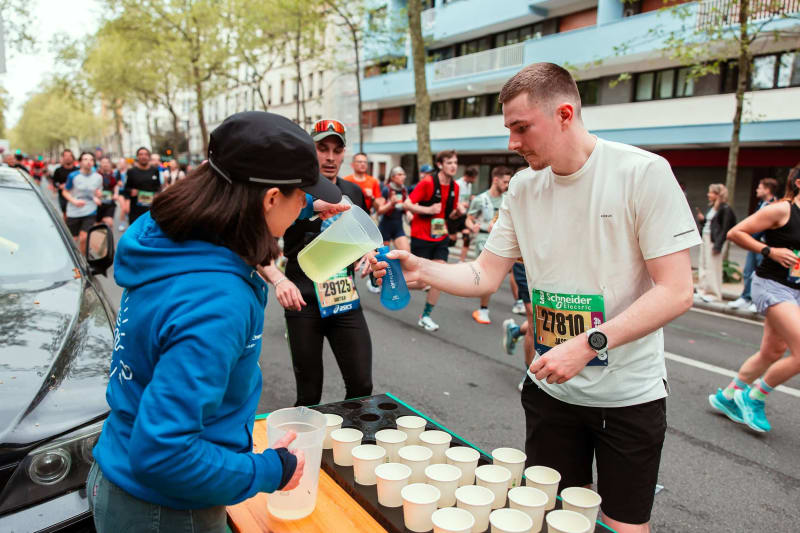
They say dehydration is bad for both performance and health. So you drink, drink and drink some more. At every aid station, you gulp down cups of water, but also sports drink, fruit juice and caffeinated soda. Variety is the spice of life, right?
Yet the old saying holds true: too much of a good thing can be bad. You think you are doing the right thing, but you are getting it completely wrong. Drinking is, of course, essential during an effort as specific and prolonged as a marathon, but drinking too much becomes counterproductive, and can even be downright dangerous. Ever heard of hyponatremia? This serious condition occurs when excess water dilutes the sodium concentration in the blood plasma. The consequences are no laughing matter: oedema, cramps, muscle problems, loss of balance, dizziness, fainting and even coma in the most severe cases.
Even without reaching such extremes, drinking too much can hurt your performance. Not only does stopping at every aid station cost valuable time, but too much fluid can also cause digestive discomfort. The key is to find the right balance: enough to keep your body properly hydrated without creating discomfort.
➜ Tips:
● Take 2–3 sips of water or isotonic drink every 2–3 kilometres if you are carrying your own supplies, or at each official aid station, which are often spaced 5 kilometres apart. If you expect to finish in more than 4 hours, you can increase that to 5 sips, as the gap between aid stations will be longer.
You can stick to plain water, or take the sports drink provided by the organisers at the aid stations. In the latter case, find out which drink will be available and test it before race day.
‘2 –– Experimenting with nutrition
 © STADION-ACTU
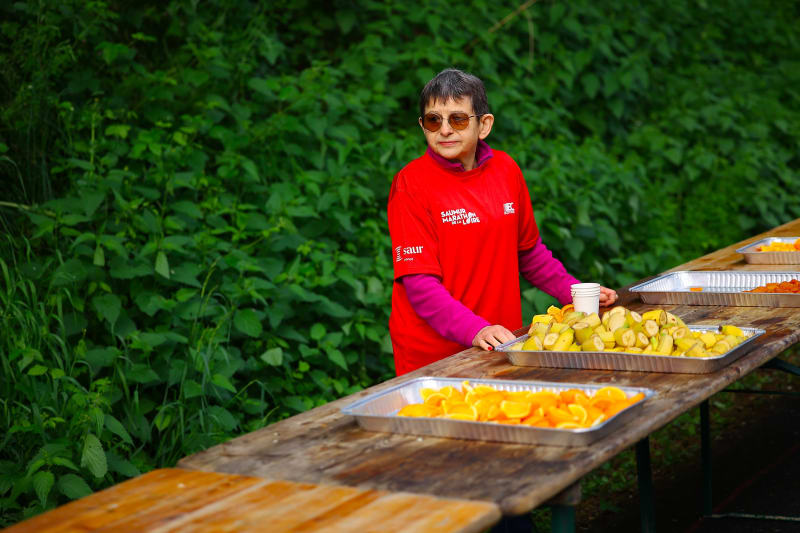
You do not want to carry your own supplies because the extra weight could cost you time. So you decide to pick at whatever the organisers are handing out: cheese, chocolate, oranges, dried fruit, unfamiliar bars… You build yourself a varied little selection of anything and everything, convinced that the main thing is to keep the engine fuelled. Big mistake: your gut rebels, and you already regret the piece of banana, savoury biscuit and cup of cola you wolfed down five minutes earlier.
As with fluids, carrying your own fuel is not always easy, unless you are willing to add a soft flask and a few gels to your kit. Relying solely on the organisers’ aid stations means risking an energy source your body will not tolerate during the effort. The only way to minimise that risk: test several foods in training to confirm what you can tolerate. It is best to avoid oranges, which are acidic, as well as sodas, dairy drinks, unfamiliar bars and foods that are difficult to digest, particularly high-fat options. You should also consider how easy each food is to chew and swallow: a gel goes down quickly, while a bar needs to be chewed.
➜ Tips:
● Eat roughly once an hour during your marathon. Be aware that gels need to be taken about once an hour to avoid blood-sugar crashes, but it is better not to start taking them too early! The aim is to use only 2 or 3 over the entire race.
● The best source of energy is still carbohydrates, which are absorbed more effectively when taken with water and sodium. In other words, a good isotonic drink ticks every box and may be all you need for fuelling.
‘3 –– Trying out your race-day carrying system on race day
 © STADION-ACTU
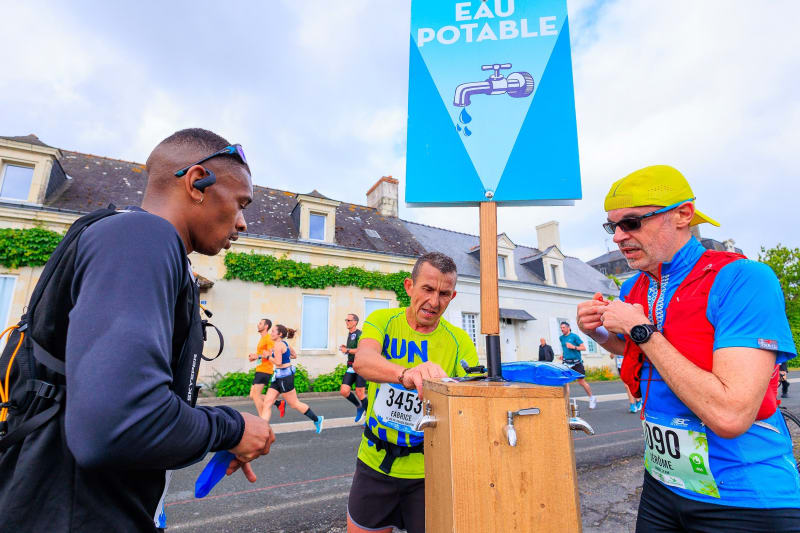
You bought it last week and it looks fantastic: a smart running belt for carrying your gels and isotonic drink flask. It is bound to be perfect for race day! Except that, when the big day arrives, you do not feel comfortable with the new thing around your waist. It itches, presses into your stomach and makes it hard to grab the gel that could save your personal best. You are so flustered that you drop your flask while trying to reach it. Total disaster.
As with everything else, you do not test anything for the first time on race day, not even that smart new belt! It is essential to validate the carrying system you will use during the race so you are familiar with how it works. You can also optimise where you place your food in the belt, for example by arranging it in the order you plan to take it so you do not have to think during the effort. Carrying a 250 ml flask is a good option if you want your own drink, especially since isotonic drink powder sticks are easy to carry and can be mixed with plain water at an official aid station. Carrying your own products not only means you know your body can tolerate them, but also gives you fuel on hand whenever you need it and means you will not waste time at the official aid stations.
➜ Tips:
● Soft running belts are an excellent solution because they prevent chafing around the waist and stop your kit from bouncing around. Ultra-light and easy to forget you are wearing, they hold food and flask firmly against your body without discomfort.
Fuelling is a performance factor in its own right. Neglecting it means jeopardising your chances of reaching the goal you set yourself. For a first-time marathoner, it is naturally difficult to know what the body will tolerate during the effort. That makes it even more important to test foods and drinks in training, limiting unpleasant surprises and learning how your body responds. Once you have some experience under your belt, you can, and should, develop a proper fuelling plan before race day. Bon appétit… or rather, enjoy the race!
➜ Tips:
● Take 2–3 sips of water or isotonic drink every 2–3 kilometres if you are carrying your own supplies, or at each official aid station, which are often spaced 5 kilometres apart. If you expect to finish in more than 4 hours, you can increase that to 5 sips, as the gap between aid stations will be longer.
You can stick to plain water, or take the sports drink provided by the organisers at the aid stations. In the latter case, find out which drink will be available and test it before race day.
➜ Tips:
● Eat roughly once an hour during your marathon. Be aware that gels need to be taken about once an hour to avoid blood-sugar crashes, but it is better not to start taking them too early! The aim is to use only 2 or 3 over the entire race.
● The best source of energy is still carbohydrates, which are absorbed more effectively when taken with water and sodium. In other words, a good isotonic drink ticks every box and may be all you need for fuelling.
➜ Tips:
● Soft running belts are an excellent solution because they prevent chafing around the waist and stop your kit from bouncing around. Ultra-light and easy to forget you are wearing, they hold food and flask firmly against your body without discomfort.