 © San Francisco Marathon
Inside the San Francisco Marathon: A Interview with Race Director Lauri Abrahamson
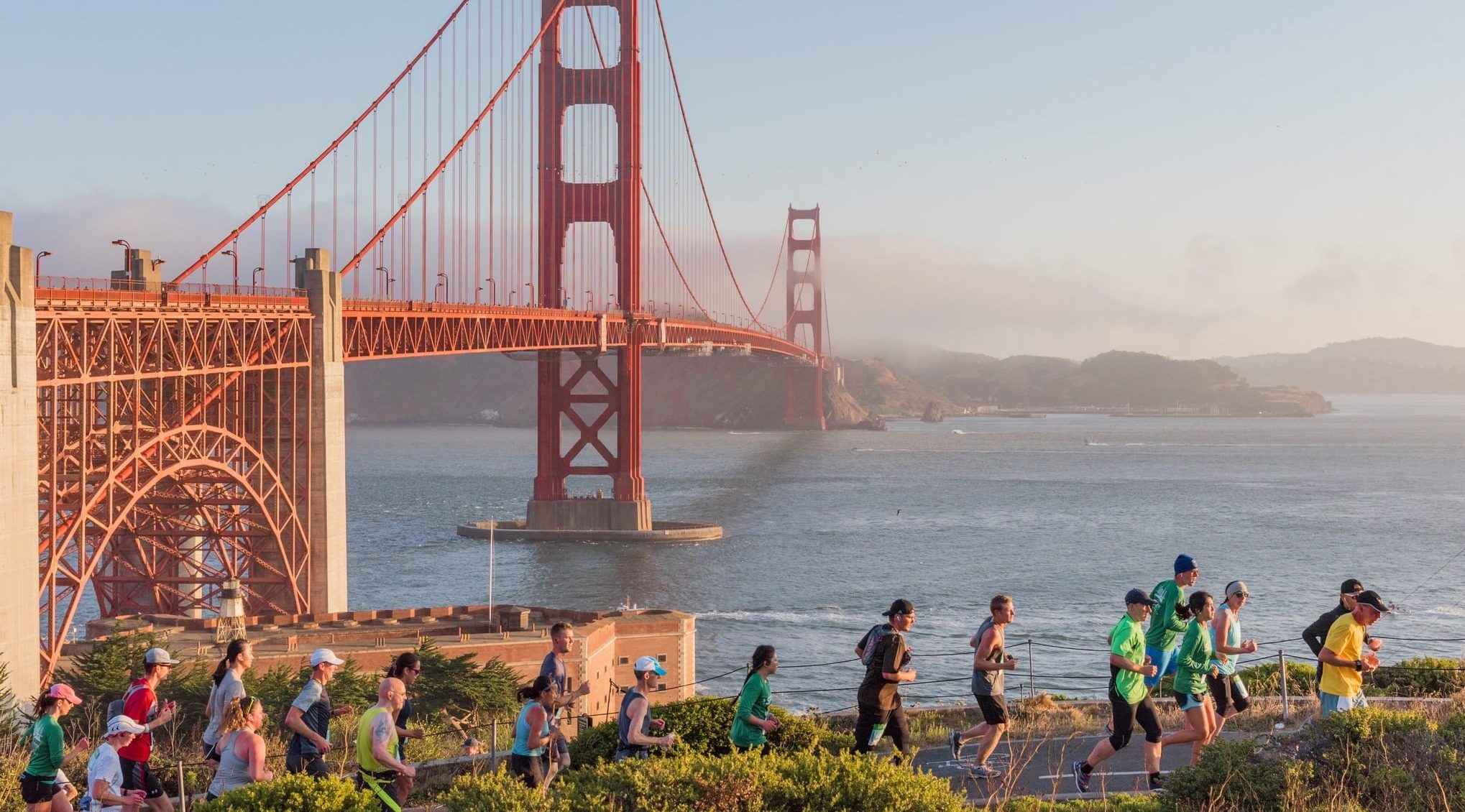
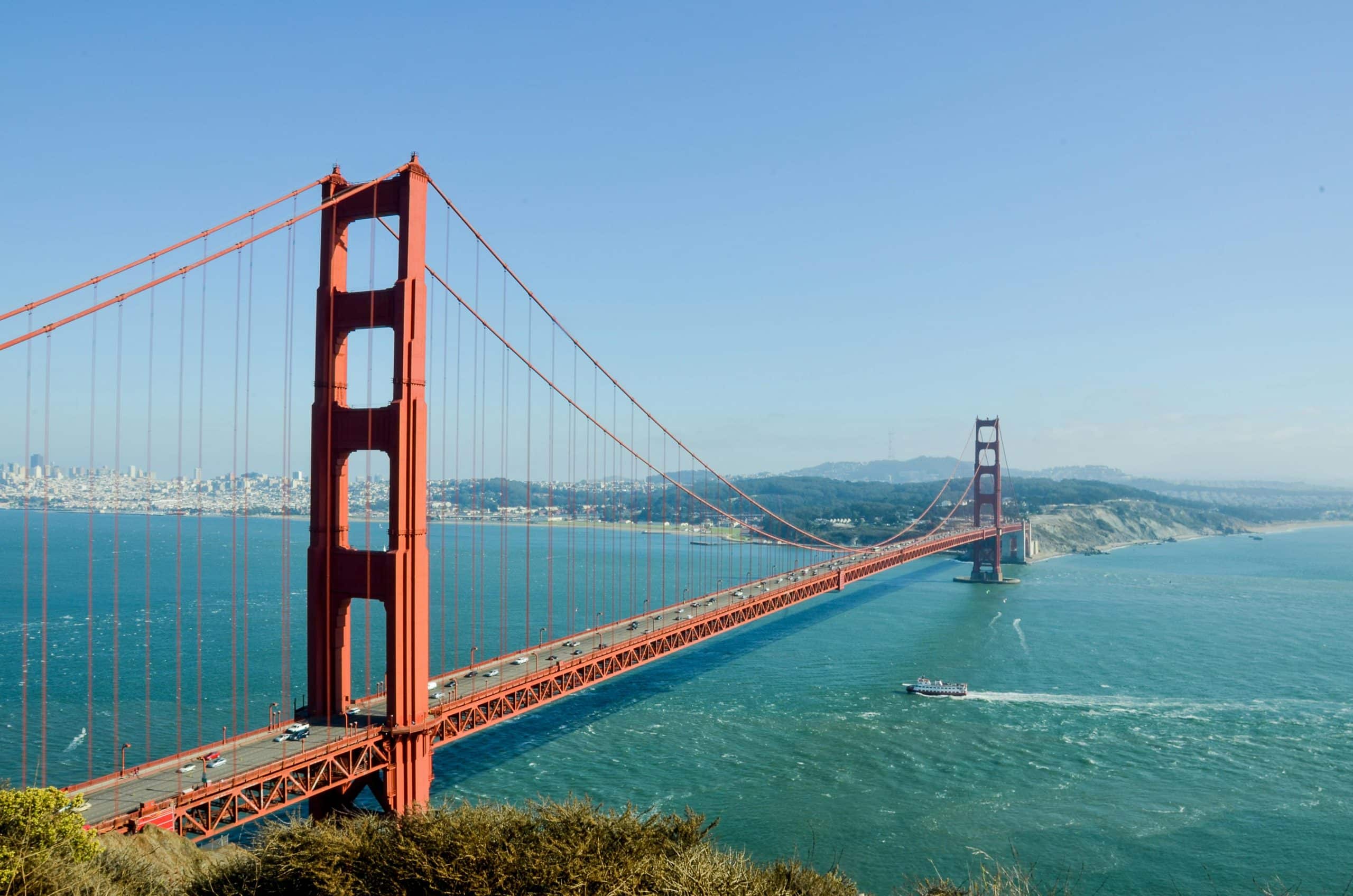
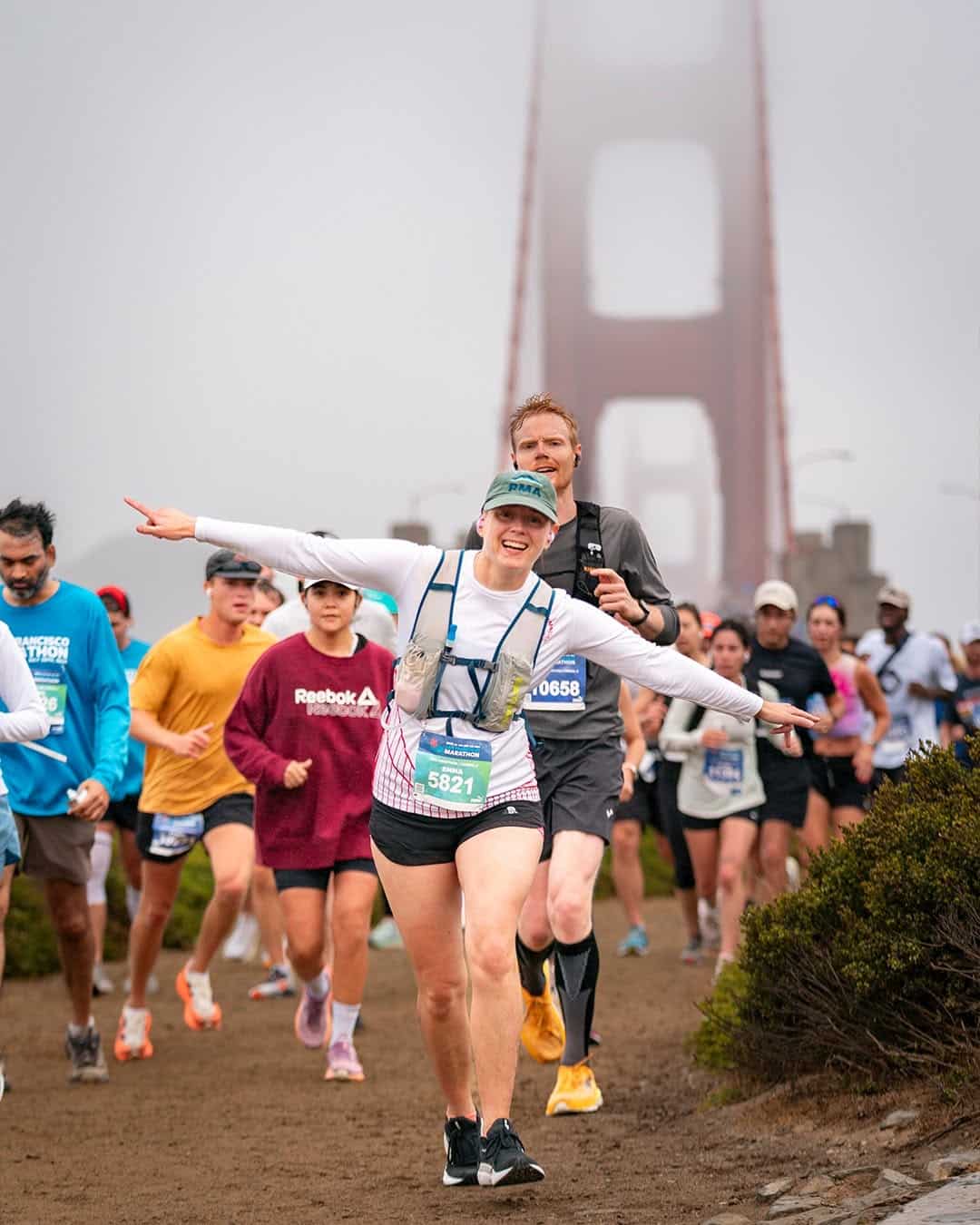
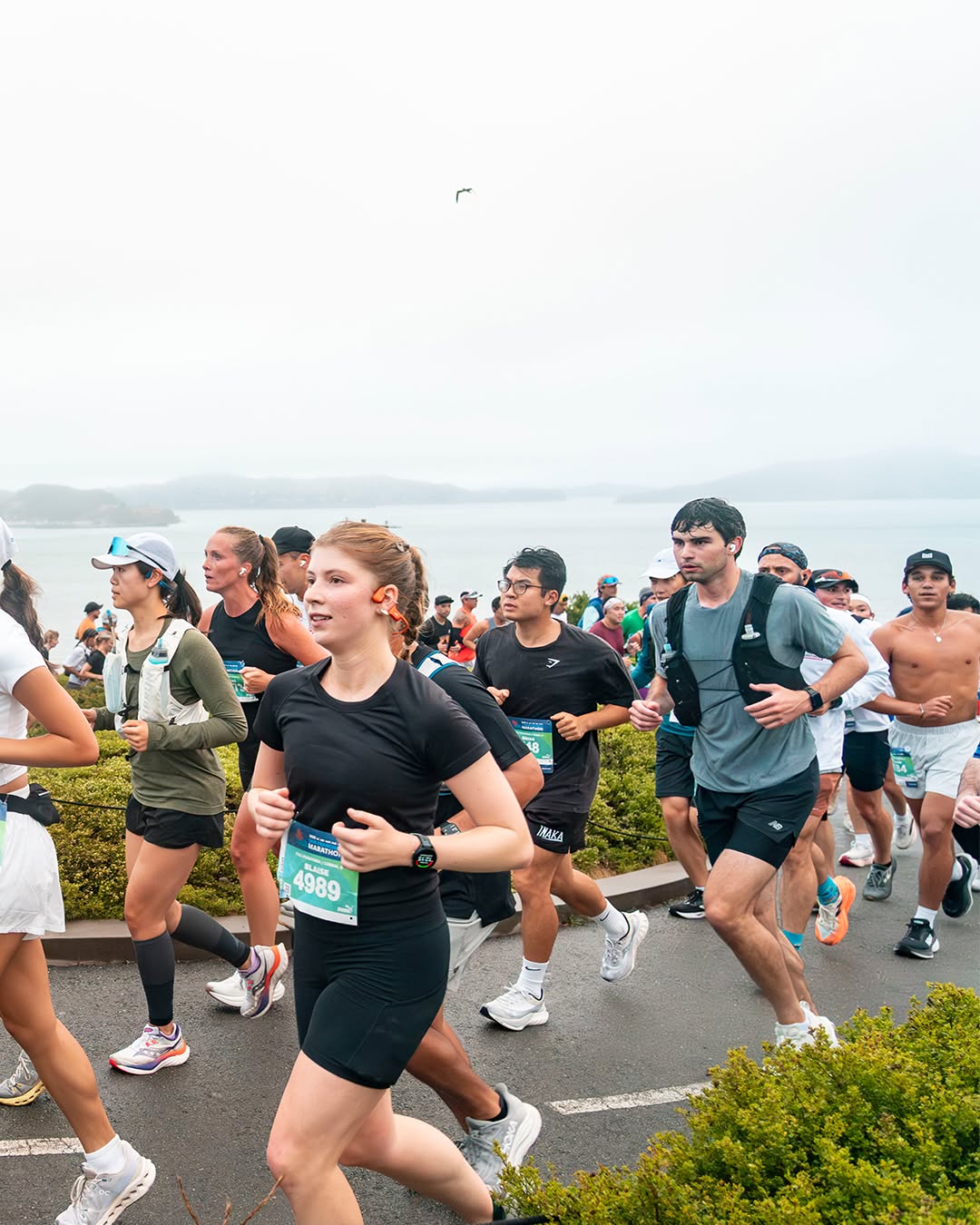
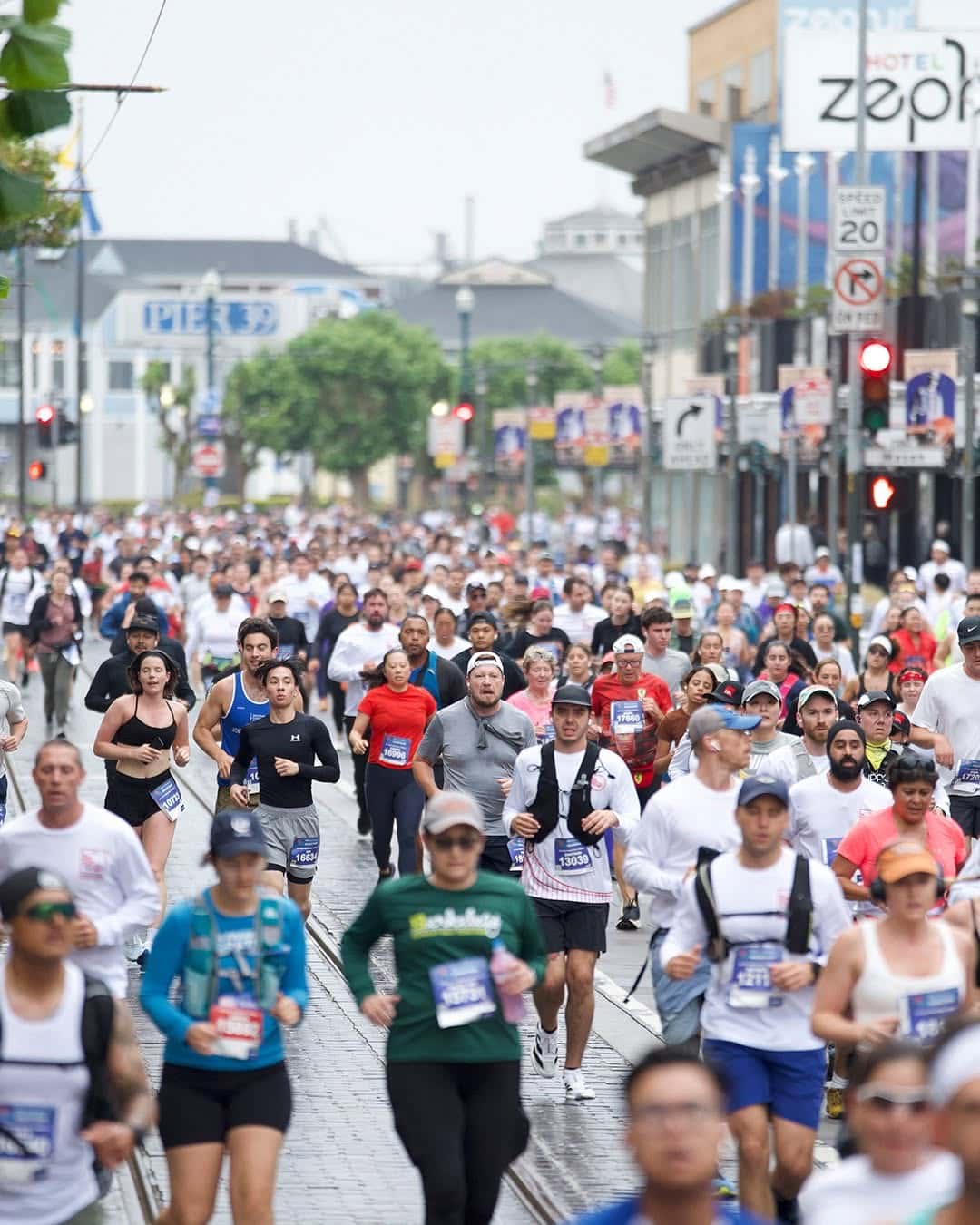
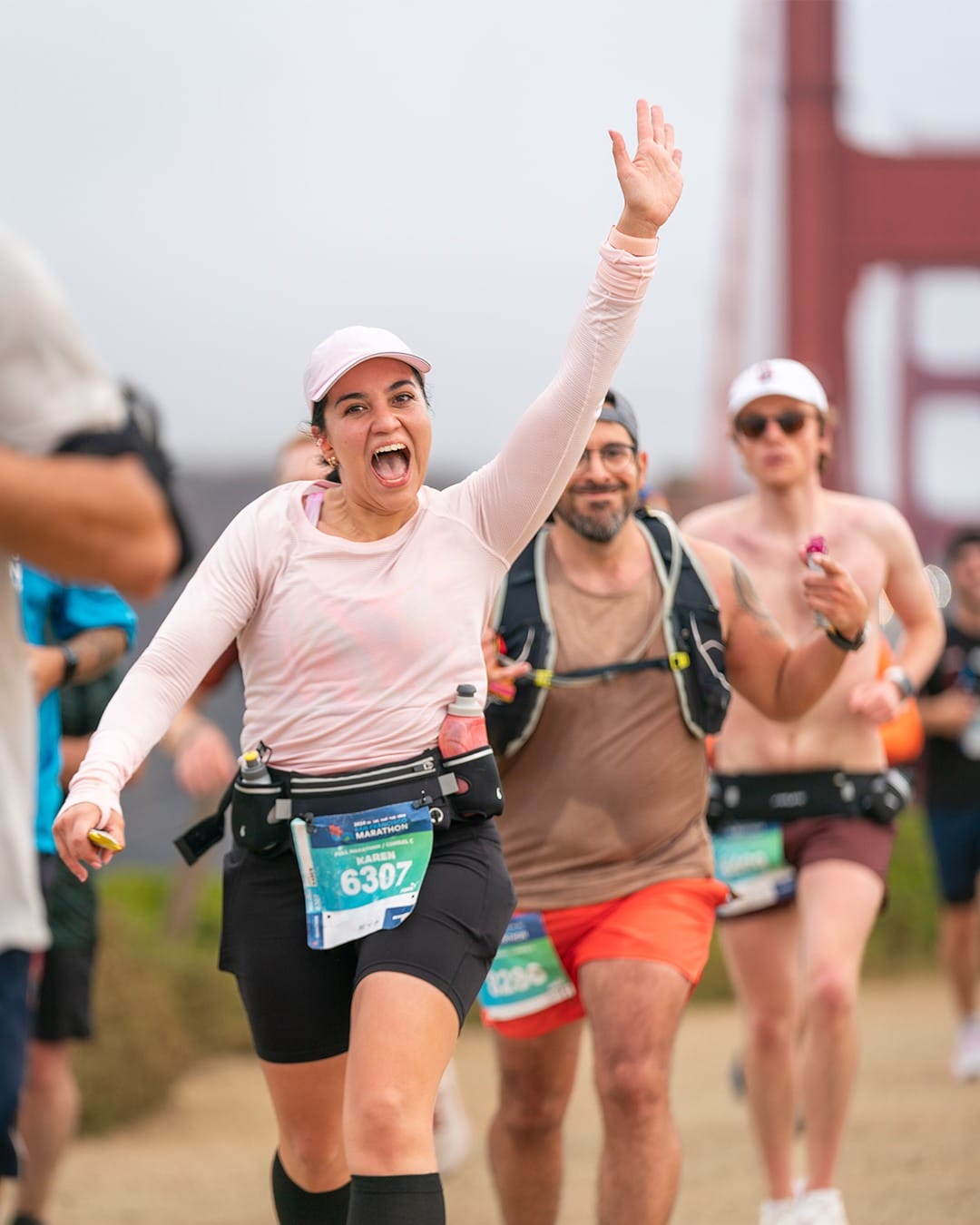
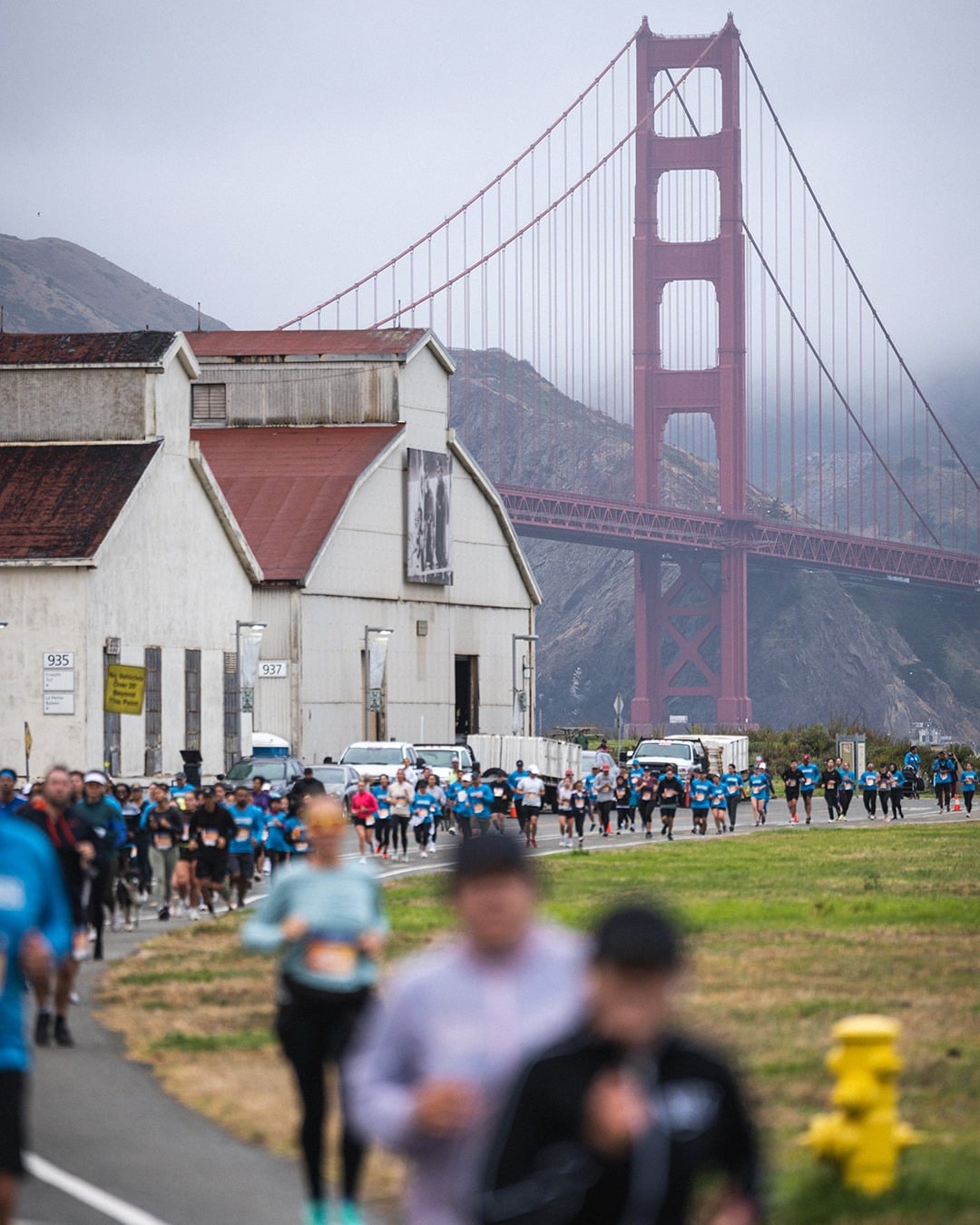
14/01/2026 10:20For nearly five decades, the San Francisco Marathon has challenged and inspired runners from around the world. In its 48th edition, the event welcomed a record 33,000 participants, from first-timers to elite athletes, on a breathtaking 26.2-mile USATF-certified course that runs across the Golden Gate Bridge, through Golden Gate Park, and past some of the city’s most iconic landmarks. With multiple race options, including two half marathons, a 10K, a 5K, and even an ultramarathon, the event, directed by Lauri Abrahamson, continues to evolve, blending tradition, community spirit, and a uniquely San Francisco experience.
➜ In April, ahead of the 2025 edition scheduled for late July, Marathons.com had the privilege of meeting Lauri Abrahamson, the Director of the San Francisco Marathon.
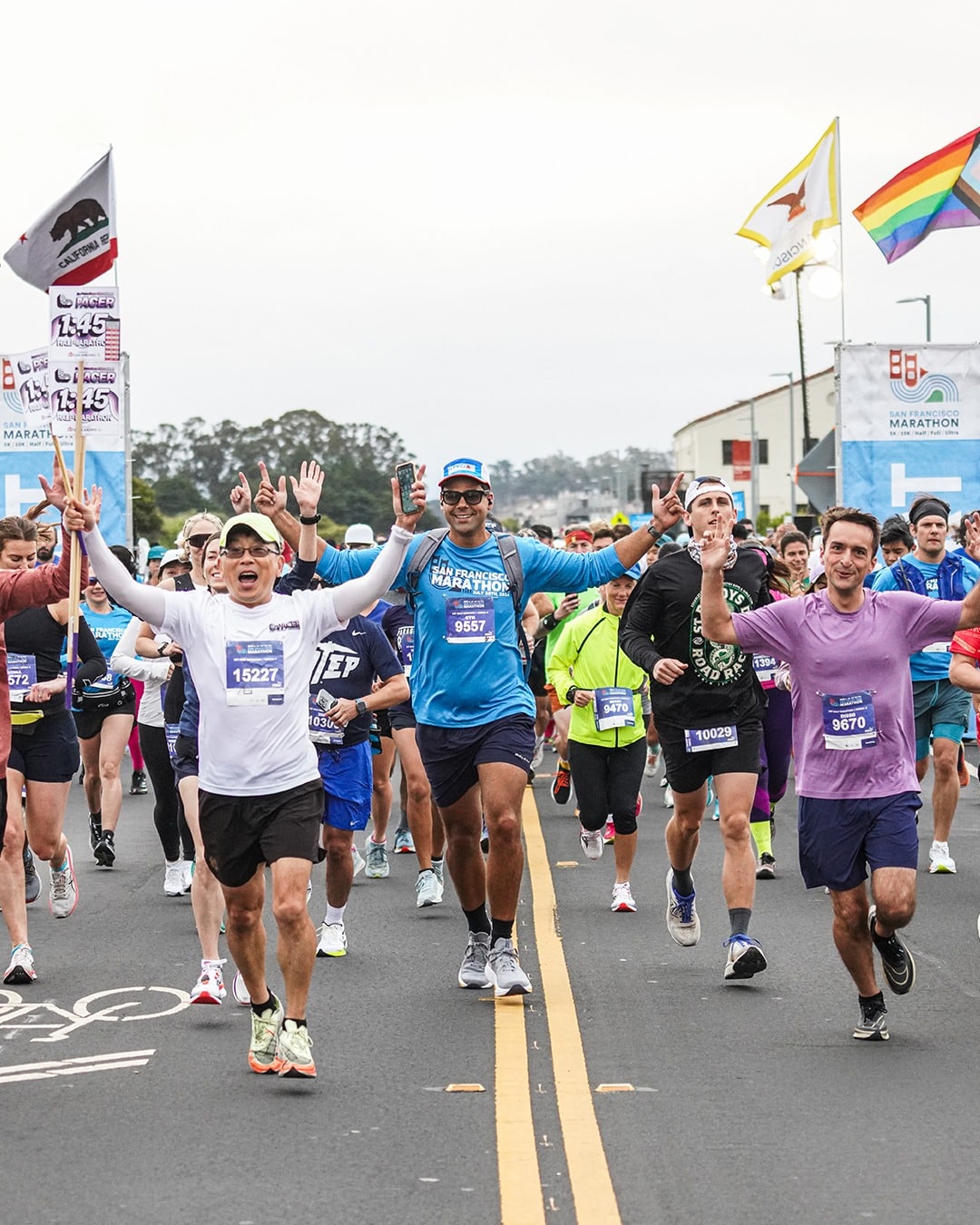
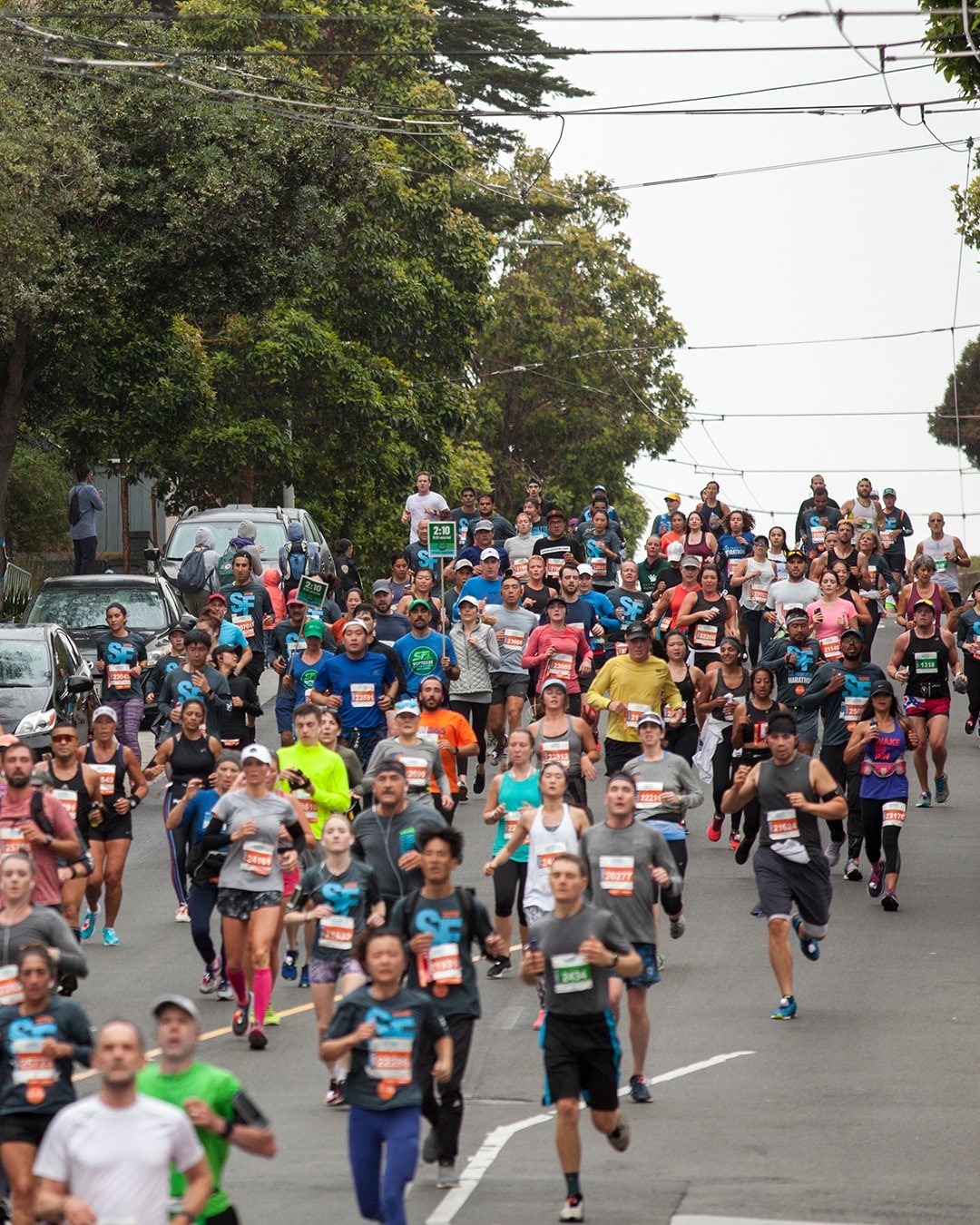
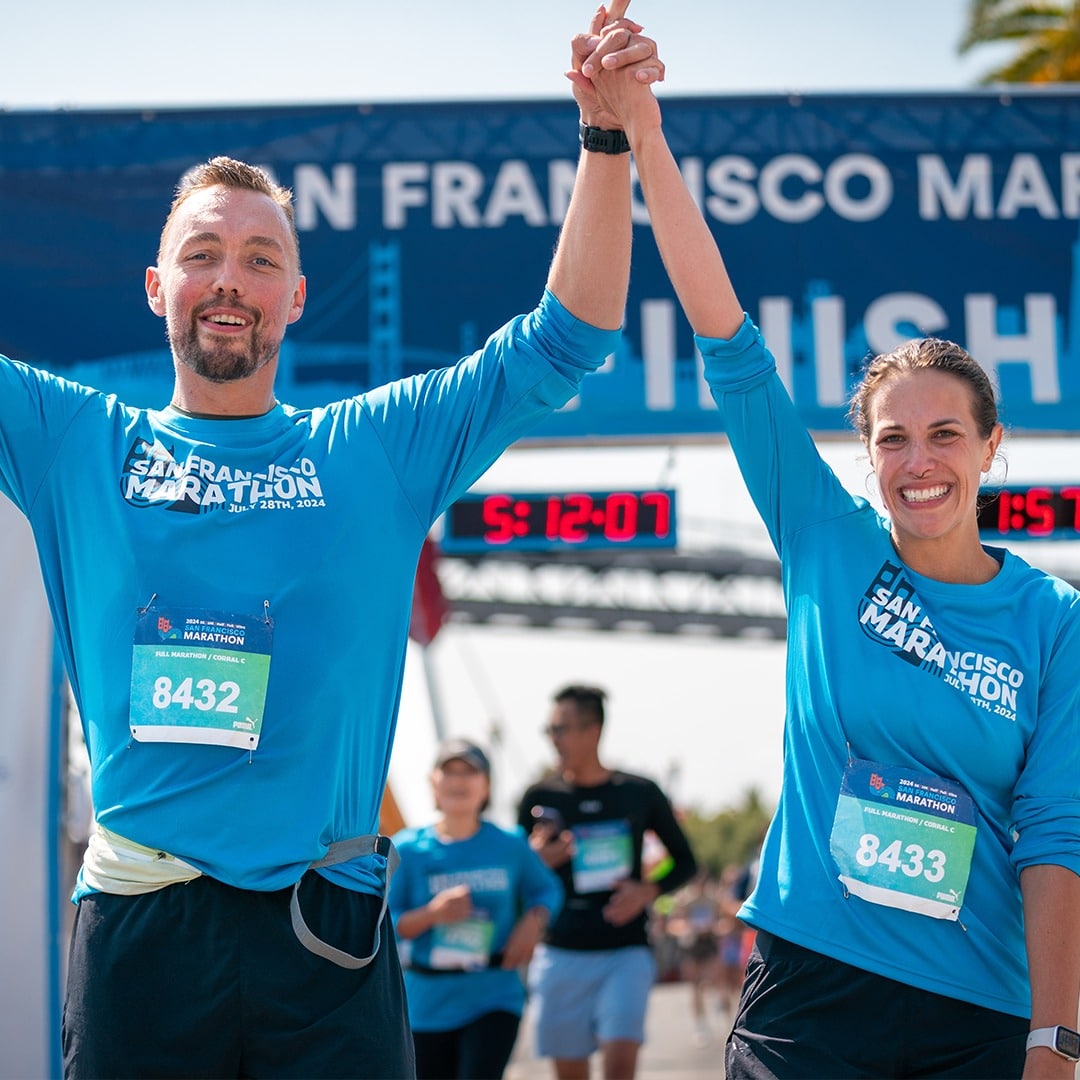
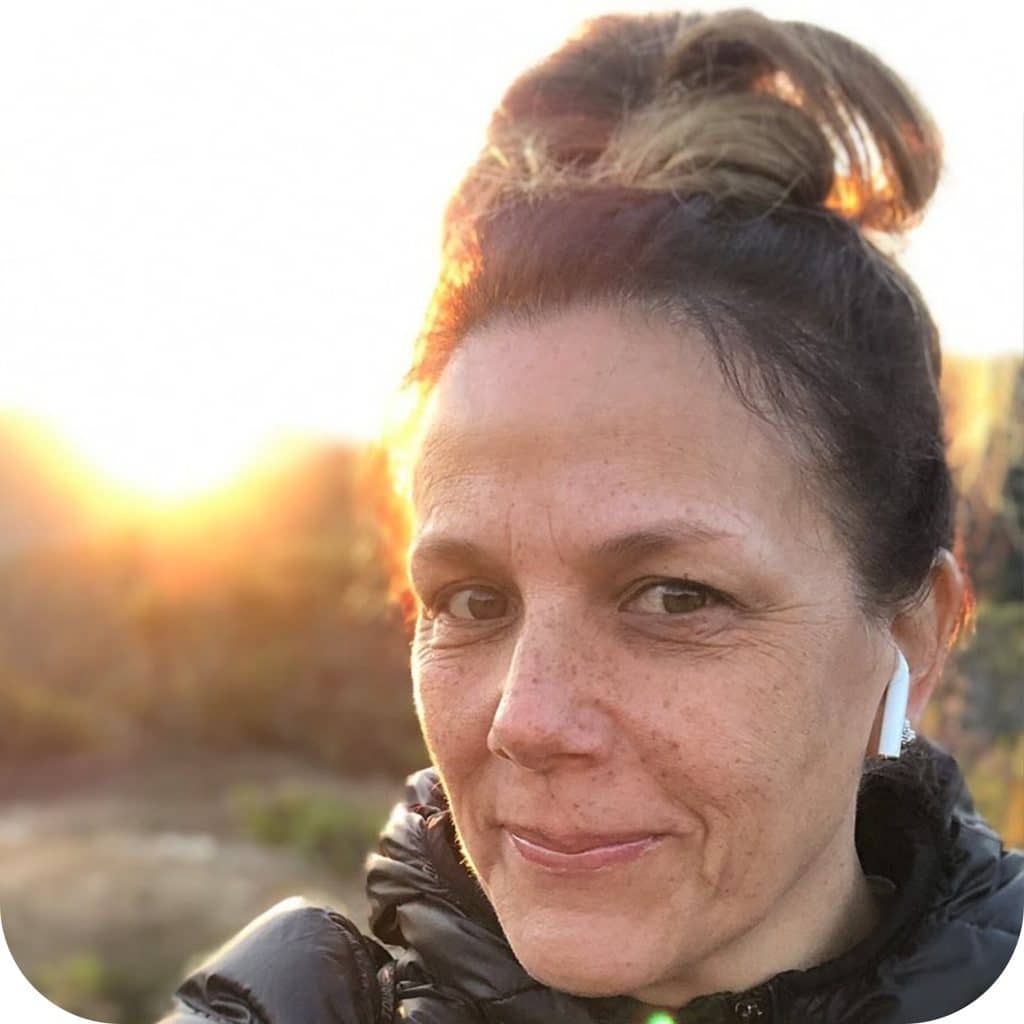
Behind the scenes of this marathon: an interview with Lauri Abrahamson, Race Director.
She has been with the event for 13 years, not always as race director, but in many different roles within the organization.
| You organize a two-day event with multiple races, including one marathon and two different half marathons. You have races on both Saturday and Sunday, which is quite rare in Europe. Why do you choose to spread your events over two days?
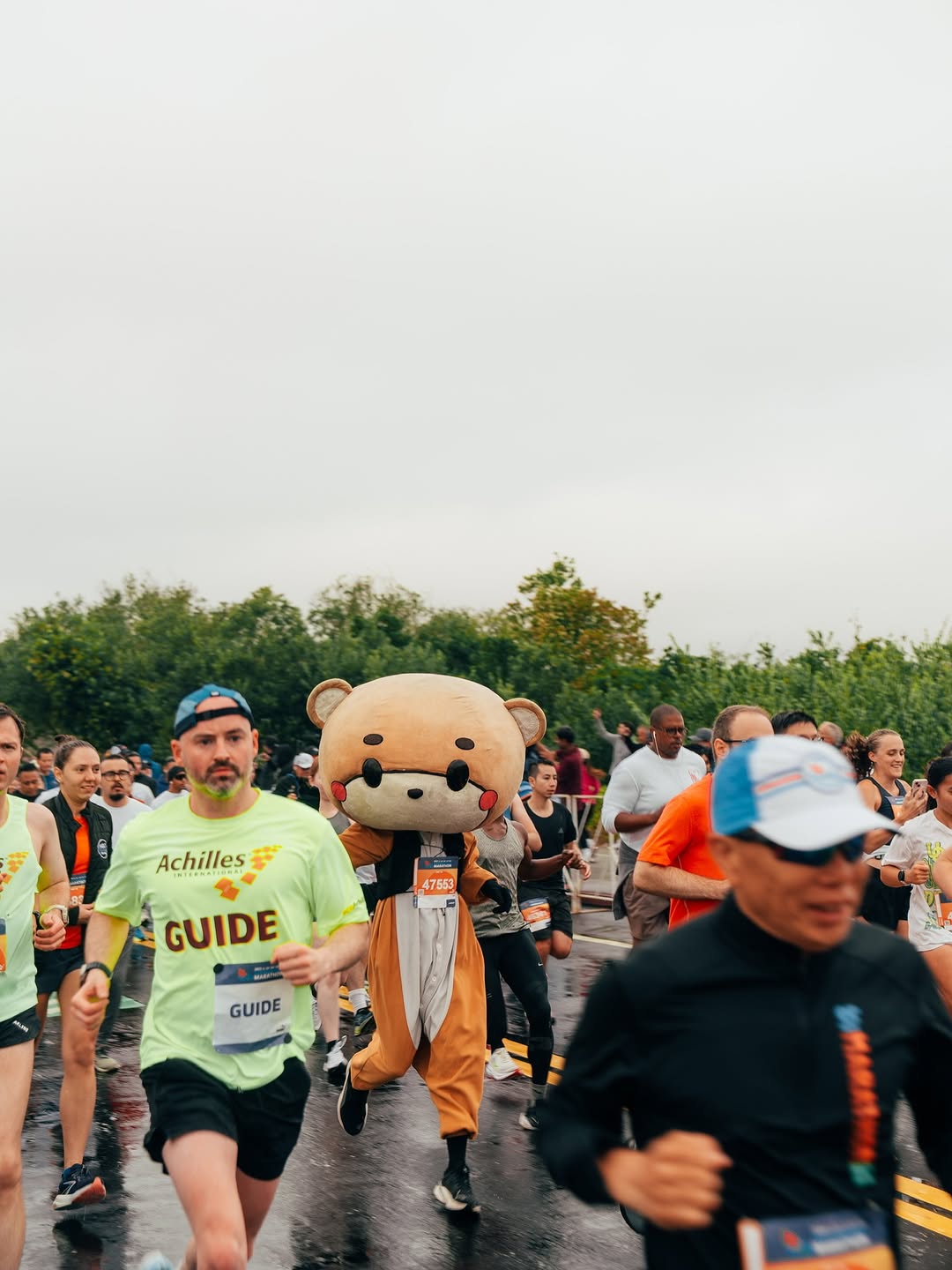
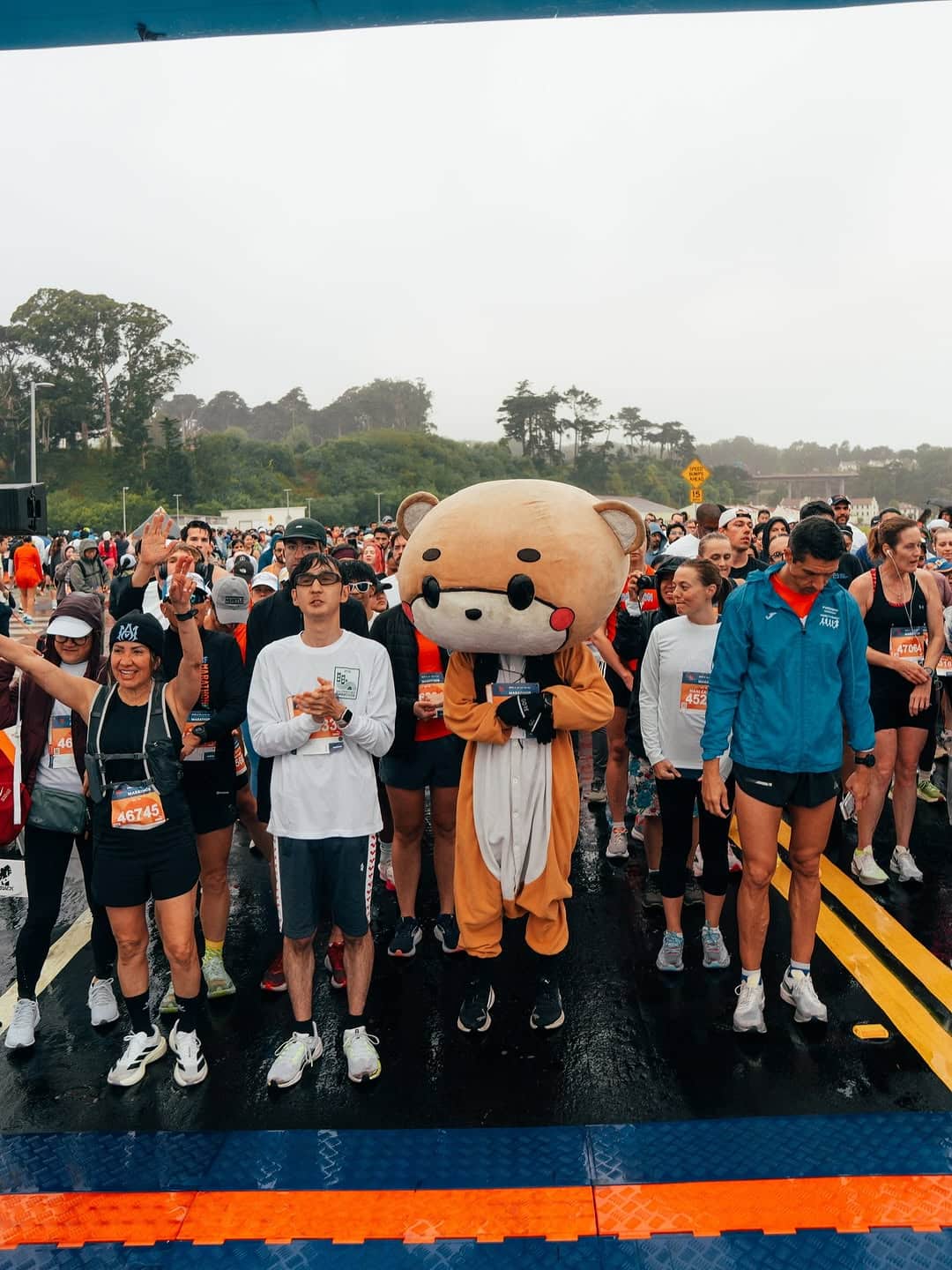
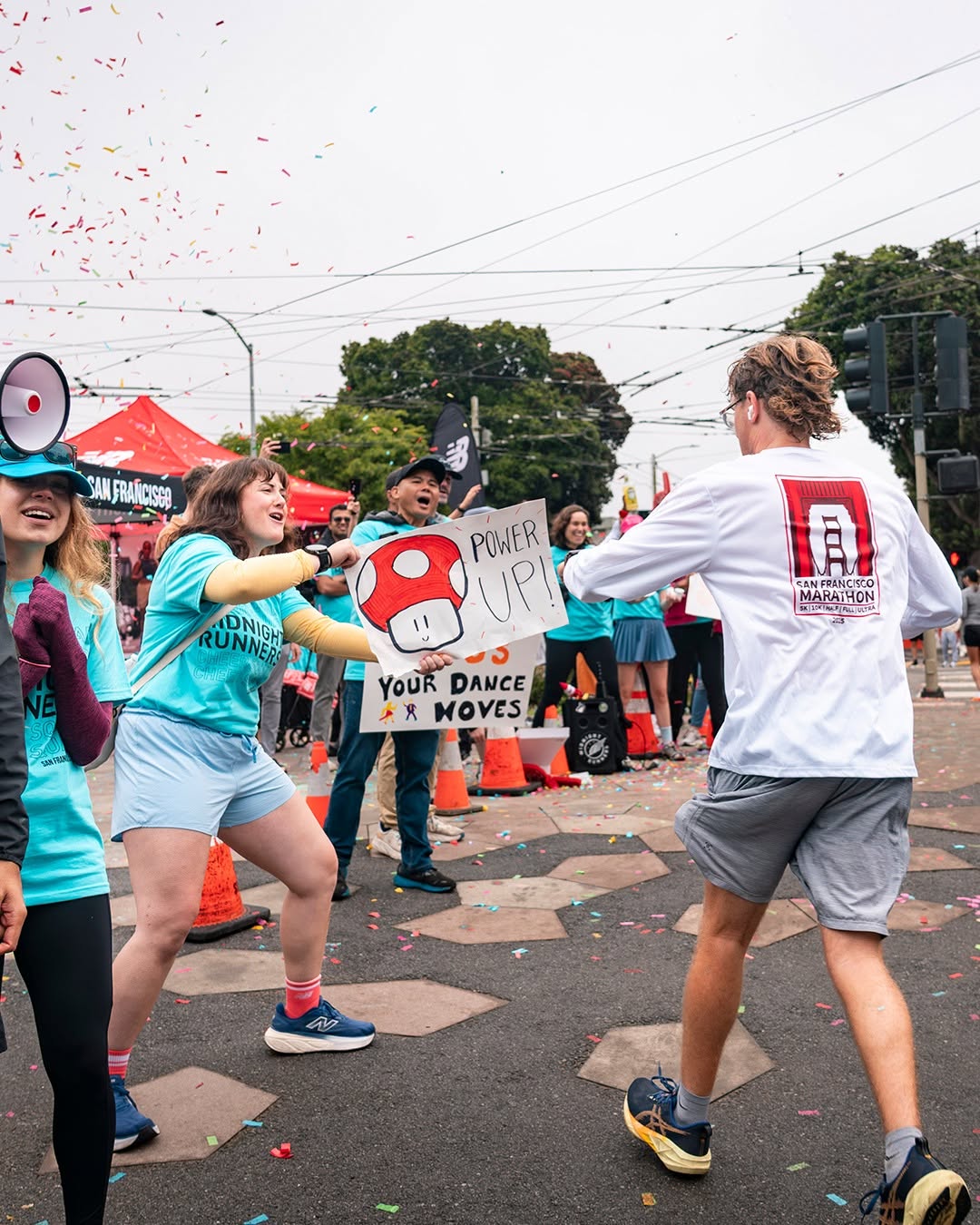
Lauri Abrahamson : I think it’s more common in the U.S. because people here run so many different distances. The half marathon and the 10K are especially popular. Our race takes place in July, which isn’t typically marathon training season because it’s hot almost everywhere. But San Francisco has the advantage of cool weather in July. It would be tough to find 25,000 people willing to run just the marathon distance at that time of year. So instead, we offer everything—from an ultramarathon to a 5K. That allows us to bring a huge community of runners together. It’s like a giant party for 30,000 people.
✓ The San Francisco Marathon offers a wide range of distances, with services designed to meet the needs of all runners. Fourteen aid stations provide water, energy gels, and medical assistance, and there’s a gear check available at the start.
| It’s pretty rare to see such a big event taking place in July. Why do you choose that date specifically?
Lauri Abrahamson : It was really just an opportunity for a big event. Nobody else was doing it at the time, so we seized the moment. San Francisco is busy year-round thanks to its temperate climate—there are football and baseball games, sailing events, festivals… so much going on. Visitors know they can come here any time of the year and expect good weather. The only other option would have been spring, but that season is crowded with Boston and New York. Then in October you’ve got Chicago and the California International Marathon. So July just fell into place nicely for us.
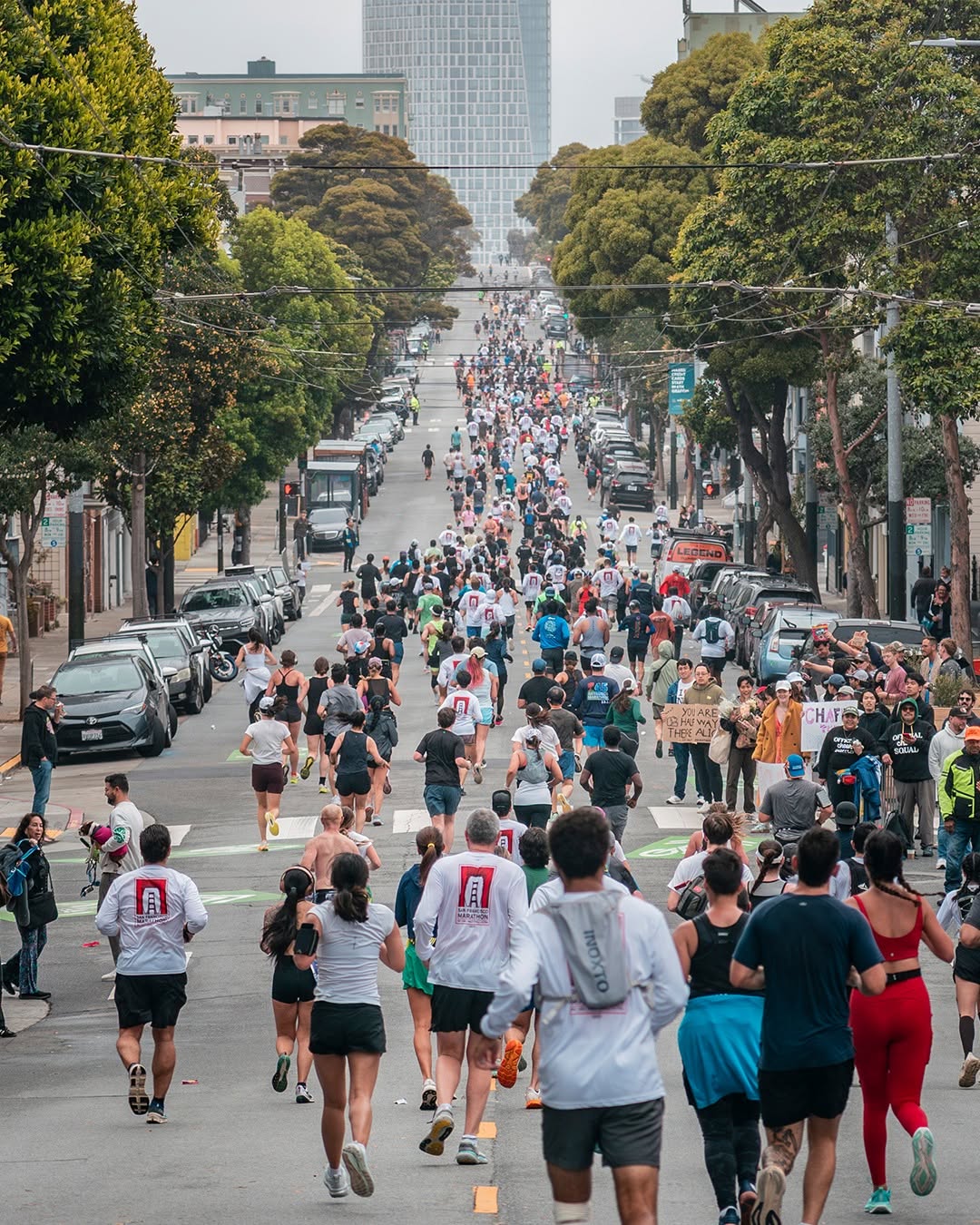
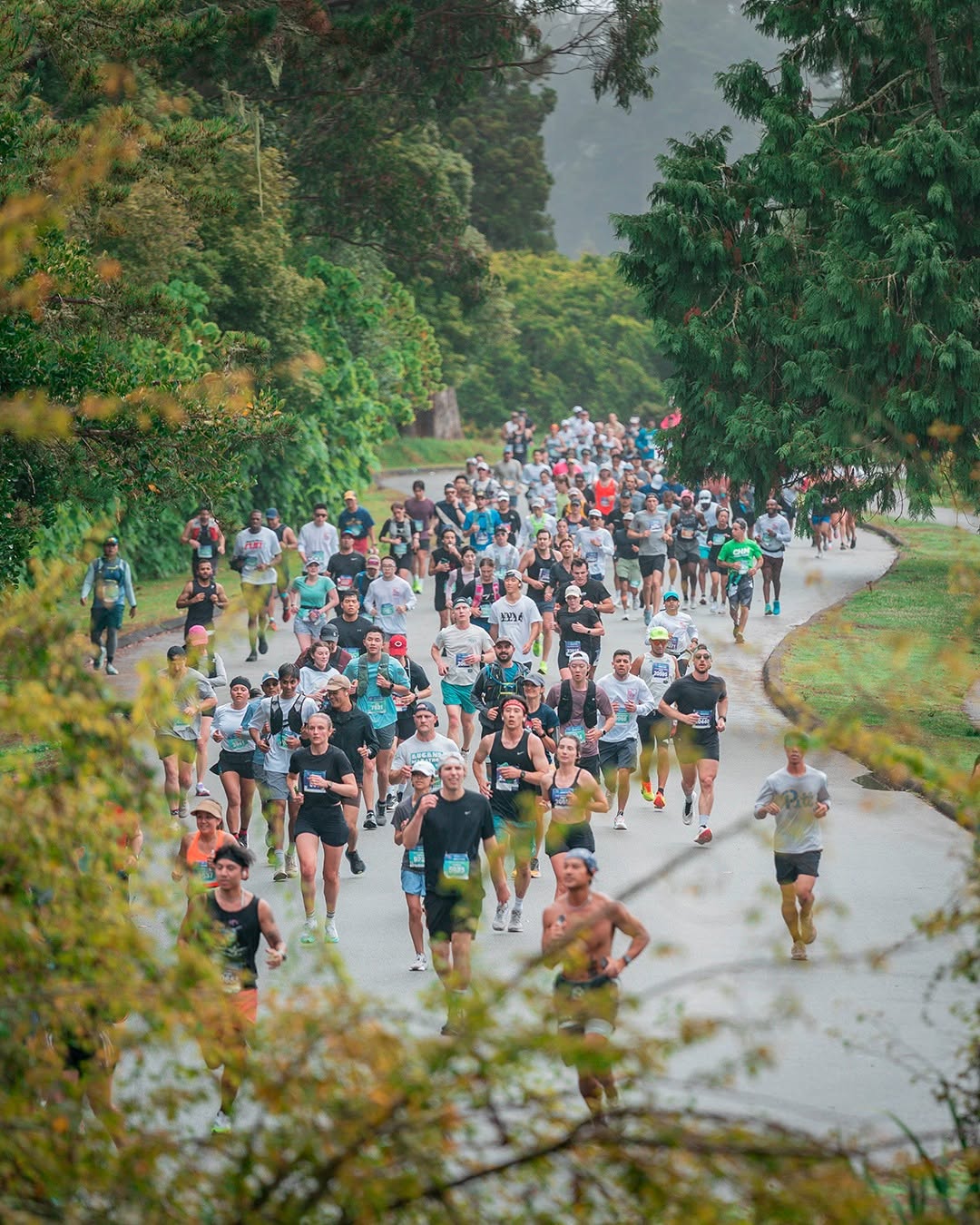
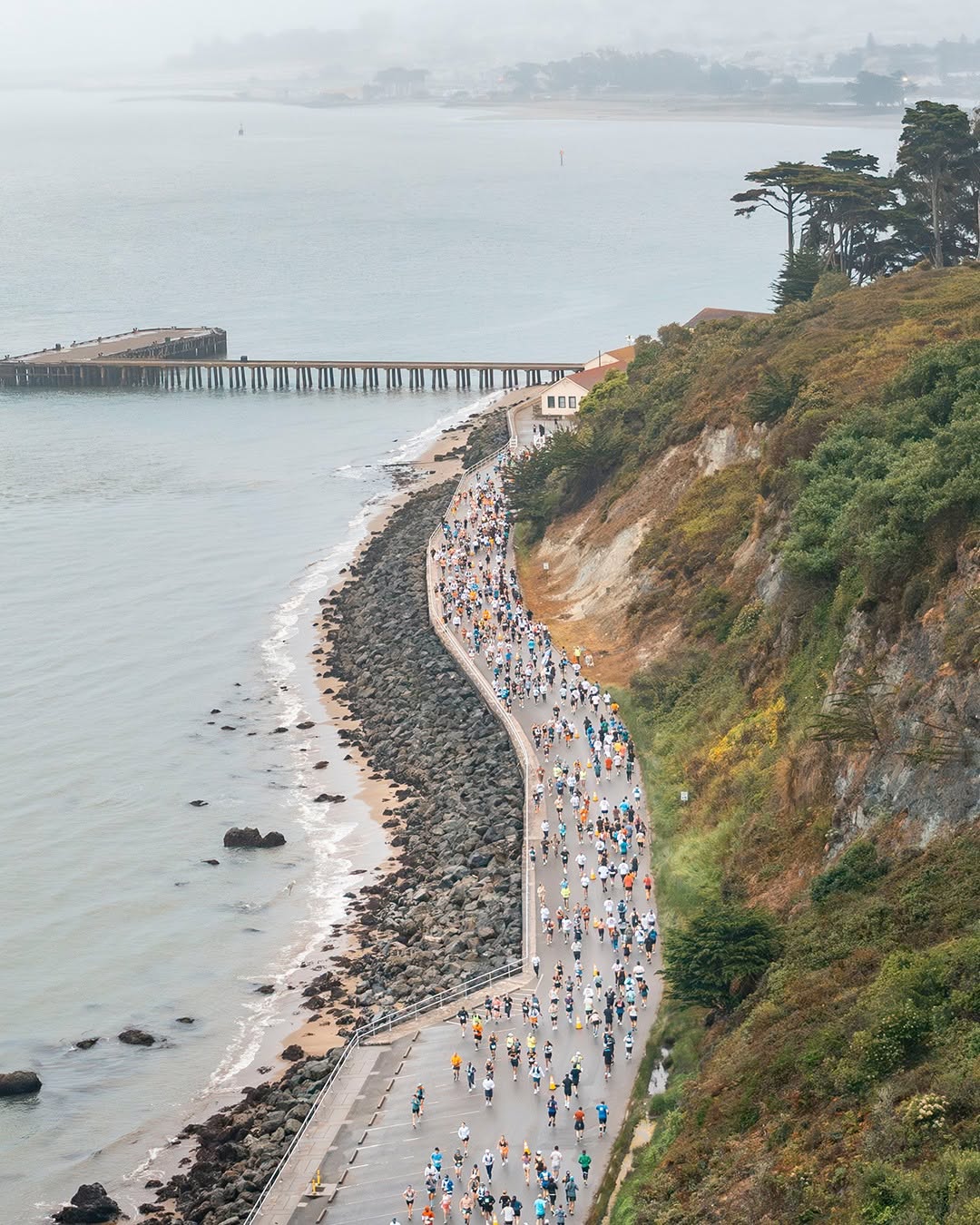
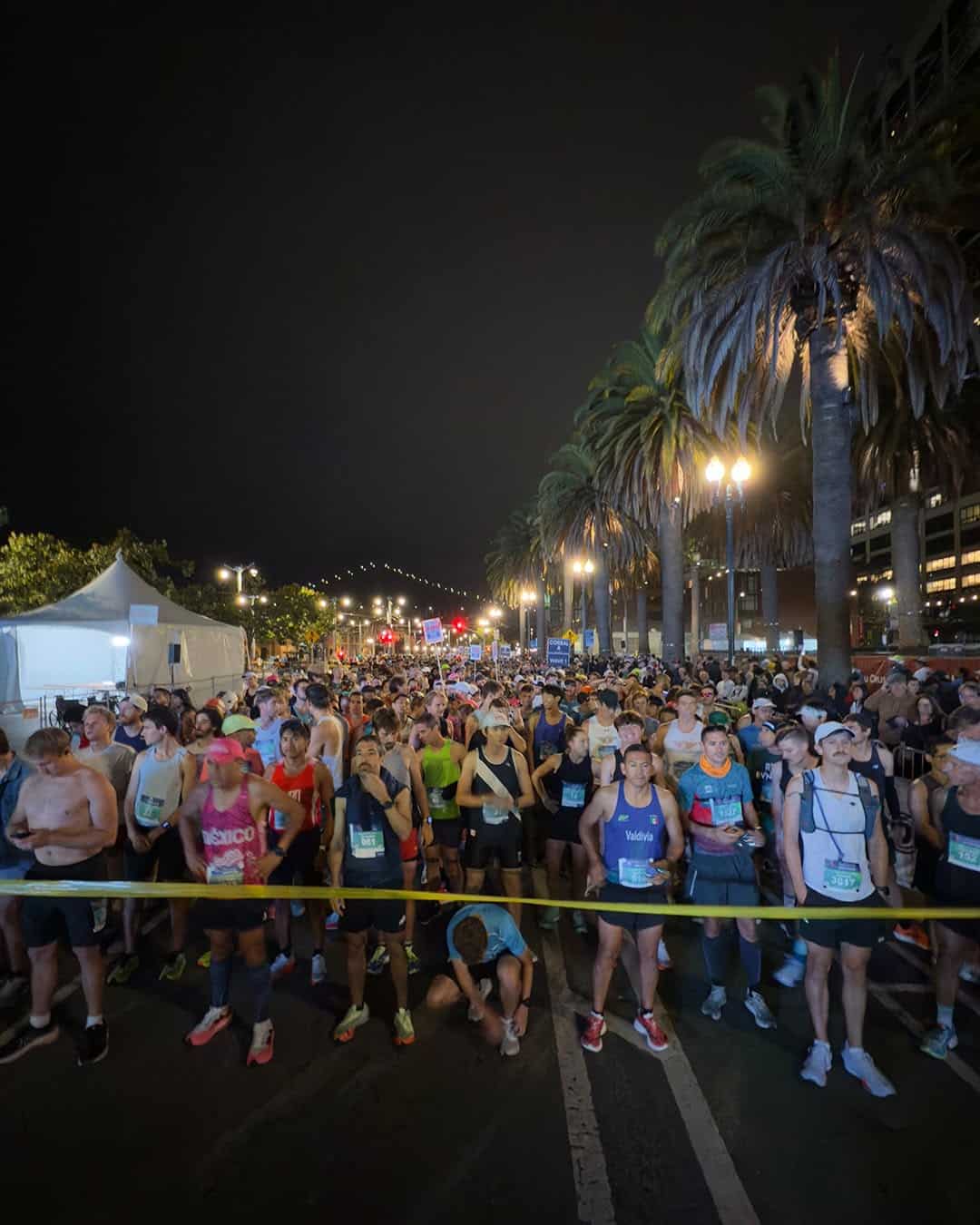
✓ This year’s event introduced a revised First Half Marathon course to improve scenery and enhance the runner experience.
| Is the Bay Area a competitive running scene? With so many races here and big events on the East Coast and north, do you see yourselves as competing? What makes your race different?
Lauri Abrahamson : I don’t think we really compete with anyone. The closest big event geographically is the LA Marathon in March. Honestly, there’s no real competition in California or even in the U.S. Our race is unique: we do attract elite runners and sub-elites, but we don’t offer prize money, so it’s not a highly competitive race. The focus is more on community and the experience of running in one of the most beautiful cities in the world.
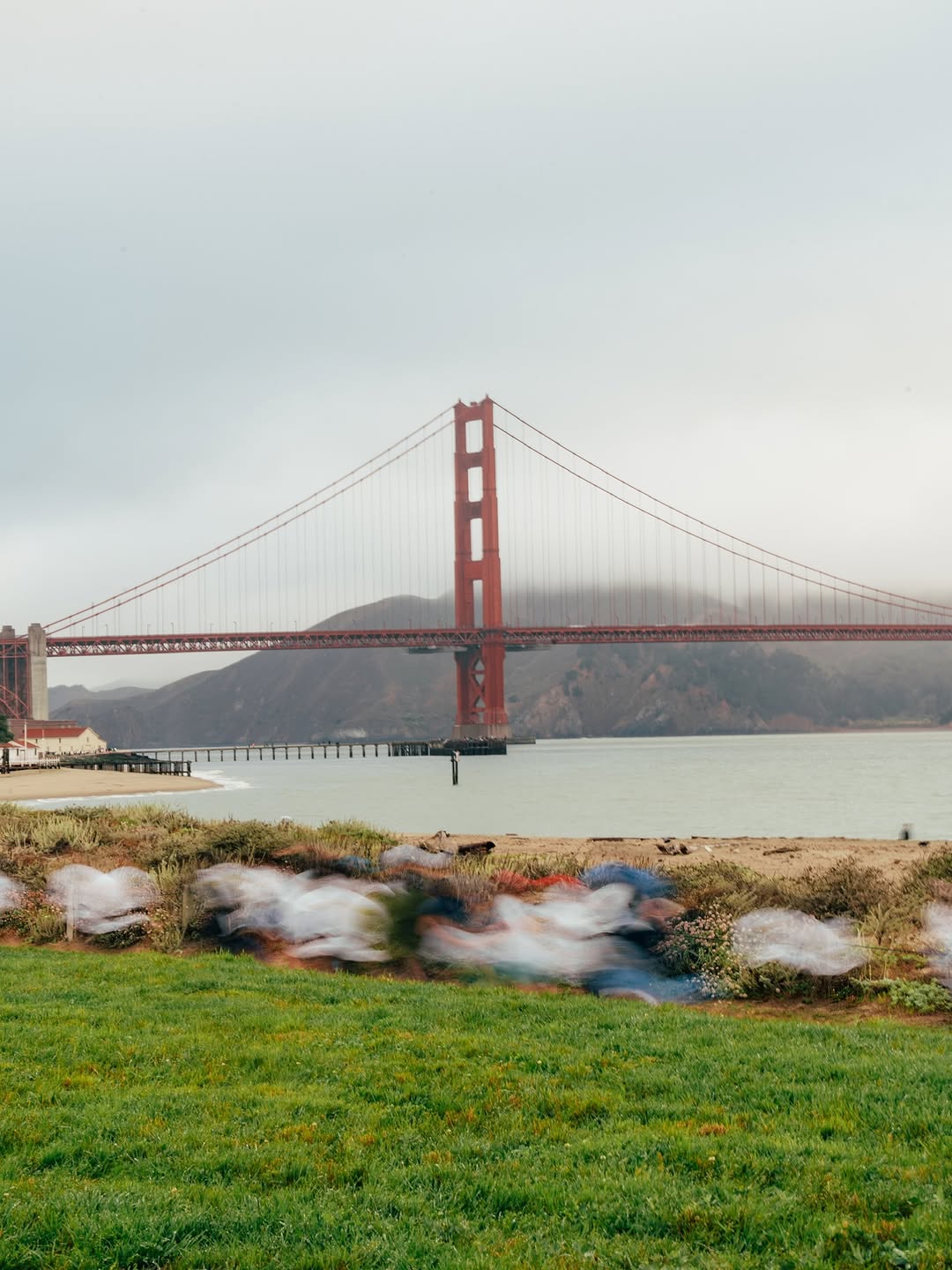
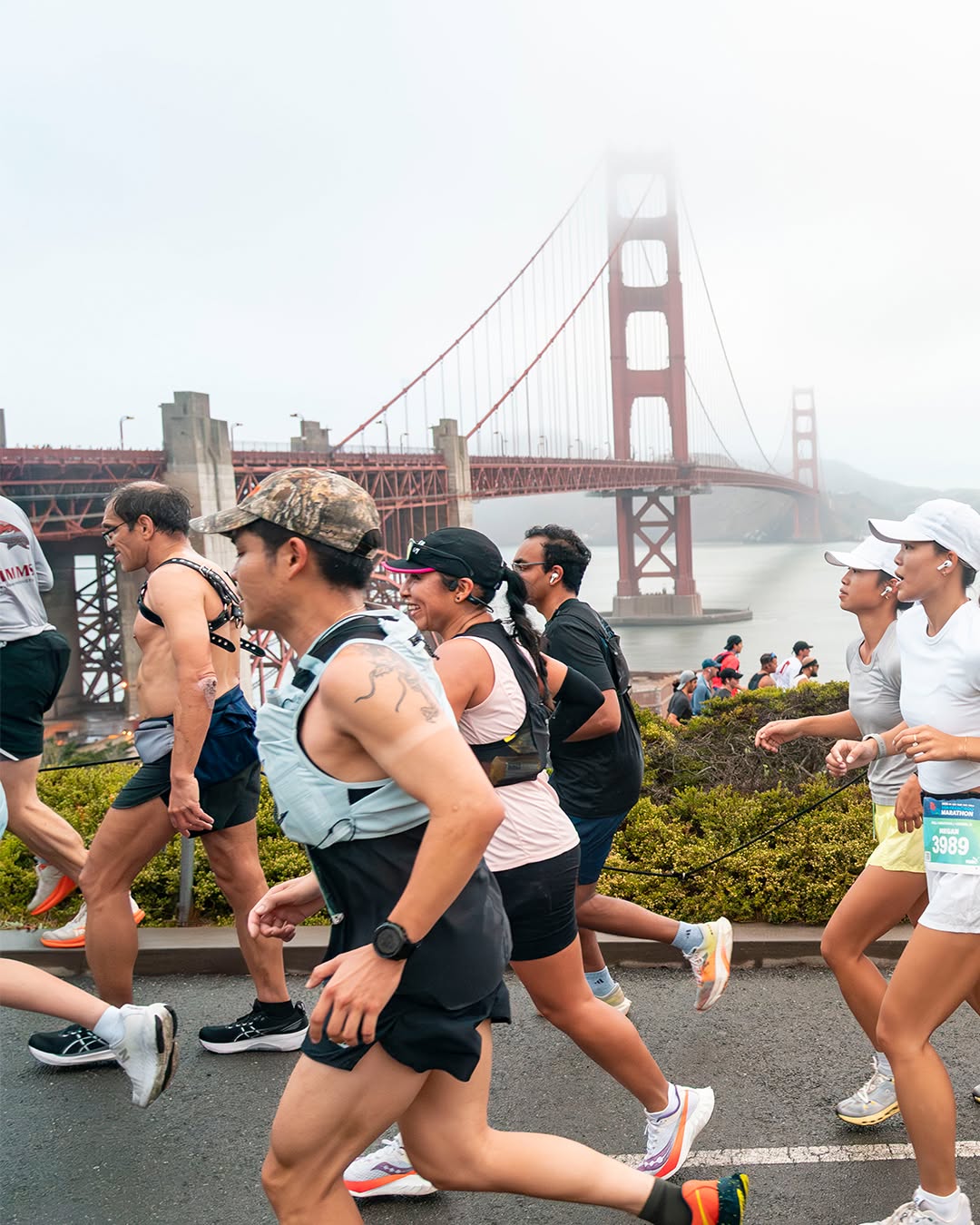
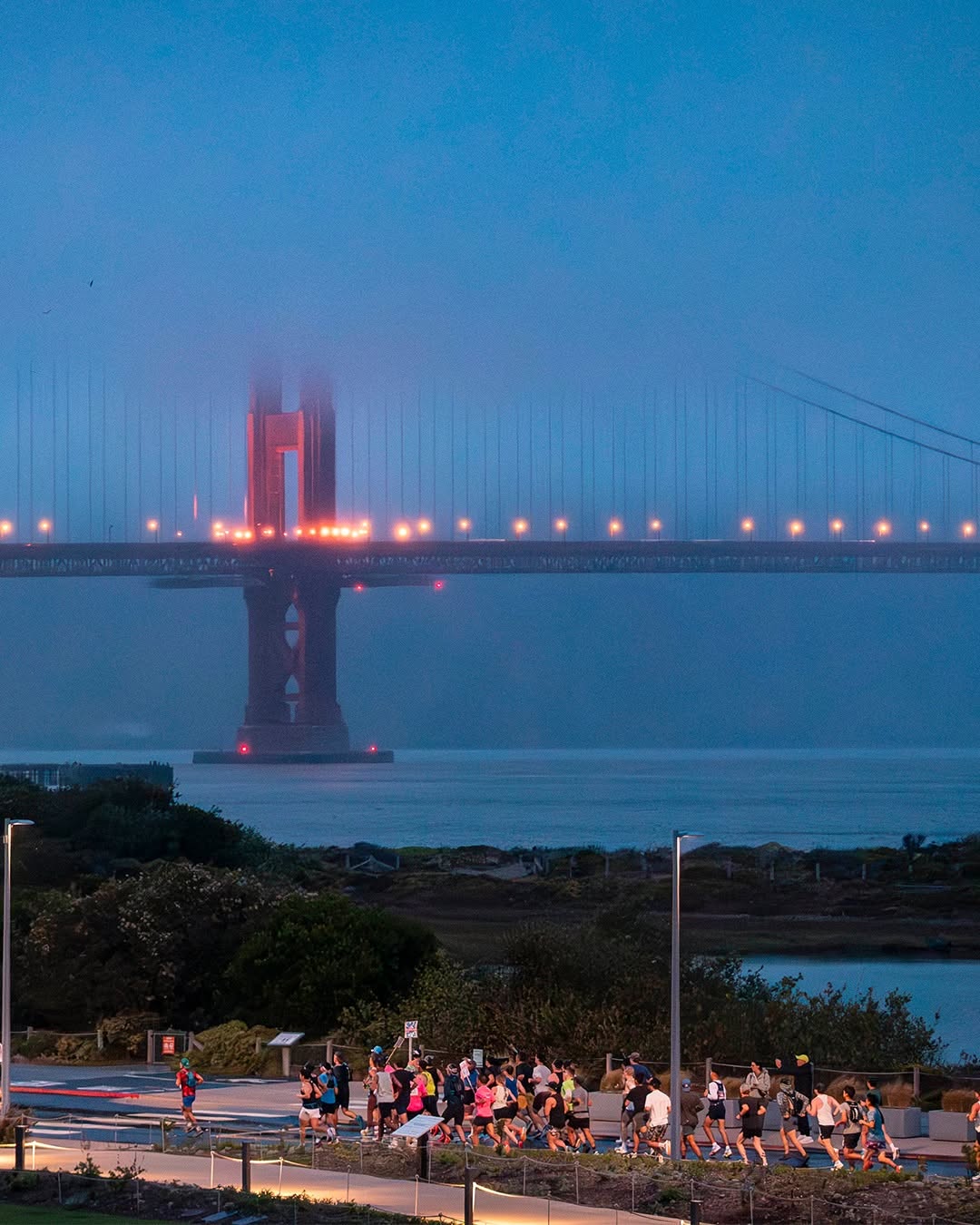
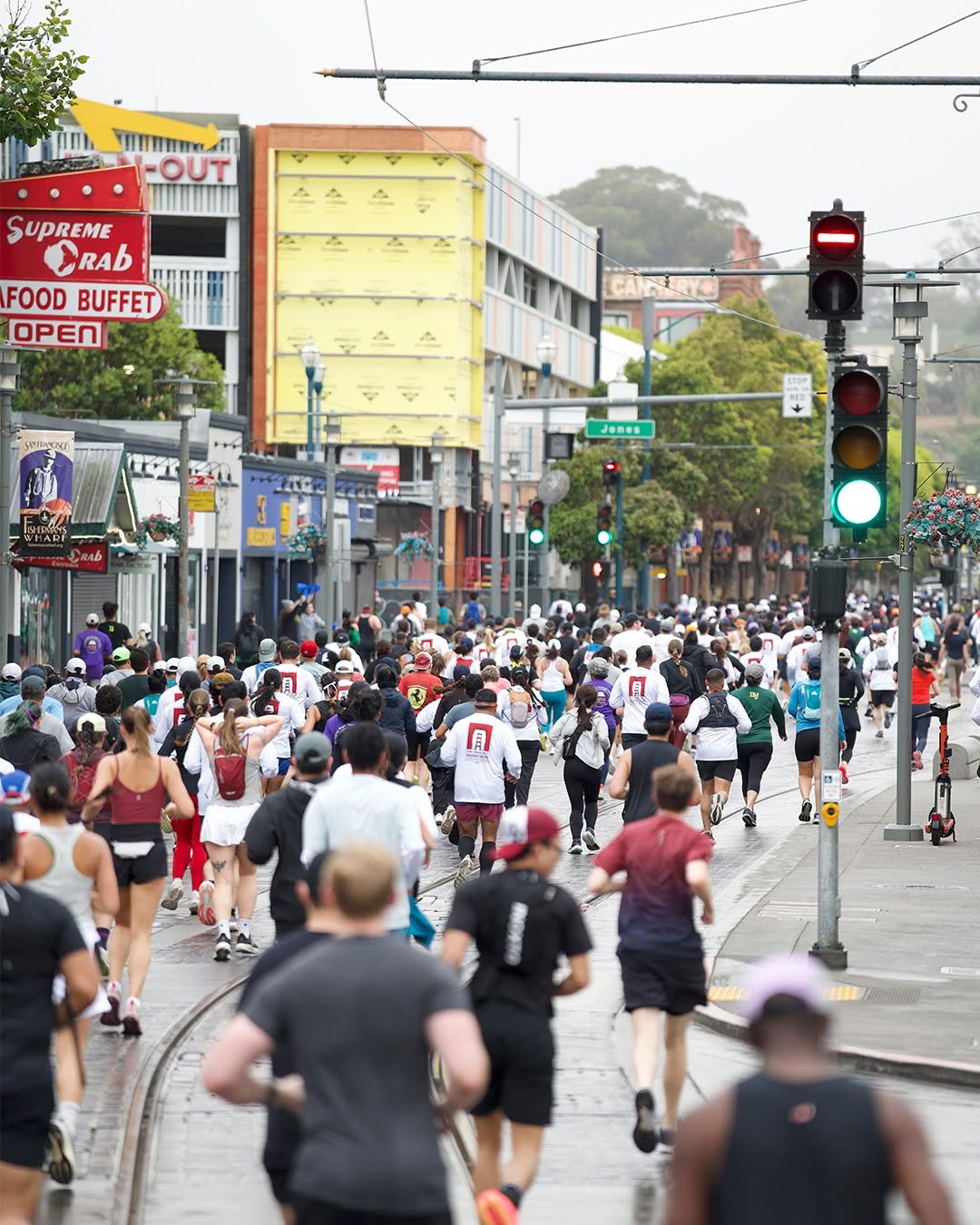
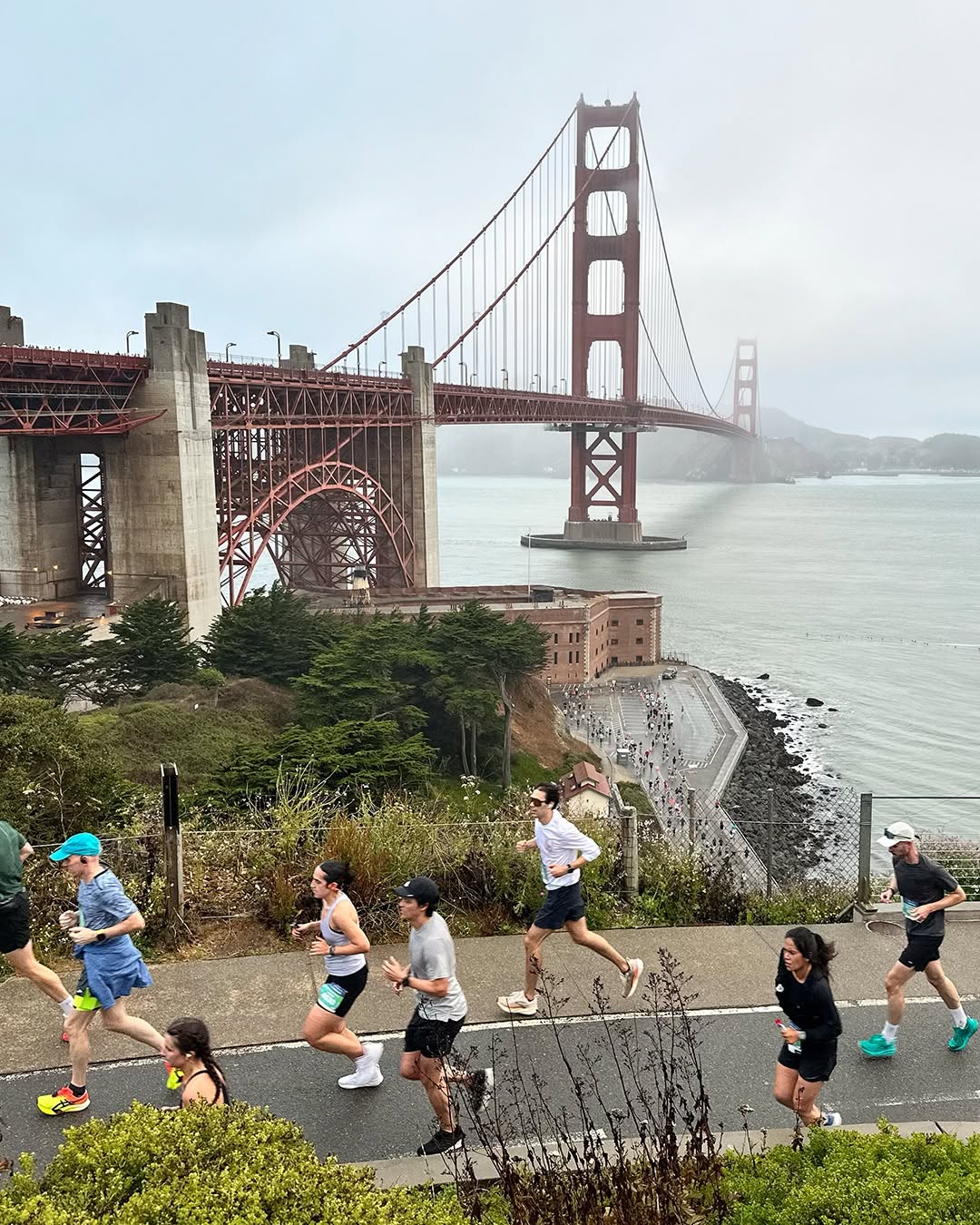
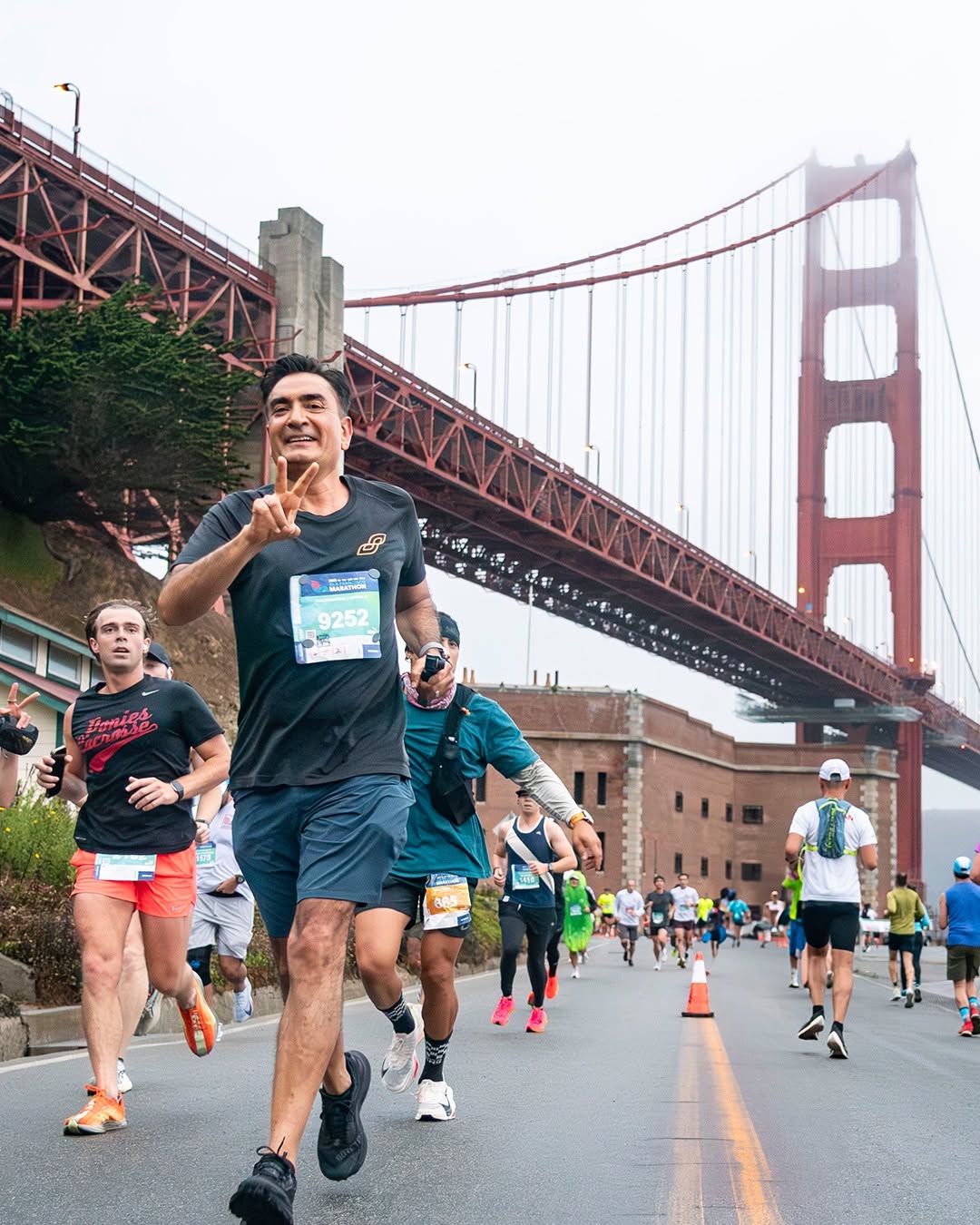
✓ The full marathon course is USATF-certified and qualifies for the Boston Marathon. It covers iconic landmarks like the Golden Gate Bridge, Fisherman’s Wharf, Golden Gate Park, Haight-Ashbury, Oracle Park, and finishes beneath the Bay Bridge.
| Would you say that having so many races in the Bay Area helps encourage runners to progress from the 5K, 10K, and 10-mile distances up to the half marathon and eventually the full marathon?
Lauri Abrahamson : Absolutely. We like to offer runners challenges at every level. You can run a half marathon, or do both in consecutive years and earn a special medal. Or you can progress to the marathon, and there are rewards for that too. For our loyal runners, we try to provide ways to keep them engaged and invested in the event.
Most of our runners are local—it’s primarily people from Northern California, with some coming from Southern California. New York and Texas are also big states for us. That centralization is actually very appealing to sponsors, because it allows them to reach a targeted geographic audience. That’s something unique about us. Unlike other big-city races, we don’t have a title sponsor. So the event feels more organic and homegrown.
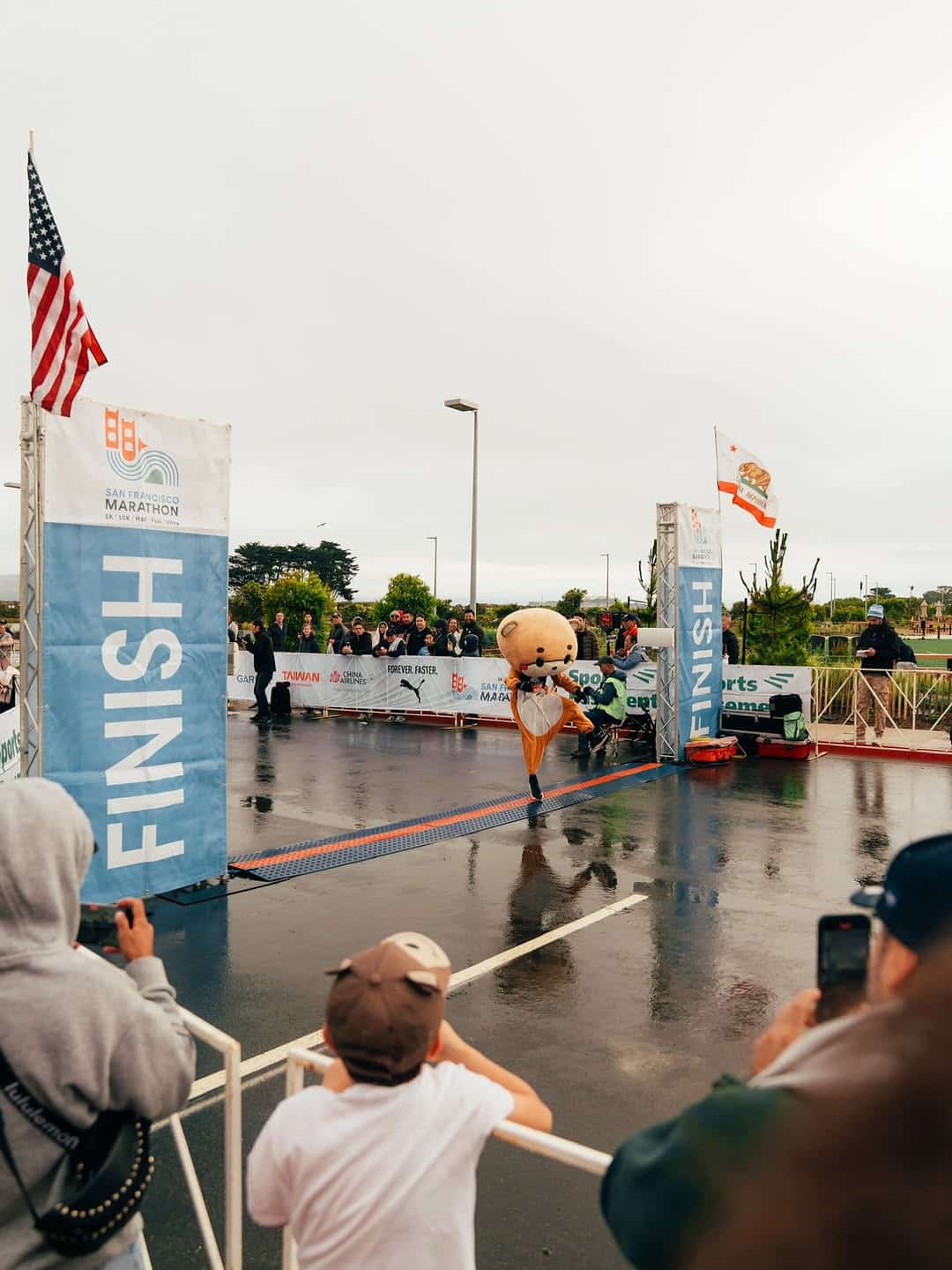
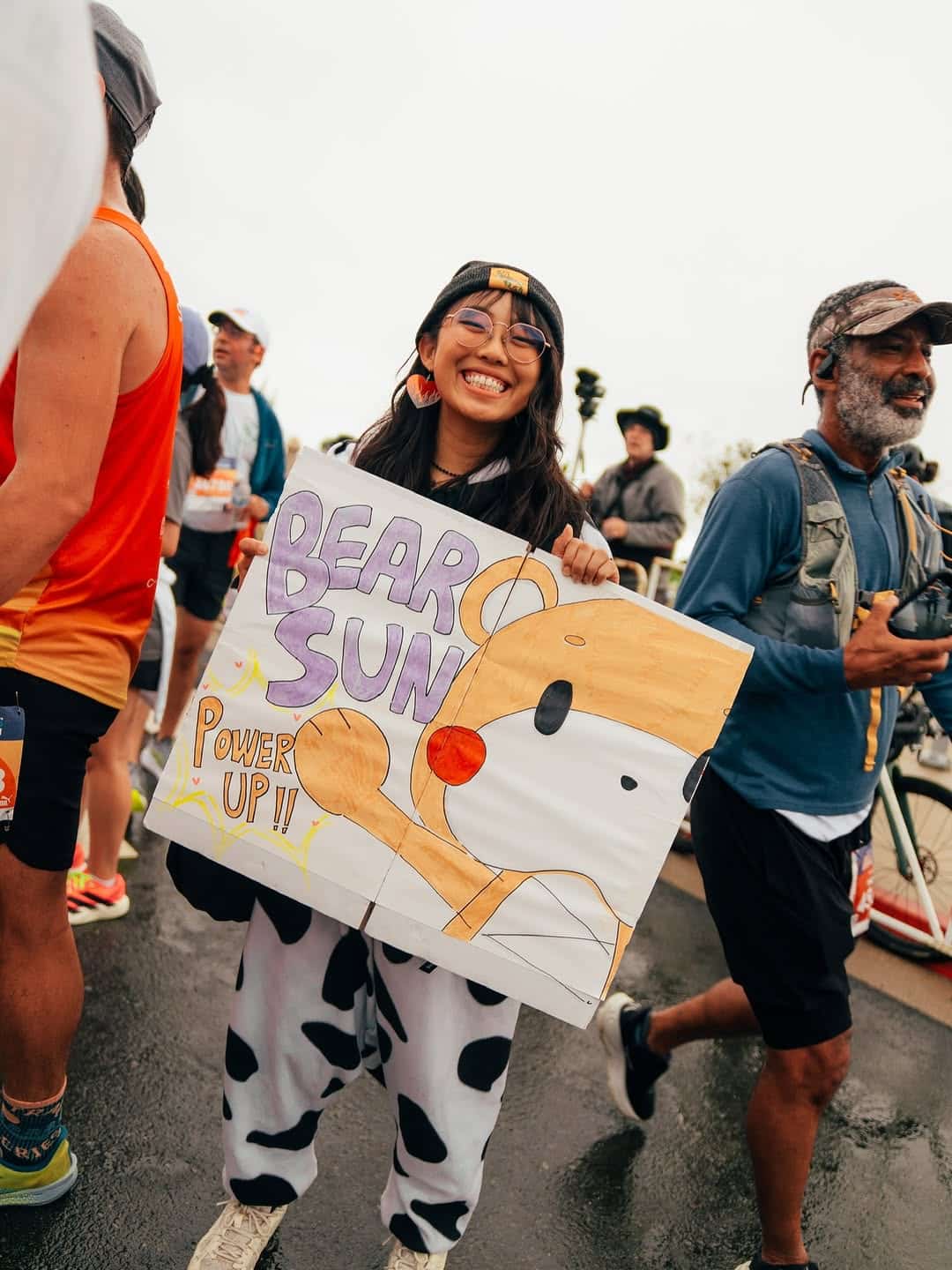
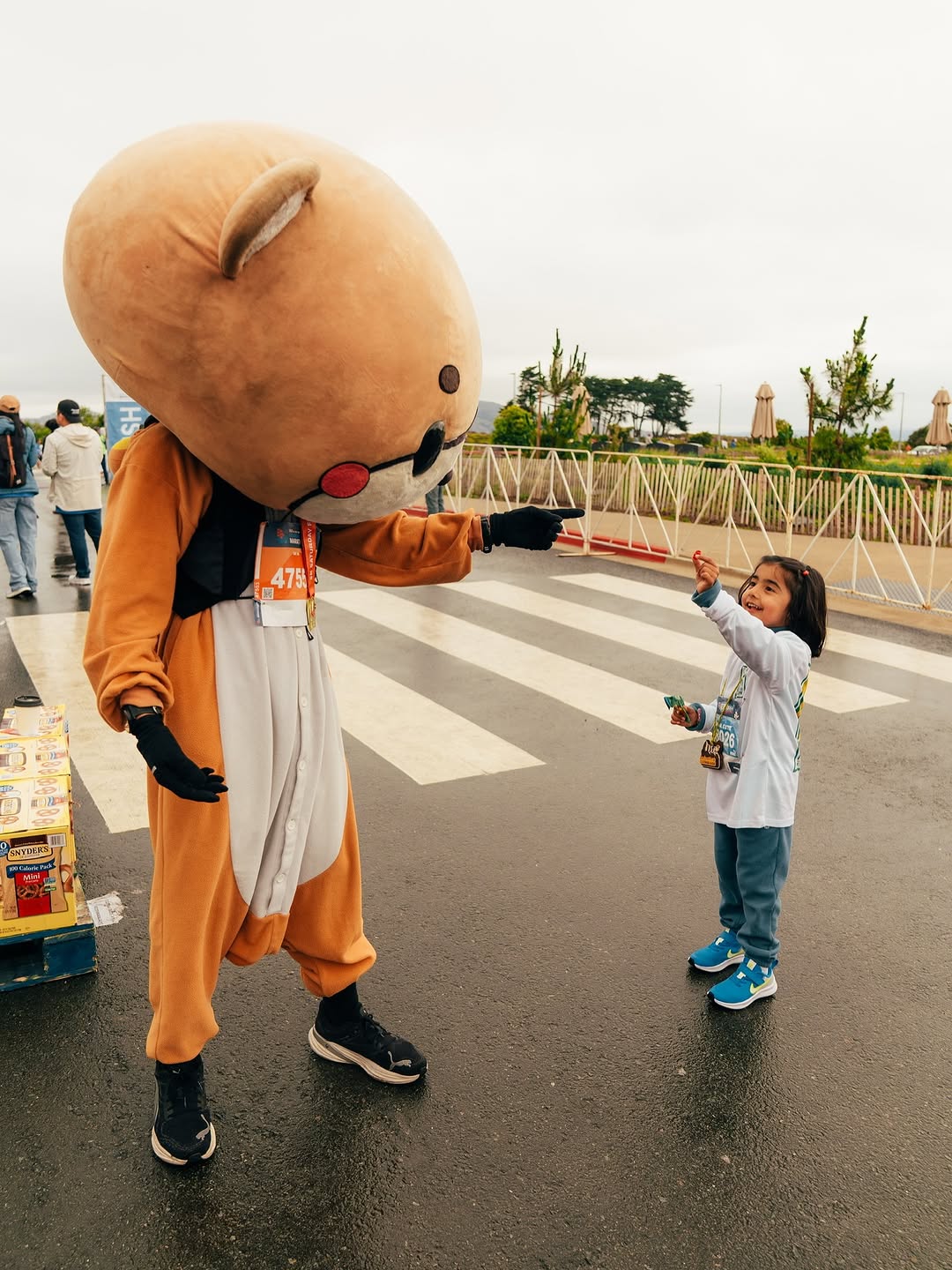
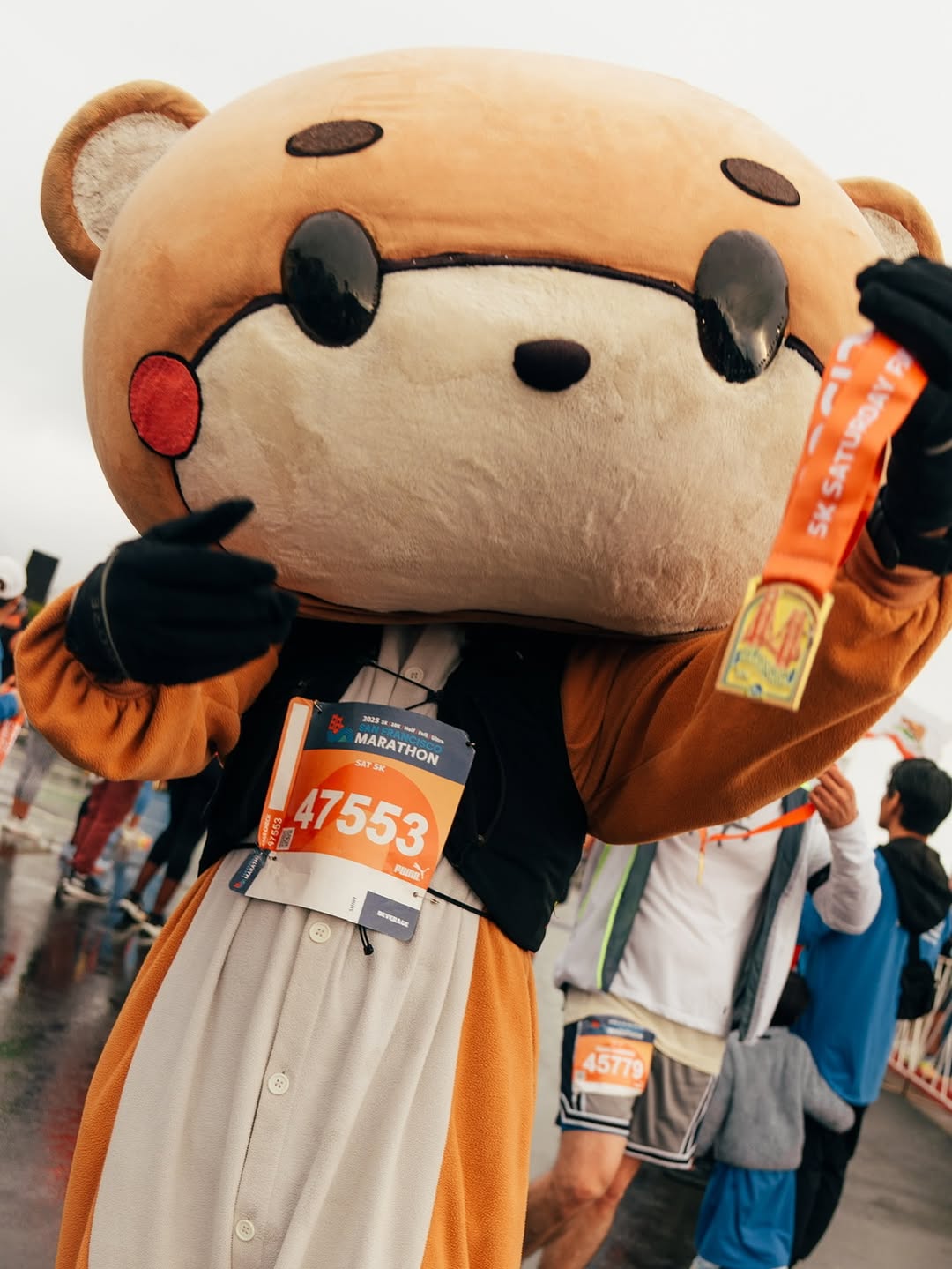 © San Francisco Marathon
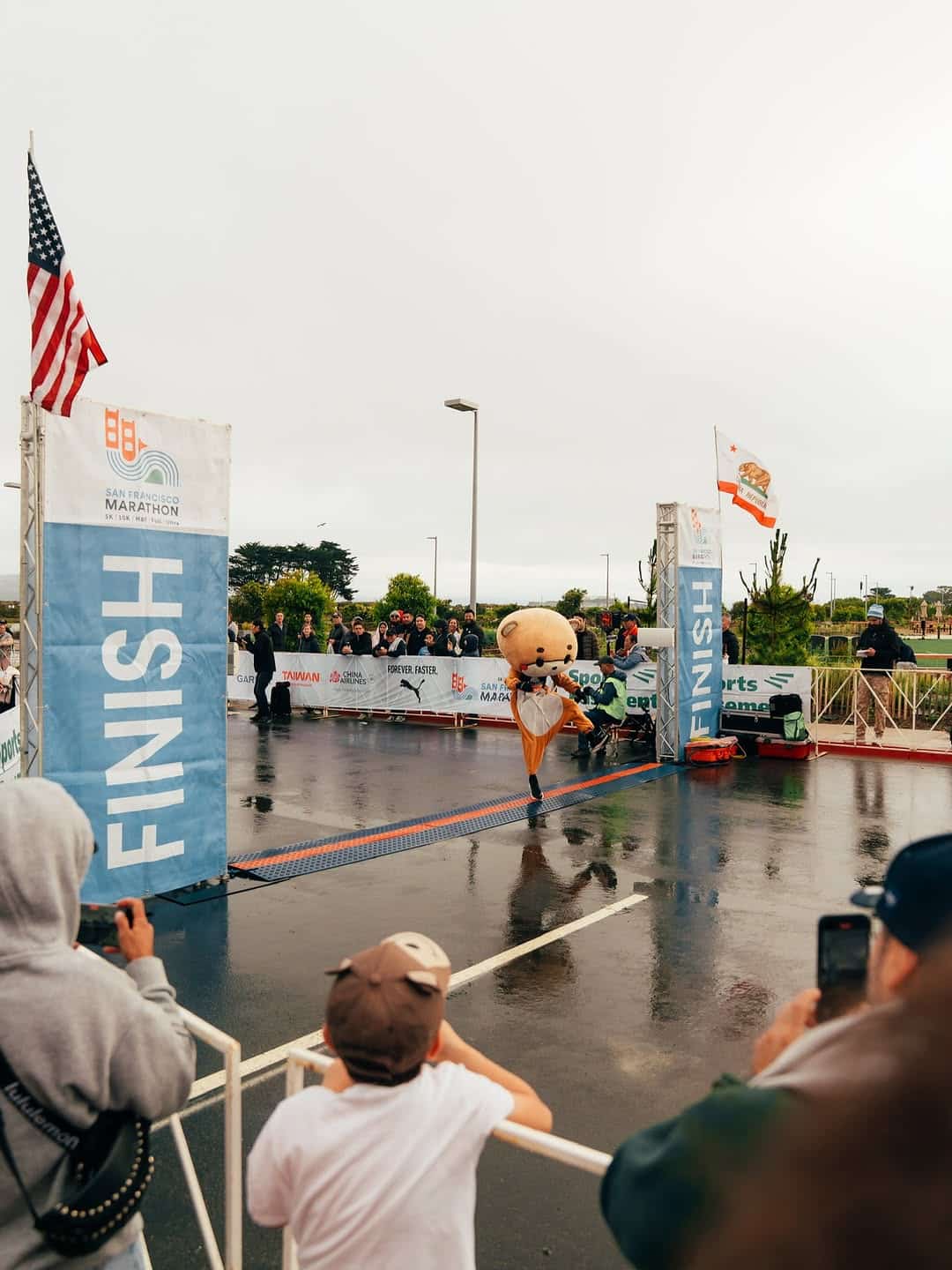
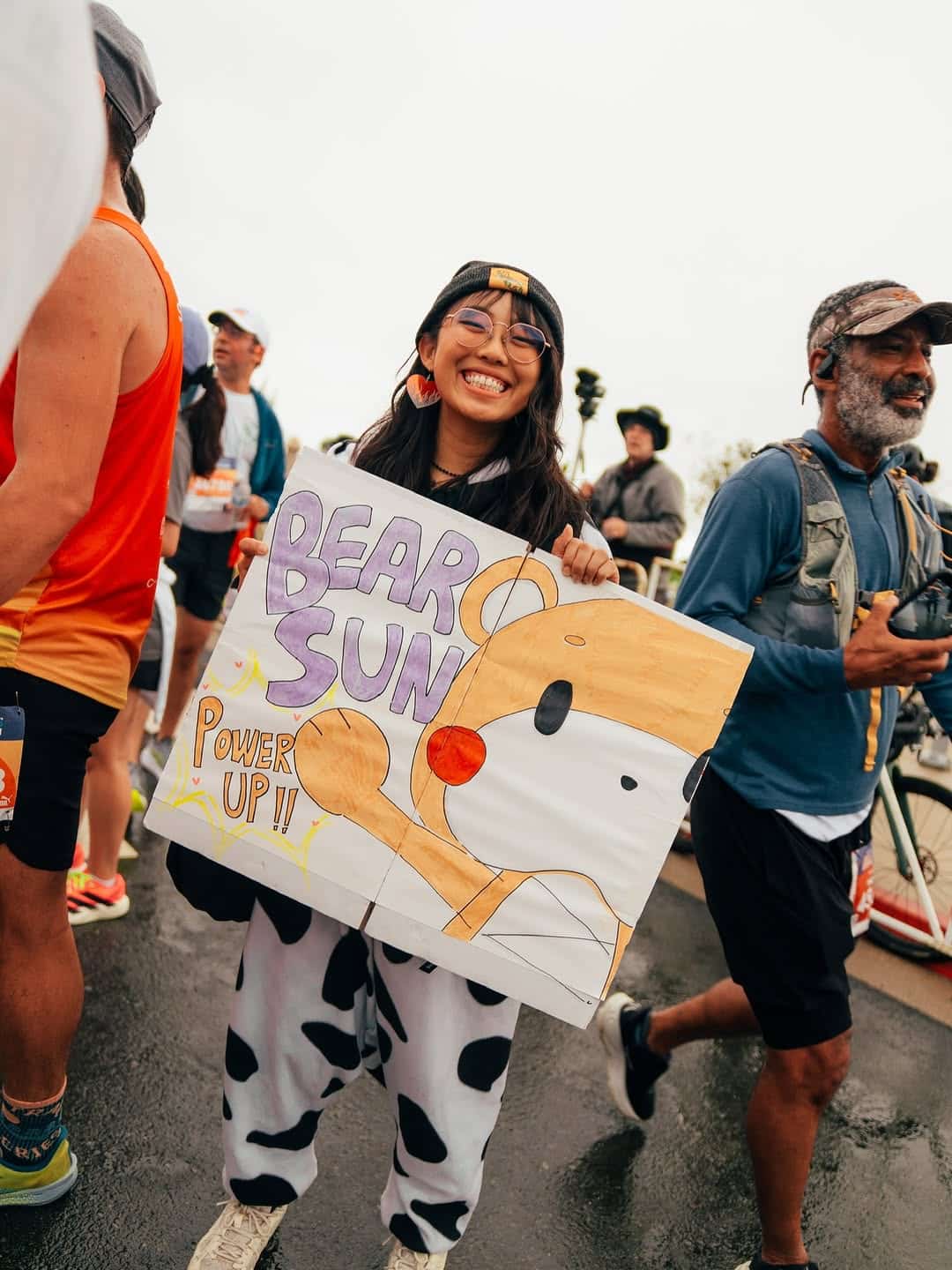
 © San Francisco Marathon
| We noticed that the bib price isn’t necessarily expensive, but it is on the higher end. Compared to other races in the U.S. (Boston, Chicago, Miami, and New York) it does seem a bit above average. Is that accurate? And could you explain why?
Lauri Abrahamson : Yes, it is more expensive than some other races, largely because of the high cost of organizing an event in San Francisco. Things are simply more expensive in California. But I believe our audience understands that. In return for their hard-earned money, we offer a truly memorable race experience, and they’re willing to pay for that. Running across the Golden Gate Bridge, for example, requires coordination with about seven different entities—national, local, parks, the port, the city, and more. Managing all these logistics, from multiple start and finish lines to the expo, makes the entire operation complex and costly. That’s just the reality of putting on an event of this scale here.
✓ It is rare for a marathon to have both a strong local community of participants and, at the same time, attract runners from across the country and around the world.
| Would you say you have a significant number of international participants? Have you ever conducted a study to measure the economic impact of your event on San Francisco or the Bay Area more broadly?
Lauri Abrahamson : Yes. I’d say international runners make up maybe 4 to 7% of participants. It used to be higher, but things shifted in 2020. Still, it’s definitely on many people’s bucket lists, and it’s a destination race. Families often come along, since kids are out of school. We’ve had great partnerships with China Airlines and Taiwan Tourism, and seen a lot of engagement there.
Economically, we have a huge impact. For example, the Hyatt Regency, located at the start and finish line, sells out all its Saturday night rooms. That’s a massive hotel. Then there are Uber drivers, coffee shops, restaurants, BART, airport taxis—all benefiting from the influx of people. I don’t have the exact figures, but we were recently listed among the top 10 races worldwide in terms of economic impact. We ranked seventh, ahead of Boston and Chicago. London was number one. That’s a big deal, and it makes me proud that we’re helping the city in return for their graciousness in letting us take over Sunday morning.
San Francisco has gone through ups and downs, but it feels like it’s turning a corner and regaining some of its elegance. I’m glad our event contributes to that.
“We have an amazing community manager who goes out into the community and connects with local run clubs—Asian, Hispanic, LGBTQIA. We have non-binary categories in our events, and inclusivity is at the core of who we are. By nature of where we are, we’re probably one of the most inclusive races out there.”
Lauri Abrahamson
| Last year you reached more than 30,000 runners. Is that your limit? Do you want to grow?
Lauri Abrahamson : It depends on who you ask. I think the race could grow to 40,000 or more. A lot depends on logistics—getting people through the start, managing flow, spreading out the field. This year will already be our largest yet, with around 35,000 expected. That’s a big jump from last year. My personal hope is 40,000 one day, but I’m not sure the city would allow it.
| It must be quite complex to shut down such a big city for two days. Would you say you have a good relationship with the city?
Lauri Abrahamson : We have an amazing relationship. Our production team, Silverback, is instrumental in securing permits and ensuring things run smoothly. They handle many other big city events, so they’ve built a lot of trust.
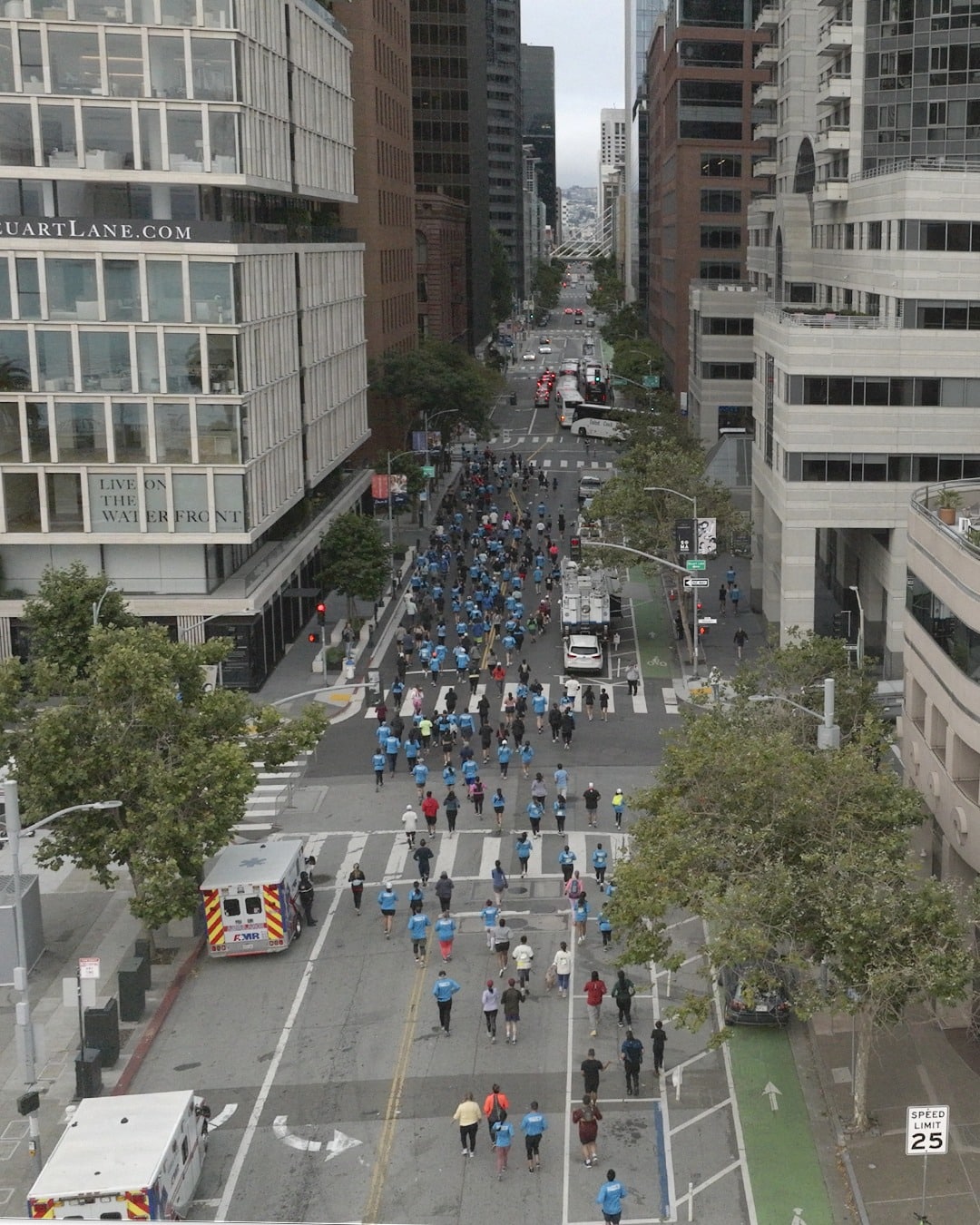
The course operates on rolling closures—sections reopen once runners pass through. For example, after runners leave the Golden Gate Bridge, some exits reopen. It’s a constant balancing act, being mindful of residents who aren’t runners and still need to get around on Sunday morning. We give plenty of advance notice and make ourselves available to answer questions.
Our customer support team takes feedback seriously—positive and negative—and we use it to improve each year. The city also gives us feedback, and we adjust. No matter how prepared you think you are, something always comes up. We just try to accommodate the city, agencies, and runners as best we can.
| It’s quite rare not to offer prize money. What’s your stance on this? Since when have you adopted this approach, and why?
Lauri Abrahamson : First, our course is really tough. Elite runners aren’t coming here to break records. This isn’t Boston or Chicago, where you can set a PR on a flat course. We’ve got over 2,000 feet of elevation. Sure, we could add prize money and attract elites, but that’s not what makes our race special.
Our runners come here for the experience—meeting influencers like Alexi Pappas, or local DJ and rapper P-Lo, joining the Puma ShakeOut Run, soaking in the community vibe. That’s what excites them. I’m not dismissing elites, but our event doesn’t demand it. Maybe one day.
| Even though the marathon course is accurately measured, its profile—with the start far from the finish and so many hills—makes it challenging for World Athletics to officially validate it. Do you think this could become an issue?
Lauri Abrahamson : I don’t think so. Our race still produces plenty of Boston qualifiers. Locals train on hills year-round, so they’re well prepared. Many even achieve personal bests here. So I don’t see it as an obstacle.
| Since the city is quite hilly—around 500 meters of elevation gain— how do you help runners prepare for that, especially those coming from flatter places like Arizona or Florida?
Lauri Abrahamson : On our website, every course has Strava maps you can download to see where the hills are. We also partner with a company called RunDot that loads our GPX maps into an AI-driven training app, which adapts plans to your ability and our course.
We also share training tips in our newsletter and run an official program called Run 365. People meet every weekend to train together on the hills. Anyone is welcome—even if you live 50 miles away, you can come join.
We try to provide all the tools people need, but honestly, locals here are so used to the hills that they sometimes go crush flat races elsewhere.
| Speaking of the experience, with the city and its landmarks, is it true that the bridge is closed during the race?
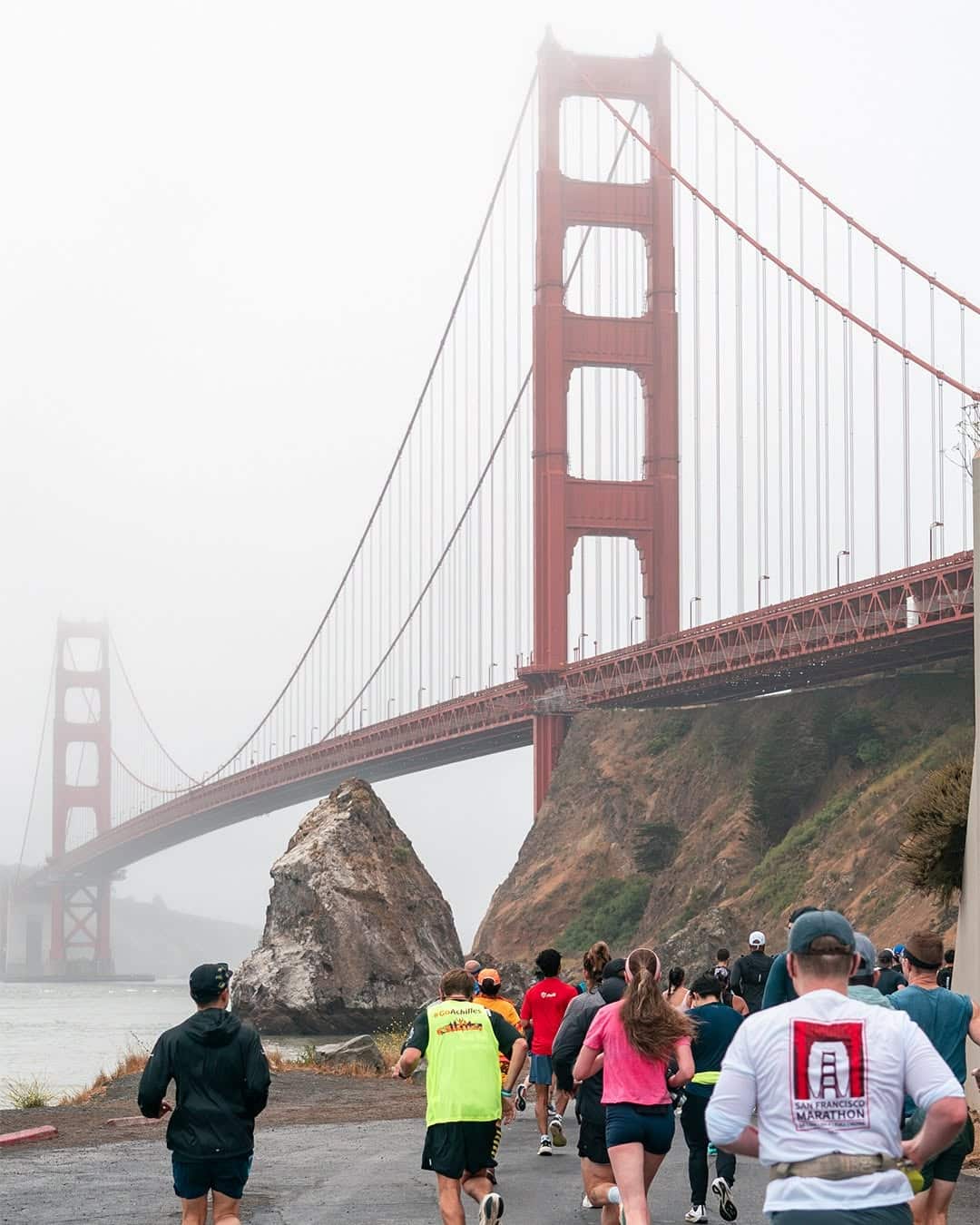
Lauri Abrahamson : The sidewalks and upper level of the Golden Gate Bridge are closed to cars during the race. Years ago, we used one side of the roadbed, but with global concerns about vehicles being used as weapons, we moved runners to the sidewalks for safety. I think it was the right decision.
| Is it too much of a cliché to call this race a “postcard”?
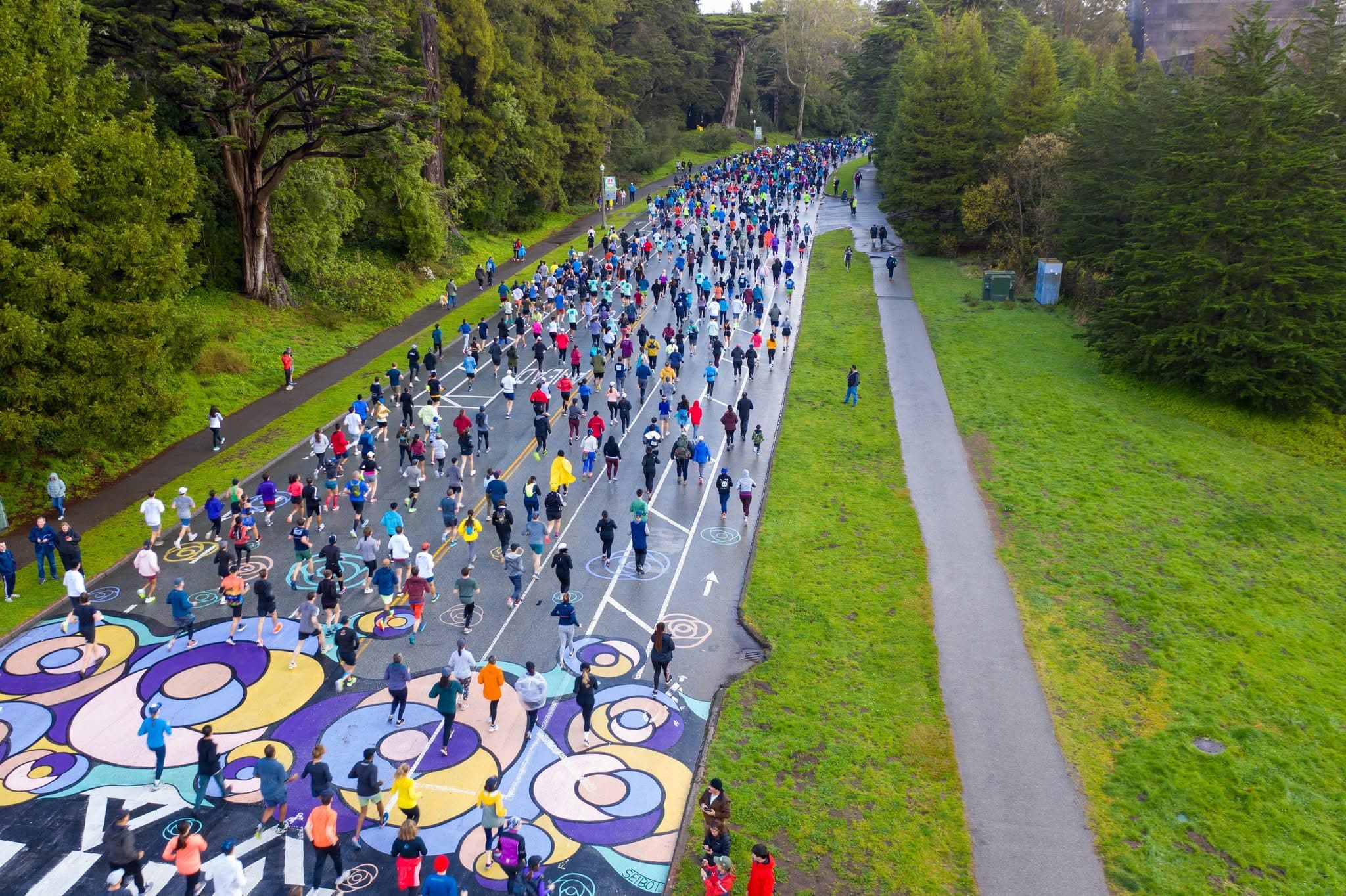
Lauri Abrahamson : Not at all. It’s spot on. And it’s not just about the bridge. You also run through the Presidio, Golden Gate Park, down Haight Street where the hippie movement started, past Oracle Park, Chase Center, and the waterfront. It’s a series of postcards, not just one.
| Last year one of the half marathons had issues with the official course distance. What happened, and how did you handle it?
Lauri Abrahamson : The course was measured and certified correctly, but a turnaround marker was misplaced. It made the course short. We didn’t realize until finishers started showing GPS data. We immediately acknowledged it and offered affected runners a significant discount for the following year.
It was only the Second Half Marathon that was impacted. We’ve since implemented new checks to make sure it never happens again. I deeply regret it—people trained hard for a half marathon and didn’t get what they came for. That won’t happen again.
| You offer two half marathons: the City Half Marathon and the Bridge Half Marathon. Why both? Why are they so different?
Lauri Abrahamson : Originally, the two half marathons combined to mirror the full marathon course—the first half covering miles 1–13 and the second covering miles 14–26. Course changes have shifted that a bit.
Now, the Second Half starts in the park near the ocean. It’s flatter and more accessible for locals who know how to get there easily. The First Half includes the bridge for those who want that iconic experience without running a full marathon. They’re two completely different races. Run the full, and you get both.
| What actions are you taking regarding the environment? What would you like to develop further?
Lauri Abrahamson : For a large race, I think we do well with sustainability. We’re held to strict recycling standards locally and score high there. We’ve also shifted to giving more durable promo items—like reusable bottles—instead of cheap swag that ends up in landfills.
We also reduce car use with BART shuttles, transporting runners from stations instead of 40 people driving into the city separately. Ideally, we’d partner with an environmental nonprofit to build a stronger, long-term plan. We’re aware of our impact and are doing what we can now, but there’s more we could do.
| In Europe, more people bike to the bib expo and even to the start line. Do runners in San Francisco do that too?
Lauri Abrahamson : In the Bay Area, yes. Cycling, running, or walking to work is common here. On race weekend, we offer bike valet at both the expo and the start line because so many participants choose to ride in.
| In France, we read that this marathon is one of the most inclusive in the U.S. Would you agree? Why does it have that reputation?
Lauri Abrahamson : Absolutely. The Bay Area is very diverse, and we reflect that. Our community manager connects with local run clubs—Asian, Hispanic, LGBTQIA. We have non-binary categories, allow dogs in the 5K and 10K, and welcome strollers. Inclusivity is part of San Francisco’s history and culture, and we’re proud to carry that forward.
| The event is not yet part of the World Marathon Majors. Is that something you’d like to pursue?
Lauri Abrahamson : I’d welcome it 100%. We already partner with them through the age group division—if you’re over 40, you can qualify here for the Majors. I’ve even spoken with Abbott about San Francisco. Whether the city’s infrastructure could handle it is the big question. The city is both large and compact. But I’d absolutely love to see it happen.
| Why did you change logos six or seven times?
Lauri Abrahamson : A lot had to do with past title sponsors, like BioFreeze, which required changes. Before that, our logo was outdated. After BioFreeze, a local design firm created the logo we have now, and it feels right. We’ve stuck with it because it’s recognizable even without words.
The squiggly lines represent Lombard Street, and the hills stand for the Presidio. It all means something. I don’t see us changing anytime soon.
| What’s the running event that inspires you besides the SF Marathon?
Lauri Abrahamson : The Dipsea Trail Race. I’m a trail runner at heart. Being on dirt paths is my favorite. The Dipsea is iconic—it’s tough, but the views and sense of accomplishment are incredible.
| In the interview, you said that every year you learn something. What’s your biggest learning?
Lauri Abrahamson : My most stressful moment was discovering, three days before the expo one year, that we had no safety pins for the bibs. It sounds minor, but when you’ve got 25,000 runners coming, it’s a disaster. I managed to source them locally through the clothing industry, but now every year I double-check: do we have safety pins? It taught me never to overlook the little things.
| What are your favorite parts of the race? You have 26.2 miles. Which mile, monument, or area do you like the most?
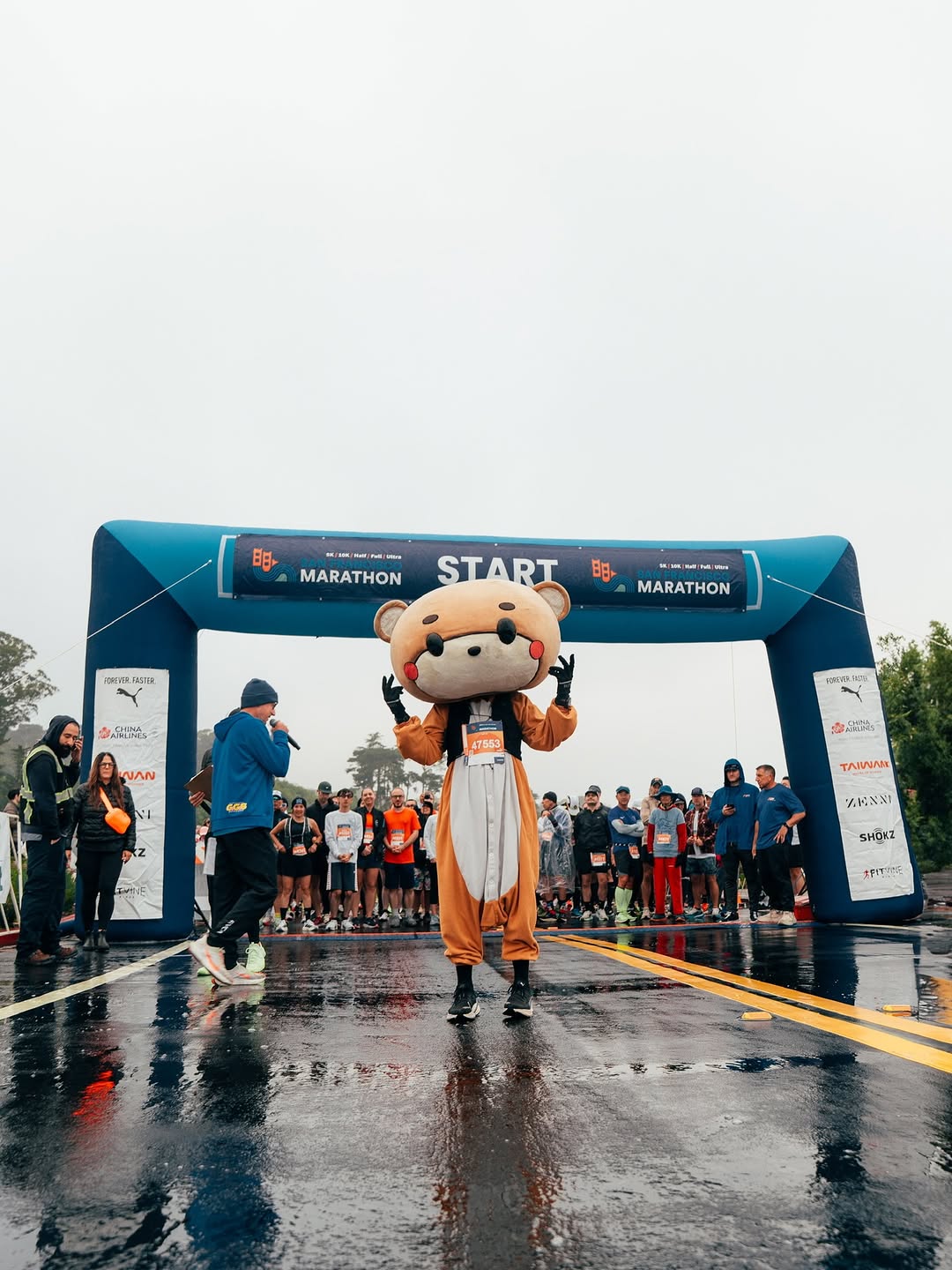
Lauri Abrahamson : For me, it’s the start line at the Ferry Building. You start in the dark, with the Bay Bridge lit up behind you. The energy is electric. Every year, I cry when the runners take off—partly from relief, but also from the overwhelming joy of seeing thousands of people come together.
I’ve run the marathon myself twice, but still, the start line is the most emotional part for me. It’s where the magic begins.
The San Francisco Marathon is more than just a 26.2-mile effort: it’s an urban and human adventure. It’s a celebration of sport, a deep connection with the city of San Francisco, and a unique visual and emotional experience at every mile.
➜ The next edition of the San Francisco Marathon takes place on July 25–26, 2026. Don’t miss it!
 19/01/2026
 19/01/2026
 13/01/2026