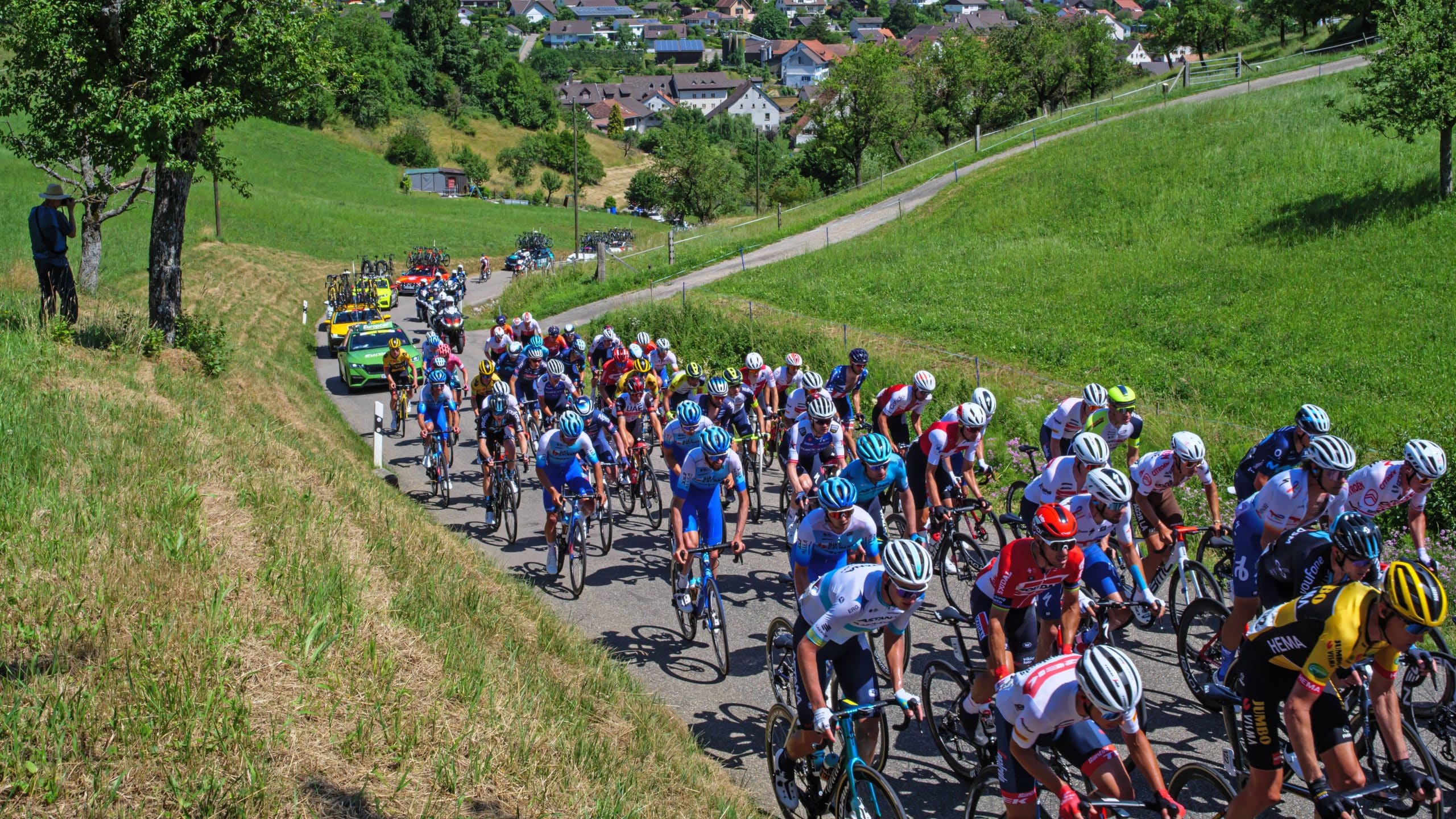
From cycling pelotons to running packs: Mathieu Van Der Poel, Tony Martin, Nacer Bouhanni… these cyclists who are becoming runners
With winter’s arrival, running packs welcome triathletes and cyclists every year — some still competing, others already transitioning to a new chapter. The buzz around running attracts many athletes from all backgrounds, including top-level performers looking for fresh challenges. For those used to the bike, testing their potential on the road has become a genuine winter goal — and sometimes a post-career project.
In recent months, performances from cyclists lacing up running shoes have multiplied. One of the latest to shake up the Strava community is superstar Mathieu Van der Poel. The three-time European cyclo-cross champion logged a 10K run at 3:22 per kilometer, titled “Is this my Strava comeback?”. The activity exploded in popularity, drawing more than 1,200 comments and nearly 70,000 kudos. And “MVDP” could well have shown off his talent at the Valencia Half Marathon last October, where he had registered to race. Although the Dutchman ultimately did not start, his name on the entry list certainly did not go unnoticed.
The prodigy is not the only one to have made the leap. German cyclist Tony Martin, four-time world champion in the individual time trial, took his first strides on the road in a half marathon that he completed in 1:24, saying “not bad for me, but so far from the top” as he admired the specialists’ performances. Nacer Bouhanni, former French champion and ex-professional rider, ran 2:34:36 at the Frankfurt Marathon, just one year after stepping away from cycling. A few weeks ago, the French sprinter finished the Boulogne-Billancourt Half Marathon in 1:11:37 and is now aiming to break 2:28 in Valencia on 7 December.
| Jimmy Whelan, from Australian cycling prodigy to a 1:01:37 half marathon
One of the most spectacular cases is that of Australian athlete Jimmy Whelan. A former professional cyclist who became a runner in 2024, the 29-year-old produced an outstanding 1:01:37 Valencia half-marathon, the thirteenth-fastest Australian performance of all time. After seven years of cycling at the highest level, including racing on the WorldTour circuit, he also brings a background as a runner up until the age of 20. The rising talent benefits from exceptional aerobic endurance. He himself admits to having a “cheat code,” the result of an enormous training volume accumulated on the bike.
His 200-kilometer running weeks, made possible by years of intensive training, show that he is not afraid of piling on the miles. The winner of the Under-23 Tour of Flanders in 2018 realized he has developed a stronger base than “anyone in distance running.” His initial post-cycling goal was to become a professional triathlete targeting Ironman 70.3 racing and the Los Angeles 2028 Olympic Games. Since then, the plan has changed. Jimmy Whelan is now focusing exclusively on running and dreams of qualifying for the Olympic marathon.
| A strong foundation for running
This ease is common among many cycling specialists. Logging hours of running sessions is hardly an issue for athletes who were used to spending thirty hours a week in the saddle. Running is far less time-consuming than cycling and makes it possible to reach a good, or even excellent, level without training nearly as much as on the bike. For runners, apart from ultradistance specialists, training between four and eight hours a day is simply not realistic. For cyclists, that used to be routine.
Damien Monier, a former professional rider who has since become an amateur runner, is a striking example. “I used to ride 30,000 kilometers a year, around 25 hours a week, with no rest day. Then we would chain three weeks of racing with only two days off. It was tough to handle,” recalls the athlete who won Stage 17 of the Giro d’Italia in 2010.
Now combining running with his work as an assistant and masseur at Cofidis, he has quickly made a name for himself in his new sport. “They’re two different sports in terms of time and distance, but I found a lot of similarities in how you train and in the way you push your limits.” After five months of running three to four times a week, the former cyclist finished second in the 25 km Trail des Volcans in Auvergne. “Like any self-respecting cyclist, I wanted to go hard, so I chose the 25K. I had a lot of fun that day, and the result wasn’t bad at all.”
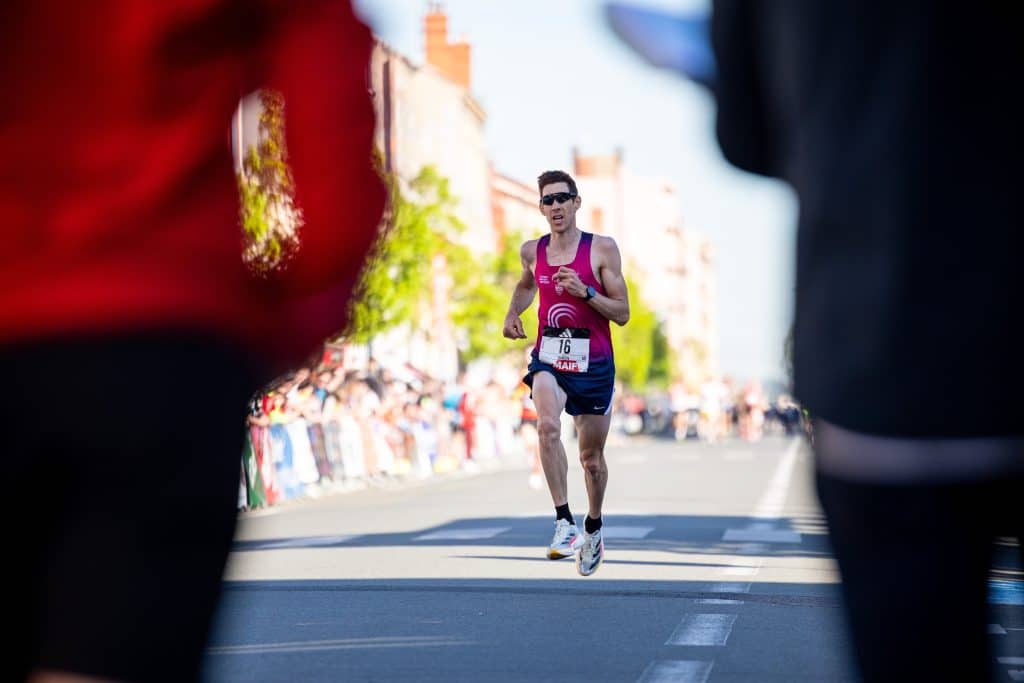
| A mindset forged in the peloton
Very quickly, the Clermont native was spotted by coach Cyrille Merle, a former national-level runner. The coach was struck by Damien Monier’s “huge engine” and his “great potential.” Years at the highest level have given him tremendous aerobic capacity, but also a rock-solid mindset inherited from an ascetic career in the peloton. “A pro cyclist is 50 percent legs and 50 percent mental strength,” says Merle. Drawn to long distances, Monier hopes to line up for a marathon one day, with an eye on the unofficial record among former road pros: that of “a little-known Italian professional who ran 2:26:26 in 2007.”
Monier is described by his coach as “professional and meticulous,” the product of 19 years in elite sport. He himself jokes about his fondness for hard efforts, about the pleasure he gets from “burying himself,” and his desire to test himself against the best. It is a trademark of cyclists, always ready to “embrace the pain.”
| Cyclists and their exceptional qualities
The multiple French national champion in individual pursuit has also discovered the near absence of tactics in his new discipline. With mass starts where running steadily is usually the best way to manage the effort, explosive attacks like in cycling are rare. It is an aspect he used to enjoy as a climber. “It’s satisfying to see the group stretching out behind you, people starting to get dropped from the back, and you’re still hanging on. I find a bit of that same pattern when I’m running.”
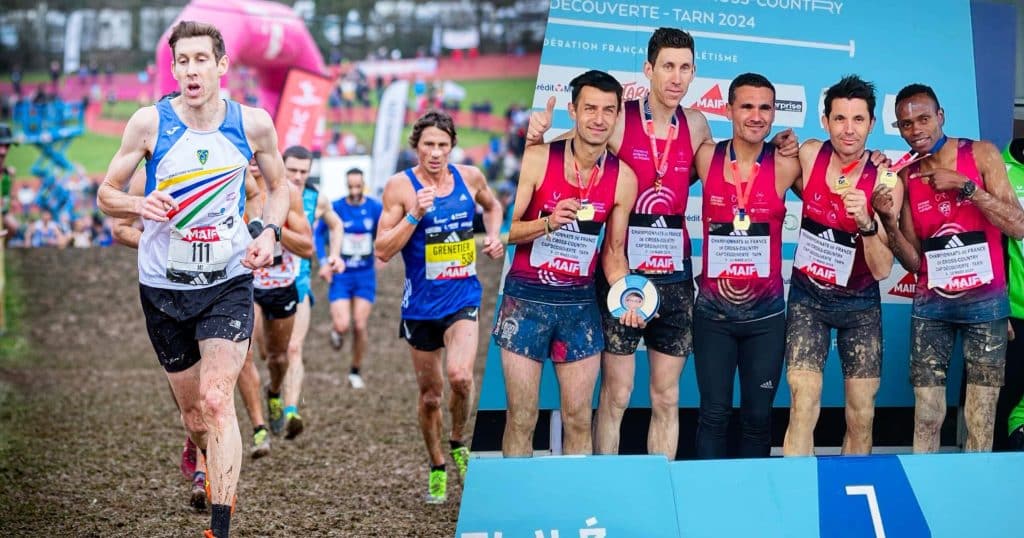
In his first cross-country race, his coach had pointed out two or three rivals he should absolutely not follow because they were out of reach. That was all it took to motivate him to slip into the lead pack. “I approached it like a cyclist, staying right on the leader’s heels and attacking at the end after sitting in the draft the whole way. It wasn’t great sportsmanship on my part, it was my first cross-country race, so I hope he’s forgiven me.” Since then, top finishes at the French Cross-Country Championships in the Masters category have multiplied: 18th in 2023 in Carhaix, 8th in 2024 in Cap’Découverte, and 15th in 2025 in Challans. These very strong results clearly illustrate the tremendous talent of athletes coming from cycling.
| The difficult transition from cycling to running
The transition is not always straightforward. Moving from a non–weight-bearing sport to one with repeated impact often leads to injuries. Running generally complements cycling, but the reverse is far more complicated. The athlete nicknamed “Momonne” experienced this shortly after the Trail des Volcans and the classic Marvejols–Mende, which the novice runner completed in 1:22. “I could manage to run for two months, then I had to stop for three. I was stuck in a vicious cycle of forced breaks for two years,” recalls the hard worker, now 43, who at that time was already being held back once he reached about fifty kilometers per week.
“At the beginning, I had muscle pain I had never known before. I was still doing a lot of cross-training because of the injuries.” Through persistence, the Cofidis staff member went on to achieve strong results: 1:07:19 for the half marathon, 30:53 for 10K, and even a French Masters silver medal over 10K in 2024.
His body has changed, his thighs have slimmed down, and his build has adapted. Someone who has ridden all three Grand Tours has traded his “cyclist’s musculature,” so useful for trail terrain and steep climbs, for a lighter profile. “I can feel that I no longer have the power I had in my early years in this sport,” he notes, though he is now able to run more than 100 kilometers per week. Caution is still needed. Beyond a certain threshold, the pain returns. But Damien Monier also knows his body very well, thanks to his professional cycling past.
Cyclists are increasingly making the move from the peloton to running packs. Their endurance is remarkable, as is the mindset forged through thousands of hours spent turning the pedals. These undeniable strengths give them a major advantage, even though they must adapt to a new discipline that involves impact with every stride.
➜ Discover the calendar of marathons
Emma BERT
Journaliste
 19/01/2026
 19/01/2026
 14/01/2026