Winter running: what the Nordics teach us about the cold
Cold, rain, snow and low light. Winter brings tougher conditions for runners. Yet farther north in Europe, in Scandinavia, facing the elements for much of the year is simply part of everyday life. How can you keep running and training despite unpredictable weather and a lack of daylight? Norwegian runners share their experience.
As daylight fades and winter sets in, athletes know the months ahead will be more demanding. While some ease off their training, others keep the intensity high. Winter is a key period, with road races, cross country events and sometimes trail races, making it an ideal time to build a strong body ahead of the spring and summer racing season.
✓ We spoke with two experienced runners from the small town of Halden in southern Norway.
| Norwegians, kings and queens of winter
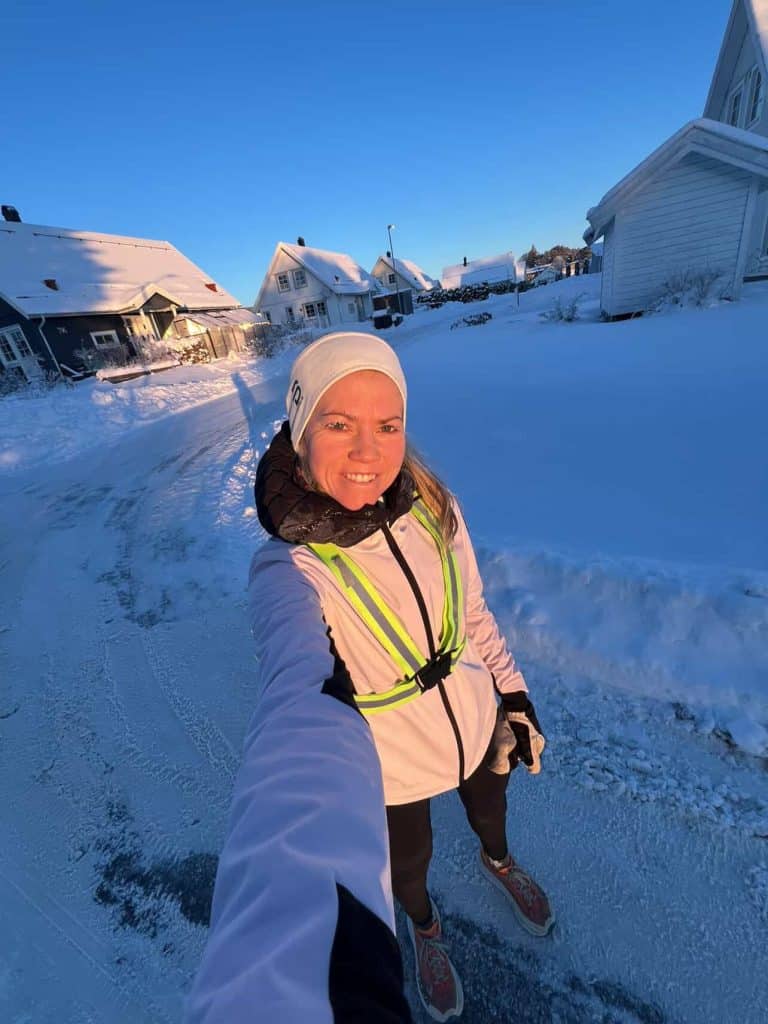
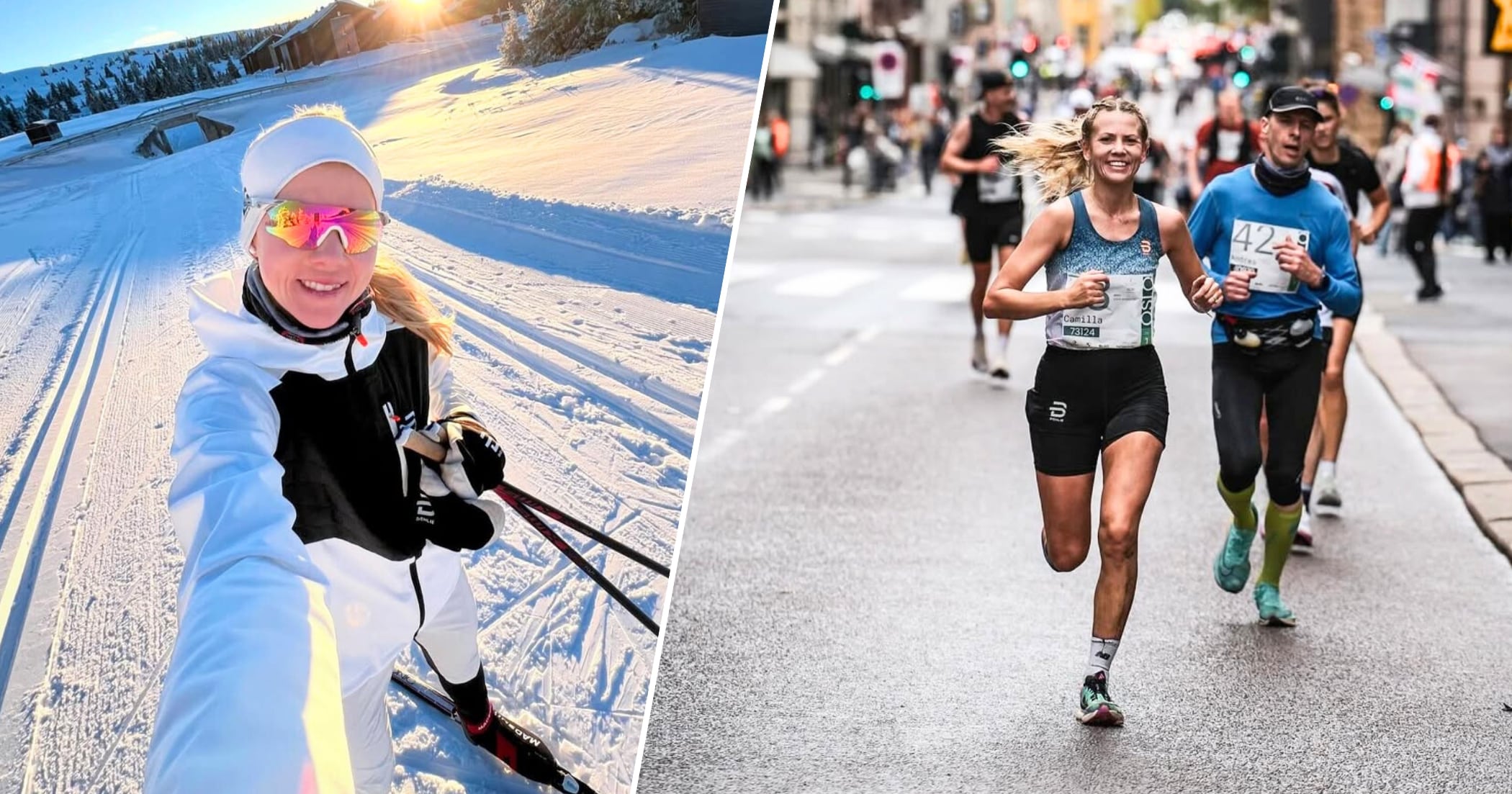
“I enjoy training outdoors all year round, whatever the season. I’ve already done several sessions in temperatures below minus 20 degrees Celsius,” begins Camilla Degnes Bonogård, 29, a Dæhlie ambassador, teacher and national level athlete from Norway. Her standout performances include a 2:44:14 finish at the Copenhagen Marathon and a personal best of 35:33 over 10 km. A footballer from the age of 7 to 25, she has also made her mark in ultra distance racing, with victories at the Oslo Trippelen over 73.3 km and Ultrabirken over 60 km, as well as a second place at the Brandstorp Backyard, where she covered 120 km.
For the athlete, running through the long, harsh Nordic winter requires constant adjustments to equipment, training and nutrition. The young mother trains intensely, running at least 150 km per week, complemented by strength training and cross country skiing. In the Nordic mindset, the cold is not an enemy, as reflected in the saying “there is no bad weather, only bad clothing” (Det finnes ikke dårlig vær, bare dårlig klær).
| The importance of equipment and adaptation
Her main advice is to wear several layers of appropriate clothing. Wool as a base layer, a mid layer in very cold conditions, and a windproof, water repellent outer jacket form the foundation. A hat or headband, neck gaiter, wool socks and gloves are essential. “I run in tights all year round and, in winter, I use insulated running leggings from Dæhlie. Once the session is over, it’s important to change quickly and put on dry clothes.” The marathon runner can rely on her partner Dæhlie, a leading name in Norway for cross country skiing and running apparel.
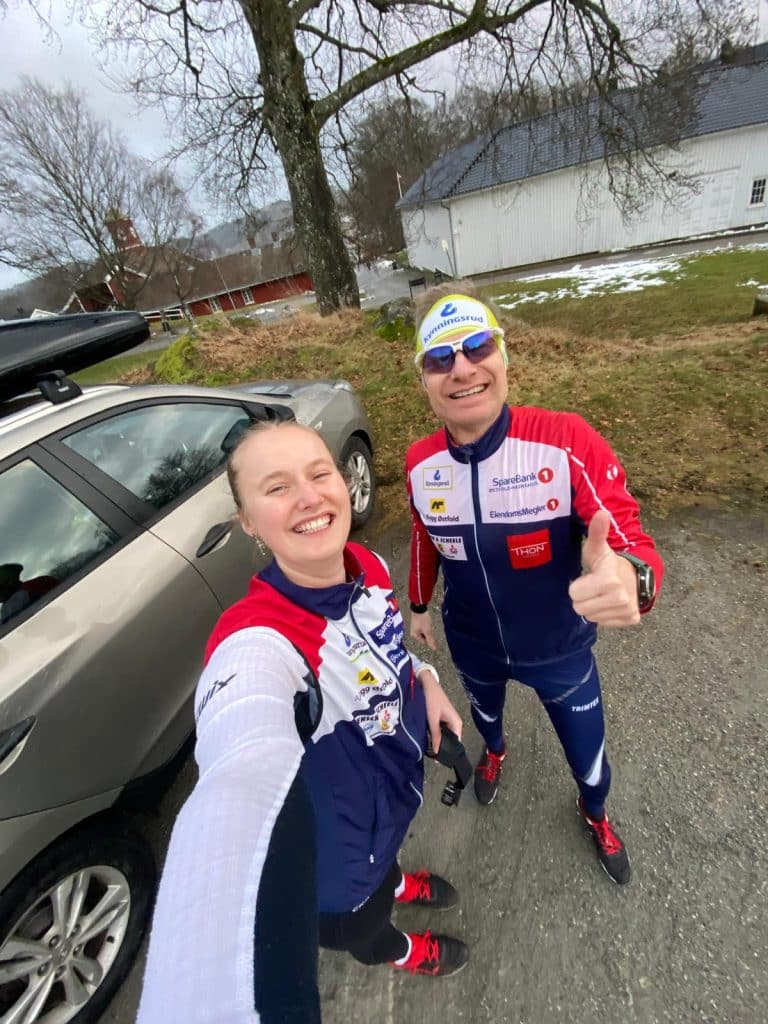
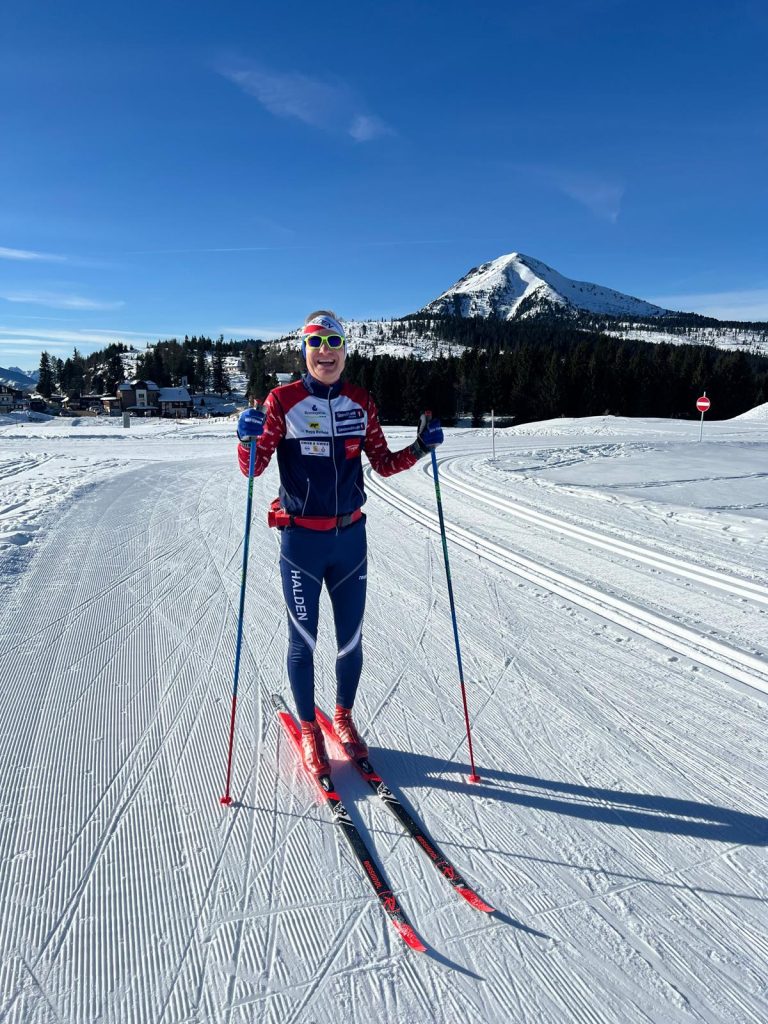
A view shared by Bjørn Brakke, 56, a passionate endurance athlete who enjoys running, road cycling, mountain biking, kayaking, cross country skiing and roller skiing. In his younger years, he ran under 34 minutes for 10 km and 1:10 for the half marathon, and also took part in several iconic events in mountain biking, skiing and running, such as the Vasaloppet, sometimes over distances of up to 200 km.
In his view, technical base layers are sufficient down to −10°C, before switching to wool or windproof membranes. His key tip is to prioritise breathable fabrics and to layer several thin garments rather than relying on overly thick clothing. Windproof sleeveless vests are also an excellent compromise. “Winter tights, which are thicker than standard tights, work well down to −10°C. Below that, it’s better to opt for windproof cross country ski trousers,” he explains, while stressing that wearing a headlamp and reflective elements is essential for safety.
| Adapting training to the conditions
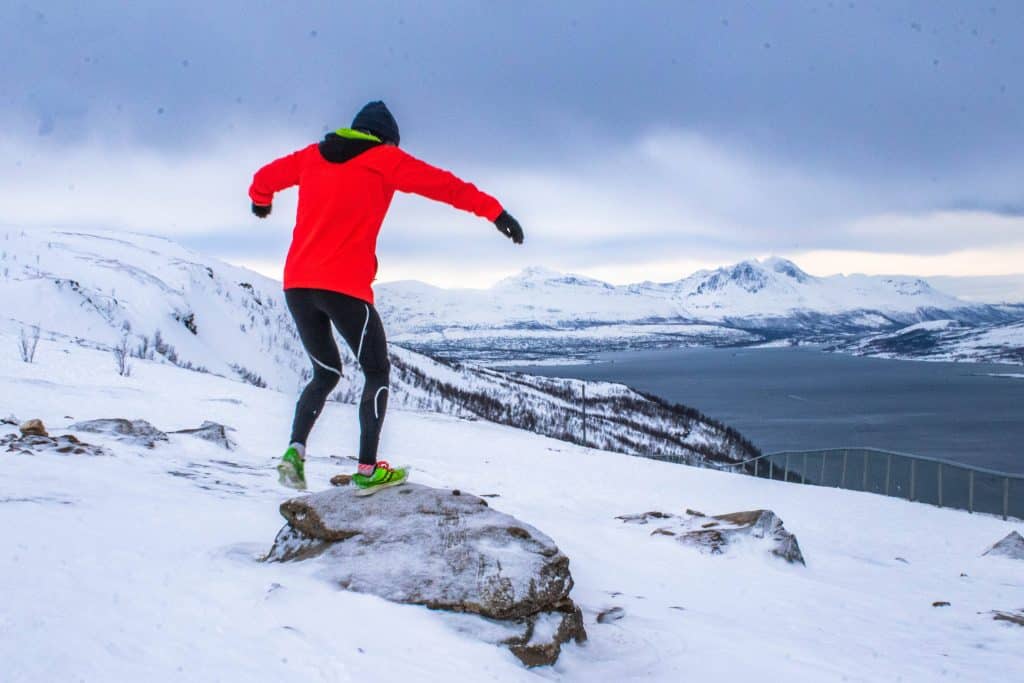
In Scandinavia, running outdoors is often challenging because of sub zero temperatures, but above all due to icy roads and snow. Camilla Degnes Bonogård stresses the importance of adapting your pace and accepting the need to slow down. “There is a major difference between running on dry asphalt and moving over ice or snow. You have to run more by feel,” the athlete explains. In winter, the Norwegian runner favours hill workouts, which make it possible to work on intensity while allowing pace to adapt naturally to the terrain. An ideal compromise to reduce the risk of injury associated with icy surfaces.
Bjørn Brakke echoes this cautious approach. “In winter, when temperatures are very low, you have to be measured with hard sessions, particularly because of the risk of developing cold induced asthma,” explains the teacher, who has always been active. He sees this period as an ideal time to build training volume, before gradually reintroducing more intense sessions in the spring. “Running through snowy fields is an excellent way to develop your physical capacities,” he adds.
“Gaining experience training in these conditions takes time, and sensations vary greatly from one individual to another. Everyone has to adapt their practice and equipment to their own perceptions.” Shoes with spikes or specific outsoles are often preferred for their grip and cushioning on hard surfaces. “Some elite athletes run in Icebug shoes with spikes,” the seasoned runner adds.
When it comes to nutrition, Bjørn Brakke likes to carry a hot drink made from blackcurrant juice in an insulated belt during his winter runs. Staying well hydrated and properly fuelled before, during and after training is a prerequisite for both runners.
| Cross training, a cornerstone of the Nordic winter
It’s impossible to talk about Nordic athletes without mentioning cross country skiing. A true institution and way of life in Norway, cross country skiing plays a central role in winter training. An excellent alternative to running, it is even a means of transport in some cities, used from a very young age.
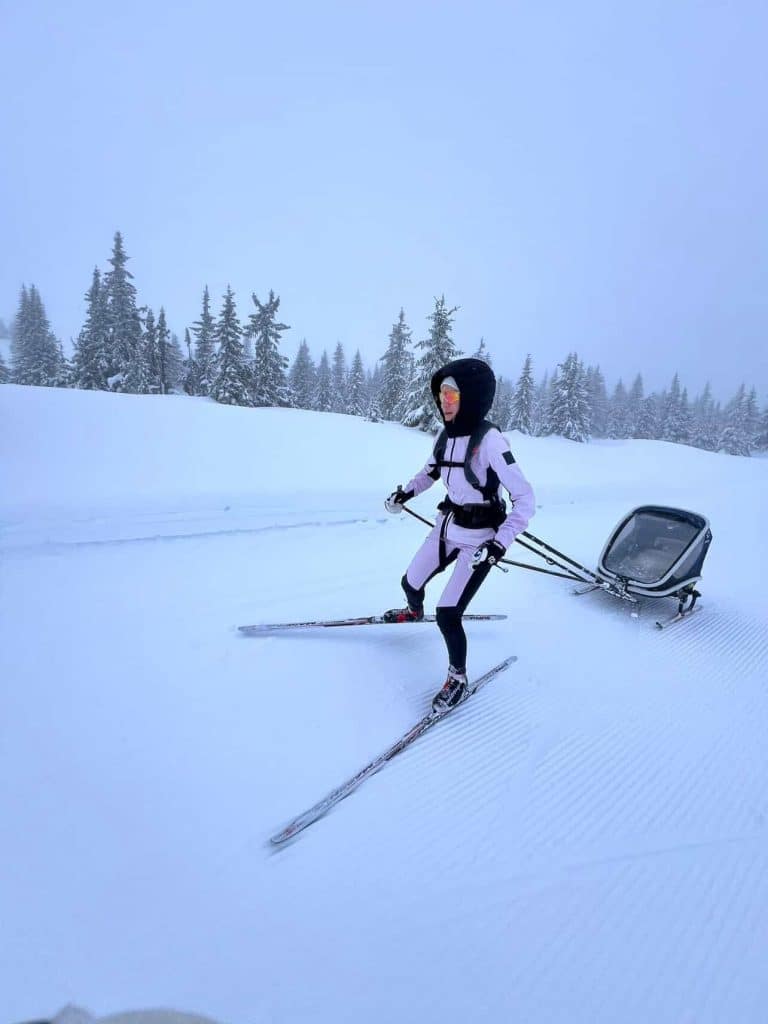
“Cross country skiing provides an excellent cardiovascular workout and strengthens multiple muscle groups, in both the upper and lower body, while remaining relatively gentle on the joints,” explains Camilla Degnes Bonogård. Many athletes, including those at the highest level, use it as a foundation of their training. Roller skiing is practised outside the winter season to maintain fitness. In winter, the runner regularly replaces some of her running sessions with ski outings of between 30 and 50 km, just like Bjørn Brakke, a keen enthusiast of the discipline.
| Friluftsliv, life outdoors
Covering trails, asphalt or the track in winter is not only about constraints. It is also an opportunity to develop “physical and mental toughness,” stresses the former footballer. “The variety of surfaces and temperatures provides very comprehensive stimulation, and many people feel a strong sense of accomplishment when training in demanding conditions,” the athlete explains. Bjørn Brakke shares this view. He believes that varied weather conditions help forge a deep inner strength in many Norwegian athletes.
The former athlete notes that the best cyclists and track and field athletes, such as those from the Uno-X team or athletes like Henriette Jaeger and Karsten Warholm, deliberately choose to train outdoors, even in difficult conditions. “This mindset allows for long term progress. In cross country skiing, the national level is so high that many athletes ranked between 50th and 100th could make the national team of most other countries.”
“Friluftsliv”, in other words life outdoors, holds a central place in Norway. Norwegians remain active at all ages, and children play outside even in the depths of winter. Hiking, walking and physical activity are part of everyday life. Even if this is not training in the strict sense, all of these elements contribute to good health and help cultivate this mindset. Appreciating nature and the sense of wellbeing it brings comes before performance.
With a population of just five million, Norway stands as an example of sporting participation and excellence. This success can be explained by the importance placed on sport from an early age, a strong culture of volunteering within clubs, and the central role given to training and collective practice. Plenty to inspire other European runners to see winter as a period of building rather than something simply to endure.
➜ Discover the marathon calendar

Emma BERT
Journaliste
 19/01/2026
 19/01/2026
 16/01/2026