 © ASO
© ASO
Behind the scenes of the official kilometer: how a road race is really measured
At every certified road race, the advertised distance follows a strict protocol that hasn’t changed for decades. Long before bib numbers are handed out, specialists measure the course down to the centimeter, following international rules designed to ensure sporting fairness and the validity of performances. So how are official kilometers actually measured? Why do GPS watches almost always show more distance? A look behind the scenes of an invisible yet essential job—one that determines records, qualifying times, and the credibility of events.
On the start line, everything seems straightforward. A sign reads “10 km.” The clock starts ticking. At the finish, your GPS watch shows 10.18 km. And the same question pops up—on the start corrals and all over social media: “Was the course long?” Behind that recurring doubt lies a discreet, ultra-rigorous world. A world where centimeters matter more than storytelling, where rain, wind, and roundabouts are part of the daily grind. A world populated by expert volunteers armed with… a bicycle, a wheel, and a mechanical counter. Welcome to the inner workings of the official kilometer.
| A job no one talks about (yet everyone relies on)
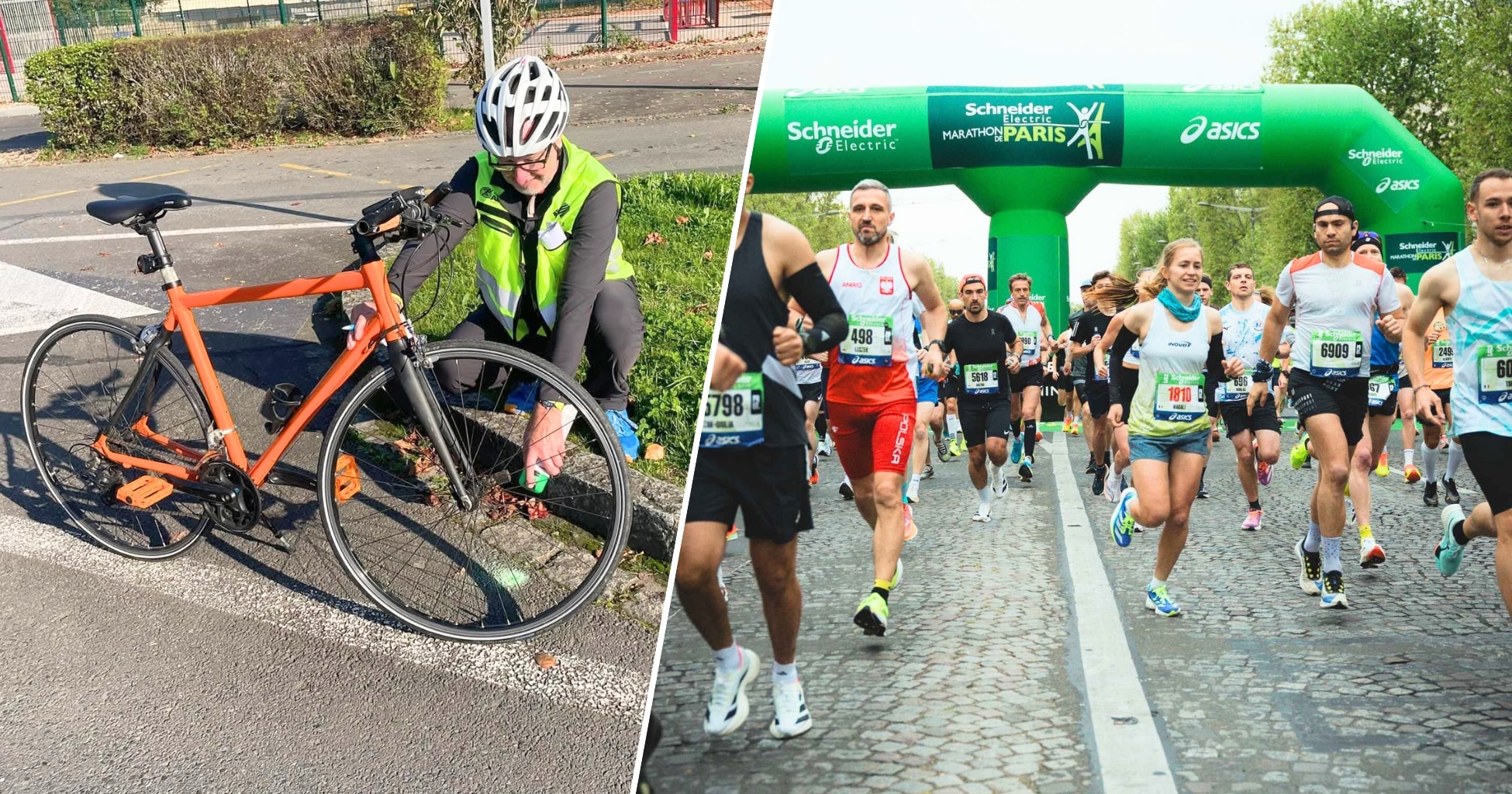
Didier Lucas doesn’t seek the spotlight. His work simply happens when everyone else stays indoors. A runner in the 1980s, he moved from cycling to running before settling in Brittany. He once cycled alone through the Arc de Triomphe at dawn to measure the course of the 2003 World Championships marathon. Gradually, he shifted from the start line to the backstage of athletics. Now nearly 69, Didier remains part of the very small international ranking recognized by World Athletics—about fifteen experts in France, only a handful of whom hold “Grade A” status, allowing them to measure major events such as the Olympics or World Championships.
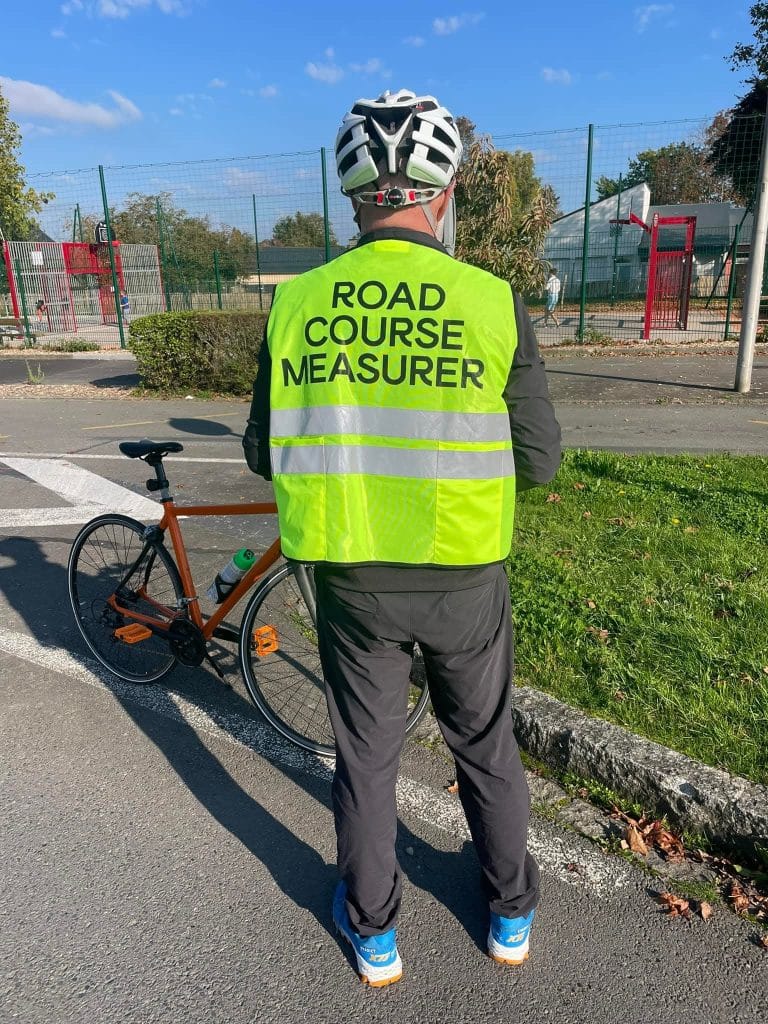
Today, France also counts between 250 and 300 certified course measurers at federation level within the Fédération Française d’Athlétisme. They certify everything from 5Ks to marathons—and even 100 km races. The mission never changes: guarantee that the advertised distance is the distance athletes actually run. He explains the path without embellishment: starting as a volunteer, organizing a marathon in Brittany, meeting a course measurer, then learning the craft. “Course measurement isn’t event production,” insists the former athlete. “You do it in the rain, in the cold, alone on the road, running calculations. You have to love it.”
| Measuring a race means measuring reality
For a long time, course measurement involved educated guesswork—cars, measuring wheels, sometimes rough bike computers. Today, digital tools dominate race planning: OpenRunner, Strava, Google Earth. Everything looks easier. Too easy. The quiet guardian of the 42.195 km smiles when organizers send him digital maps. “On a half marathon, the gap between what’s drawn and reality is often 300 meters.” A detail on a screen. A chasm in real life.
Why? Because maps ignore texture. A roundabout always looks the same size. Sidewalks don’t exist. But a runner’s actual path weaves, cuts corners, drifts wide. The core rule of official measurement can be summed up in one sentence: measure the shortest possible route. Always. Thirty centimeters from the curb. Tight on every corner. As if every athlete followed an ideal line—impossible in racing, yet essential for fairness.
« We work to the centimeter. If the temperature changes, the wheel expands. If the tire pressure drops, the diameter changes. In those conditions, GPS becomes unusable. »
Didier Lucas
No GPS. No lasers. No miracle algorithms. Since the 1980s, the global standard has remained the Jones Counter method: a mechanical counter mounted on the front wheel of a bicycle. It doesn’t measure distance directly, but impulses—each corresponding to a fraction of a wheel rotation. Before any measurement, the bike is calibrated on a precisely measured base, at controlled temperature. Multiple passes. An average. Simple equations, absolute rigor.
The scene feels almost anachronistic. Often at dawn, two experts—sometimes escorted by police—cycle through a city, stopping every kilometer, noting, recalculating, double-checking. Measuring a marathon takes four to five hours. Either two measurers, or one who does the job twice. The allowed discrepancy between passes? A maximum of 0.1%. Over 42.195 km, that’s no more than 42 meters. And the shortest distance always prevails.
| Run straight, measure true
Here lies the great misunderstanding of modern running—right on the wrist. GPS watches. The course-measurement specialist is blunt: “Watches are never exact.” Not because the technology is bad, but because of physics. A GPS records points, sometimes every 10 or 15 meters. The path between those points is reconstructed—rarely in a straight line. Add walls, tunnels, buildings, wide turns, zigzagging through dense packs, and the extra meters pile up.
When runners complain their watch shows 10.2 km on an officially measured 10 km, Didier redraws the route with a “real” (non-ideal) line. The missing 200 meters appear—logically. The rule is simple: if a watch shows less than the official distance, there’s a problem. More? Perfectly normal. Measurement is only part of the job. The rest lives in a file that can reach 60 pages: aerial photos, exact instructions, barrier placement, how to negotiate roundabouts, which lanes are allowed or forbidden. One mantra comes up again and again: “The measurer isn’t there on race day. Everything depends on the course marking.”
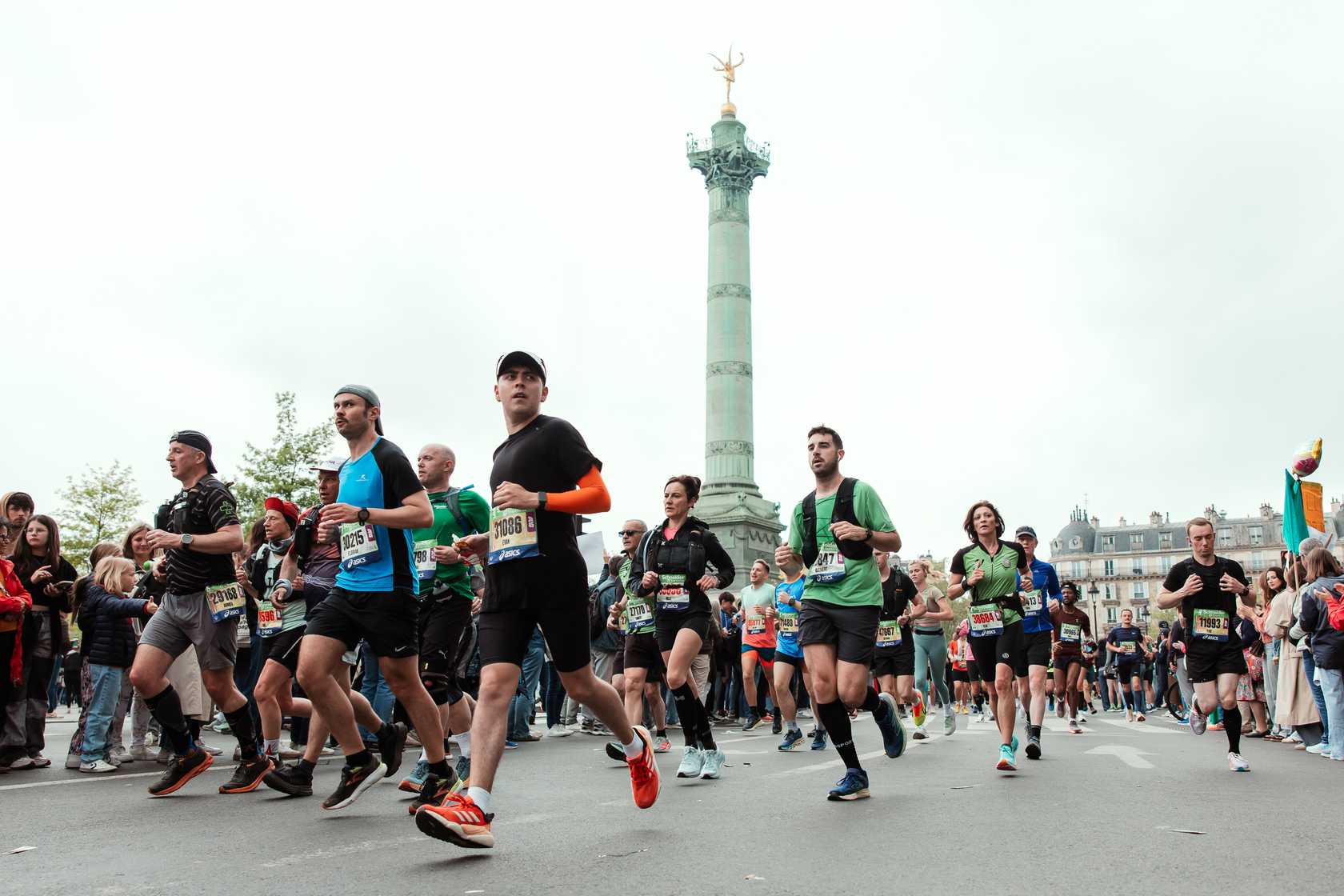
A roundabout taken on the wrong side, a poorly marked turnaround, an accessible sidewalk on a corner—and the real distance changes. Records can be invalidated. Labels can be lost. On major French events, every sensitive point is monitored—unlike in some countries where measurement can be lax. In Paris, nothing is left to chance. The Marathon de Paris plans its measurements months in advance. Same approach for certified races like the Corrida de Langueux or the 20 km de Paris, both listed on the international calendar.
| “The bike and the counter are still unbeatable”
The modern paradox is obvious: tools have never been so plentiful, yet human expertise has never been more essential. Event companies know how to manage crowds, partners, and spectacle. Regulation, technique, and extreme precision belong to a different craft. “The expertise isn’t with them—it’s with us,” says the passionate measurer who settled in Chavagne (Ille-et-Vilaine) in the mid-1980s, without bitterness. More and more organizers now call measurers early. Wait too long, and you may have to move a start line by 300 meters—sometimes impossible in urban settings.
Why such rigor? Because a meter gained in a corner, multiplied fifty times, adds up. Because qualification points, records, and national selections depend on these details. Because a course that’s too downhill skews the hierarchy. Some races have lost certification for being too fast, too favorable, too far from the equity sought.
The method hasn’t changed in forty years—not for lack of trying. “If an engineer had found something simpler, more reliable, usable everywhere in the world, we’d know by now,” Didier Lucas concludes. “For now, the bike and the counter remain unbeatable.” For how long?
➜ Discover the marathon calendar
Dorian VUILLET
Journalist
 21/02/2026
 03/02/2026
 19/01/2026