
24-Hour World Championships: France Take Silver in Albi
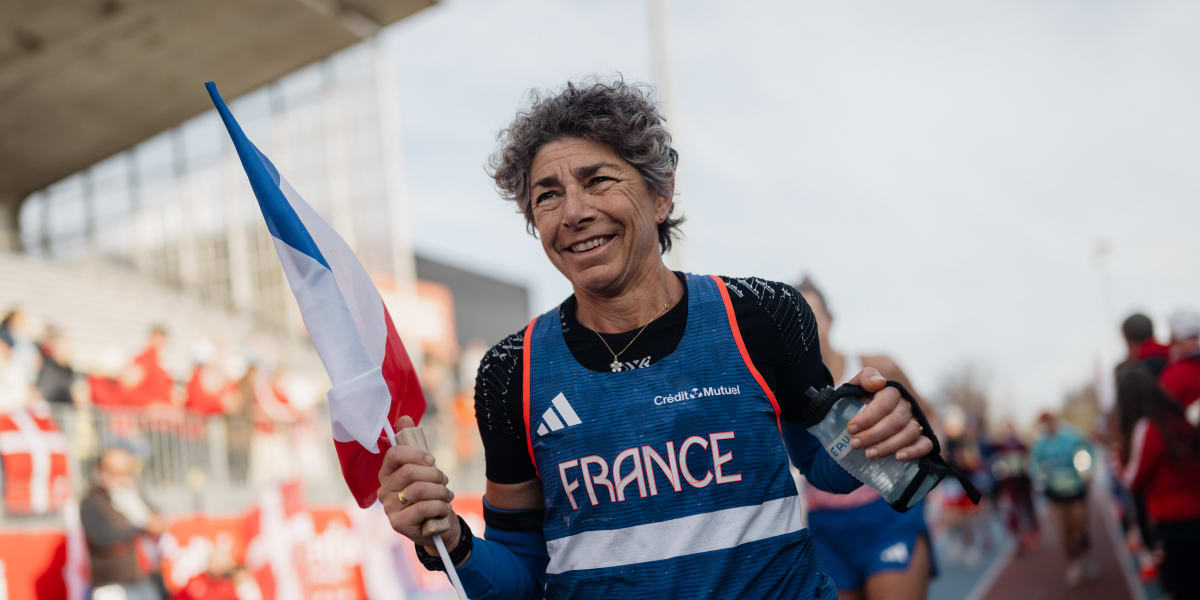 © FFA/REMI_BLOMME
The 24-Hour World Championships were held from 18 to 19 October at Albi Municipal Stadium in the Tarn. The world’s ultra-distance elite maintained a relentless pace in the breathless race through the Occitan city. France claimed second place in the team standings at the 15th edition, while Corinne Gruffaz secured an impressive eighth place in the women’s race.
The 24-hour ultra-distance race demands extraordinary endurance, precision nutrition, but above all, an iron mindset and flawless strategy. The winner is the athlete who covers the greatest distance in 24 hours. It is not only an intense battle against the opposition and the clock, but above all, against yourself.
The circuit around Albi Municipal Stadium came alive to the rhythm of the world’s best ultrarunners as they embarked on this test of extreme endurance. The Albi event now ranks among the strongest editions in the history of the discipline. Once largely overlooked, long-duration road races are attracting growing interest, as shown by the 24 Hours of Brive and the French 100 km Championships.
Four hundred runners, thousands of volunteers and 46 international delegations were ready to face a day with no end. The men’s world record still belongs to the master of effort management, Lithuania’s Aleksandr Sorokin who covered the remarkable distance of 319.614 km in 24 hours in 2022, an average pace of 4:30/km for those keeping track.
Women’s world record, Corinne Gruffaz finishes eighth
 © REMI BLOMME / FFA
Organised by the International Association of Ultrarunners, the 1.5 km course around the stadium was fast, with broad turns that were ideal for world-record attempts. Britain’s Sarah Webster seized the opportunity. Leading from start to finish, the distance runner won with 278.622 km, setting a new world best. Australia’s Holly Ranson, runner-up last year, finished second with 274.172 km. Third place went to defending champion Japan’s Miho Nakata, who reached 271.987 km, even surpassing her own world record. It was a clear reflection of the depth and quality of this edition.
For France, Corinne Gruffaz delivered the team’s best performance, finishing an excellent eighth with 245.359 km. Nathalie Schmitt (38th, 217.173 km) and Océane Chanet (44th, 213.856 km) helped France finish fifth in the team standings with 676.388 km. Francine Copy (84th, 187.170 km), Nathalie Derault (88th, 181.828 km) and Hélène Leger (154th, 96.020 km) completed the French line-up.
France take silver
 © REMI BLOMME / FFA
France’s men made a major statement by claiming an impressive silver medal. With three athletes in the top 20, the French team covered 791.195 km collectively, finishing just behind Finland on 797.030 km. France’s top performer, Diego Filiu finished ninth with 266.554 km. Jean-René Delance stopped after 264.120 km for 11th place, while Michael Boch followed in 13th with 260.520 km. Gabriel Noutary, who had briefly looked capable of reaching the podium, eventually had to settle. He completed the race with 240.642 km for 39th place. Thomas Lepers (82nd, 212.466 km) and Freddy Prigent (128th, 184.603 km) also finished.
The outright winner was Ukraine’s Andrii Tkachuk, who surged clear late in the day and held firm through the following morning. The world champion had hoped to break the 300 km barrier, but finally stopped at 294.346 km after two gruelling final hours. Norway’s Jo Inge Norum took second with 285.513 km, while Finland’s Matti Jonkka snatched bronze by the narrowest of margins with 283.699 km.
 © REMI_BLOMME / FFA
In Albi, France established itself among the rising nations of ultra-distance running. With a team silver in the men’s race and strong individual results, the French men and women showed the strength of their legs and, above all, their iron mindset.