
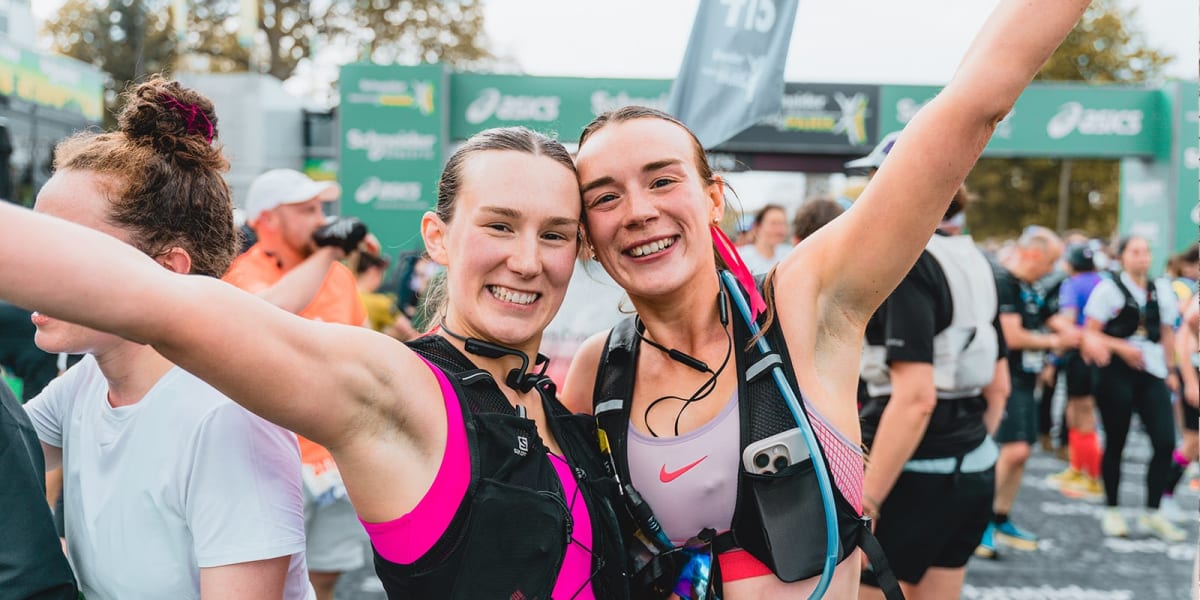
Once upon a time, running a few metres to catch the bus was enough to get your daily dose of exercise. Now you string together training sessions and races, proud to have become a regular runner. But have you ever stopped to think about what really drives you to run, and how far? Behind the passion, there may sometimes be a deeply rooted habit, or even a form of dependence. Marathons.com looks at the deeper reasons that keep us lacing up.
Table of contents
- We thought running was just a passing fad. It turned out to be something deeper
- Fitness and health as a starting point
- Rapid progress from the very beginning
- From completing a first 10K to a first half-marathon…
- An undeniable sense of community
- The feel-good hit that keeps you fired up
- A sport accessible to everyone, everywhere
- “Listening to yourself” to keep running
✓ A closer look, with accounts from three new running “addicts”, plus insight from a sports doctor and ultrarunner, an expert at La Clinique du Coureur, a world reference in running injury prevention and treatment.
In this article, the term “addicts” is used somewhat loosely. This is not about bigorexia, meaning dependence on physical activity, but about people who have been running for several years, not necessarily every day, and who find it hard to do without it.
You were hardly enthusiastic about training for that famous 3×500-metre session at school. You were no more convinced when your friends waxed lyrical about the pleasure of their latest interval workout. Running a few metres to catch the bus was your annual run. But one day, you felt like going out for a run. Whether it was under the influence of someone close to you or because you wanted a healthier lifestyle, the reasons vary and are personal. Now you have crossed the threshold. You are no longer just a Sunday jogger. You have finished several road races and made running a regular part of your life. But have you ever wondered whether you train a little too often? Or where this routine comes from? If so, that is a good thing: you may already have explored the origins of this relationship and examined your attitude to running, the activity that shapes your daily life, motivates you and makes you feel alive, sometimes even powerful. If not, now is the perfect time to do so.
We thought running was just a passing fad. It turned out to be something deeper
Whether you were drawn into running by a friend who was already a runner, a group of colleagues taking on a challenge, or simply the desire to get moving and clear your head, once you enter the running world, it is hard to leave…
In her book Les Enfants d’Achille et de Nike, sociologist Martine Segalen examines the thorny question of running as a “fad”. You might think beginners would soon tire of it, ease off and stop, out of laziness, boredom or a need for something new. Once the euphoria of those early days fades, progress slows and routine sets in.
“ In the 1970s, people said running would be a passing fad, a flash in the pan like the hula hoop or the craze for lapel pins. How wrong they were! More participants! More kilometres! More events, longer distances, more runners. In the 1990s, ordinary running had lost none of its initial momentum, combining a festive and sporting dimension,” she notes in the chapter “Mass races for ordinary runners.” And she was right: the phenomenon has continued to grow, much to the delight of newcomers discovering this world.
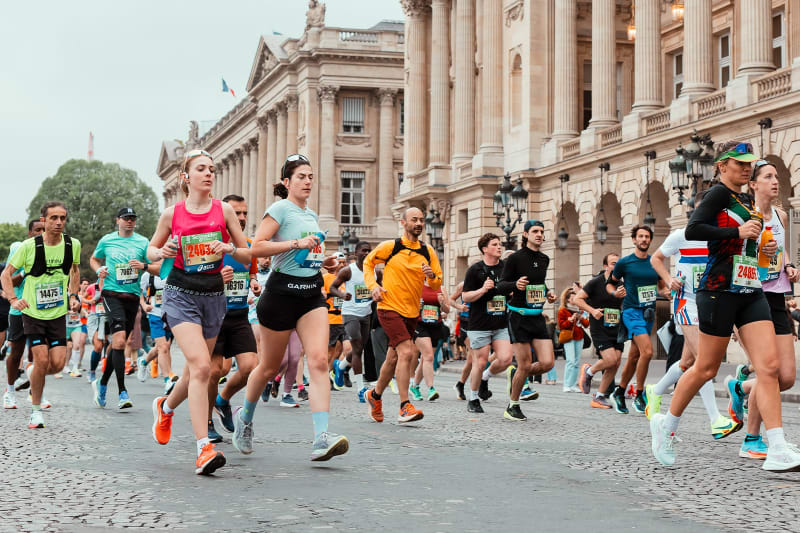
Today, we can clearly speak of a phenomenon, even a frenetic running movement amplified by social media. By definition, a fad does not last. According to the Larousse, it is a “way of living or behaving that belongs to a particular era or country”. A phenomenon, on the other hand, takes hold over time. It is an “observed fact, particularly in its development or as the manifestation of something else”. It is “a social construction of the closing years of the 20th century,” Martine Segalen wrote in 1994.
 © ASO
© ASOFitness and health as a starting point
One of running’s main drivers is simply health. Moving to feel better. Calls to “take part in physical activity” are nothing new, but they resonate differently today. Perhaps because social media amplifies them, or because modern life encourages us to listen more closely to our bodies. Looking after our lifestyle and caring for ourselves through movement are now firmly established ideas. That is no bad thing, given the recommendations of ANSES, France’s national health safety agency, which advises 30 minutes of cardio five times a week, strength training once or twice, and a few flexibility sessions to round things out.
With all this advice, people feel they have to take up sport. “If I do nothing all day but go for a run, it makes me feel less guilty,” says Léonore, a party-loving suburbanite. Running has helped her find a balance between young adulthood and physical wellbeing, while also helping her stay in shape. Running helps people regain control of their bodies. Colin quickly saw physical changes. He felt himself getting leaner, while his muscles became more toned. His friend Julie says, “It did him a lot of good. He suddenly became really sporty and feels much better about himself.” The two health-related dimensions, improving fitness and caring for one’s appearance, are therefore closely linked and, for many people, running is what brings them together.
Rapid progress from the very beginning
As well as its visible effects on the body, running quickly rewards effort. As author and runner Martine Segalen puts it, “The runner’s love for running is richly repaid, because you can progress very quickly,” particularly as a beginner. Going from five minutes of running to 15 in a week has a real impact, and seeing progress makes you want to do even better.
Beginners soon learn to control their breathing, while the duration and pace of their runs improve. They all agree on this. “At first, my chest and back hurt quite a lot, and the more I ran, the less they hurt. I progressed very quickly, which was incredibly satisfying. It made a difference because being capable of so little at first, then so much a short time later, made me proud of myself,” says Julie, who has been running for a year. Léonore adds: “At the beginning, it’s really stimulating because you have no idea how far you can run. The more you do it, the longer and faster you run.” A run is therefore always rewarding. At times, it can even create a sense of power. “It’s good for your morale to finish a session feeling strong.”
“The runner is always happy at the end of a journey whose length and speed have been tailored to their goals. An agreeable sport, then, which risks ensnaring the runner. These gains come at the price of commitment: you have to run often, and you have to run farther and farther, especially when major events loom, 20Ks, half-marathons and marathons,” Martine Segalen explains in the chapter “The runner, a social and sociable being”. Dr Schmitt shares the observation. He recently saw a young patient who had been running for three months and was already up to 40 kilometres a week. “At the beginning, there is a lot of room for improvement. People who get hooked progress too quickly.”
He warns of the potentially harmful effects of progressing too fast: “For me, this is the biggest problem. Often, these are people who are already fit. They see the benefits of running very quickly and set themselves goals that are too big, too ambitious, too soon. I often hear, ‘I’ve been running for seven months and I’m aiming for a marathon.’ They run the marathon, then come to see me because they are injured. That’s where things start to go wrong.” The body, including cartilage, tendons and muscles, needs time to adapt. Otherwise injuries quickly appear: shin splints, plantar fasciitis or patellofemoral pain syndrome. “These are broadly the three conditions we see most often in beginner runners.”
 © Kenzo Mabeno
From completing a first 10K to a first half-marathon…
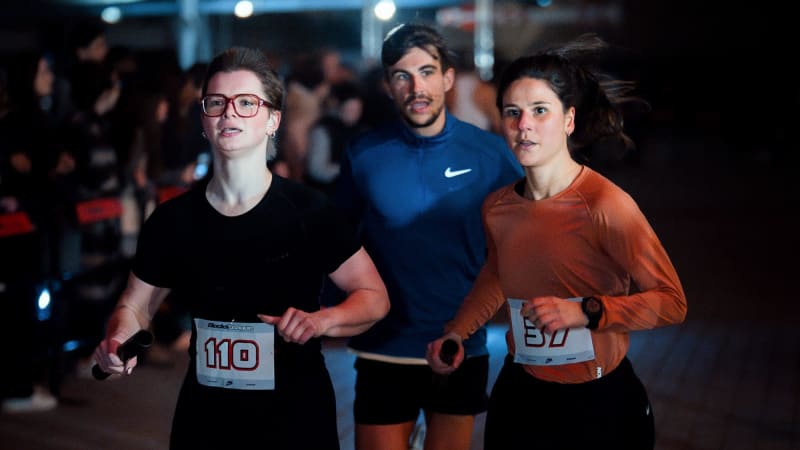
Once they clear one hurdle, beginners are quickly drawn into the cycle of timed road races. “A race is both the act of running and a competition over a given distance and course. It doesn’t take long to move from running to racing,” says Martine Segalen. Sometimes a friend, relative or colleague is the catalyst. “I started running because people at work wanted to do a 10K, so we wouldn’t have to miss a day at work (laughs). I thought I’d better start training, otherwise I’d embarrass myself,” Léonore admits. Preparing for a half-marathon afterwards helped her maintain the rhythm. One race leading to another is often what keeps motivation alive, even in the depths of winter. “Standing on a starting line with a race number on your front sums up and gives meaning to all the training that came before,” Martine Segalen analyses.
Sometimes a more solitary motivation leads people to buy their first race entry. Colin, a mountain dweller, dreamed of taking up trail running, a local sport that initially seemed complicated. He began with road races to build a solid fitness base. “I was a hiker, but I felt the need to cover more kilometres. Eventually, I thought I would leave the road behind and focus exclusively on trail running. But I really enjoyed training for road goals, going farther and faster, and eventually decided to carry on,” says Colin, who has already completed around ten 10Ks.
These so-called “ordinary” runners, in Martine Segalen’s words, take part in “mass” races because they bring together thousands of participants. Their main aim is not to set a time or win. For them, “the reason for racing lies in the race itself. That does not rule out competition, a challenge set for oneself or one’s friends.” In many cases, “it is the competition project itself that brings the group together.”
Watching other people run can spark the desire to try it yourself. Martine Segalen explains it perfectly: “Mass races claim to have an educational virtue: anyone can do what we do. But you still have to take the plunge and face the challenge of the first kilometre, then five. Once that first physical experience has taken place, it is easier to return to the activity at increasingly frequent intervals because this individual movement is part of a powerful collective movement.” In other words, once you start, and despite the pain of the effort, you want to do it again. To improve, of course, but also because you are carried along by this collective energy.
An undeniable sense of community
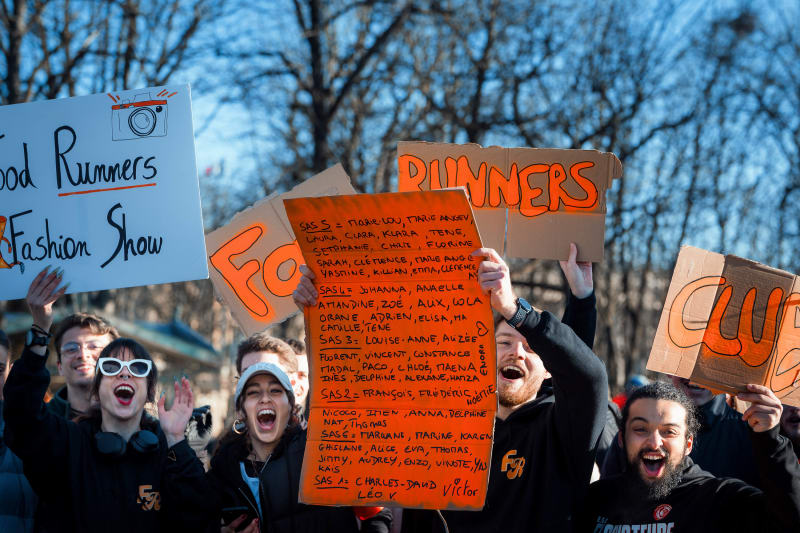
Running brings people together. Hundreds of runner communities have sprung up in recent years, and everything encourages you to join one. Even without running as part of a group, running remains a shared sport: with friends, family or even strangers met at events. “Every race is an opportunity for social interaction; every runner who takes to the asphalt plays a fundamental part in the essence of the city. They are among the ‘anonymous’, but also actors and spectators in a modern sporting spectacle, a swift pilgrim of the 21st century, carried by the joy of participation and energised by the force passed along the chain of runners,” Martine Segalen theorises.
Her words echo Léonore’s testimony: “I love the atmosphere at races, it’s truly incredible!” Still full of the memories of her race in Rome with colleagues, this newcomer has fully embraced the festive spirit surrounding these events. Beyond the atmosphere, it is above all the experience with her small group that will make this race memorable.
“There is a really strong sense of community in racing. It’s nice to be part of a community. When you meet strangers, you talk about the race and learn a lot from other people about it,” Julie admits. Becoming part of this community as a first-time finisher is both exciting and almost commonplace, given the hundreds of thousands of runners who line up every year. The proliferation of races has made the experience more ordinary, even though it still feels like an “achievement” to some.
I always say that humans have no limits. Some people can run 500 kilometres, but you just have to listen to your body.
The feel-good hit that keeps you fired up
The release of endorphins, which reduce pain and create a feeling of wellbeing during exercise, dopamine, released when we reach a goal or anticipate a reward, and serotonin, which structures daily life and stabilises mood after exercise, all play a decisive role in the desire to keep running. Since we feel better after a run, we tell ourselves we will want to go out again tomorrow… Even if it sometimes takes courage to leave the house and run in the rain, dark or cold. “Running then becomes a mental event, not merely a physical one. It is constantly run through the mind of the person who has decided on another outing, another training session,” writes Guillaume Le Blanc in the chapter “Addict” of his philosophical essay Courir : Méditations métaphysiques.
Léonore has been running for almost a year and completed her first half-marathon in 1:52 on 19 October. “It used to annoy me when people said, ‘You’ll see, it’s addictive,’ but honestly, it makes me feel really good. It clears my head after work or a night out.” The young Parisian is not the only one to feel this post-run wellbeing. Colin, who lives near Annecy, has fitted running into his schedule for the past two or three years and sticks with it because “they are moments of escape, mental rest and relaxation.”
Wherever we live, getting some fresh air always feels good, especially after a day spent in an office. “I really like nature and any kind of outdoor sport. I think it’s great,” says Léonore, still discovering the discipline. “I spend much more time in the mountains and see more landscapes,” says Colin, delighted to make better use of his surroundings.
According to a survey by the Fédération Française d’Éducation Physique et de Gymnastique Volontaire (FFEPGV), conducted this year with Ipsos France, 91% of French people believe that sport has a positive impact on mental wellbeing. Martine Segalen neatly sums up this balance between the physical and psychological dimensions: “Whether practised in reasonable or excessive doses, this sport ends up transforming everyday culture, becoming part of a project aimed at improving wellbeing and breaking the monotony of daily routine.”
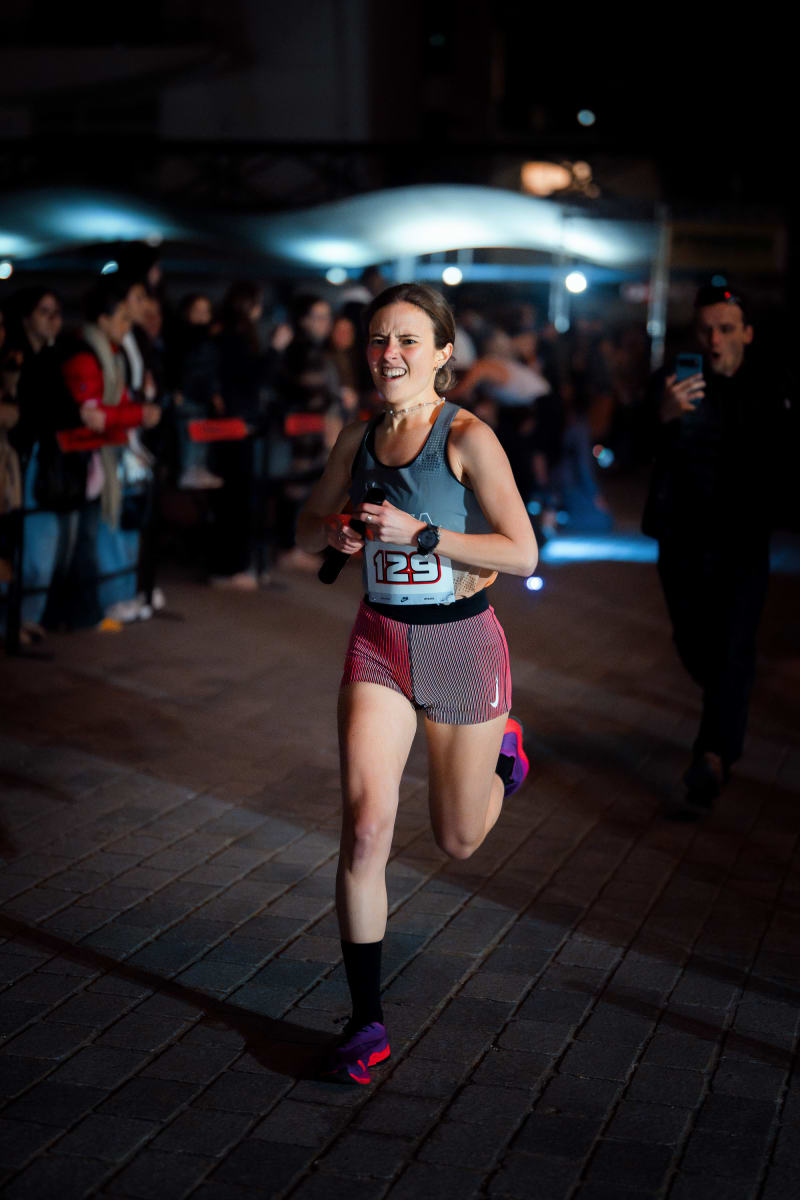 © Kenzo Mabeno
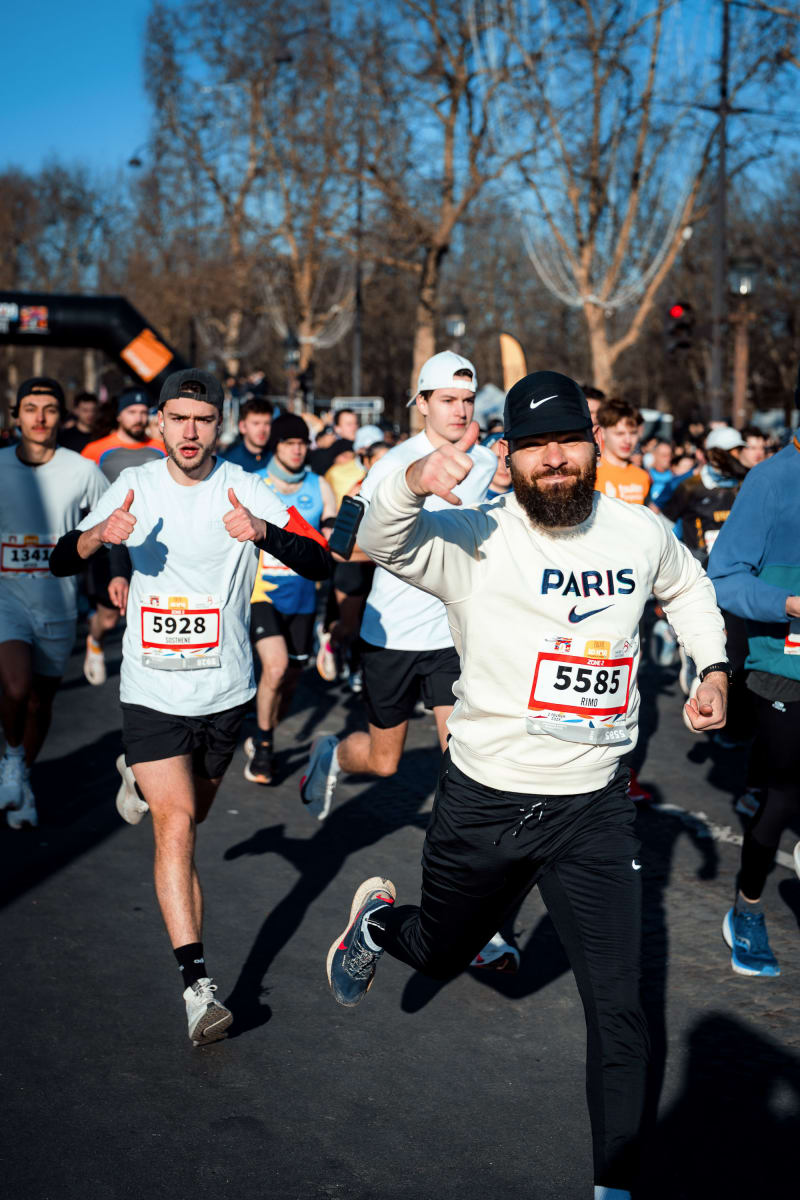 © Kenzo Mabeno
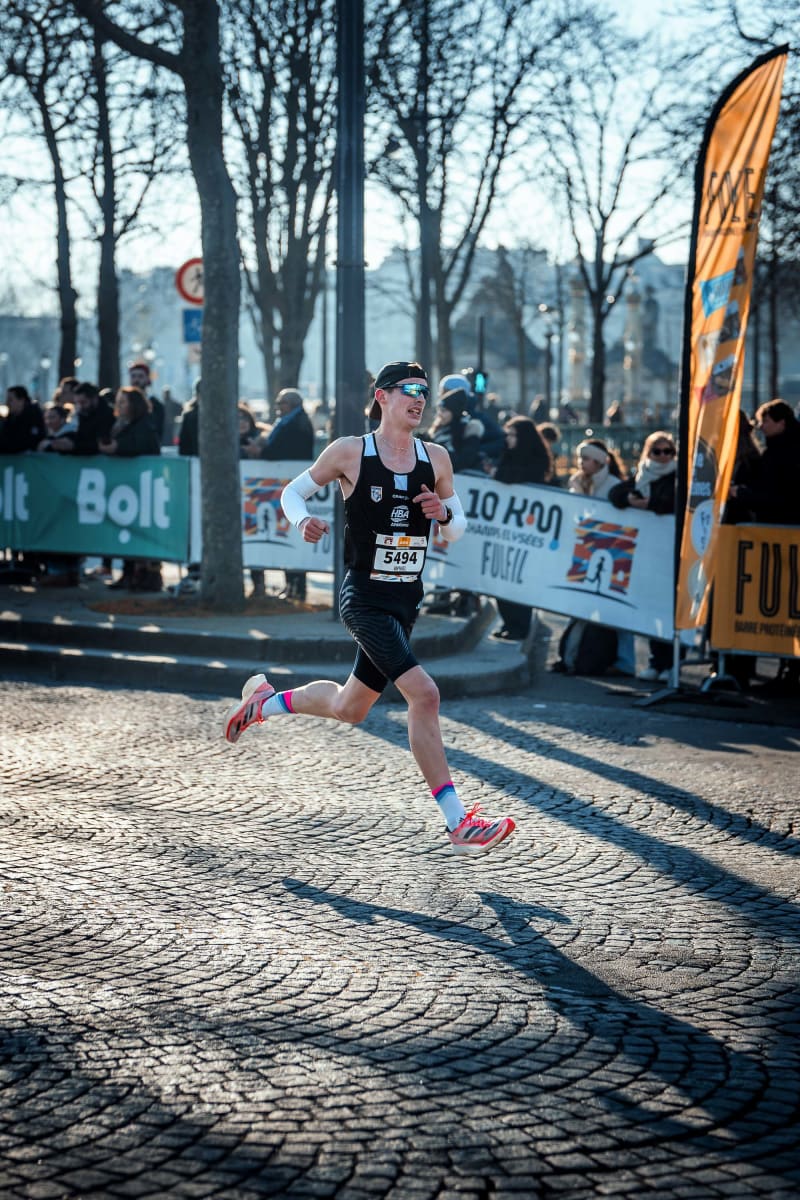 © Kenzo Mabeno
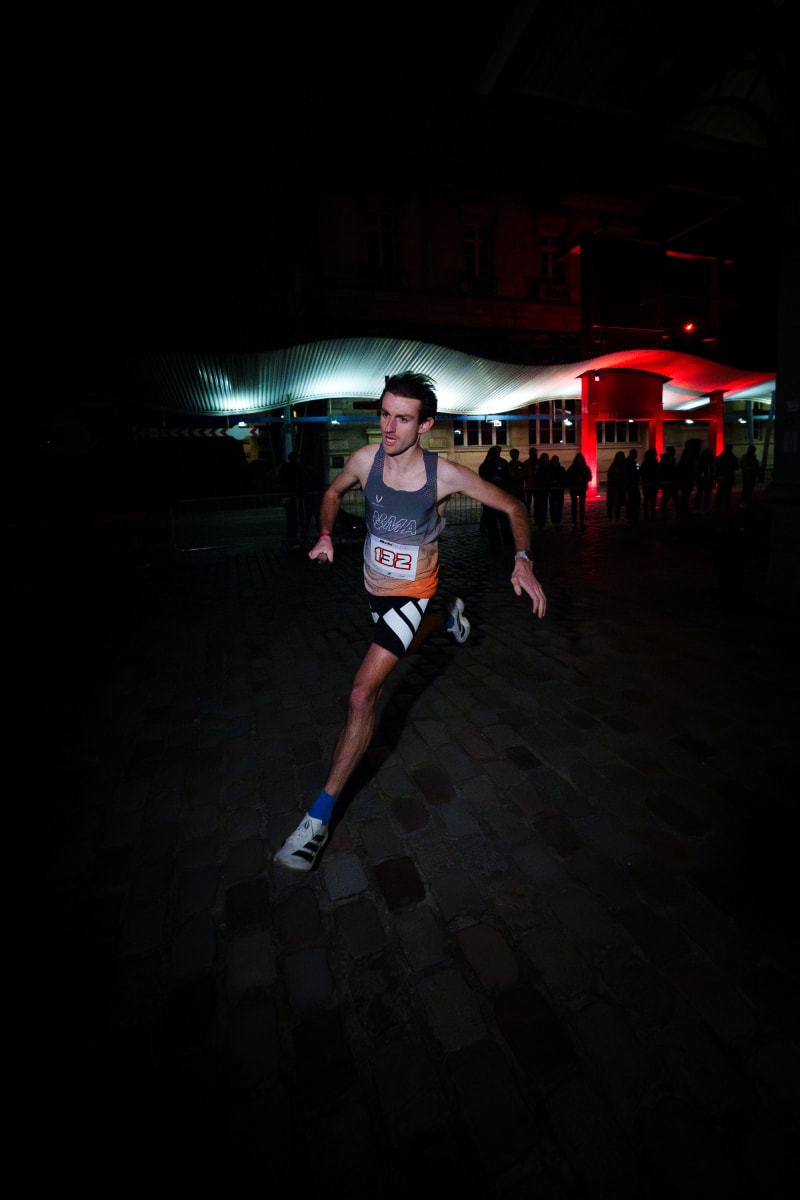 © Kenzo Mabeno
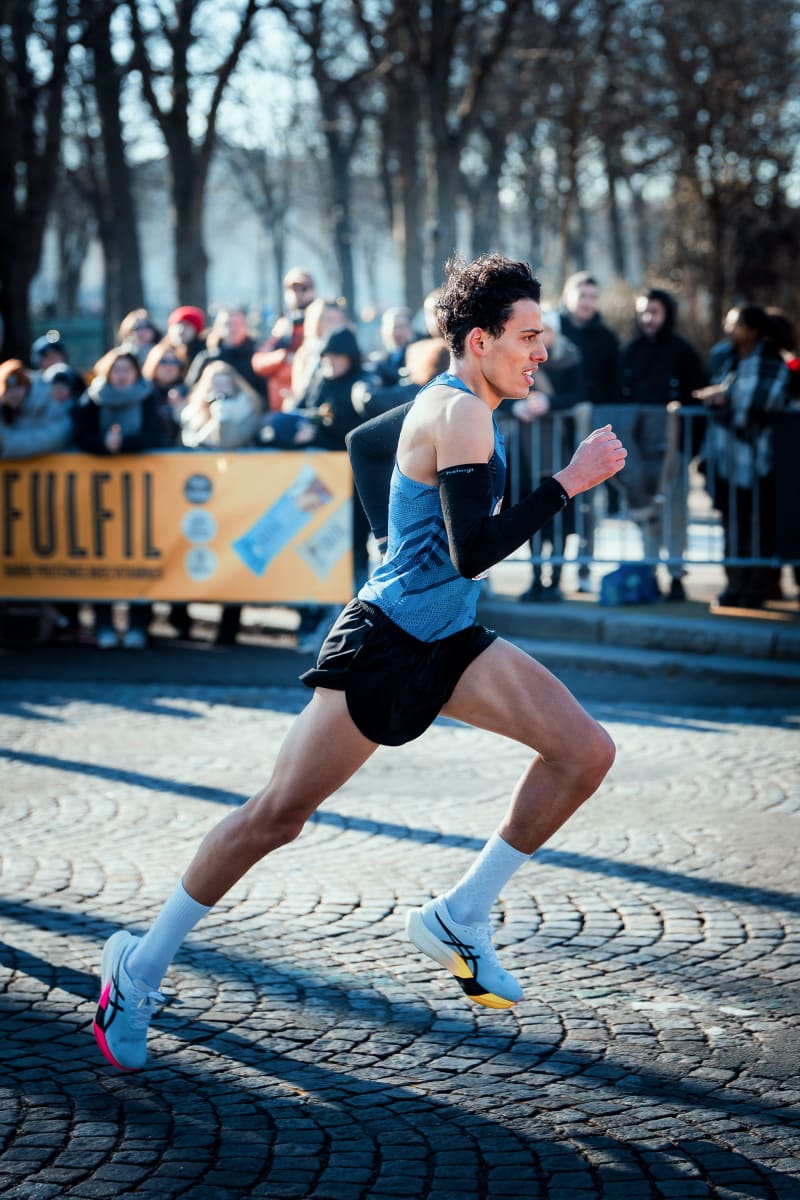 © Kenzo Mabeno
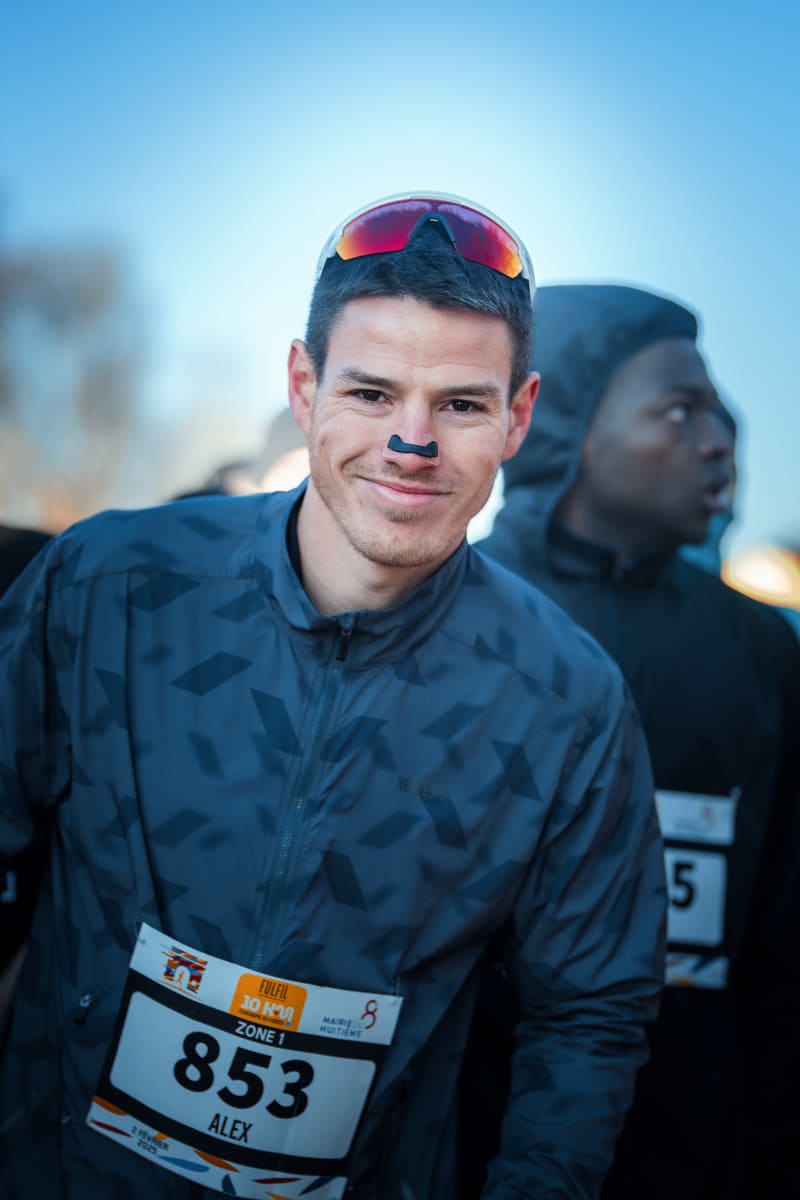 © Kenzo Mabeno
A sport accessible to everyone, everywhere
Running has the advantage of being one of the most accessible sports around, both in terms of preparation, since all you need is a pair of trainers and suitable clothing, and of the conditions in which it can be practised: alone or with others, whenever you like, for as long as you want, without having to travel to a specific facility.
In consultations, Yann Schmitt’s patients, a sports doctor based in Strasbourg, often say they started because “it takes less time than other activities.” He explains: “If you want to run for 20 minutes, you put on your trainers, go downstairs, step outside and run for 20 minutes. With swimming, you have to travel, get changed, swim, then shower.”
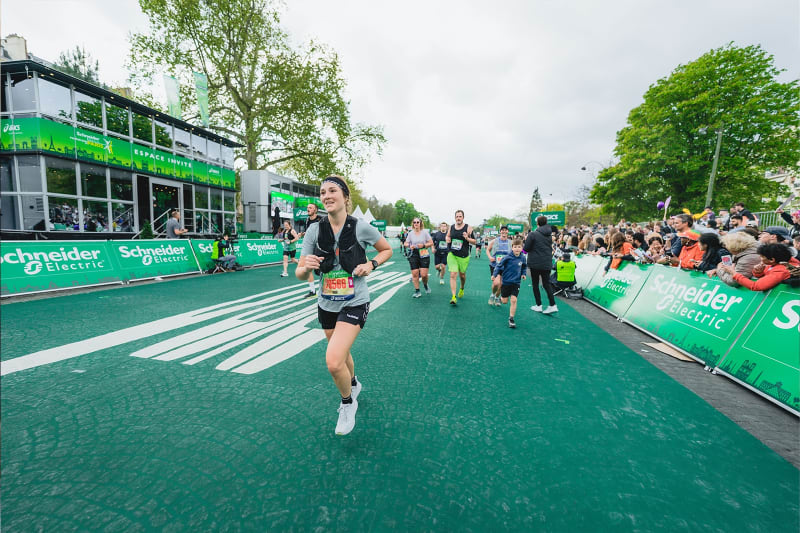 © ASO
© ASORunning is also an affordable sport when it comes to equipment. “You can be a trail runner who spends €1,000 on a watch, wears €300 shoes and €1,500 worth of kit, or someone who runs in the sports T-shirt everyone owns, basic shorts and a pair of trainers bought from Decathlon or Intersport,” points out the doctor, who is also an ultrarunner.
The discipline suits all levels and ages, which explains its broad appeal. Martine Segalen concludes her sociological and anthropological study by writing: “Across ages and social classes, running allows the heavy, the slow and the no-longer-young to say who they are. By reclaiming their bodies, they reclaim the city, taking it back from cars for a moment. They subvert it and rehumanise it through the oldest of anthropological activities.”
“Listening to yourself” to keep running
All these factors mean that, despite the time and effort devoted to running, the sport encourages people to stick with it. The arguments that once held us back, “it’s repetitive, not fun and not for everyone,” no longer carry much weight. Accessibility, physical and mental wellbeing, community and the desire to keep improving now attract people and allow everyone to thrive through running. Whether some simply need to breathe fresh air in nature or others want to finish their run drenched in sweat, the freedom is total.
For these former beginners, the issue is no longer simply hanging on. The priority is preventing injury so they are not forced to stop an activity that began with good intentions. For Léonore, putting on her trainers has become “natural,” almost automatic whenever she “crashes at a friend’s place. Colin cannot imagine giving it up, with his three or four runs a week. Julie, who took up running thanks to him a year ago, feels unwell when she goes five days without running. Recently injured, she now takes things more carefully by alternating different sports.
Running is recommended, even daily running, and that is perfectly acceptable. Yann Schmitt, who works with beginners and experienced runners alike, has no issue with it. “People who damage their health by running every day do so because they do not listen to themselves. They start to feel very tired or develop pain, but keep running in the same way. Inevitably, that leads to problems. But someone who runs a little every day has no problem. The body responds better to daily stimulation than to occasional heavy loads.”
Ultrarunner Stéphanie Gicquel, who contributes to research, says that “running carries no risk if you do it properly.” It is therefore better to run a small amount every day than twice a week with big spikes in training load. “Health comes first,” reminds Dr Schmitt, who insists on prevention when advising new patients. “I do not give them a recipe, but I give them a toolbox that helps them recognise the warning signs.”
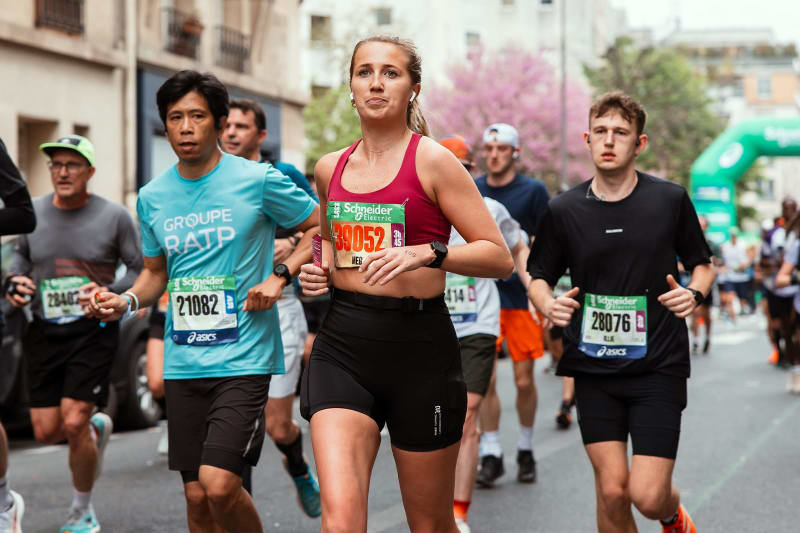 © ASO
© ASOThe risk of injury comes from excessive training load, too much training or overly ambitious goals. Dr Schmitt advocates gradual progression: “At the beginning, people tend to focus on volume. They run more and more because they realise they can cover longer distances or spend more time running. I often tell them they risk burning their wings early on. You really have to try to follow the 10% rule. It is always about taking things slowly but surely,” he says. He also recommends strength training because, as Stéphanie Gicquel puts it, running must “be supported by other work; otherwise it can become destructive.” Yann Schmitt explains that “strength training is what makes such a big difference between runners 20 years ago and runners today, even at professional level. Someone who does a lot of lower-body strength work, along with more general strength training, will certainly suffer far fewer injuries than someone who does not.”
Above all, the key is “listening to yourself.” He never tires of repeating this advice, the most important rule for avoiding physical setbacks and going the distance. “I always say that humans have no limits. Some people can run 500 kilometres, but you just have to listen to your body.” It is better to cut a session or run short than make the problem worse. “If you realise that you did a session and felt no pain during it, but wake up the next day with pain somewhere that was fine the day before, you did too much and need to step back one or two stages. You should be able to tell yourself that the next day, your physical condition and fitness should be good enough to repeat the same training session.” Listen to yourself, then, and learn your body. Stéphanie, who holds the French 24-hour track record, still suffers the effects of a fractured kneecap. “That does not make me stop running because I know exactly which massages and stretches I need to do. When you know your body really well, you worry less.”
Many myths about the risks of running took hold in the 1990s and 2000s. “At one point, running was forbidden because people said it carried a risk of osteoarthritis, back problems and so on. But the picture has completely changed. As far as the back is concerned, we know that runners strengthen their spinal discs, which become healthier. Running also slows the onset of osteoarthritis,” says Yann Schmitt.
Stéphanie Gicquel adds: “People often say running is bad for the joints, but it helps fight osteoporosis, particularly in female masters athletes. Road running teaches you to stand upright and maintain good posterior pelvic tilt. It does a lot for body alignment, even in everyday life.,” Running is therefore no longer contraindicated. It simply needs to be adapted, for example by changing the way you run or adjusting your training. “You should always encourage the patient, not tell them, ‘That’s it, you must stop running.’ Otherwise, true enthusiasts shut down.”
They laced up their running shoes to clear their heads, let off steam or simply see what it felt like. And they never stopped. With every stride, running became much more than a sport. A habit, an anchor, sometimes even a small, openly acknowledged addiction. It soothes as much as it challenges, brings people together as much as it isolates them. Provided you know when to ease off. Because running is not just about going faster or farther; it is about learning to listen to yourself, breathe and feel alive.
➜ Discover the marathon calendar.
Sabine LOEB
Journalist
More articles

Running, the new playground for brands from outside sport
More and more non-sport brands are moving into running to reach runners and earn credibility.
Thu, October 22, 2026

BlablaRun Club brings runners together on the streets of Nancy
Every Tuesday, BlablaRun Club brings Nancy runners together at Place Stanislas, with three pace groups to choose from.
Wed, September 9, 2026

10K of Magical Aid Stations: the race where every sip makes your head spin
The Food Runners Club’s 10K of Magical Aid Stations returns for a festive sixth edition, where drinks, community and fun matter more than the clock.
Wed, September 9, 2026