

A health insurer, a pasta brand, a carmaker, a laundry detergent, a phone operator and now Lidl. Running is drawing companies further and further from the usual trio of shoes, watches and apparel. But do you really need a sporting pedigree to talk to runners? Between the hunt for credibility, storytelling and the urge to be useful, each brand is trying to find its own way into a world that isn't quite theirs.
There was a time when talking to runners meant at least knowing what VO2 max was. These days, selling pasta, cars or laundry detergent can be enough. Race expos have changed at a dizzying pace. Between the historic gear makers, you now bump into a health insurer, a carmaker, a hygiene brand or a supermarket chain. The latest example is Lidl, which no longer just puts its logo around the sport and is building a full range of gear with CRIVIT, right up to a carbon-plated running shoe. Running has become such an attractive playground that even brands that have never made a single product for running want their slice of the pack.
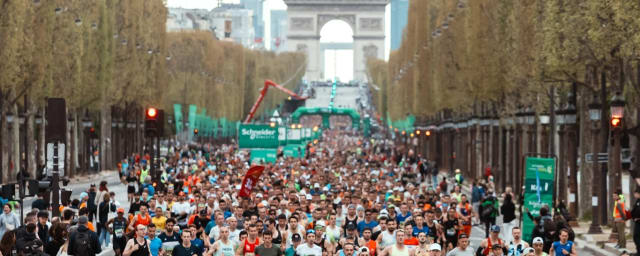
The trend says something deeper than a simple pile-up of sponsors. Running has changed scale. It brings together millions of participants, events that sell out, communities that are extremely active on Strava and social media, and an audience whose life obviously doesn't stop when the run does. Runners eat, commute, work, travel, use their phones, look after their health and wash their clothes. For a company, that's a lot of possible doors. The question is whether runners want to open them.
Running has become contested territory
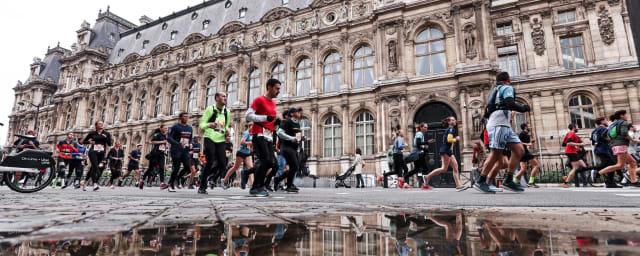
At a marathon expo, the scene would almost seem absurd if it weren't so commonplace by now. Next to the carbon shoes and energy gels, an insurer explains how to move more, a carmaker talks about progress, a pasta brand talks nutrition and a detergent promises to keep your kit fresh after the effort. Even toothpaste has found its spot. At the HOKA Paris Half Marathon, Colgate joined the event's long list of partners, while Lenor built its presence on an argument as simple as it is familiar to runners: after sweating through 21.097 kilometers, you have to wash your shirt.
That presence isn't necessarily artificial. It shows how far running has spilled beyond the strict boundaries of sport. Running is no longer just about shoes and a stopwatch. For a large share of participants, it has become a way of life, a way to stay in shape, meet people, travel or simply set a goal. A company can have something to say without making a midsole or a GPS watch.
The runner population is a perfect match for the consumers we target with our electric range.
Harmonie Mutuelle built its message on this logic. The brand now says it supports more than 500 running and walking events and treats sport as a prevention tool. “Promoting physical activity among our members and corporate clients is at the heart of the mutual's strategic priorities for prevention,” said Catherine Touvrey, managing director of Harmonie Mutuelle. Running becomes a fairly natural extension of its own business. The brand doesn't claim to be a gear maker. It comes to talk about a subject on which it already has credibility: health. That's probably the first secret of these newcomers. They don't need to copy sports brands. They have to find their own reason to be there.
Hyundai, or learning how to talk to runners
The Hyundai case is even more telling. At first glance, a car and a marathon don't have much to say to each other. Yet the carmaker has become a regular on the French calendar. In 2026, Hyundai is a partner of the Paris Marathon and continues its “Run to Progress” program, which supports runners with training plans, content, race-day experiences and various initiatives aimed at people just starting out. The carmaker isn't trying to turn a car into a running accessory. It's trying to settle into the moments around the practice: progress, travel, first races, big goals. In 2024, Lionel French Keogh, then president of Hyundai Motor France, was openly clear about the commercial logic behind the investment. “The runner population is a perfect match for the consumers we target with our electric range,” he said, pointing in particular to their sensitivity to the environment and eco-mobility.
Two years on, the message has moved even closer to the practice. “Supporting every runner, at every stage, in all their firsts” is how Clémentine Antunes, marketing and communications director at Hyundai Motor France, now sums up the ambition. The brand has teamed up with Stéphane Diagana and, in 2026, Laure Manaudou to guide its “first-timers.” The shift is telling. Hyundai no longer just wants to be seen by runners. It wants to be part of their running story. First 10K, first half, first marathon. The brand still doesn't make shoes, but it now knows the codes of the pack well enough to tell something more than a standard sponsorship story. And the same approach can work for players much further removed from sport.
Even a laundry brand can find its kilometer
Lenor, for its part, chose an angle that seems almost too obvious to fail. Runners sweat. Clothes need washing. Why not start there? The brand teamed up with the Paris Half around the freshness of kit after the effort, with an activation designed for participants. No need to talk about performance, recovery or world records. Lenor cares about what happens once the medal is around your neck and your shoes are back in the bag. Colgate came in through a different door, oral health and inclusion, while Barilla is building its presence in sport around nutrition and Strava challenges. Orange went for emotion at the Paris 2024 Marathon Pour Tous, where the operator was an official partner. The phone almost vanished from the message in favor of what the brand does best: connecting people, sharing an experience and prolonging a feeling.
These examples have one thing in common. None of them asks runners to believe the brand has suddenly become a sports company. Detergent stays detergent. Toothpaste stays toothpaste. Pasta stays pasta. A car stays a car. But each tries to find a situation where its product or expertise makes sense for someone who runs. The trouble starts when that consistency disappears. Runners know their world and, above all, they are now heavily solicited. A campaign can look good, an influencer can wear the right tee and a finish arch can be enormous, but that doesn't necessarily create attachment. In a world where people sometimes spend months preparing for a race, the gap between a brand that understands their daily life and one that just wants visibility can show very quickly.
Lidl now wants to step into the shoes
Lidl's arrival, by contrast, adds another wrinkle to the story. With CRIVIT, the chain no longer just wants to talk to athletes, it wants to sell them gear directly. And not only products for occasional use. The running range includes a carbon-plated shoe listed at €59.99 on Lidl's French site, when some competing models go well past €200. CRIVIT's pitch rests squarely on accessibility. “We make sport accessible to everyone,” the brand said, explaining that it wants runners to focus “on the joy of moving, not on your budget.” A strategy that carries particular weight in a sport where the bill can climb fast once you add shoes, a watch, kit, race entries, travel and nutrition.
So Lidl bends the rules a little. Hyundai can find its place around mobility and progress. Harmonie Mutuelle around health. Barilla around food. Lenor around daily life. Lidl goes straight onto the gear makers' turf. That makes the question of legitimacy even more interesting. At what point does a non-sport brand become a sport brand? When it sponsors a race? When it fields a team? When it makes shoes? Or simply when it understands runners well enough that they start to trust it? There is obviously no clear line. And that may be exactly what makes the phenomenon so interesting.
Runners don't necessarily want a specialist, they want a reason
Because runners aren't as closed off as the stereotype of the super-shoe obsessive might suggest. They can perfectly well accept a brand from elsewhere. They just ask that it not barge in. A marathoner doesn't expect an insurer to explain how to run a marathon. But they might listen to what it has to say about prevention and health. They don't expect a carmaker to teach them interval sessions. But they might welcome help preparing for a first race or getting to an event. They'll never ask a detergent how to pace themselves. But they might find it funny, even useful, that it thinks about their shirt after 30 kilometers. Legitimacy doesn't necessarily come from sporting DNA. It seems to be built more on the ability to understand a real, everyday situation.
And a runner's daily life is wide. There's the start line, of course, but also the 6 a.m. alarms, the runs in the rain, the miles ground out alone, the training shared with friends, the pre-race meals, the trips to events, the recovery, the laundry, the photos, the endless debates about shoes and, sometimes, signing up for the next race before you've even recovered from the last one. That's exactly the space brands are after. Running is no longer just a sport. It has become a lifestyle big enough for companies from almost every sector to find a story to tell. But the audience doesn't have to listen. That's where the real limit lies. Anyone can join the pack. No one gets to decide for the runners that they belong.
Sports brands will keep a head start when it comes to shoes, apparel or performance. They've known runners, their needs and their obsessions for decades. But they're no longer the only ones who can tell a story about running. An insurer can talk health. A car, mobility and progress. A food brand, nutrition. An operator, connection and sharing. A detergent, daily life. A retailer like Lidl can now even talk gear directly. Running has grown big enough to hold all of them. The question now is who will last. Because deep down, runners may not ask brands to be sporty. Mostly they ask them not to pretend they know them.
Related events
More articles

Investigation: The new running addicts: why they start… and never stop
Running was never your thing. Then one day you started, and now you’re a regular finisher. But have you ever wondered why you run so much?
Wed, September 9, 2026

BlablaRun Club brings runners together on the streets of Nancy
Every Tuesday, BlablaRun Club brings Nancy runners together at Place Stanislas, with three pace groups to choose from.
Wed, September 9, 2026

10K of Magical Aid Stations: the race where every sip makes your head spin
The Food Runners Club’s 10K of Magical Aid Stations returns for a festive sixth edition, where drinks, community and fun matter more than the clock.
Wed, September 9, 2026

New sporting goals for the season? Take part in Barilla Protein+'s No Penne No Gain challenge on Strava
Take on Barilla's No Penne No Gain challenge on Strava and ease back into running with a gradual build and more protein on your plate.
Sun, September 6, 2026

Barilla PROTEIN+ puts plant protein back on runners’ plates
Barilla PROTEIN+ helps runners boost recovery with plant-based protein, without sacrificing taste, simplicity, or everyday convenience.
Thu, August 27, 2026