
Brooks Glycerin Max 3 review, maximalist cushioning done right
Published on Fri, November 20, 2026

Maximalist running shoes have been booming for several years. Among runners, the trend is clearly more foam under the foot, and almost every brand now has at least one maximalist model on its shelves. With the new Glycerin Max 3, Brooks strengthens its position in the segment with the third version of a line that could become a pillar of the category. Unprecedented comfort, a refined fit and a very pronounced rocker: this Glycerin Max 3 ticks every box for runners who rack up the miles.
The Glycerin Max, a franchise starting to carve out its place
To really understand this Glycerin Max 3, you have to look back a little. In autumn 2024, Brooks made its move into the maximalist segment with the original Glycerin Max. 45 mm of foam at the heel, 39 mm at the forefoot, a 6 mm drop: it is simply the highest and most cushioned shoe the Seattle brand had ever released. On the foot, it feels a bit like an ocean liner. It also debuted DNA Tuned, a supercritical nitrogen-infused foam mixing two cell sizes. Large cells at the heel for a very soft landing, smaller ones at the forefoot to keep some snap at toe-off.
The result: a very plush ride, a cozy fit you almost slip on like a slipper, and a big hit with runners who adopted it fast. Ideal for easy runs and able to stretch the distance thanks to all that cushioning, it particularly appealed to marathoners, who usually log big training volumes.
A year later, the Glycerin Max 2 arrived with the same stack height and the same drop. But not quite the same feel. Brooks changed the upper (a triple-layer jacquard mesh) and reworked the shape of the classic Glycerin, snugger through the midfoot. Underfoot, DNA Tuned felt noticeably firmer, and the shoe gained around twenty grams (about 320 g versus 298 g for the first version, men's size). Not a bad shoe by any means, but early fans were left a little wanting.
With the Glycerin Max 3, Brooks seems to have heard the feedback and wants to correct course. The idea is to return to what made the franchise a success: comfort, XXL cushioning and a rocker that makes you want to go faster. This time, with a new foam to carry it all.
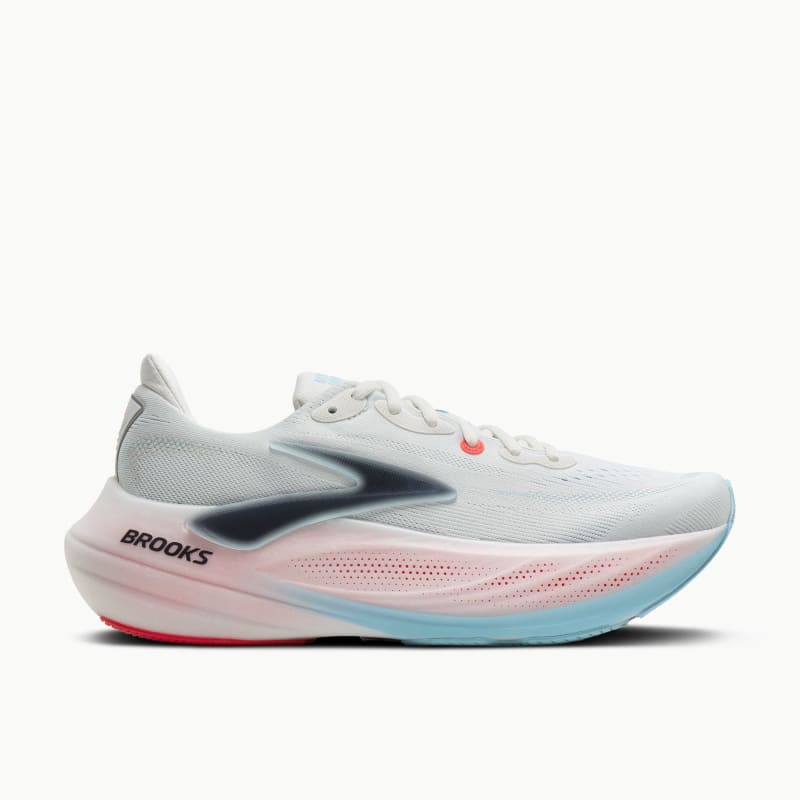 © Brooks
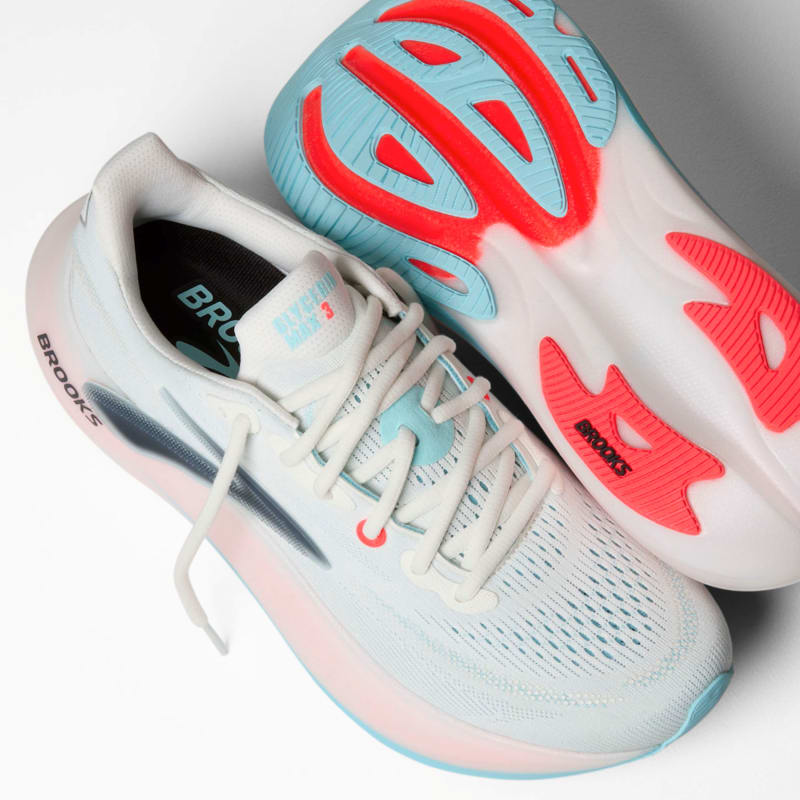 © Brooks
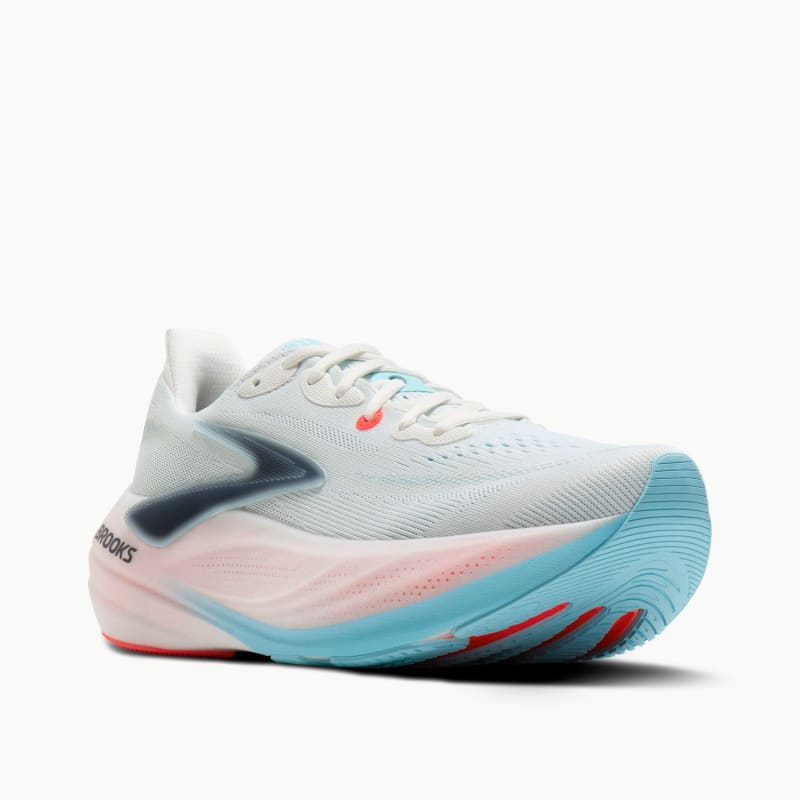 © Brooks
DNA Rise Tuned, rocker, fit: what the Glycerin Max 3 brings
The big news here is the DNA Rise Tuned foam. It's a direct evolution of DNA Tuned: the principle stays the same, a supercritical nitrogen-infused foam with two cell sizes, but Brooks says it can now fine-tune the ratio of small and large cells much more precisely, zone by zone, from heel to forefoot. On paper, the brand claims a foam 7% softer, 8% more responsive and 15% lighter than DNA Tuned. All without a plate in the midsole.
You feel it on the scale. Brooks lists 303 g for men and 272 g for women, roughly the weight of the very first version. For a shoe of this size, that's reasonable without being light. It's still very much a maximalist shoe.
On geometry, Brooks leaves what works alone. The numbers stay put (45 mm at the heel, 39 mm at the forefoot, 6 mm drop), and the GlideRoll Rocker, the franchise's signature, is still there to deliver that forward-propelling feel. The midsole shape has nevertheless been reworked for smoother transitions, with a rocker that seems more aggressive under the forefoot.
Finally, the fit. The upper has been revised based on runner feedback, with better lockdown from heel to forefoot, while still leaving enough room up front so the toes don't get cramped, especially on long runs when feet can swell slightly.
Key info – Brooks Glycerin Max 3
Price: €200
Availability: November 1, 2026
Use: easy runs, long runs
Gait: neutral
Weight: 303 g (men) / 272 g (women)
Stack height: 45 mm (heel) / 39 mm (forefoot)
Drop: 6 mm
Foam: DNA Rise Tuned (supercritical, nitrogen-infused, dual cell size)
Geometry: GlideRoll Rocker
Upper: reworked technical mesh, reinforced hold from heel to forefoot
Outsole: abrasion-resistant rubber
 © Brooks
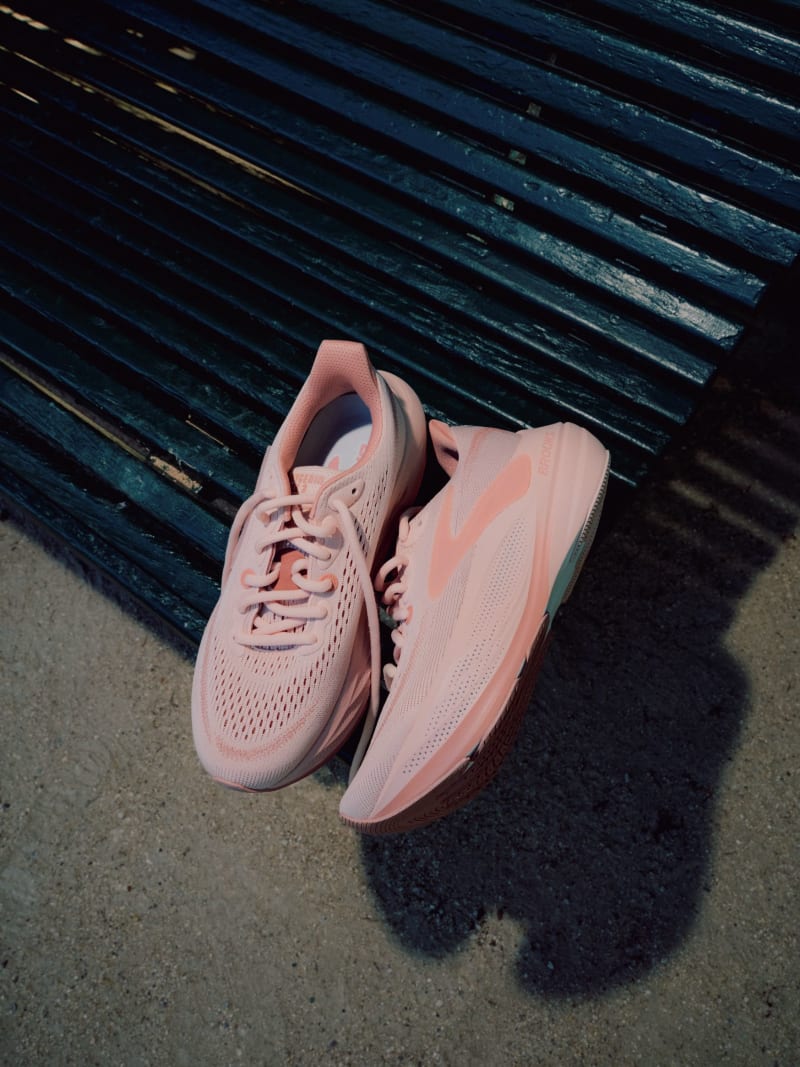 © Brooks
 © Brooks
Who is it for?
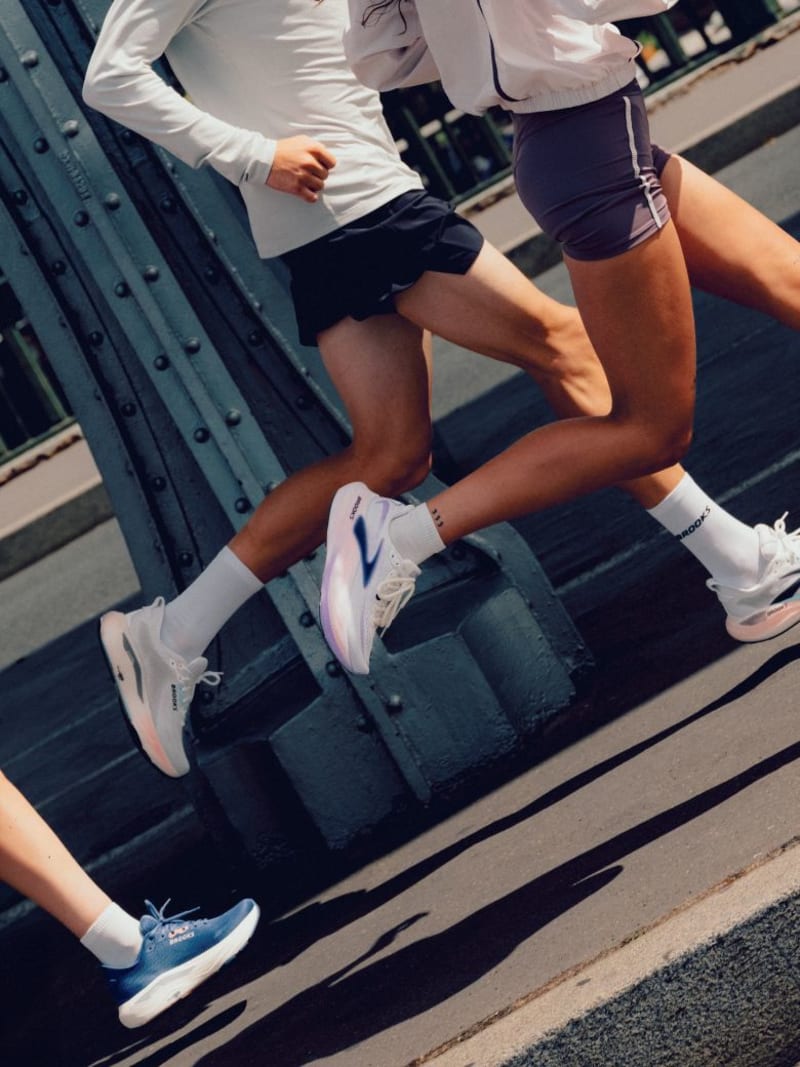
The Glycerin Max 3 doesn't try to be versatile, and that's rather good news. Brooks clearly built it for everyday easy runs and long runs. In other words, all those kilometers run at easy aerobic pace that make up most of a distance runner's training volume.
It will speak first to runners building up for a marathon and stacking miles, to those who want to protect their legs the day after a hard session or race, and more broadly to anyone who puts comfort ahead of pure speed. Heavier runners, or those who land hard on the heel, should also find something here, with that big cushioning and a rocker that smooths the transition from heel to forefoot.
Conversely, it's not the ideal choice for a VO2max session on the track. The weight and stack height are noticeable as soon as you change pace, and it's less at ease on tight bends. Those who like to feel the ground will also look elsewhere. As for runners who need support: even though the shoe feels surprisingly stable, Brooks points them toward its GTS models.
Last point, and it's a big one: the price. At €200, this is a real investment. If the budget allows, the smart move is to put it in a rotation, alongside a livelier shoe for quality days.
Where does it sit in the Brooks range?
The Glycerin Max 3 sits at the top of a road lineup that has grown considerably in recent years at the American brand, to the point where it's easy to get lost between the Ghost, Glycerin, Max versions and GTS. A few pointers to help you find your way:
Ghost 18: the brand's best seller, the do-it-all trainer for those who want reliable, classic cushioning day to day.
Glycerin 23: the softer everyday version. A notch below the Glycerin Max in stack height, but more versatile.
Ghost Max 4: the other maximalist in the house, with 40 mm of DNA Loft v3 foam at the heel and a 6 mm drop. Lower and more affordable, with a more settled feel, it also suits people who walk a lot in daily life.
Hyperion Max 4: the super trainer of the range, for fast sessions and long runs at marathon pace.
Hyperion Elite 6: the racing shoe, the one for race day. Note that new prototype models were recently spotted at the New York Marathon, notably on the feet of Jessica McClain, who finished 2nd. 2027 looks loaded with new releases for Brooks.
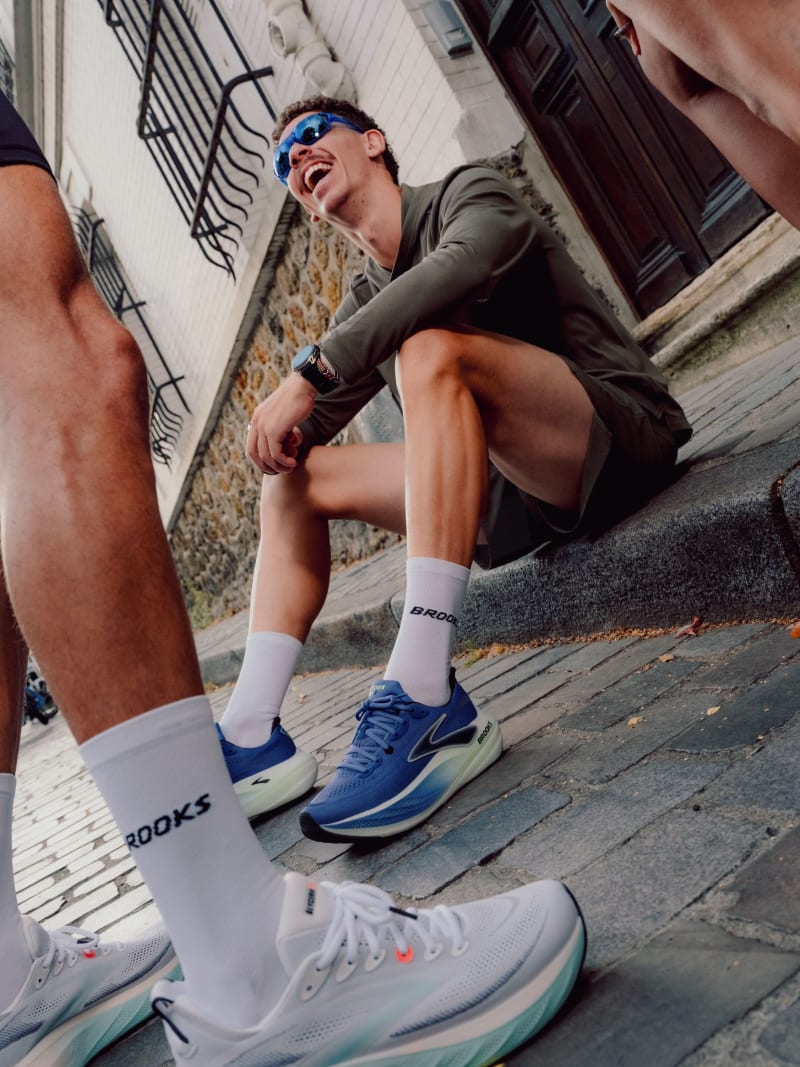
The Glycerin Max 3 therefore sits right at the top for comfort. In a typical rotation, it pairs very well with a Hyperion Max 4 for quality days, with the Ghost or Glycerin handling the rest of the week.
 © Brooks
Against the competition
On paper, the Glycerin Max 3 clearly sits at the high end for stack height, though not at the very top. The Nike Vomero Premium stands apart in the category: 55 mm at the heel, two Air Zoom units buried in ZoomX, a 10 mm drop. It's the tallest, bulkiest, heaviest and most expensive of the bunch, with a very pronounced bounce but a stability that takes some getting used to. A shoe particularly loved by American runners Conner Mantz and Charles Hicks. The Brooks plays a different card, with a lower drop and a more settled feel.
The most direct rival is probably the Puma MagMax Nitro 2. Nearly identical stack heights (46/38 mm), a foam known for its bounce, a lighter weight and €10 less. On paper, the Puma wins on lightness and pep, while the Brooks wins on comfort and rocker, which guides the stride more.
The Mizuno Neo Vista 3 isn't exactly in the same lane. With its Wave plate and Enerzy NXT foam, it's more of a maximalist super trainer, lighter and livelier, happy to pick up the pace. If you're looking for one pair for long runs with a few accelerations, it's a serious option to consider.
Model | Price | Stack height heel / forefoot | Drop | Weight | Foam |
Brooks Glycerin Max 3 | €200 | 45 / 39 mm | 6 mm | 303 g | DNA Rise Tuned |
Puma MagMax Nitro 2 | €190 | 46 / 38 mm | 8 mm | 275 g | Nitrofoam |
Nike Vomero Premium | €229.99 | 55 / 45 mm | 10 mm | 351 g | ZoomX + 2 Air Zoom units |
Mizuno Neo Vista 3 | €180 | 44.5 / 36.5 mm | 8 mm | 266 g | Enerzy NXT |
Hoka Bondi 9 | €180 | 43 / 38 mm | 5 mm | 297 g | Supercritical foam |
ASICS Gel-Nimbus 29 | €200 | 43.5 / 35.5 mm | 8 mm | 277 g | FF Luxe Plus + PureGEL |
Finally, when it comes to comfort and cushioning, you can't skip two historic names in this segment. The Hoka Bondi 9 and ASICS Gel-Nimbus 29 come to mind. The Bondi is hugely popular with people looking for an ultra-comfortable shoe to walk (and run) for hours, but its responsiveness is limited next to other models in the segment. The new Nimbus 29, out December 1, is highly anticipated because it moves to a plusher new foam (FF Luxe Plus). So the Glycerin Max 3 is neither the tallest, nor the lightest, nor the bounciest. So why pick it? Maybe its real strength is the ideal balance of XXL cushioning, remarkable comfort, a lively rocker and solid stability. Not easy to pack all those ingredients into one shoe... And yet Brooks seems to have pulled it off here.
 © Brooks
With the Glycerin Max 3, Brooks delivers a maximalist shoe that pulls off the mix of responsiveness, comfort and stability. Thanks in particular to a new foam that is softer and lighter, a weight back in line with the first version, and a reworked fit. The American brand returns to the fundamentals that made the franchise successful, without trying to reinvent the recipe, and that's probably the smartest move. On paper, this Glycerin Max 3 has everything it takes to become one of the best pairs for eating up the miles of a marathon build-up. In an era where cushioning rules, we have few doubts about its success, and this pair will surely be on the feet of many runners during their next winter training block.