Cross-training, the new recipe for successful runners
To become a good runner, alternating running with other sports such as swimming or cycling can be key. Marathons has looked into this balance, more commonly known as “cross-training,” which both professional and amateur athletes have been increasingly turning to in recent times.
✓ Analysis with testimonials from Alessia Zarbo, French record holder in the 10 km and half marathon, triathlete Lisa Lecompte, fourth in the Junior World Championships, and athletics coach and sports coach Thibault Weigel.
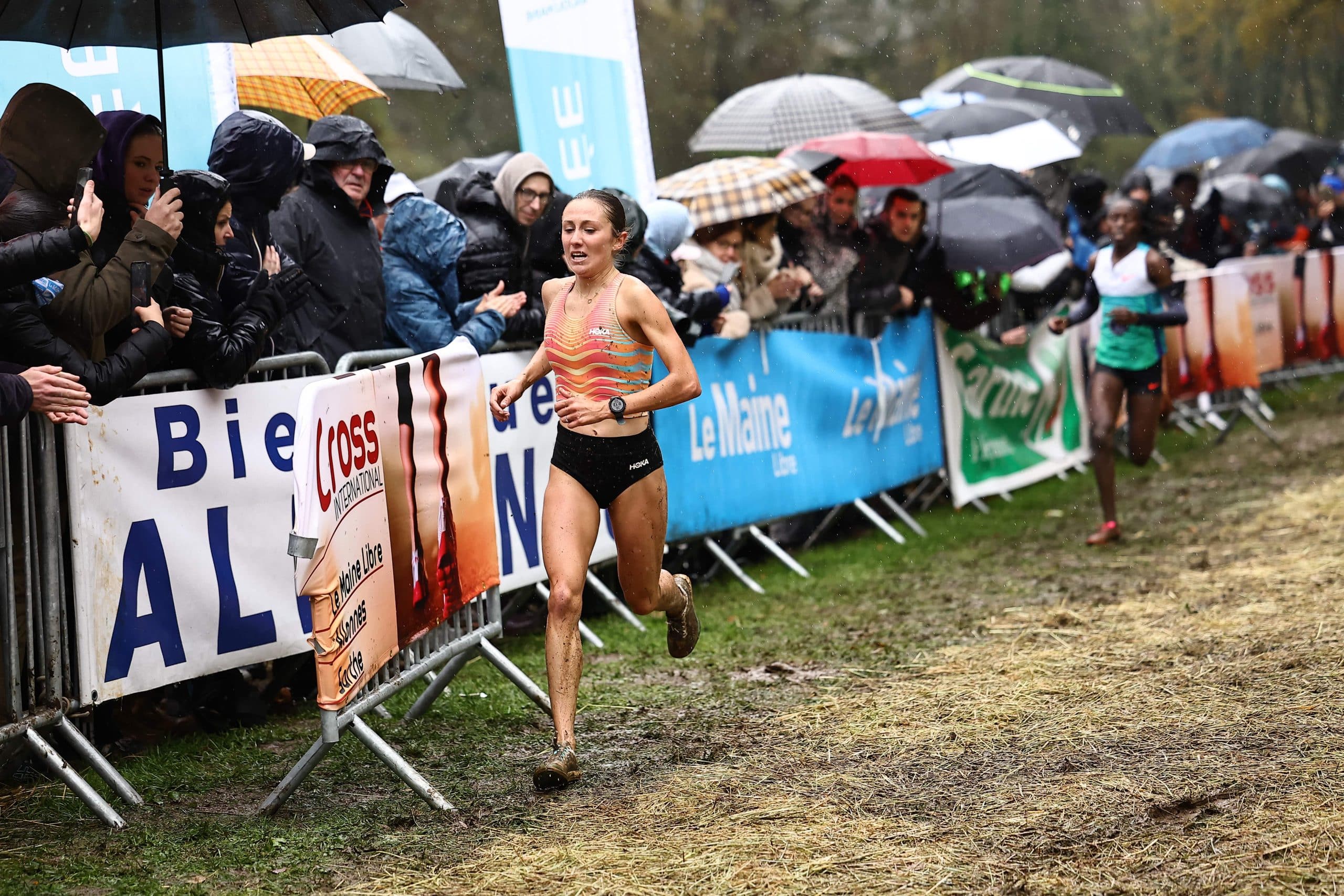
It’s a habit worth getting into: squeezing in a bike ride or swim during the day, rather than doing two running sessions to “build up mileage” with a jog and a workout. French half-marathon champion Alessia Zarbo understands this well. Cycling and swimming have always been part of her life, but today she racks up the miles in a variety of ways, without ever feeling the strain of training. “Unlike in the United States, or at INSEP last year, I always travel by bike, even to go to my physical therapist, who is 30 miles from my home. The same goes for visiting my grandmother, who is also two hours away by bike,” says the Antibes native, whose lifestyle allows for this pace.
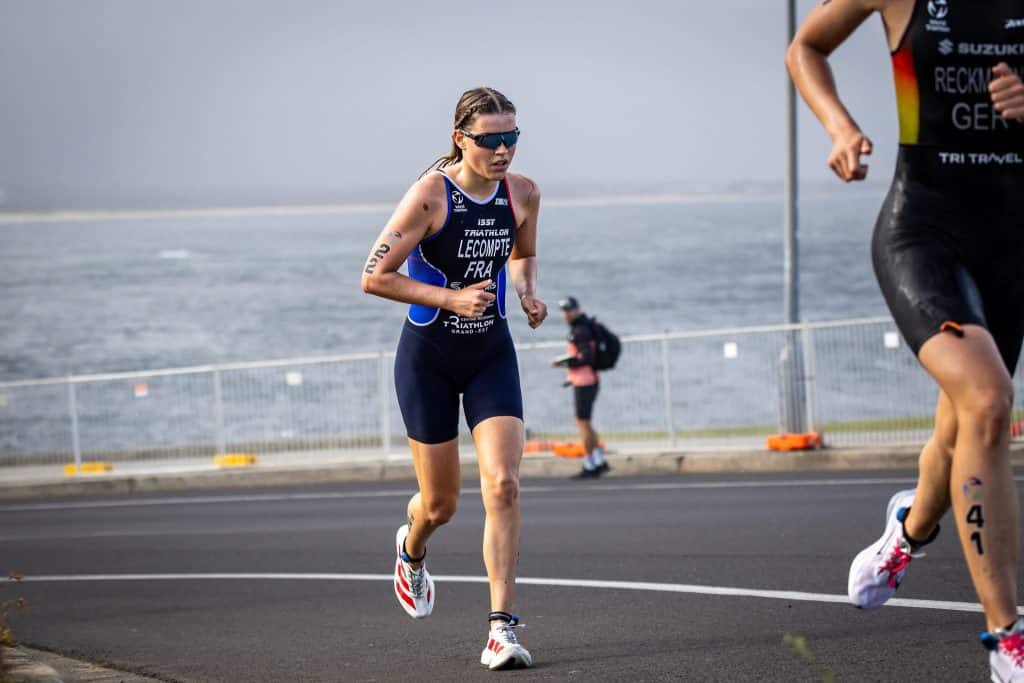
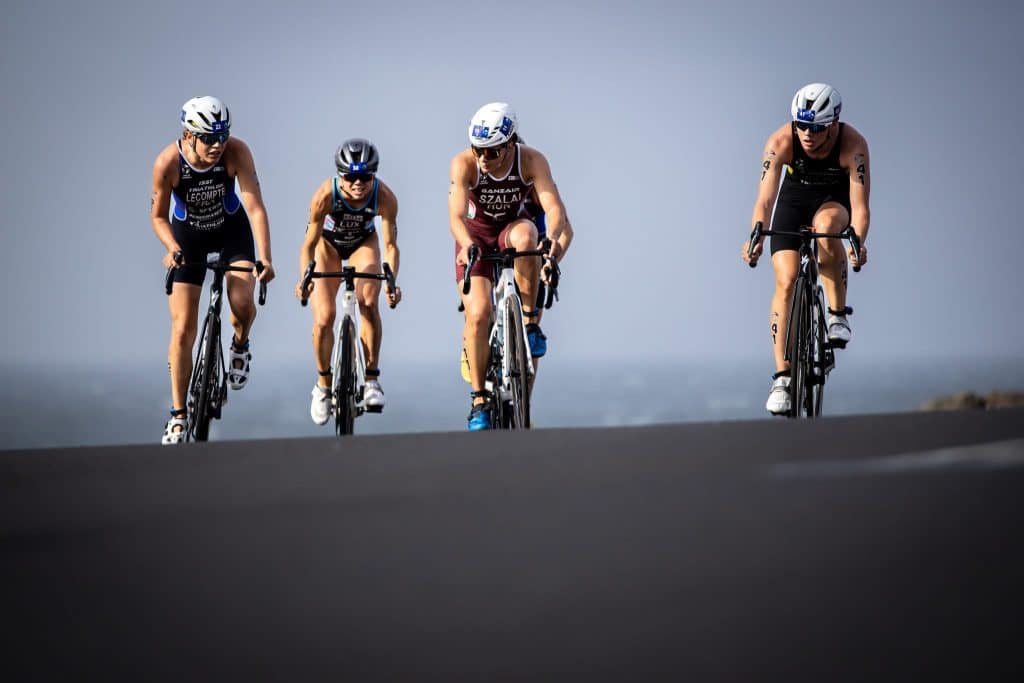
Young triathlete Lisa Lecompte, who came fourth in the Junior World Championships, shares this lifestyle. Her sport, which ultimately combines three sports in one, pushes her to never take a break. “You feel like you’re falling behind,” she says. The advantage of cross-training, and in her case her versatile sport, is that it fits in everywhere, even on vacation. “It’s so natural, it’s like eating and sleeping,” she tries to explain, her mother nodding in agreement at her side. “There’s always time for a quick jog to explore the surroundings, and at the beach, my brother and I always swim a few laps before playing.”
| Protecting your body from potential injuries… or repairing it
Running is not dangerous if you listen to your body. Dr. Schmitt argues that running can prevent certain injuries and even aid recovery. “Before, we used to say you had to stop. Now we say you have to do it. Some rheumatologists may recommend running because the body adapts to micro-shocks. It also slows down the onset of osteoarthritis. Thomas Pesquet, in zero gravity, doesn’t put his feet down and doesn’t experience any vibrations. That’s where osteoporosis comes in,” he explains. However, cross-training remains an excellent alternative to avoid overuse injuries related to excessive running or to continue training during a period of inactivity. Thibault Weigel, a coach and advocate of this method, confirms: “It helps limit certain impact-related stresses.” And you can continue training, even if you’re injured. The Issy Triathlon representative emphasizes that “swimming and cycling provide enough training to stay in shape and continue to progress.”
The record holder for the 10 km and half marathon, Alessia Zarbo, who has been walking a tightrope since March without seeing any old physical problems resurface, puts less strain on her body by combining running with cycling and swimming, which limits the impact on fragile areas. “If there are two sports I’ve never stopped doing in my life, it’s swimming and cycling!” she exclaims. Running was reintroduced into her training after her injuries. “I never really thought about it any other way because I’ve been injured so much in the past that I’ve tended to do other sports.” In the United States, during her long periods without being able to run, she would do aqua jogging in the morning with her father on FaceTime, cycling at noon, swimming in the evening… She still follows this routine today, which allows her to continue running without traumatizing her body.
| Recover better
Letting your body rest is an integral part of the life of a top-level athlete—it’s almost 50% of the job. Lisa Lecompte, French D1 vice-champion with Issy Triathlon, takes this essential phase very seriously, as it takes up almost half of her day. “I lie in bed and talk on the phone. You’re so exhausted that you can’t study or do anything else, it’s impossible,” she smiles.
However, cross-training can offer better recovery than complete rest. “You maintain a high blood flow, which allows you to eliminate muscle waste more quickly and bring more nutrients to the muscles. Studies show that active recovery is one of the best ways to recover, right after sleep,” explains coach Weigel. Alessia Zarbo confirms: “I’ve noticed that going for a relaxed swim, even for a long time, is often more beneficial than complete rest for recovery. Typically, I was in Marbella two weeks ago. I had done a 25 km tempo run in the morning. I know that when I’m tired, I need to go swimming because it really energizes me and makes me feel good. There was a 25-meter pool at the hotel, which was a luxury. I went swimming, and since I felt good, I swam for 1 hour and 40 minutes instead of 30 minutes.
Swimming activates the upper body, stimulates the aerobic system through hypoxia, and improves venous return thanks to the lying position… It’s the perfect combination for recovering the week after a marathon or trail run, when the motor system has been put under severe strain. However, Thibault Weigel, a specialist in this method, adds a note of caution: “To avoid hindering your running, you need to maintain a good balance between training load and recovery. If adding a session causes too much fatigue, it’s better to take a proper rest.”
| Engage other muscles
The combination of running, cycling, and swimming is ideal for those who hate weight training, where you lock yourself in a gym to lift weights, do push-ups, pull-ups, bench presses, or strengthen your lower body with jumps, squats, and lunges. In short, everything that any coach recommends to improve your performance and gain strength.
“I don’t do much real weight training, where I go to the gym for an hour and a half. Instead, I do muscle strengthening to prevent injuries. Every day, I do 30 to 45 minutes of activation or core training. Over the week, that still amounts to 3-4 hours of strength training,” says Alessia Zarbo. I don’t work my upper body, but I swim a lot, with paddles, on my back with both arms, which opens up the rib cage, and lots of core exercises that strengthen my core. When cycling, I adjust my saddle height depending on whether I want to work my quadriceps or hamstrings more.” All these adjustments allow you to work different muscle chains, activate other muscle groups, vary your heart and breathing rates… and simply stimulate your body in different ways.
« If we can’t do quality, we’ll do quantity; that’ll do the trick. »
Alessia Zarbo, French record holder in the 10 km and half marathon
| Vary your pleasures and explore other disciplines
Isn’t variety one of the main motivations for investing in a bike or swimming equipment? Rather than sticking to one specific activity all season long, you can explore new horizons while maintaining mental freshness and constant motivation.
Using your bike as a means of transportation kills two birds with one stone. The French 10 km record holder has found her own way to contribute to French athletics: maintaining a “fresh mind” thanks to a balance that suits her perfectly. “I just let my friend who lives in Monaco, two hours away from my home by bike, know that I’m coming over for lunch. I arrive at 1 p.m., eat, leave, get home at 4 p.m., and can go for a run at 5 p.m. I feel like I’ve had a really fun day, between four hours of cycling and a jog. Which is still a good day of training aerobically speaking. And on top of that, I had time to see my friends.” If one day the “double threshold” suggested by the coach, two sessions of sustained effort just below and around the anaerobic threshold, seems too heavy or unsuitable for your physical or mental condition, replacing one of the two sessions with a bike ride may be more than enough, thus protecting both your body and mind from possible burnout.
| Become more efficient by doing high-quality running sessions
Middle-distance runners Aude Clavier and Agathe Guillemot, who recently trained at Font-Romeu, didn’t just stick to jogging and running sessions. Sometimes, a bike ride gave them the fresh air and energy they needed to get back to honing their skills on the track. As both were just getting back into training, the idea was to build up their volume without burning out right from the start.
Aude’s new coach was taking it easy on her, giving her only light workouts, but in search of a little more intensity, the 2025 French half-marathon champion turned to her friend Alessia, whose advice she followed. “I told her, ‘For now, do your sessions at full throttle and build up your mileage on the side. It’s better to do less jogging but run with quality and speed, and build up your mileage in other ways.” Alessia’s mantra, shared by many, is simple: “If you can’t do quality, do volume, that will do the trick.” And clearly, it works. Her recent performances didn’t come out of nowhere. “It’s this combination that has allowed me to put the pieces of the puzzle together and reach this level.”
In concrete terms, the benefits are mainly physiological. “You can improve your cardiovascular system by staying in the aerobic zone for longer, and VO2 max remains a key factor in running performance,” explains the coach. Cycling and swimming are two sports that allow you to work on endurance and build volume without the sometimes traumatic impacts of running. “I don’t do double thresholds. My running sessions are fast and often long, and cross-training allows me to add extra volume to the day, in addition to quality,” explains Alessia. I couldn’t run 20 km fast in the morning and then do another 15 km in the evening. If I’ve had a big running session in the morning, I do home trainer or cycling in the afternoon, sometimes for an hour, up to two and a half hours. My ‘aerobic days’ often consist of an hour of jogging and two hours of cycling.”
After a weekend climbing mountain passes in the Alps, Thibault Weigel noticed that his performance over 5 km on the road had improved significantly despite a low volume of running. He had developed his cardiovascular capacity on the bike, and this had directly translated into his running time. “I was pleasantly surprised by the result,” he concludes. Alessia Zarbo recalls a similar experience, where for four days she wanted to take a break from running and didn’t run at all. “I did 6-7 hour bike rides and, in the end, it unblocked me aerobically. After that, all my thresholds increased. I did the equivalent of 200 kilometers of running over four days, which is huge. Except you do it in a different way.” Swimming also has surprising effects: “In the weeks when I was swimming a lot, I felt that I had gained a lot of mobility. Moving in the water drains and accelerates blood circulation, which promotes recovery.” It all comes full circle: better recovery ultimately means better performance.
Ultimately, cross-training is not a miracle solution, but a great tool for preserving the body, varying pleasures, and optimizing performance. Well thought out and intelligently integrated into training, it allows you to combine volume and quality while promoting effective recovery. Even if it requires organization and adaptation depending on where you live, it’s worth the effort for those who want to progress without burning out.

Sabine LOEB
Journaliste
 21/02/2026
 21/02/2026
 21/02/2026