Wheelchair marathon: two men, one quest
In the 1970s-80s, there was no room for athletes in wheelchairs in races. The era wasn’t yet focused on the inclusion we aspire to today. However, two men made their mark by following their hearts. Bob Hall and Claude Issorat paved the way by participating in a wheelchair marathon…
| Bob Hall makes history in Boston
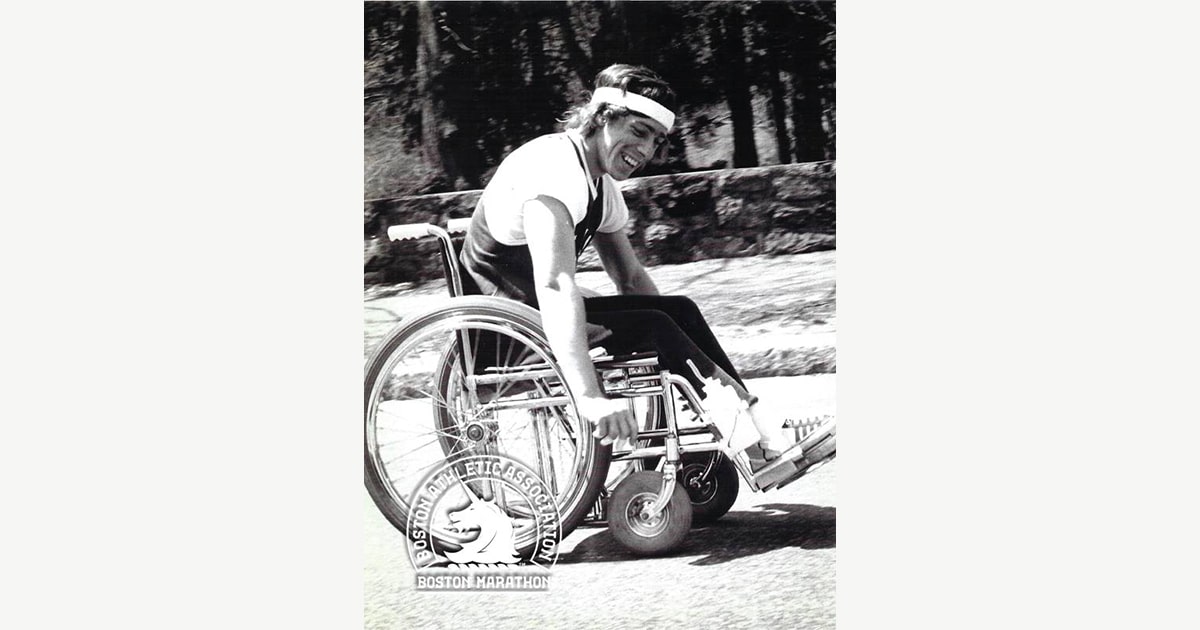
Boston, April 1975. The crowd is gathered to cheer the thousands of runners ready to take on the 42.195 km of the legendary marathon. That day, the spectators were in for a surprise. Among the participants was a man in a wheelchair, determined to show that racing wasn’t exclusive to able-bodied individuals. His name? Bob Hall, now a legend in the sport. Born in 1951, Bob was already known in adaptive sports, but Boston was another story. At the time, marathon organizers were skeptical, mirroring the society around them. A wheelchair on the course? Unthinkable. Yet Bob insisted, promising to finish the race in under three hours.
On race day, under a spring sky, Bob set off. His self-designed wheelchair was far from today’s high-performance models. It was sturdy, almost rudimentary, but Bob mastered every inch of it. Captivated by his courage, determination, and smile, spectators cheered him on with every wheel turn. The Newton hills, feared by all marathoners, didn’t stop him. At the finish line, he crossed in 2 hours and 58 minutes, becoming the first wheelchair athlete to officially complete the Boston Marathon. He was 24 at the time, paving the way for the recognition of wheelchair marathoners. In 1977, he broke his record (2h40) and inspired a separate start for disabled athletes, a tradition still in place. In 1978, he founded Hall’s Wheels, creating lighter, high-performance custom wheelchairs, revolutionizing the sport. His legacy endures today, inspiring disabled athletes worldwide. His wheelchairs have become iconic, with one designed by Bob Hall in 1986 featured at the MoMA, the renowned modern art museum in New York. A symbol of significance.
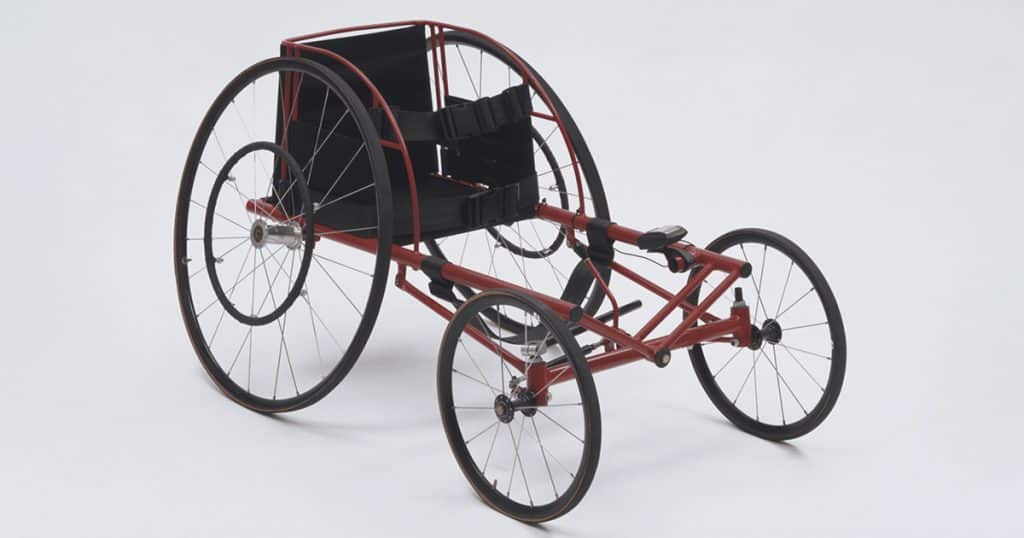
The achievement of Bob Hall wasn’t just a personal victory. It was a strong message to the world of sports: athletes with disabilities deserve their place at the starting line. Thanks to Bob, marathons began including wheelchair categories, paving the way for legends like Jean Driscoll and Tatyana McFadden. He didn’t stop at Boston; with his engineering background, he revolutionized racing wheelchair design, offering athletes lighter, faster, more maneuverable equipment. Bob Hall remains a respected icon in adaptive sports, a pioneer whose legacy continues to inspire.
| Claude Issorat challenges Paris
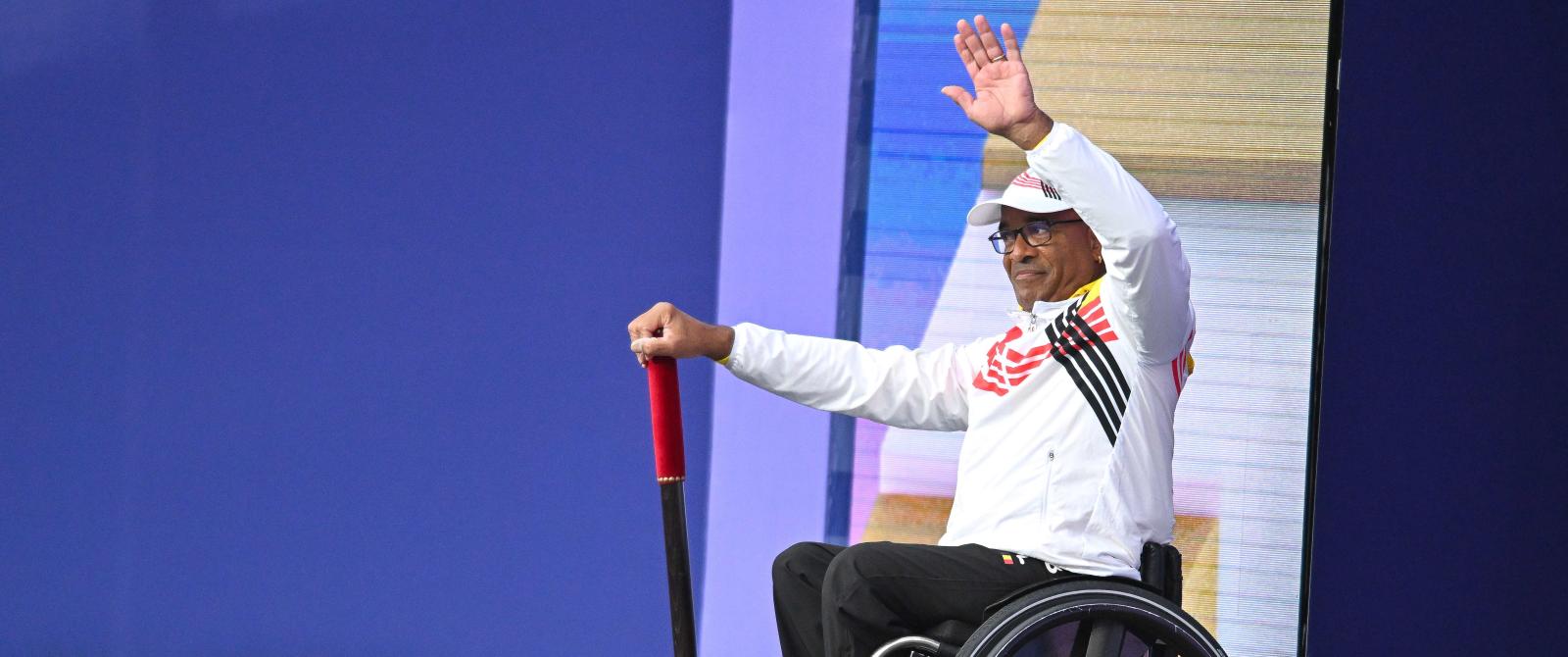
A few years later, in the early 1980s in France, another man was preparing his own revolution. Claude Issorat (cover photo), paralyzed from a motorcycle accident at 19, dreamed of breaking the constraints imposed on him. In 1981, he set a challenge for himself: finish the Paris Marathon in a wheelchair. Launched in 1976, the race was still young. Claude had to convince the organizers to accept him. The native of Pointe-à-Pitre, France managed to get the officials’ authorization, and on race day, he set off with the other runners. His specially designed wheelchair was far from today’s models. But Claude, who would become a significant figure in French sports in the 1990s (gold medalist at the 1992 Barcelona Summer Paralympics, gold medalist at the 1996 Atlanta Summer Paralympics…), had an extraordinary strength of character.
Kilometer after kilometer, he pressed on, determined to reach the finish line. The streets of Paris, sometimes cobbled and often uphill, didn’t stop him. At the finish, he crossed in 3 hours and 10 minutes, becoming the first French wheelchair athlete to complete a marathon. This achievement marked a turning point for adaptive sports in France. Claude Issorat became a symbol of courage and perseverance, proving that disability isn’t an obstacle to athletic performance. His success paved the way for other French athletes.
Like Bob Hall, Claude didn’t just participate in a marathon. He also advocated for greater inclusion of disabled athletes in sports competitions. But not only that: retired from sports since 2004 and now employed by a major French company, he is also a prominent voice for greater inclusion of disability in the workplace. In an interview with Brut last September, Claude Issorat expressed his desire to transform society: “we can always do better. It’s like in sports. We don’t stop after we win. If we continue, it’s always to improve, improve, improve.” Respect.
Thanks to him, the Paris Marathon gradually integrated wheelchair categories, becoming one of the most inclusive races in the world. Claude Issorat remains a figure who turned his disability into strength and motivation. His 1981 achievement is still celebrated as a key moment in the history of adaptive sports in France. He continues to share his passion as a coach. In 2024, at the Paris Games, he will accompany the Belgian delegation as a coach for the paralympic athlete Maxime Carabin, a leading figure in his sport.
Two great sports personalities who inspire and command respect…
 28/02/2026
 27/02/2026
 21/02/2026