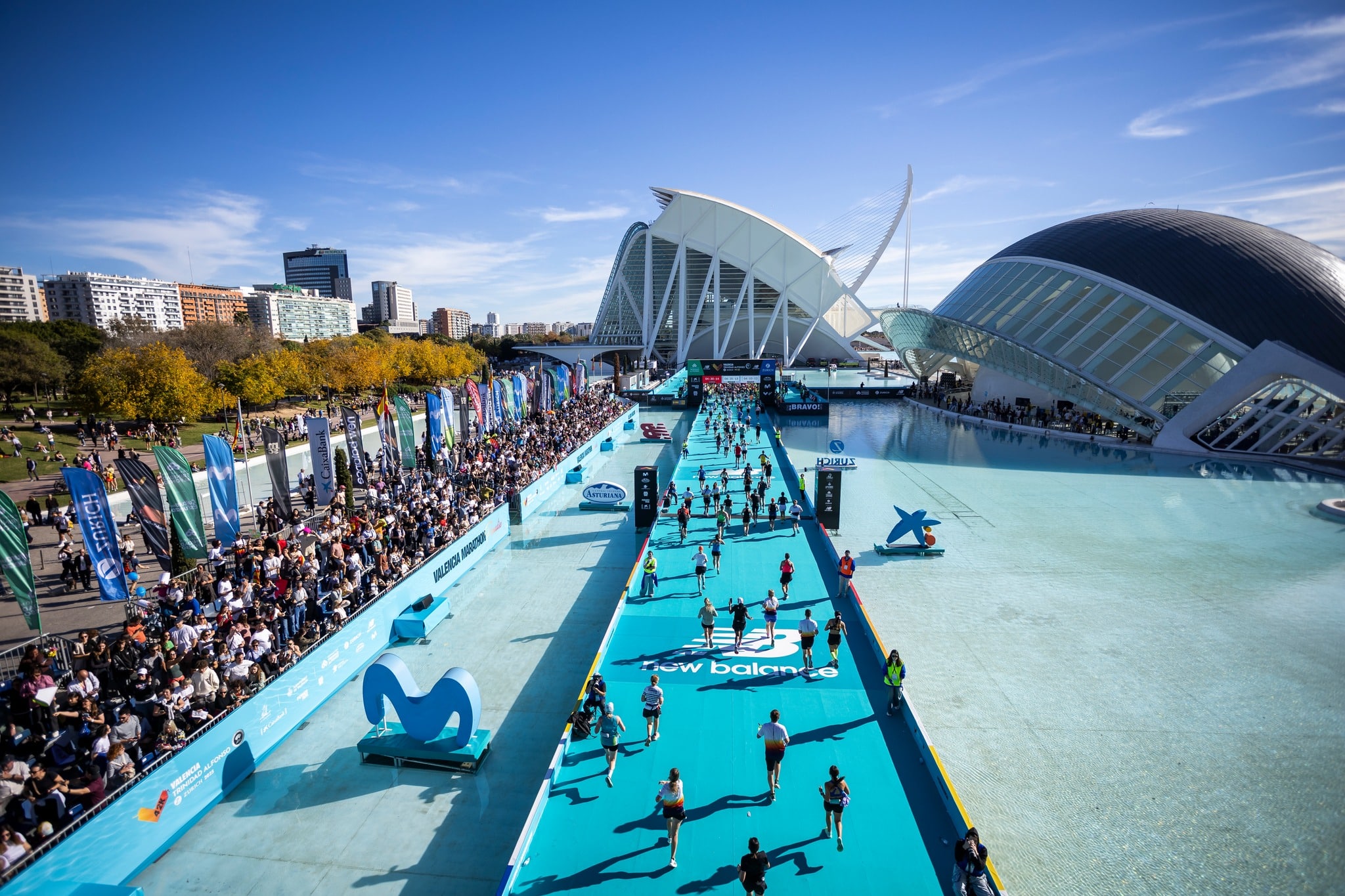
 © Valencia Marathon
Winter marathons are booming: trend or true shift in the running calendar?
Cold weather has never been this appealing. For decades, the marathon calendar felt set in stone—now winter is emerging as a key window, blending fast times, dream destinations, and sold-out races. Behind this rise, one question lingers: a passing trend, or a true shift in how the marathon is run today?
Once limited to exotic destinations or bold bets, the winter marathon has changed status. From Valencia to Osaka, Marrakech to Houston, bibs now sell out as temperatures drop. Ideal conditions, smarter scheduling, and a growing appetite for both performance and travel—behind the surge in winter marathons, a deeper trend is taking shape. A well-timed fad, or a genuine transformation of the global running calendar?
Not long ago, the marathon season followed a predictable rhythm: spring for records, fall for confirmation, and winter left to the die-hards or far-flung races. That era seems to be over. In recent years, the landscape has shifted—fast.
Julien Devanne, a former French elite marathoner turned coach, has seen the change firsthand: “If you follow running even a little, you can see winter marathons are booming. From December to March, it’s become a real season.” For him, this shift is no coincidence.
| Winter becomes the new playground of global marathoning
The winter marathon map is now impressively dense. It stretches from the Valencia Marathon to the Osaka Marathon, from Houston to Marrakech, from Xiamen to Luxor. Historic races like Fukuoka and Beppu-Oita now sit alongside ambitious events across the Gulf and Asia.
A few names capture the shift:
➜ Valencia, Seville, Naples, Athens, Florence, Istanbul, San Sebastián, La Rochelle
➜ Marrakech, Louxor
➜ Houston, Osaka, Fukuoka, Nagoya, Beppu-Oita, Shonan, Kumamoto
➜ Doha, Dubai, Abu Dhabi
➜ Hong Kong, Xiamen, Taipei, Incheon, Daegu
➜ Mumbai, Jaipur, Tata Mumbai Marathon
This global spread is no accident.
| The Valencia effect and the search for perfect conditions
If one race symbolizes the shift, many point to Valencia. Over the past decade, the Spanish race has consistently delivered elite performances, records, and deep international fields—giving massive credibility to a marathon held in early December. “I don’t know if it’s partly due to Valencia’s rise,” says Devanne, whose personal best of 2:14:55 was set there. “But if Valencia hadn’t achieved what it has over the past five years, many runners might have stuck to the traditional Berlin window in September or October. Results heavily influence the calendar.”
As a coach, he’s seen how certain races have redefined expectations: “Before these winter marathons really emerged, in France for example, late-season options were limited—mainly La Rochelle. And racing there could be a gamble: wind, rain, unpredictable weather. People went for the atmosphere. But now, with Valencia or Seville, everything has changed.”
« Psychologically, runners now realize marathons can be run year-round. And when you know places like Valencia offer sunshine and stable conditions, it changes your perspective »
Julien Devanne, former French marathoner
Weather is often the main driver behind the trend. Running a marathon in temperatures between 10 and 15°C (50–59°F) remains the ideal setup for performance, and those conditions tend to be more consistent in winter across several parts of the world. Southern Spain, the Mediterranean coast, Japan, and the southern United States all offer near tailor-made climates for covering the 42.195 km distance. The Angers-born runner backs up this very pragmatic view: “Psychologically, people have started to realize that marathons can actually be run year-round. And when you know that places like Valencia offer sunshine and stable conditions, it changes the way you look at it.”
| A more logical training calendar
Another key factor: preparation.
Training for a February or March marathon means building your base in the fall—a period often better suited for higher mileage. “Personally, I’ve become a big fan of winter marathons,” Devanne admits. “Preparing for a September race in the middle of summer is tough—especially if you have family commitments or want to enjoy the break. Winter prep is usually easier to manage.”
It also helps structure the year differently: “If you run a winter marathon, your season becomes more balanced. You can then focus on 10Ks in spring, enjoy more relaxed races in summer, and start a new cycle afterward.”
Demand is reinforcing the trend. Some races sell out in minutes. “These days, bibs are gone in 30 minutes—sometimes within a few hours at best,” notes the 2019 French marathon champion. “So runners jump on whatever race is available. If there were only spring and fall windows, it would be tough for European marathoners.”
| The winter marathon as an experience
Finally, there’s a cultural shift. The marathon is no longer just a race—it’s an experience. Running Seville in February, Marrakech in January, or Osaka in winter blends performance with travel. Tourism boards and race organizers have embraced this. Winter becomes a powerful selling point: a fast course paired with a few days of sunshine in the middle of Europe’s gray season.
Looking ahead, climate could accelerate the trend further. Rising temperatures are already making some summer and spring races harder to organize. At 37, Devanne acknowledges the shift: “With increasing temperatures, some summer races will have to adapt. Running in extreme heat isn’t ideal for performance—or for athletes’ health.”
Hard to call this a passing trend. Between record-breaking performances, favorable weather, smarter training cycles, and saturated traditional calendars, winter now has all the ingredients of a true marathon season. “For me, this isn’t a fad. It’s here to stay,” Devanne concludes. The marathon distance hasn’t changed. But its calendar? That’s clearly entering a new era.
➜ Check out the marathon calendar
Dorian VUILLET
Journalist
 27/03/2026
 28/02/2026
 27/02/2026