

How to keep training through the holidays without missing out
Summer usually means a proper reset: beach days, long lunches, and running shoes left in the closet. Makes sense after a full year of miles and race bibs. But if you’re not the type to go weeks without running, the real question is balance. Can you enjoy your summer break and still stay fit? Yes: you can back off without hitting stop. Here’s how to keep running over the summer while still enjoying good food and real downtime.

Holidays and running: are they really incompatible?
For a lot of runners, summer is synonymous with a break, and that’s completely normal: both body and mind need to breathe after a season paced by long runs and race days. Taking one or two full weeks totally off is even recommended. The issue is when that break becomes the default and stretches into a full month or two. Because your body is always adapting: without regular mechanical load, muscles and connective tissue lose some of their spring, and the September comeback can sting.
So the right move isn’t choosing between “everything” and “nothing.” Since running isn’t the priority, this is the time to adjust the training. For most runners (not elites), cutting your usual volume by 30 to 50% is more than enough to free up time for summer pleasures: the beach, restaurants, nights out, family time… At the same time, keeping a decent training load helps you hold onto the fitness and progress you built during the season.
Your summer training plan
No need for a complicated plan. Three runs a week is plenty to keep your engine ticking over through the summer. Just remember: this isn’t a performance-optimization block. It’s a phase where you accept easing off, and a perfect chance to run more by feel, without staring at your watch.
One easy run in Zone 2. Truly comfortable effort, slow pace. The goal isn’t speed, but keeping a regular cardiovascular and musculoskeletal stimulus without piling on fatigue.
One interval session on trails. Bright summer sun is the perfect excuse to ditch the track and asphalt for shaded trails and rolling forest terrain. A session that works well: 3 x (4 min at half-marathon pace, 2 min at 10K pace, 1 min at 5K pace), with 1 min easy jog between reps and 2 min between sets. More experienced runners can add an extra set over the weeks. Running on uneven ground changes everything: it’s less pounding than asphalt and it recruits stabilizing muscles you don’t hit as much on the road, where your stride is always identical.
One longer, steady run. Between 1:00 and 1:15, at a pace a bit quicker than your easy run but nowhere near interval intensity. For example: around 30 seconds per kilometer slower than marathon pace. Enough to maintain your aerobic system and the muscle-tendon stimulus without draining the batteries. And above all, in hot weather, avoid efforts that are too long and too demanding.
Important reminder: in summer heat, don’t force the pace and stay tuned in to how you feel. Avoid running between 10 a.m. and 5 p.m., hydrate regularly, and make sure you’re getting enough salt.
Holiday training week
Session 1 : 45-minute easy run (Zone 2)
Session 2 : Fartlek 3 x (4 min at half-marathon pace, 2 min at 10K pace, 1 min at 5K pace), with 1 min easy jog between reps and 2 min between sets
Session 3 : 1:00 to 1:15 steady aerobic run
Runner nutrition and protein: what the science actually says
Treating yourself in the summer is basically mandatory. And good food usually goes hand in hand with enjoyment. Here’s what we already know, and what sports science and the running industry have been repeating for years: carbs are a priority for endurance athletes, because they’re the main fuel store during exercise.
But what’s still widely underestimated among runners is protein intake. We tend to think protein = lifting = bulking, and that it’s mainly a topic for gyms and the bro crowd. Recent research tells a very different story for endurance sports. Protein matters for runners.
A 2024 meta-analysis (28 randomized trials, 373 athletes) looked at the real effect of protein supplementation on performance. Overall: no significant improvement. Simply eating more protein, on its own, won’t make you faster. But when the data is broken down by sport, the effect becomes statistically significant, especially in endurance disciplines, where muscle glycogen levels (a runner’s key energy store) also improved clearly in the protein group. The most interesting takeaway is the method: protocols combining protein AND carbs show a significant benefit for endurance performance, while high protein intake alone, without carbs, doesn’t produce the same effect.
The bottom line: protein isn’t a fad. For runners, the goal isn’t to max it out to gain muscle mass, but to pair it with carbohydrates to preserve glycogen and support long-duration efforts. A quiet role, but a crucial one, and it’s still not as highlighted as it should be.
Boost your protein intake with Barilla PROTEIN+
For runners, the new Barilla PROTEIN+ range fits right in: an easy way to increase protein intake without spending ages in the kitchen or sacrificing the simple pleasure of eating together, two non-negotiables on holiday.
With Barilla, we especially like the transparency and simplicity of the ingredient list. Here, the recipe comes down to just two ingredients: carefully selected durum wheat semolina and pea protein, for a 100% plant-based protein boost. Simple and effective. The bronze-die process gives it that signature rough texture that holds sauce better. So you still get the authentic Barilla taste, just with extra protein this time.
Barilla PROTEIN+
100% plant-based : suits most diets
20 g of protein per 100 g
€2.19 : recommended retail price
Available in three shapes: Spaghetti, Penne Rigate and Fusilli
For example, an 80 g portion (about 320 g cooked for 4 people) provides around 16 g of protein on its own, even before counting the rest of the ingredients. With the rest of the meal, it’s easy to reach at least 30 g of protein, or close to one-third of an endurance athlete’s needs (using a 75 kg athlete as a reference, with a target of 1.2 to 1.4 g/kg, i.e. 90 to 105 g, according to this study).
3 summer recipes: pleasure and performance on the same plate
PROTEIN+ Fusilli, Romanesco broccoli, turmeric and citrus.
Ingredients (serves 4)
320 g PROTEIN+ Fusilli
1 small Romanesco broccoli
2 g turmeric
1 orange (or another citrus fruit)
30 g pine nuts
20 ml extra-virgin olive oil
Marjoram, to taste
Salt and pepper, to taste
Method
1. Clean the Romanesco broccoli and cut it into small florets. Blanch in boiling water for about 10 minutes, then immediately plunge into ice water to preserve the color.
2. Drain, then blend with the olive oil, turmeric and a pinch of pepper until smooth and creamy.
3. Cook the PROTEIN+ Fusilli in salted water. Once al dente, drain and toss with the sauce.
4. Add a few marjoram leaves.
5. Plate up and finish with a little grated orange zest and lightly toasted pine nuts.
PROTEIN+ Spaghetti, datterini tomatoes, Taggiasca olives, basil-lemon oil.
Ingredients (serves 4)
320 g PROTEIN+ Spaghetti
500 g datterini tomatoes
30 ml extra-virgin olive oil
50 g Taggiasca olives
1 garlic clove
Chili, salt, to taste
For the basil-lemon oil:
30 g basil
20 ml extra-virgin olive oil
Zest of 1 lemon, finely grated
1 small espresso cup
Method
1. In a pan, gently sauté the minced garlic with olive oil and chili, without letting it brown too much. (If using fresh chili, slice it; if dried, crumble it.)
2. Turn up the heat and add the datterini tomatoes, halved. Adjust seasoning if needed, then cook over high heat for about 5 minutes, stirring occasionally.
3. Add the olives, halved. 4. Wash and blanch the basil for 1 minute in very salty water, then immediately plunge into ice water. Drain and squeeze out excess water, then blend with the olive oil and lemon zest.
5. Meanwhile, cook the PROTEIN+ Spaghetti in plenty of boiling salted water. Drain when al dente, then toss with the sauce.
6. Finish with a few drops of basil-lemon oil, and top with toasted almonds.
PROTEIN+ Penne Rigate, zucchini, robiola, saffron and chives.
Ingredients (serves 4)
320 g PROTEIN+ Penne Rigate
200 g Robiola cheese
2 zucchini
1 pinch of saffron
1 garlic clove
50 ml extra-virgin olive oil
Chives, to taste
Salt and pepper, to taste
Method
1. Wash the zucchini and cut into quarters.
2. Heat a pan with a drizzle of olive oil and sauté the zucchini until golden. Once cooked, add the robiola, let it melt gently, then stir in the saffron.
3. Cook the Barilla PROTEIN+ Penne Rigate in plenty of boiling salted water. Drain al dente, then toss with the creamy sauce.
4. Serve and finish with finely chopped chives.
Three quick, seasonal plates that have nothing to envy from ultra-sophisticated “healthy” dishes. Even if you’re not a natural in the kitchen, pairing performance and indulgence has never been easier.
There’s no secret. To keep performing, you have to keep training. But a racing season also includes phases where you dial it back. Summer is clearly one of them. The solution is simply to adapt. Rotating three well-thought-out sessions is a great way to stay in shape. And don’t forget nutrition, with a solid plate that brings the right carbs and protein. That’s how you hit September without starting from scratch. Barilla taste, extra protein. At Marathons, it’s tested and approved. The PROTEIN+ range will be with us all summer to stay fit and be ready to tackle the back-to-school challenges.
➜ Find all the details on the Barilla PROTEIN+ range on the official barilla.com.
More articles

What to Eat Before a Half Marathon: Your Guide to Starting Fully Fueled
What to eat before a half marathon, from the night-before meal to breakfast, plus the mistakes that can derail your race.
Tue, October 13, 2026
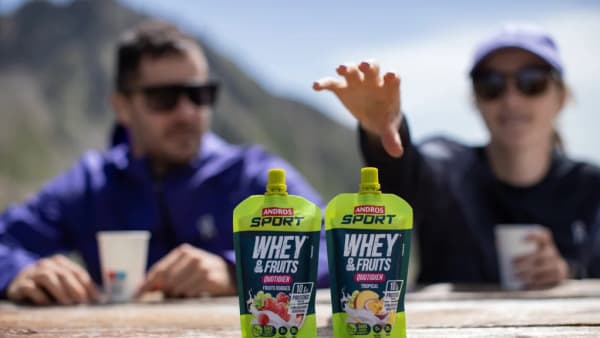
Andros Sport launches Whey & Fruits pouches, bringing protein into your everyday routine
Andros Sport unveils Whey & Fruits pouches with 10 g of fruit-based protein for post-run recovery, without the shaker.
Thu, September 10, 2026

New fall running goals? Jump into Barilla Protein+’s No Penne No Gain Challenge
Take on Barilla’s No Penne No Gain Challenge on Strava and kick off your running season with a smart build and more protein on the plate.
Sun, September 6, 2026