
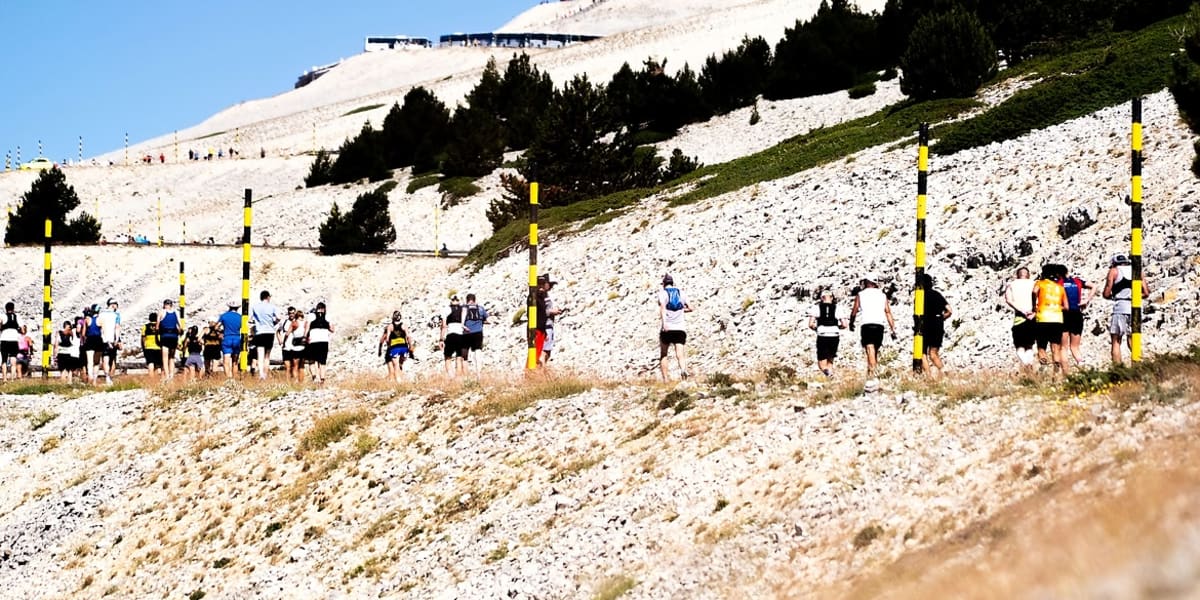
 © Semi-Marathon du Mont-Ventoux Kookabarra
The half marathon is running fast, but the marathon is hard to catch
1,800 bibs at most for 8,000 to 9,000 applicants at the foot of Mont Ventoux, an inaugural half in Avignon sold out in two hours, a world record smashed in August in Buenos Aires. The 21.0975 km is no longer a background act and is now sprinting behind its big brother. Catching it will be far harder than a matter of times or quotas. Organizers, coaches and numbers don't quite tell the same story.
At the foot of Mont Ventoux, Bertrand Delhomme has no shortage of requests. The Bédoin native relaunched the Semi du Ventoux after Covid, a race his predecessors had kept very local for years, and watched it explode within two or three years, to the point where it has become a classic whose reach far exceeds its field size. The aura of the “hardest half marathon in Europe” helps, with its “1,600 meters of elevation gain over 21 kilometers” that make even seasoned road runners wince. The result boils down to a simple tally. “We were at 1,700 bibs handed out, 1,800 at the very most, partners included, for a demand that I think was around 8,000 to 9,000 before registration opened,” he sums up.
In Avignon, where he co-founded a marathon with Christophe De Cecco, the same pattern played out on a rolling, touristy course looping through the city center. Half marathon registrations went in two hours, and the organizer is convinced that “we could have filled 5,000 to 6,000 places without any trouble”, if wanting to control the flow for a first edition hadn't slowed things down. Elsewhere, the phenomenon shows up on a much larger scale. The Semi de Boulogne-Billancourt drew 12,000 runners in November 2025, and Buenos Aires broke its participation record in August with more than 31,000 entrants, including around 6,000 foreigners.
Is it a bubble? Bertrand Delhomme dismisses the idea out of hand. Every race of any note fills up within a week, even the lower-profile ones sell out two months ahead, and entry caps rise every year without ever being enough. National figures back him up. The Finisher barometer from the FFA and Union Sport & Cycle counts 4.12 million results in 2025 across road, trail and cross-country, 40% more than in 2024 (2.95 million), for 13,320 races organized, 4,905 of them on the road, where participation is highest with 2.52 million finishers. Virgile Caillet, general delegate of Union Sport & Cycle, sees “reliable and unprecedented figures”, and the 2026 Running Observatory counts 13.2 million French people who ran in 2025. These data cover all running without isolating the half marathon, but they paint the dream playing field for it.
Runners under 35 now make up 41% of the pack, against 30% in 2015, and the share of women has gone from 28% to 37% in ten years. At ASO, Antoine Courbon, Head of Digital, noted that this rejuvenation was even reaching the Marathon de Paris. “Before Covid, the average age was 40 to 41, then 39 in 2023, and now it's 37,” he details, which is the average age you'd come across at a half marathon in 2022-2023. Over at Strava, Gen Z says it is “75% more likely than Generation X to cite a race or event as its main motivation to run”. Bibs, stories and tales of self-surpassing fit well with a distance that doesn't demand sacrificing everything. The training app Runna, acquired by Strava, tells the same story: 34% of its female users are preparing a half marathon versus 29% of men, while 12% of women and 20% of men are aiming for the marathon.
The ideal distance, but not the top step
Why such enthusiasm? The coaches at “Campus” talk about a “good compromise between effort intensity and endurance”, with a lower barrier to entry than the marathon. Bertrand Delhomme describes the same click among runners, whose reasoning fits in one sentence. “If I can run a 10-kilometer easy jog, I'll be able to finish a half marathon,” he imagines. Before, he says, “the half marathon scared people, not as much as the marathon, but it still scared them quite a bit.” Today, even “runners who think of themselves as beginners project themselves quite quickly onto a half marathon”, whereas ultras and marathons keep pushing limits and make the 20 kilometers feel a little ordinary.
He himself, who strings together ultras without yet having dared the marathon, illustrates the psychological gap. If someone offers him a half tomorrow, he's in, even with less preparation, but for 42 kilometers, “if I'm not prepared, I'm not going”. Julien Devanne, French half marathon champion in 2019 and marathon champion a few weeks later (2:14:55 personal best), now a coach, loves the distance too. He sees it as “the ideal distance from a physiological, mechanical and many other standpoints”, one that lets you “run a half marathon regularly, without too much fatigue, keeping consistent form all year round”.
Even a slower amateur, who signs up for two to two and a half hours of effort, stays within acceptable variables, whereas the marathon doesn't lend itself to a weekly rotation. Another asset is predictability. A runner targeting 4:30 for a marathon can't afford 30 kilometers in training without risking injury, whereas they can run two hours straight before a half and know from the start that they're capable of it. In his view, “any elite athlete, at the start of a marathon, is scared or unsure of their preparation”, whereas the half leaves “far fewer biases” to interfere with performance, between stomach, hydration, weather, wind and pacemakers.
A half marathon barely resonates with anyone
Yet Julien Devanne refuses to crow about victory, and his verdict explains why the queen distance will be so hard to catch. In his view, “it isn't on the top step of the podium. Roughly speaking, it finishes third”, behind the 10K in second and the marathon at the very top. The half is not a locomotive; it “follows the upward trend in marathon participation”. Runners start with a 10K, then slip a half into their marathon build-up, as training literature suggests. His on-the-ground assessment is just as blunt. “A half marathon barely resonates with anyone,” he observes, whereas the Monday-morning coffee machine crowd easily grasps what a marathon represents, even one finished walking.
The half is nonetheless a marathon cut in two, but the collective imagination doesn't do that math. The marathon keeps its mysteries too. Devanne calls it “the mirage”, those kilometers where everything seems easy, until three seconds per kilometer too fast tip the race over. The half, meanwhile, demands “total commitment from the first kilometer to the finish”, whereas the marathon is “a race of patience”. The organizer of the Semi du Ventoux, though crowned king of enthusiasm for the distance, doesn't back down either. “The mythical distance is still the marathon”, he says flatly, and convinced that “there is still an aura around the marathon that sits above the rest”. The numbers back him up, with “80,000 runners at the London Marathon”, 60,000 entrants in Paris, and very few half marathons able to draw crowds like that.
At the finish, “the emotions are multiplied tenfold” for first-time marathoners. The economic argument also weighs in, since runners “aren't afraid to travel far” for 42.195 km, hotels and restaurants included. In Avignon, the original plan was actually the marathon. The half was added because it is simpler to organize and draws volume, but the international visibility comes from the marathon. The organizer nonetheless warns against trivialization, because newcomers tell themselves 42 kilometers will be fine, and “you're taking risks”. His reading is also psychological. The more a distance scares people, the more it feeds the myth, and the half loses some of that aura as it becomes more democratic.
Rocket-fast times and a throne that refuses to budge
On the spectacle side, the 21.0975 km is not short on drama. Ugandan Jacob Kiplimo ran 57:20 in Lisbon in March, after an unratified 56:42 in Barcelona in 2025, before Ethiopian Yomif Kejelcha brought the mark down to 56:51 in Buenos Aires on August 23, becoming the first man under 57 minutes (record pending ratification). But the marathon hit back on its own turf. In April in London, Kenyan Sabastian Sawe ran 1:59:30, and that same Kejelcha, on his very first marathon, clocked 1:59:41, the second man in history under two hours. The sport's biggest barrier has just fallen over 42.195 km, and no half marathon record, however spectacular, makes the same noise.
On the French side, the Semi de Paris saw Kenyan Kennedy Kimutai win in 1:00:11, and the women's field is no slouch either. In Lisbon, Frenchwoman Mekdes Woldu equaled the French record of 1:08:20, which she now shares with Alessia Zarbo, in a race won by Ethiopian Tsigie Gebreselama in 1:04:48. This depth is also explained by training, since “every young runner I come across who is committed to performance does a minimum of 120 km, even 150 km a week”, insists Julien Devanne. A base that lets you chain distances without flinching, marathon included.
It's better to get into training for a half marathon or marathon than to stay on the couch and not move a muscle.
Dethroned or not? The marathon keeps its myth, its global visibility, its majors and its tourism economy, while the half has earned its independence and its own dreams. Demand is there, records fall, the fields are getting younger and more female, but the gap in imagination doesn't close with bibs sold out in two hours. Running in 2026 remains “very much about always wanting more”, which feeds the marathon as much as the half, and it even pushes its athletes to “step back down to the half marathon” to break the routine and work on other qualities.
Bertrand Delhomme would rather widen the frame. “We're lucky in France to have a half marathon or marathon calendar that is quite exceptional”, he points out, before concluding that “it's better to get into training for a half marathon or marathon than to stay home and not move”. The half marathon may not have toppled its big brother yet. It has mostly stopped asking for permission, and the marathon has yet to stop showing that it keeps the lead.

More articles
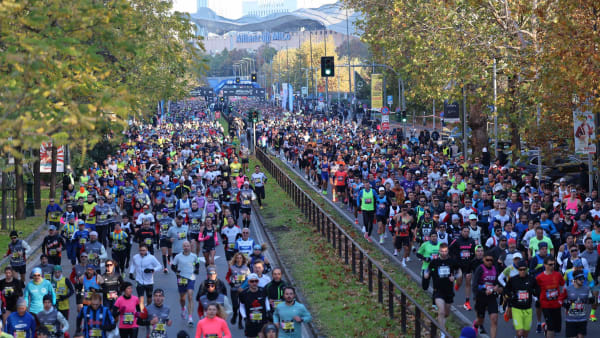
Four days out from the Powerade Milano Half Marathon, everything you need before the gun
Bib pickup, start times, course, weather, aid stations… Everything before the Powerade Milano Half Marathon on Sunday, November 22.
Thu, November 19, 2026

Monza Half Marathon 2026 set for Sunday, October 4: everything you need to know
Schedule, bib collection, access, timings and advice for getting ready for the 2026 Monza Half Marathon.
Thu, October 1, 2026
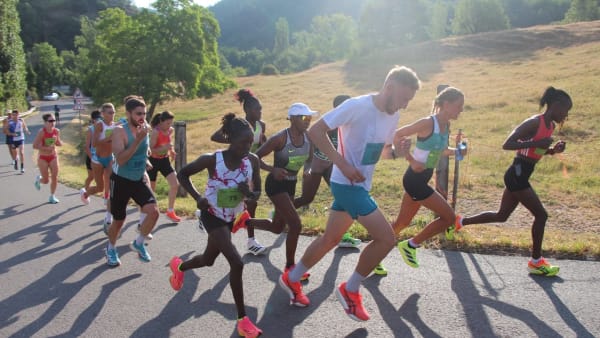
Marvejols-Mende delivers an exceptionally deep field for its 53rd edition
Nearly 2,200 runners took part in the 53rd Marvejols-Mende Half Marathon.
Thu, September 10, 2026
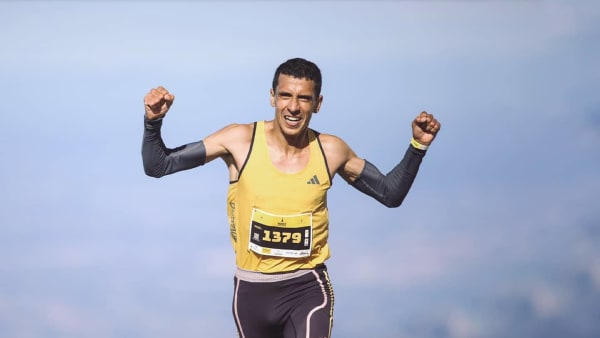
Mont Ventoux Half Marathon brings Chahdi, Roudolff-Levisse, Polin and 1,600 runners to the start line
Europe’s toughest half marathon features Chahdi, Roudolff-Levisse, Polin and 1,600 runners on the slopes of Mont Ventoux.
Wed, September 9, 2026