 © Victoria Negri
Interview with Victoria Negri, director of the upcoming film Ultra
Victoria Negri is eyeing a 2026 production start on the fiction feature Ultra, starring Shailene Woodley (Big Little Lies, The Descendants…). A long-distance runner herself, the American filmmaker spoke with great intimacy to marathons.com about this deeply personal project.
While flipping through the news, somewhere between film updates and running stories, we came across this discreet piece of information: preparation would begin in 2026 on a film titled Ultra, blending extreme endurance with psychological introspection. Intrigued, we dug a little deeper and quickly landed on Victoria Negri, director of several short films and of the feature Gold Star (2017, starring Robert Vaughn and Catherine Curtin), which was awarded at several independent film festivals. One detail stood out: the young New York–based filmmaker is also an accomplished runner, with several long-distance races to her name. When contacted, Victoria Negri was more than happy to talk about this upcoming film, whose synopsis appears below, and about her all-consuming passion for running. Radiant and thoughtful, she shared enough insights to make us impatient to see Ultra on the big screen. And good news: “The film should also be released in Europe…” The story will unfold within the otherworldly atmosphere of the Badwater 135, one of the most demanding races in the world. A deliberate choice by the director. We can’t wait.
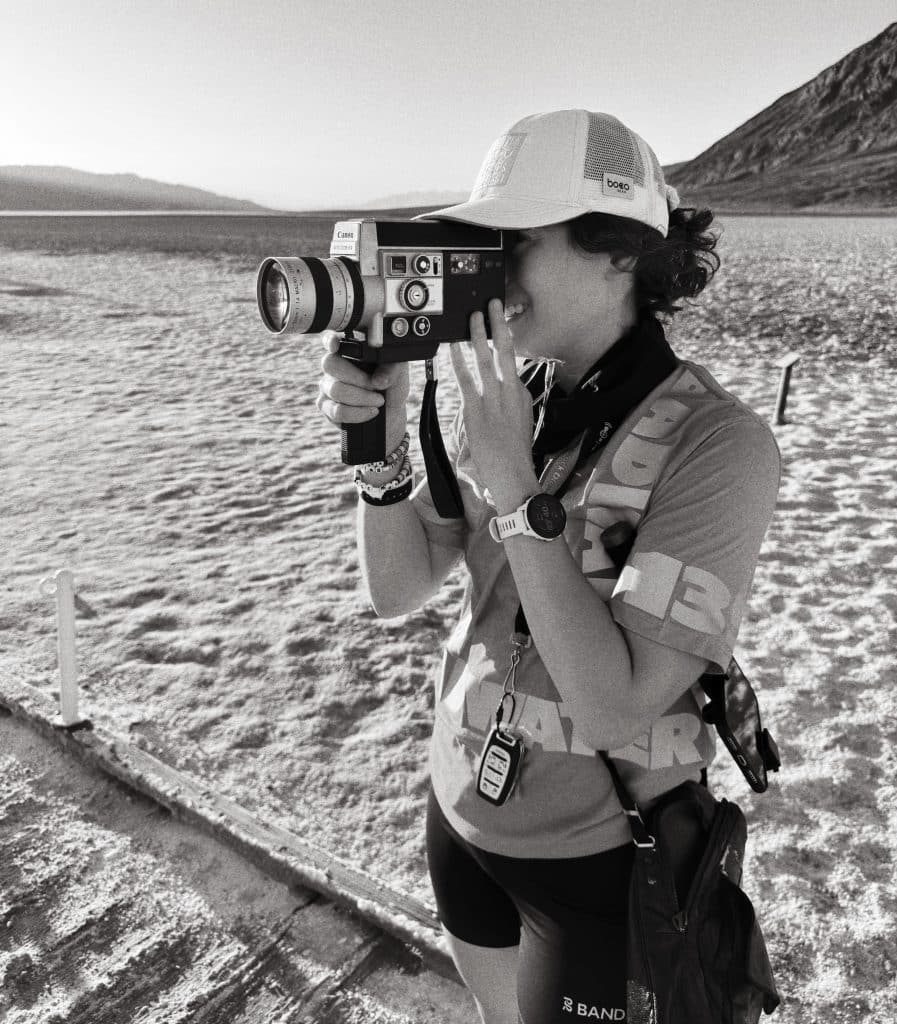
Synopsis du film Ultra
As Eve (Shailene Woodley) battles the relentless elements and the intense physical and psychological pressure of the race, she finds herself pursued by an unknown runner dressed in white, who steadily closes the gap between them as they cross the desert. As she tries to escape this threatening presence, Eve is forced to confront the darkest parts of herself and ultimately discover what she is truly made of.
| Victoria, when is filming on this promising project set to begin?
With the entire production and filming team, we’re hoping to film this year. Everything depends on finalizing several elements: development, financing, schedules… Making a film is incredibly difficult. It takes an army of people, and so many things have to align perfectly. The stars really do have to align. Since the race takes place in July in Death Valley, it would simply be far too hot—and dangerous—to film at that time, especially for the crew. Honestly, I think the runner herself (editor’s note: Shailene Woodley) could probably handle it, but the crew—people carrying cameras, working long hours in extreme heat—that’s where it becomes truly risky. I can count on the support of Badwater race director Chris Kostman. He’s been incredibly supportive from the very beginning.
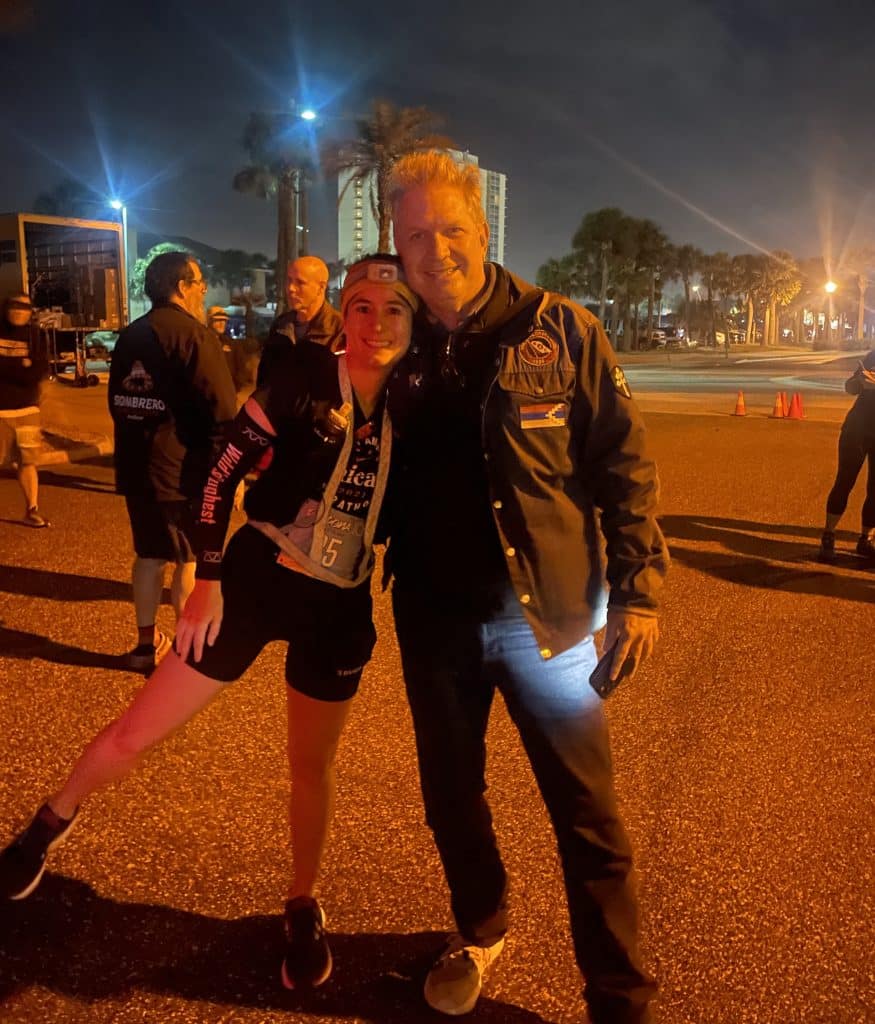
© Victoria Negri
You’ll never know how much inviting me to Badwater truly changed my life. I’m a better person because of ultras. Thank you forever.
Victoria Negri to Chris Kostman, on Instagram
| You’re an accomplished runner yourself. Can you tell us about running, which has always been a major passion for you?
I’ve been running recently in freezing cold conditions, and even then there are moments of beauty—seeing a hawk swoop right in front of me, catching the smell of fireplaces in the distance. You miss all of that if you don’t slow down and if you’re not fully present. Losing my father, who was himself a marathon runner, changed the way I see things. Life is short. Even though he lived to be 88, his passing deeply shook me. I really began running intensely during the last year of my father’s life, after he had a stroke. He had been a runner his entire life, and seeing him suddenly unable to move or do what he loved unlocked something in me. There was anger, grief, but also a kind of celebration—the realization that life is short and that I didn’t want to waste it. I was running for him, but also for myself. What if one day I can’t move anymore? I want to use my body while I still can. There were runs where I would just cry while running. Once, someone even pulled over and asked if I was okay. Running takes you into very deep emotional states. It gives you a sense of control, and then very quickly teaches you that you have none. You feel strong, confident in your pace, and then suddenly something happens and everything changes. Long-distance running reminded me that I am emotionally strong and capable of getting through difficult things—including losing my father. During my 100-mile race, I was running at three in the morning and I started talking to him. I felt him there with me. Running creates connections—with people, with the world. I feel incredibly lucky to have that. And I’ve always been drawn to challenges, especially big ones.
| How many ultras have you run?
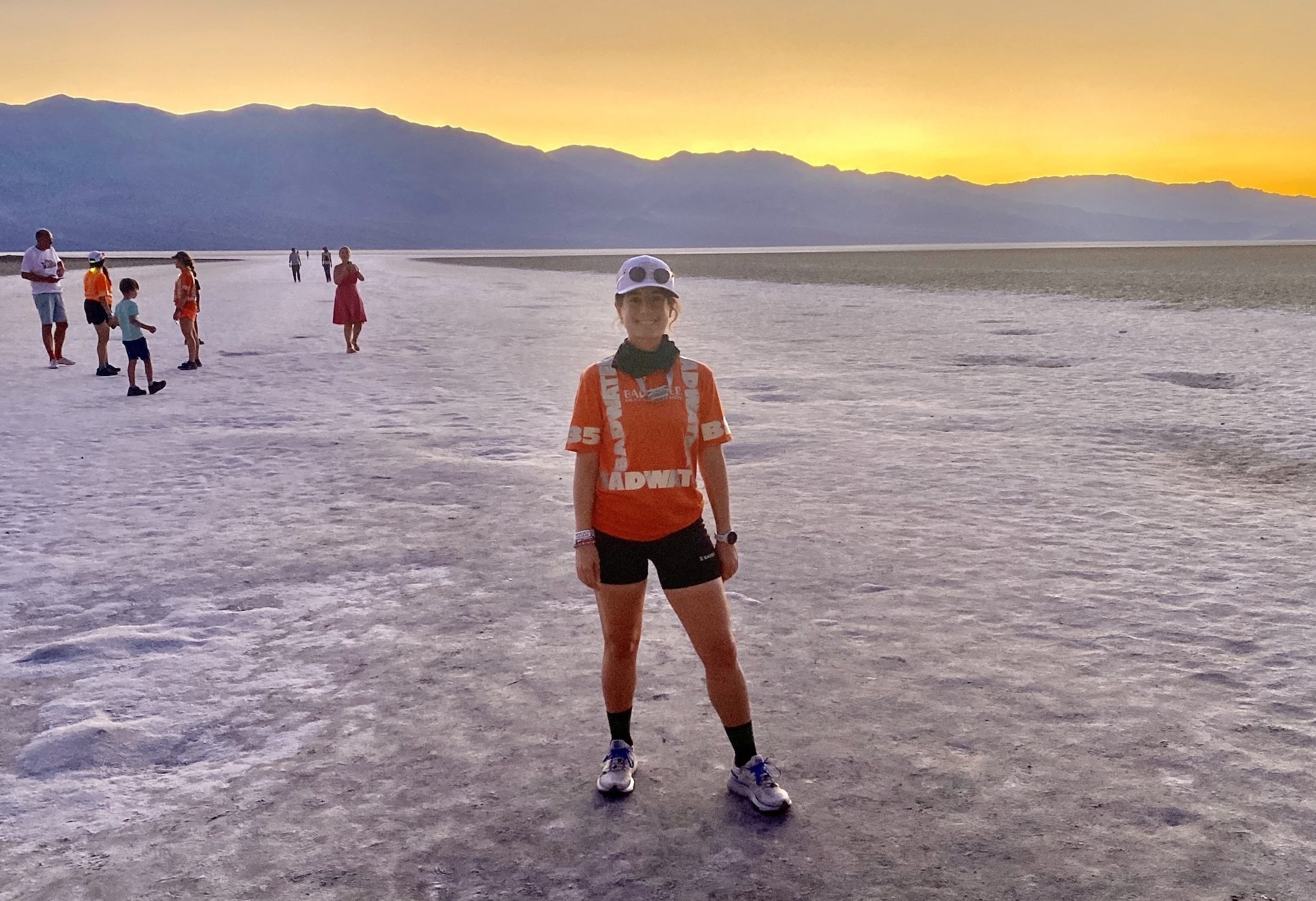
Badwater Cape Fear was my third and fourth ultramarathons. Before that, I had run two trail races in New York State, both 50 milers. I ran Badwater Cape Fear twice, taking a year off because of a film festival. It’s an extremely difficult race, mainly because much of it takes place on sand. When the tide is low and the sand is firm, it’s manageable, but when the tide comes in and you’re running on soft sand, it’s brutal. In total, I’ve completed four 50-mile races and two 100-mile races. The most recent one was Javelina 100 last October, and it was incredible. That race is entirely community-driven—it’s literally an all-night desert party. It’s a looped course, so you pass through the same area multiple times. On the final loop, around mile 80, there are tents everywhere, people cheering, fire jugglers, performances… You’re exhausted and you think, “Am I hallucinating, or is this really happening?” If someone had told me, when I started writing this film, that I would one day run 100 miles, I never would have believed it. At that point, I had only run marathons. My first 50 miler was before the pandemic, around 2018, I think.
| Confidence, patience, focus, and community—those are the words you used to describe your first 100 miles. Do you see ultrarunning as an allegory for filmmaking, which also demands those qualities?
Absolutely. Confidence, patience, focus, and community are also an allegory for filmmaking. I started writing this film in 2018, well before the pandemic. It took passion—discovering this world, meeting ultrarunners, running ultras myself—and above all, confidence: believing that the project would eventually come to life. Both filmmaking and running require presence. You need hope, you need to believe in the finish line, but if you’re not focused on the present moment, if you don’t take things step by step, you get overwhelmed. In a race, you stumble, you fall. In filmmaking, it’s the same. The parallels are endless. It’s always one step at a time, always moving forward, and always about community—from the initial idea, to the producers, to conversations like this one, all the way to the moment the film meets an audience that connects with its story. My first film, Gold Star, was shot on a shoestring budget, in my parents’ house, and it was loosely inspired by events that occurred after my father’s stroke. Ultra may seem very different on the surface, but on many levels, it’s an evolution of the same themes: grief, loss, and the way we move through and transform those emotions.
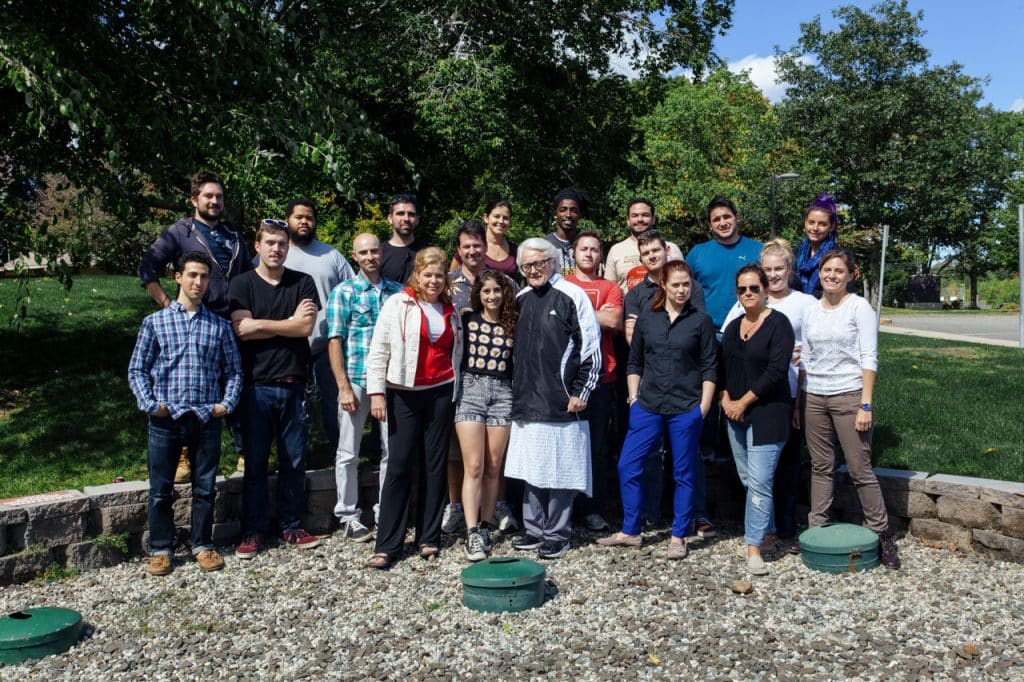
© Victoria Negri
| Running is something your father passed on to you. How did cinema enter your life?
I’ve been going to the movies since I was a child. Every weekend, my family would see at least one film. Some of my best memories are in movie theaters, like Milford Quad Cinemas. My father was much older, so I was exposed to a wide range of films that people my age didn’t necessarily have access to. He loved anything related to cowboys—John Wayne, Clint Eastwood… I feel very lucky to have grown up with such a rich film culture.

© DENNISMAHANEY1
When I was in high school, The Lord of the Rings came out, and those films literally changed my life. They made me want to be in film, to write films, to make films. At the time, I interpreted that desire as wanting to act. I didn’t yet understand what it meant to direct or to be behind the camera. I went to NYU to study acting, and after graduating, I quickly realized that I wanted to be the one creating, the one telling stories. I had so many ideas—I wanted to be behind the camera. That transition shaped what I love most today: working with actors. I know how courageous and vulnerable it is to be an actor, and I have immense respect for that. Cinema is my life. Running became important later.
| Let’s go back to Ultra. Where did the idea for this fiction come from—the energy behind the project?
What interests me in this project is exploring how running an ultra forces us to confront the darkest parts of ourselves, but also the most beautiful ones. I know the synopsis may sound dark, and in many ways it is a psychological thriller, but it’s also a deeply luminous and hopeful film. It’s about inner strength, about the ability to move beyond parts of ourselves that we may not want to face. Running these kinds of distances—especially ultras—forces that confrontation. That’s really what I most want to share with audiences: the contrast between light and darkness, black and white. Artistically, I’m constantly thinking about how to translate that visually. What do we see behind her at night? Is it nothingness, or fragments of the world? We’ve tested different headlamps and waist lights—what is the quality of the light emanating from her body? How do reflective elements interact with the environment? All of this feeds into that reflection on black and white, light and darkness. I know the synopsis may sound dark, and in many ways it is a psychological thriller, but it’s also a deeply luminous and hopeful film. It speaks to inner strength, to the ability to move beyond parts of ourselves we may not want to confront.
I know the synopsis may sound dark, and in many ways it is a psychological thriller, but it’s also a deeply luminous and hopeful film. It’s about inner strength, about the ability to move beyond parts of ourselves that we may not want to face.
Victoria Negri
| How do you plan to authentically portray the Badwater 135 race?
We’ll be filming in Death Valley, in real conditions. Authenticity and accuracy are extremely important to me. The first time I saw Death Valley, I was completely overwhelmed by its beauty. People often imagine it as a flat desert, but it’s incredibly diverse: sand dunes, red rock formations, vast valleys. The race crosses three mountain ranges. It’s wild, and I really want to show that to the world. What drew me to Badwater was the symbolism of the race. I first heard about it when I read Born to Run. The fact that the race starts at the lowest point below sea level and finishes on a mountain immediately struck me. I thought, “There’s a story here.” It’s a journey. It’s the story of a character emerging from something extremely difficult and arriving somewhere else—physically and symbolically. It became a metaphor for grief, for ordeal, for transformation… Coming out of a hellish place and rising toward something else.
| Shailene Woodley was cast in the lead role. Does she have a background in running, or was your choice motivated by something else?
Shailene is already immersing herself in this world. She trains and runs, and we talked about that from our very first conversation. If you’ve seen her performances, you know she’s a very athletic, very physical actress. She also told me about her love for open-water swimming, which says a lot—this attraction to risk and danger isn’t insignificant. She understands the psychology behind taking big physical risks, and that was very important to me. She understands the appeal of pushing the body beyond its limits. And on top of that, she’s fast. Right after our first meeting, she sent me a screenshot of a road run she had just done: a half mile in exactly six minutes, with no specific training. I thought, “OK, there’s clearly real potential here” (laughs).
MORE
– Instagram Victoria Negri

Charles-Emmanuel PEAN
Journalist