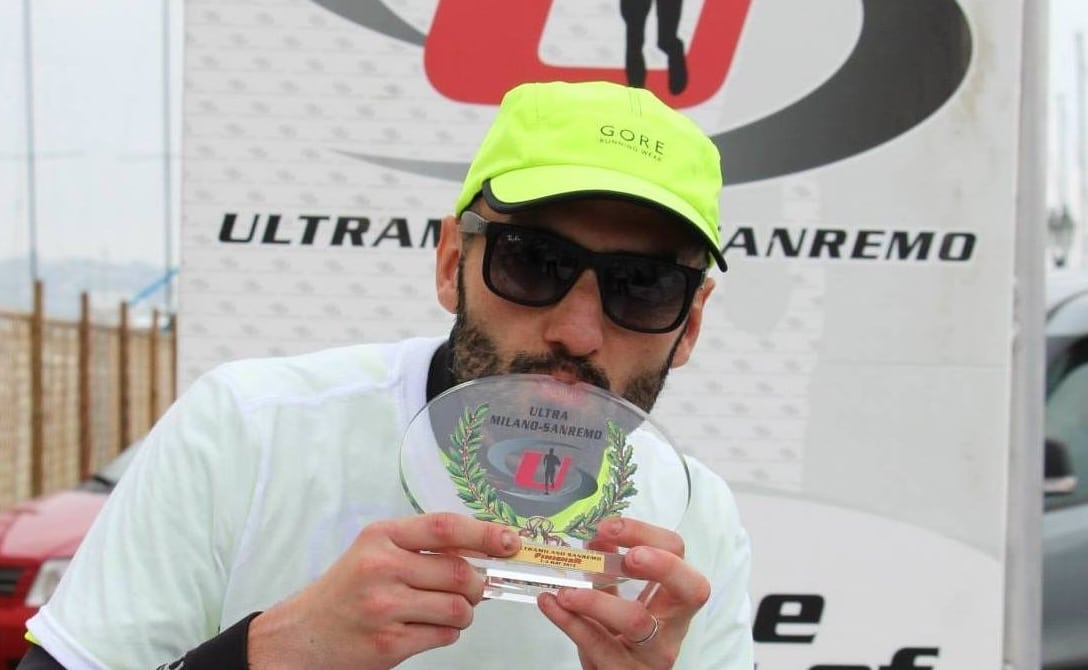
 © Simone Leo
Meeting Simone Leo, organizer of the latest Ultra-Marathon World Championships
From March 27 to 29, the Ultra-Marathon World Championships took place in Cinisello Balsamo, just outside Milan. It was an opportunity for Marathons magazine not only to meet Dean Karnazes, but also to spend a weekend alongside a very special breed of athletes: men and women who run for 12, 24, or even 48 hours straight. We spoke with Simone Leo, the event organizer.
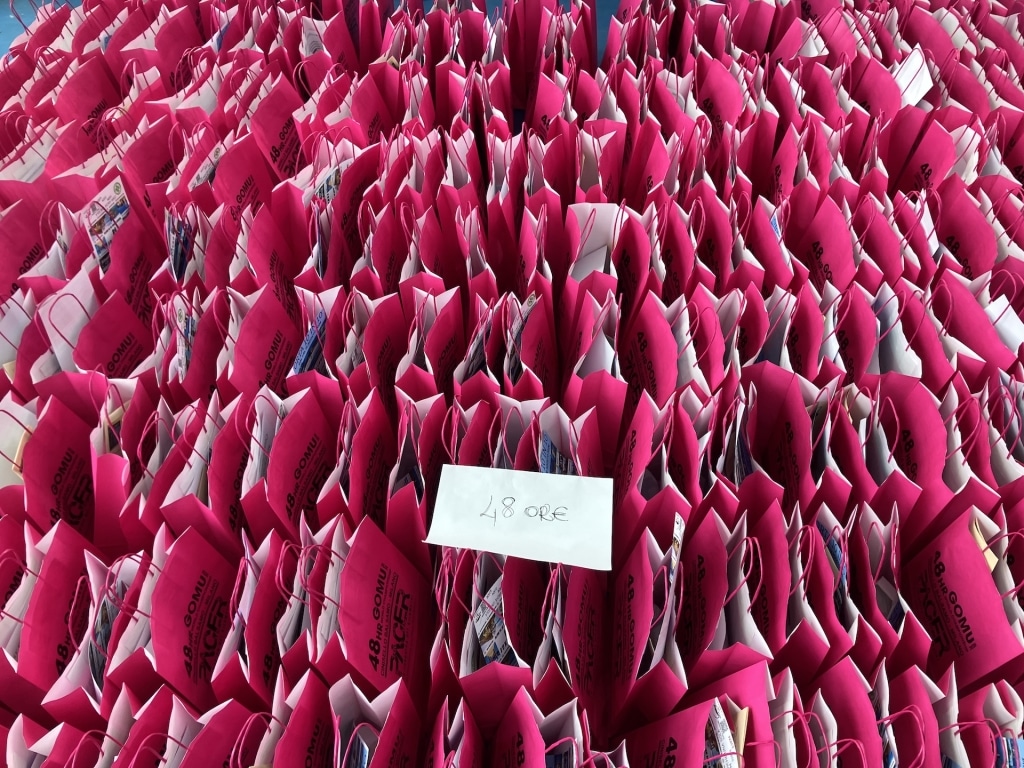
Just before interviewing Simone Leo, founder of the Cinisello Balsamo Running Festival, we took a look at the race kits prepared for participants. Could there really be that many runners for a 48-hour race? You had to see it to believe it. Ultra runners from all over the world gathered north of Milan: 206 competitors in the 48-hour race, 63 in the 24-hour category, and 137 in the 12-hour event.
The race (thankfully) came to an end on Sunday afternoon, March 29—and even then, the results were hard to grasp. Polish star Patrycja Bereznowska won the women’s race with an astonishing 413 kilometers covered in 48 hours, while her compatriot Bartosz Fudali claimed victory in the men’s race with 447 kilometers. It was a Polish sweep, with the women’s podium entirely dominated by runners from Poland.
➜ Women’s 48-Hour Podium
1. Patrycja Bereznowska (Pologne) 413,396 km (6,58 min/km)
2. Edyta Lewandowska (Pologne) 390,650 km (7,16 min/km)
3. Magdalena Superson (Pologne) 372,031 km (7,4 min/km)
➜ Men’s 48-Hour Podium
1.Bartosz Fudali (Pologne) 447,581 km (6,25 min/km)
2. Laszlo Nemes (Hongrie) 427,065 km (6,44 min/km)
3. Nicolas De Las Heras Monforte (Espagne) 407,439 km (6,5 min/km)
➜ Women’s 24-Hour Podium
1. Luisa Libios (Philippines) 161,122 km (8,55 min/km)
2. Anna Rybitw (Pologne) 142,601 km (10,06 min/km)
3. Rachelle Meigh Cabasa (Philippines) 125,595 km (11,28 min/km)
➜ Men’s 24-Hour Podium
1.Rafal Wos (Pologne) 203,872 km (7,02 min/km)
2. Wojciech Sip (Pologne) 198,074 km (7,15 min/km)
3. Giorgio Basso (Italie) 194,961 km (7,22 min/km)
➜ Women’s 12-Hour Podium
1. Carmen Maria Perez Serrano (Espagne) 138,867 km (5,11 min/km)
2. Lisa Borzani (Italie) 117,415 km (6,08 min/km)
3. Gaia Porcellini (Italie) 103,279 km (6,59 min/km)
➜ Men’s 12-Hour Podium
1.Lorenzo Bulgarelli (Italie) 127,424 km (5,38 min/km)
2. Amedeo Bonfanti (Italie) 126,414 km (5,41 min/km)
3. Patrick Marquis (Italie) 117,299 km (6,07 min/km)
The sixth edition of the Cinisello Balsamo Running Festival hosted this year’s World Championships organized by the Global Organization of Multi-Day Ultramarathoners (GOMU). This marked a major milestone for an event launched just before the COVID-19 pandemic, whose popularity has continued to grow steadily. Between gusts of wind that forced last-minute adjustments, Simone Leo—himself an ultrarunner—took a few minutes before the start to answer our questions.
| How did ultra-running enter your life?
There’s a very specific date: July 7, 2007. I was at a wedding. Some friends took a photo and sent it to me. When I saw it, I was 29 years old, overweight—I weighed 110 kg—and constantly tired. I realized I had to do something. Over the years, I had tried the gym, swimming, indoor cycling… nothing stuck. Running seemed like the simplest option: buy a pair of shoes, step outside, and go. No membership, no schedule, no coordination needed. I had tried running before, but that day something clicked. Six days later, on July 13, I went out and ran 7–8 kilometers at my own pace. What made the difference wasn’t so much the run itself—I suffered, clearly—but what came after. I sat down on the couch after a shower… and then I felt it: endorphins. The ‘feel-good’ hormones. Boom—a head-on collision!
That sense of physical and mental well-being, that satisfaction—I had never experienced anything like it before. From that day on, something switched. It took years to become a ‘real’ runner, but everything changed: how I approached races, what I ate, even buying fruit and isotonic drinks. The first thing I tell people moving from the marathon to ultra distances is: forget the stopwatch. The only goal is to stay on your feet. It’s an adventure with yourself. For me, it’s almost a different sport altogether.
« The ‘feel-good’ hormones. Boom—a head-on collision! »
Simone Leo
| This “couch moment” led you to your first 100 km race…
I followed the usual progression. In 2009, I ran my first half marathon—just for fun—then my first competitive half, then my first marathon in New York (for international readers: the New York City Marathon). In 2011, I ran my first ultra: the 100 km del Passatore. No specific training, no knowledge of ultra-running—I just went for it. It went well, and I’ve never stopped since.
| Does your role as an organizer still allow you to race?
Running ultras takes an enormous amount of energy, and honestly, in recent years my priorities have changed. I know what it takes, how long recovery is, and physically I can’t push the same limits anymore. In 2024, I got injured while preparing for the Tor des Géants—two broken ribs and a fractured vertebra. A real disaster. It was hard to come back from that. Now I run more sporadically. I still do the occasional 100 km for fun. This year, I’m considering a race in Ladakh, India, near the Pakistan border—a 100-mile trail.
| Do you enjoy being an organizer?
I love it. It’s not entirely different, although I have to admit that watching others run doesn’t compare to running yourself. But there’s real satisfaction in experiencing the race alongside the athletes—and let’s be honest, it’s also nice that they’re the ones suffering! That said, for reasons I can’t fully explain, I would never run the races I organize—even though they’re successful. Take, for example, the Turchino ultra that we organize with Impossible Target, the same group behind this festival. It takes place on the last weekend of July, and entries sell out within two days.
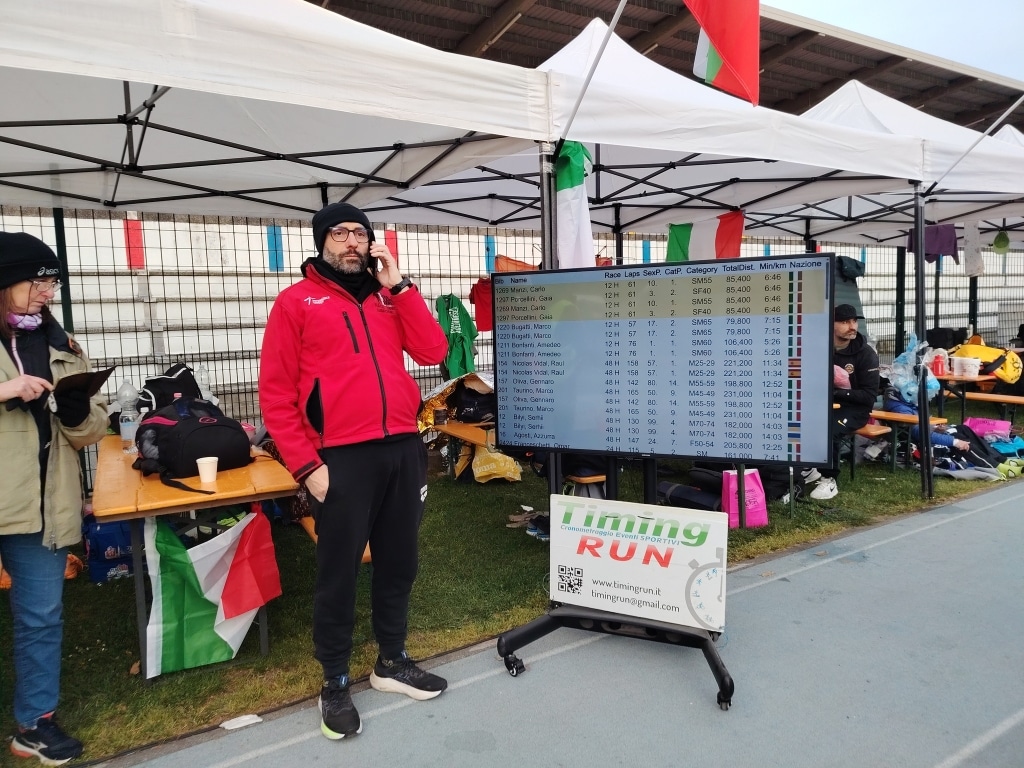
| How did your race get selected to host the 2026 World Championships?
This is the sixth edition of the festival. The idea was born before COVID—to create an ultra-running celebration here in Cinisello Balsamo. The pandemic slowed everything down for two years, but the mayor, Giacomo Ghilardi, never stopped supporting us. We benefit from excellent infrastructure: a track, surrounding facilities… and the race kept growing.
As an ultra enthusiast, I closely follow what’s happening in Italy, and I realized there were no more 48-hour races in the country. Since we already had the capacity to organize a 24-hour race, we launched the 48-hour format—and it was a success. With the support of the Italian ultra-running association, we submitted a bid. Our strong collaboration with civil protection services and the dedication of our volunteers were key factors. In total, more than 400 runners took part
| How many volunteers are involved?
There are 120 people from civil protection, plus all the race volunteers—around 200 in total, working in shifts day and night throughout the weekend. The course is a 1,400-meter loop, officially certified for potential record performances.
| Are you proud to welcome so many international runners?
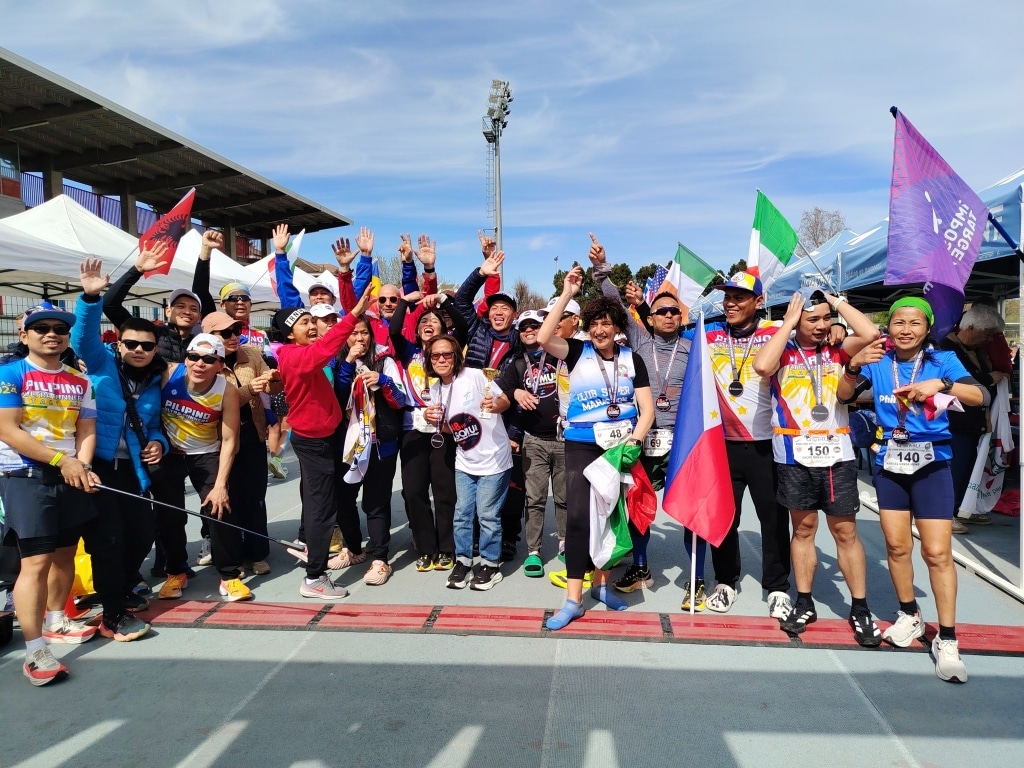
Beyond the high level of competition, it’s simply beautiful to see so many people come together around the same passion. The journey these races represent… We’re lucky to have a runner who came all the way from Japan, Minoru Onozuka. It’s an honor for us as organizers. We don’t have the world record holder—Belgian runner Mathieu Bonne—but the field is still extremely strong, both in the men’s and women’s races. Patrycja Bereznowska honored us with her presence, and her victory adds credibility to our event. Bartosz Fudali is also a world-class athlete. And we also have a well-known French figure: Jean-Louis Valderrama, better known as ‘Crocs Man.’

Charles-Emmanuel PEAN
Journalist