
Olivier Bessy: “We seek to bring intensity to our lives, and running offers that”
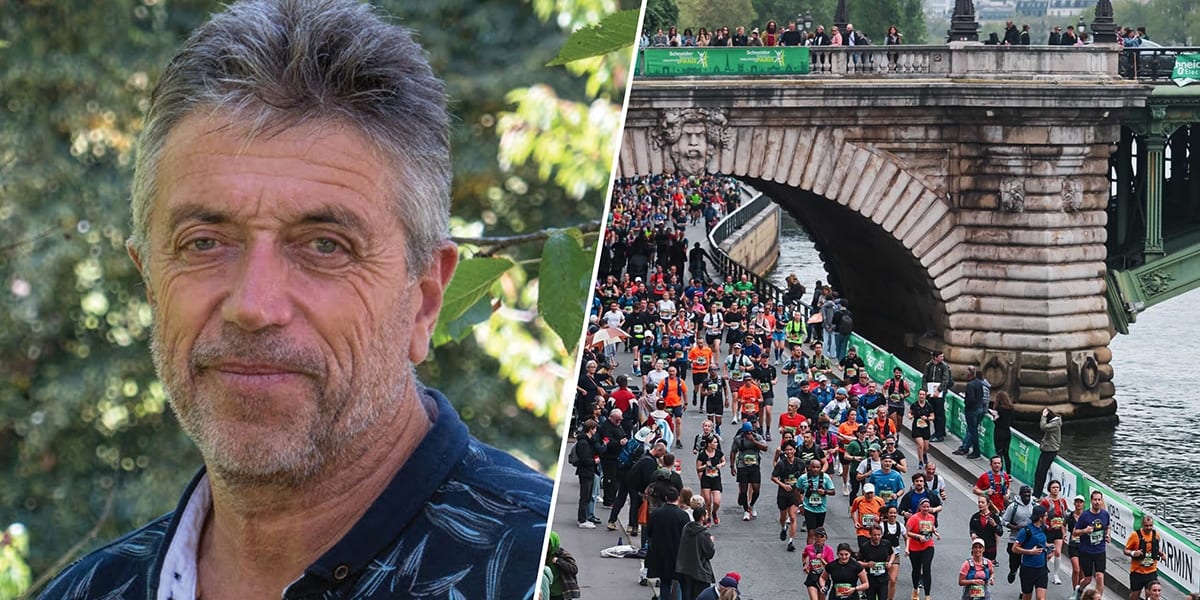
A leading figure in the sociology of sport in France, Olivier Bessy has spent more than 40 years studying running, its transformations and its place in contemporary life. Professor Emeritus at the University of Pau and the Pays de l’Adour and a researcher at the TREE laboratory (Environmental and Energy Transition), he is also the author of several key works on the history and sociology of a practice that has become a social phenomenon. ✓ In this interview, he looks back on 50 years of personal and academic passion, tracing the evolution of runners from the first post-’68 joggers to today’s ultra-trail athletes and Strava jockeys.
What is your relationship with running?
I have a passionate relationship with running. It has been part of me for 50 years. I’ve lived through every era of the sport, starting out in a club on the track, then moving on to cross-country, road races, trail and ultra-trail. Today, at 67, I run to give myself a moment of meditation. I put on my running shoes whenever I feel the need.
Why did you become interested in running as part of your academic work?
I started out as a physical education teacher, then continued my studies as a lecturer and researcher in a STAPS faculty. I wrote a thesis on “The cult of the body and fitness”. In 1981, I decided to work on running because I was already deeply involved in it and could sense that something was happening around the sport. In 1994, I studied the Marathon du Médoc and wrote a book for the event’s tenth anniversary. I went on to write a series of books examining the sport, because you can’t understand what it is today without understanding what came before.
Today, runners are looking for more flexible and open forms of social connection. Social media and new technologies also make it possible to perform at a high level without belonging to a club.
In your book “Running from 1968 to the Present Day, Volume 1: Running Unbound”, published by Cairn, you describe a first revolution after May 1968.
Yes, it all began in the 1970s. May 1968 meant the liberation of the body: pleasure without restraint, running without restraint. People began breaking free from the federation, and women started running. The 1970s also saw the birth of legendary races such as Marvejols-Mende (1973), Marseille-Cassis (1976) and the 20 km de Paris (1979). That’s how the sport grew.
In 2024, the French Athletics Federation recorded 2.95 million results in road running, trail and cross-country. What is driving so many people to run today?
There isn’t one single explanation, but several factors are converging. During Covid, running helped people feel alive, free and present during the limited periods when they were allowed outside. Today, the cult of performance that runs through society has been added to the mix. People are also looking to bring intensity to their lives by having the most memorable experiences possible, and running offers that. We shouldn’t forget the need to put ourselves on display in an image-driven society, either. These values reflect hypermodernity, which became the dominant social model around the turn of the 1980s and 1990s.
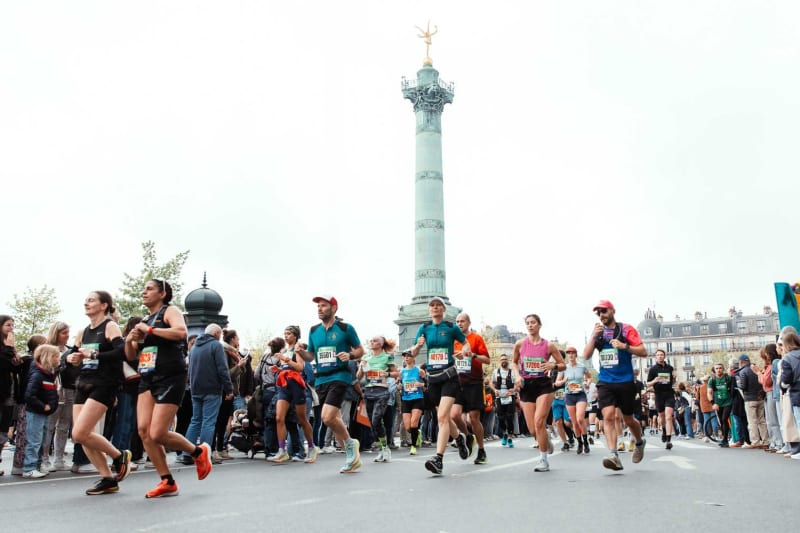 © ASO / Marathon de Paris
That period marked the second revolution. How did it change the way people run?
People now have a relationship with their bodies that is more efficient, more performance-driven and more adventurous. Hypermodernity broke down every code and broadened people’s horizons.
Social media often comes up in discussions about this desire to put ourselves on display. Has its presence been positive or negative for running?
I try to avoid passing value judgments and simply explain what is happening. Social media is part of our lives, so it was only natural that it would find its way into running. Running isn’t just an individual activity; it’s also a social one, and social media has helped bring people together around the sport through various apps. Now, with Strava, Garmin and the rest, every runner can show what they do. The symbol of this hypermodernity is the “Strava jockey”. In other words, to impress your community, you pay someone to complete an effort you aren’t capable of making yourself. It’s important today to break free from this hypermodern illusion and work towards new forms of balance.
You now speak of transmodernity, which comes after hypermodernity. What values lie behind the term?
Indeed, for the past decade, the values of hypermodernity have been challenged by new ethical, environmental and social concerns. Transmodernity raises the question of what meaning you give to your practice. It is a form of eco-humanism. That is the subject of my new book, “Running Without Limits: The Ultra-Trail Revolution 1990–2025”, which will be published at the end of July.
There are said to be 14 million runners in France, or 25% of the population. Yet the number of licensed athletes rose by only 8% between 2023 and 2024. Why is that?
Since the first running revolution of the 1970s, freedom has been the priority, in line with the Spiridon movement, which promotes enjoyment in effort and the pursuit of autonomy. Clubs came to be seen as restrictive, and people wanted something else. Today, runners are looking for more flexible and open forms of social connection. Social media and new technologies also make it possible to perform at a high level without belonging to a club.
Despite running’s popularity, race entry fees are getting higher and higher. What would you like to say to race organisers?
I would tell them that a great event isn’t necessarily one that attracts huge numbers. Prioritise quality. And if you want to offer a more environmentally responsible event, you need to work on its environmental impact, but also on its social and local dimensions. The idea is to design the race in close connection with the resources of the area, so that everyone can make it their own.
Through Olivier Bessy’s sharp perspective, it becomes clear that running is far more than a sport: it reflects our times and our pursuit of freedom, performance, meaning and reconnection. From the liberating strides of the post-’68 era to the ethical and environmental challenges embodied by transmodernity, running remains a deeply human act, somewhere between introspection and self-display. It is now up to each of us to find our balance on this endless starting line, where enjoyment, sharing and responsibility can set the pace too.

Julia Tourneur