
 © Jean Bouin victorieux de la course Nice – Monaco (18 km) en 1910 © wikimedia
Jean Bouin, the trailblazing face of French running
You’ve seen his name on stadiums and sports venues everywhere. But do you really know the story behind Jean Bouin? An Olympic medalist and a pre-war giant of French athletics, the Marseille prodigy rewrote the record books before being killed at 25, at the very start of World War I, during the Battle of the Marne.
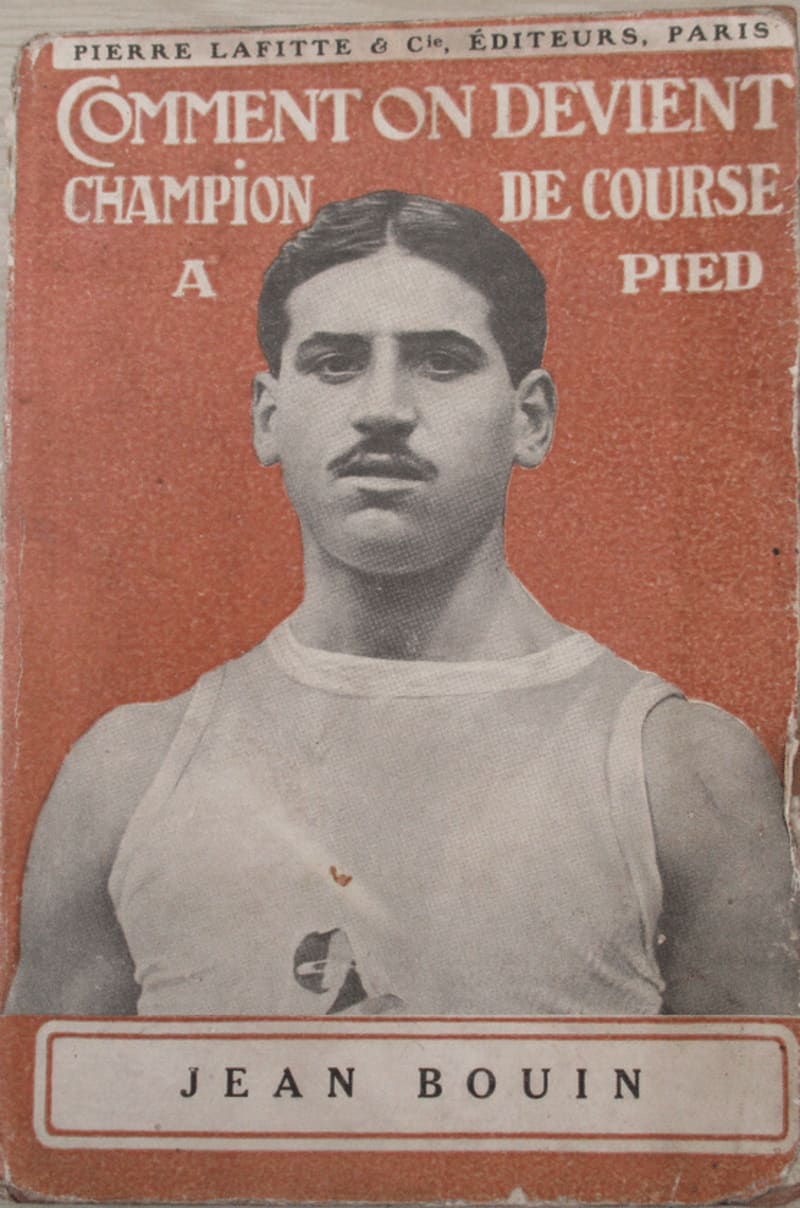
At the dawn of the 20th century, as modern athletics was starting to take shape, a young French runner began steamrolling everything in his path. His name was Jean Bouin, born in Marseille on December 21, 1988, and from his teens he stood out for sheer willpower and freakish performances. Legend has it that this sports-mad kid, also a swimmer, fencer and gymnast, turned to running after regularly watching marathoner Louis Pautex train in Parc Borély, near his home. At 21, in 1909, he became French cross-country champion. It was the start of an era of wins and records. More than a century after his death, his story still fuels France’s sporting memory. Jean Bouin was a phenomenon, ahead of his time in more ways than one (training, sleep, nutrition...). In 1912, he even published a book to advise young runners: How to Become a Champion Runner. A true pioneer. With movie-star charisma, too.
Performances and records that made history
The career of Jean Bouin is defined by an extraordinary concentration of top-level results achieved in a very short span of time. Passionate and mature, he committed early to a wild trajectory, and his fame quickly spread far beyond the Marseille neighborhood where he grew up. A specialist from 800 to 10,000 meters, he established himself as a complete athlete, able to shine on the track and on longer formats alike. His signature moment is surely the silver medal in the 5,000 meters at the 1912 Stockholm Olympics. In that now-famous race, he battled Finland’s Hannes Kolehmainen in a brutal duel all the way to the final meters. Bouin led for much of the race before being caught with barely twenty meters to go, losing by a tenth of a second. His time that day (14:36) would stand as the French record until 1948. Beyond that Olympic silver, his resume is staggering. In France, he won the national cross-country title in 1909, 1910, 1911 and 1912...
Internationally, he didn’t do things by halves either: he won the Cross des Nations three years in a row (1911, 1912, 1913), the event that, from 1903 to 1972, predated today’s World Cross Country Championships. Only the great Alain Mimoun did better for France, with four wins. In 1913, at the peak of his international fame, Jean Bouin set his sights on the world one-hour record... and delivered: 19.021 km. The previous mark was 18.878 km. That French record wasn’t beaten until 1955 by Mimoun, once again. The results speak to exceptional endurance and consistency, at a time when training methods and racing conditions were far less developed than they are today.
The champion’s story
Behind the elite athlete, the personal journey of Jean Bouin traces a path shaped by determination and raw talent. Born into a modest family in Marseille, he discovered running very young, watching other runners train. Looked after by elders who knew they were seeing a prodigy, he fell in love with the sport and won his first race at just 16. His rise was rapid. The boy was gifted, but it was built on hard work and strict discipline. In an era before professionalism existed in sport, Bouin juggled training with everyday obligations. He was known for running 20 kilometers every day, honing his running form day after day, but not only that. In his book How to Become a Champion Runner (1912), he also stressed the importance of nutrition, sleep and a healthy lifestyle. A modern champion before his time, with the asceticism of the very best.
 © wikimedia
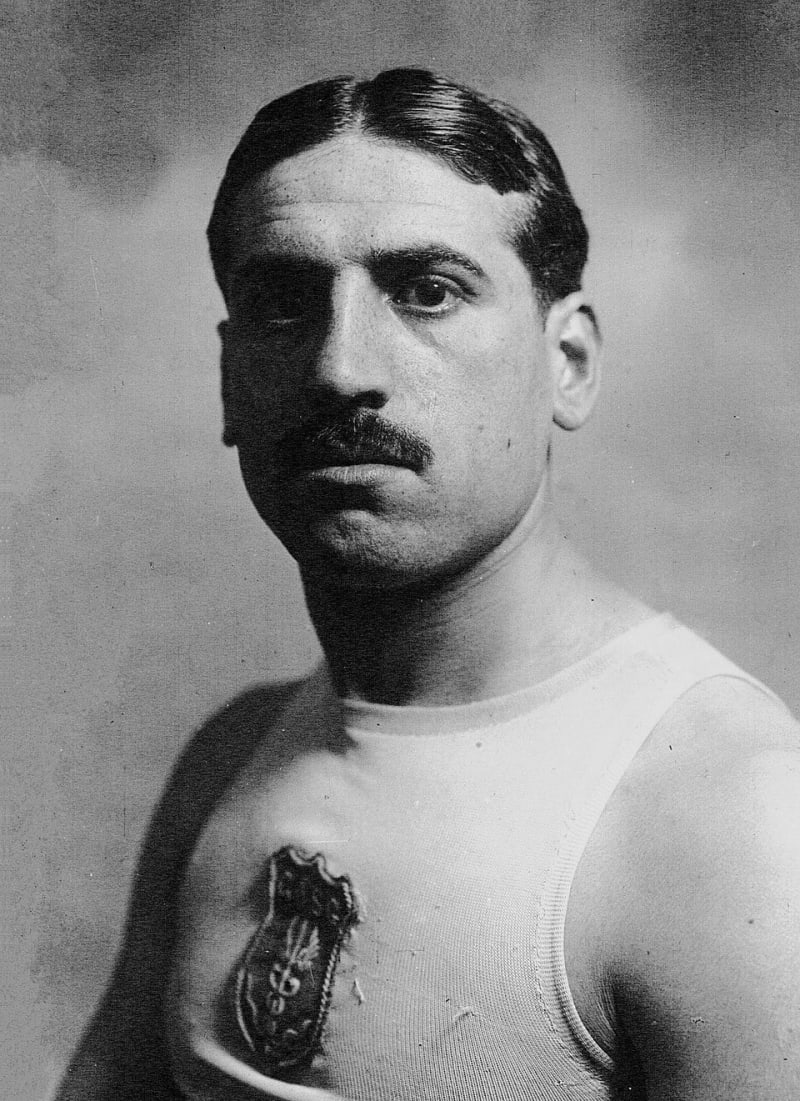
Sadly, his brilliant destiny was overtaken by the horror of World War I, during which 10 million young Europeans died, including 1.5 million French soldiers. Mobilized at the very start of the conflict in August 1914, he was offered a posting away from the front because of his status as a celebrated athlete, but he refused. He wouldn’t leave his comrades behind. He joined a frontline combat unit. A few weeks later, on September 29, 1914, he was killed during the Battle of the Marne at just 25 years old, after a French artillery misfire.
A lasting legacy in French sport... and beyond
Despite a career cut short, the mark left by Jean Bouin remains immense. His name is firmly written into the history of French athletics, both for his performances and for what his story has come to symbolize. From a purely sporting point of view, his records served as benchmarks for a long time. Some weren’t broken until decades later, proof of how exceptional they were. Beyond the numbers, Bouin helped popularize distance running in France. At a time when athletics was still finding its structure, he helped spark a culture of performance and international competition. He made such an impression that there’s even a race named after him in Barcelona, Spain: the Allianz Jean Bouin.
In France, his name has been given to countless sports venues, most famously Stade Jean Bouin in Paris. More than a century after his feats, that presence in public space still speaks to a collective desire to remember a great man. Hard-working, gifted, visionary, Jean Bouin left his mark on his era... and he remains a source of inspiration.
More articles

John Tarrant, the “Ghost Runner”
Banned from British athletics, John Tarrant became the “Ghost Runner”: a top-class ultrarunner who kept racing despite the rulebook.
Sun, August 2, 2026

What if starting running later in life was the best way to keep going?
Sat, May 16, 2026
Charity Bibs: The Alternative Way Into Sold-Out Races
Wed, May 13, 2026