

Running puts the spotlight firmly on the feet. They are the only part of the body in contact with the ground, so they deserve plenty of attention. The running-shoe market has become a dense, diverse jungle that can be difficult to navigate. Marathons.com shares the key points to consider when choosing your next pair.
Once upon a time, there were running shoes
Let’s start by turning back the clock and taking a look at the running shoes worn by previous generations.
➜ In the 1960s and 1970s, runners wore fairly basic models: very thin soles, maximum flexibility and no built-in technology.
➜ The revolution arrived in the 1980s and 1990s. Following Nike’s lead as it flooded the global market with its waffle soles, every brand began developing its own technologies: air cushions, springs, gels, anti-pronation systems… Research and development took off among sports-shoe manufacturers, with the aim of improving comfort through greater cushioning and reducing the risk of injury.
➜ At the end of the 1990s, another revolution took place, or rather a return to basics: people rediscovered the benefits of running barefoot. Toe shoes and minimalist models began appearing, with ultra-thin soles, plenty of flexibility, a near-zero drop and a fit that followed the shape of the foot.
➜ In the middle of the minimalist boom, HOKA arrived in 2009 with its maximalist, or oversize, shoes. In other words, shoes with an enormous amount of cushioning.
➜ A decade later, in 2018, Nike released the first carbon-plated shoe, soon followed by every other major brand.
Today, step into a specialist running store and you will find every kind of shoe imaginable: from oversize models to the most minimalist designs, with carbon plates and highly resilient foams in between. So how do you choose the right shoe in this jungle?
What to look for
First, it is worth making one thing clear: there is no single ideal pair of shoes for every runner. Every runner is physiologically unique, from foot shape and body weight to running gait. Each person also has their own training habits, terrain and preferred distances, as well as their own particular sensations. A model that feels perfect to one runner may feel uncomfortable to another. Still, a few key criteria can help you find your way through the crowded running-shoe market.
✓ Comfort
Without question, this is the most important criterion. You are going to spend hours in your shoes, so they need to feel genuinely comfortable. A rubbing spot, pressure point, or fit that is too tight or too loose may seem harmless when you try the shoes on in a store, but become a nightmare after several miles. Choose a fit that gives your foot room to spread and move, rather than one that squeezes and restricts it. Your foot will be better able to do its job naturally, and you will reduce the risk of discomfort.
✓ Lockdown
A shoe should feel like an extension of your foot, providing a secure fit, especially around the heel. Your foot still needs a degree of freedom, but it should not slide backwards and forwards or move from side to side. Poor lockdown can quickly lead to a lack of stability and confidence. Lacing is an art in itself, as our article on the subject explains, and can help you fine-tune the fit. Keep that in mind before ruling out a model for good.
✓ Cushioning
This is probably the trickiest factor, given how strongly marketing pushes us towards the most technologically loaded shoe available. Even so, it is important not to follow every trend and, above all, to listen to your own preferences. If you like to feel close to the ground, choose less cushioning. If you feel more confident with your foot insulated from the surface, go for more. Even within the same cushioning category, shoes can differ in firmness, responsiveness and drop, the difference in height between the heel and forefoot.
As for carbon, the secret ingredient of modern performance, it offers only a small benefit, around 1 to 2% for full-length plates, and only when running faster than 14 km/h. For some runners, though not all, depending on their running technique and biomechanics, a carbon plate slightly reduces the energy cost of running: 1.5% at 14 km/h, 2.4% at 16 km/h and 3.5% at 18 km/h. Looking at these figures from scientific studies, it is fair to ask whether super shoes are worth the investment for anyone who is not an elite runner. That decision is up to you.
✓ Drop
Drop is a favourite topic among minimalism enthusiasts, who advocate a zero drop to get closer to a natural stride. Traditional shoes generally have a drop of between 4 and 8 mm. As well as creating different sensations, with the foot positioned more or less flat, drop affects the load placed on the Achilles tendon and calf. In other words, runners prone to Achilles tendinopathy may prefer a higher drop, which helps reduce strain on the tendon. In all cases, whether you are injured or not, any major change in drop should be introduced very gradually because it has real consequences for running biomechanics.
✓ Weight
The weight of running shoes has steadily fallen thanks to technological advances, especially in foam design. Today, even a bulky shoe can be remarkably light on the scales. Because shoes sit at the end of the legs, their leverage effect is considerable, with consequences for enjoyment, energy cost and performance. Weight is therefore worth checking carefully, but do not become a slave to it. It should be considered alongside the other criteria, rather than automatically treated as the deciding factor.
✓ Flexibility
Here again, flexibility is a favourite of minimalism advocates, who believe that a flexible shoe helps promote a natural stride, allowing the foot to play its full role in moderating impact. A flexible model encourages a smooth transition and can deliver excellent sensations, provided your feet are up to the task. That means having strong feet capable of stabilising, springing and propelling you. Strong feet are an asset, so regular foot-strengthening exercises are worth including, whatever your level.
✓ Traction and grip
Essential for outdoor disciplines such as trail running, traction, meaning the ability of the lugs to bite into the ground, and grip, meaning the sole’s ability to hold on wet surfaces, are less important for road running. If you run on both trails and asphalt, you can choose shoes designed for mixed use. Some brands are also bringing out models marketed as “gravel” shoes for this kind of running.
Allow time to adapt
If you run regularly, you are already used to running in a particular type of shoe. When you switch models, your body needs time to adapt, especially if you reduce the drop or cushioning. During the first few weeks, alternate between your old and new shoes. This gives your body time to adjust to slightly different loading patterns and changes, however small, in your stride. A gradual transition is even more important if you decide to move towards minimalist shoes.
Most high-level runners own several pairs of shoes and switch models depending on the session. Racers generally prefer a lightweight, responsive model for short, fast workouts, while they often choose a more protective pair for long runs. If you can, keep two or three different pairs in your closet to vary the demands placed on your muscles, tendons and joints.
Ultimately, choosing running shoes is a highly personal decision. It depends not only on your history, including any previous injuries, but also on your preferences and physiology. Do not chase trends or assume that a higher price guarantees better performance. If you are not getting injured, there is no need to change shoe categories. If you are dealing with injuries or want to improve your performance, consider a gradual move to a different type of shoe. Above all, keep this fundamental principle in mind: every change should be gradual.
More articles

The Ironman Marathon Delivers the Final Verdict
The final 42.195 kilometres decide everything in an Ironman, exposing every mistake and testing the limits of endurance.
Thu, September 10, 2026
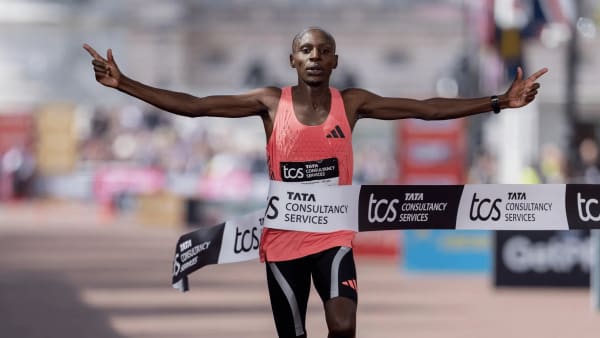
Sabastian Sawe, the fight against doping and the need to believe in the marathon again
Sabastian Sawe’s sub-2 marathon reignites the doping debate. AIU, Kenya, increased testing and credibility in a sport under pressure.
Thu, September 10, 2026

Euro Marathon Metz 2026 is scaling up with more than 9,000 runners
Euro Marathon Metz 2026 is gathering serious momentum, with more than 9,000 runners entered one month before race day.
Thu, September 10, 2026