
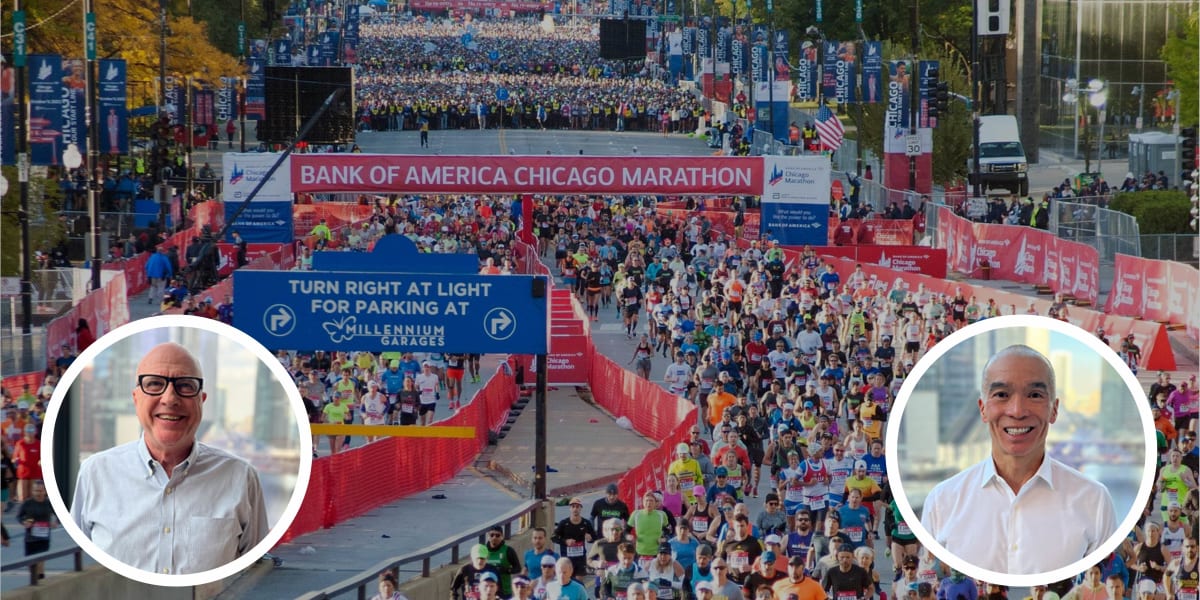
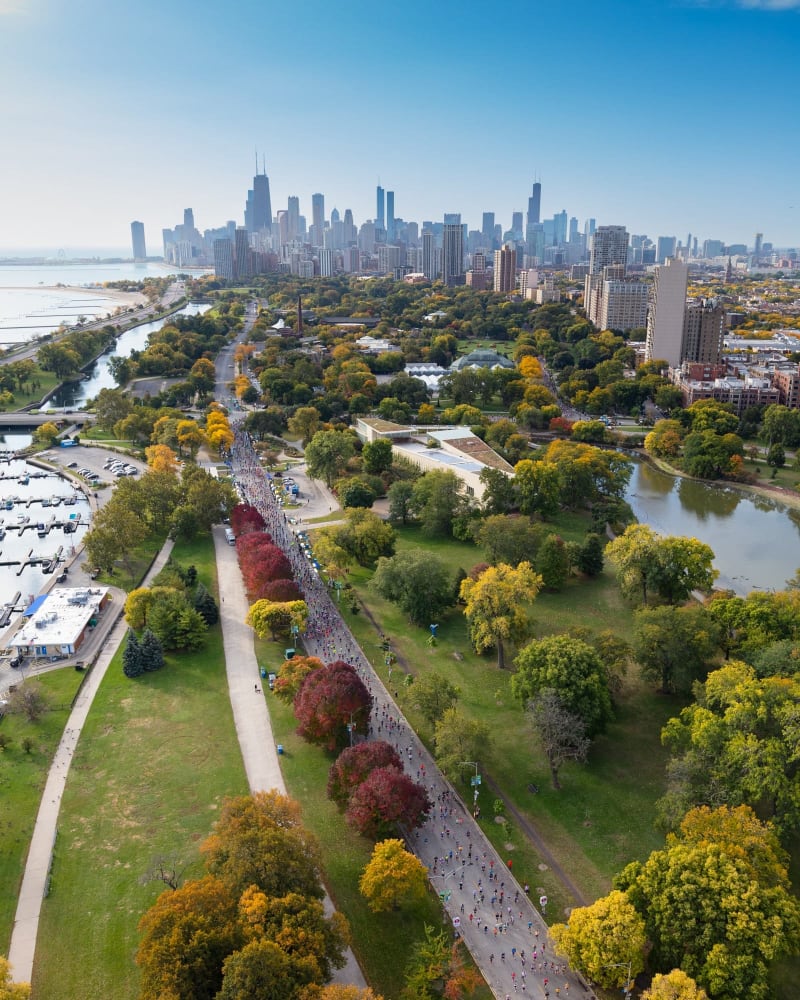
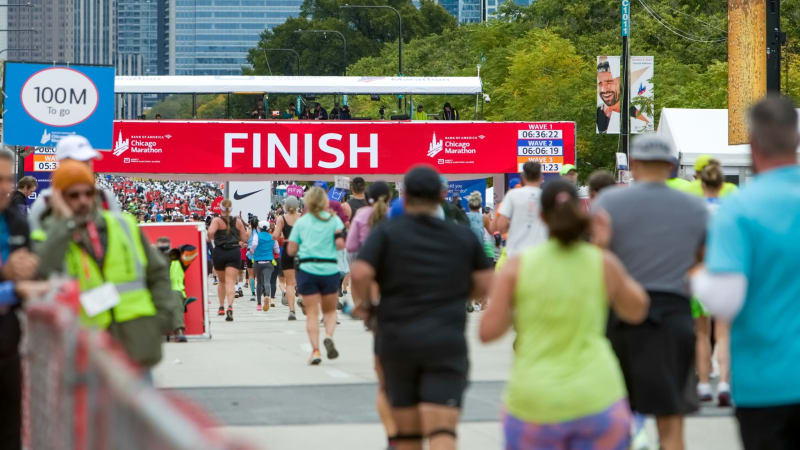
Held in Illinois, the Bank of America Chicago Marathon has been part of the prestigious Abbott World Marathon Majors since 2006. For elite athletes and amateur runners alike, this iconic race often represents the fulfilment of a lifelong dream. Flat, fast and charged with energy, its course takes in the shores of Lake Michigan, the Chicago River and Millennium Park. Runners move between green spaces and skyscrapers, experiencing the city’s striking blend of nature and architecture. Awarded World Athletics’ Platinum Label, Chicago is now one of the world’s biggest marathons, drawing more than a million spectators to its famously fast course. The city has also hosted several world records, for both men and women.
Table of contents
- From 4,200 runners to more than 53,000: a marathon transformed
- A global movement: the Abbott World Marathon Majors
- A record finisher rate
- The economic and social impact
- Safety and organisation: a colossal challenge
- A fast course with a rich history
- World records and the mythical two-hour barrier
- Diversity and inclusion: the marathon’s DNA
- Looking ahead to 2028 and the 50th anniversary
- The marathons closest to their hearts
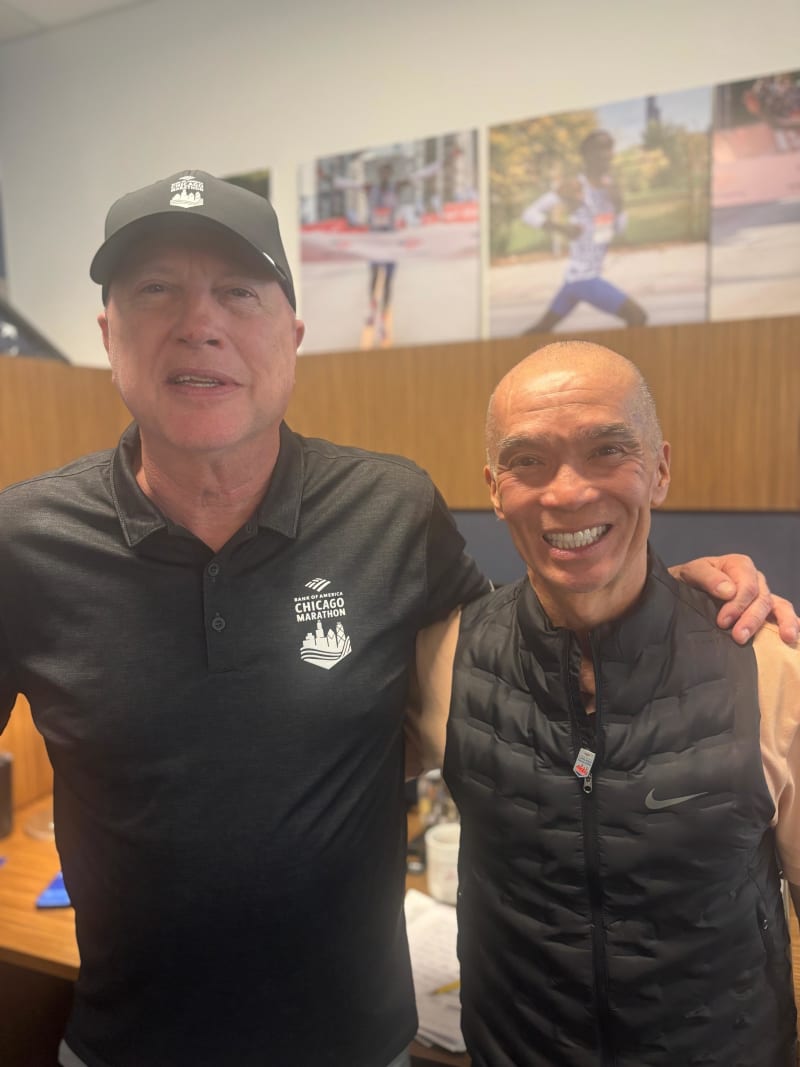
➜ In April, a few months before the 2025 edition this autumn, Marathons.com sat down with Carey Pinkowski, the race’s executive director, and Michael Nishi, its operations director, for an exclusive conversation.
 © Marathons
 © Marathons
 © Marathons
 © Marathons
 © Marathons

In this deep dive into one of the world’s most iconic races, we had the opportunity to discuss what organising the Bank of America Chicago Marathon means, and the challenges it brings, with Carey Pinkowski (Race Director, Bank of America Chicago Marathon) and Michael Nishi (General Manager, Bank of America Chicago Marathon).
From 4,200 runners to more than 53,000: a marathon transformed
| The Bank of America Chicago Marathon has grown spectacularly since its revival in 1977, when just 4,200 runners paid a $5 entry fee. In 2025, more than 53,000 participants are registered for the 47th edition. How do you view that evolution, and what do you see as its main drivers?
Carey Pinkowski: First of all, I think people in the United States and around the world have rediscovered running as an activity. We live in a world dominated by technology and speed, where everything moves at a hundred miles an hour in every direction. Running rebuilds connections and communities. It is a kind of rediscovery: it is the most accessible sport, offering both exercise and relaxation, and everyone makes it their own.
I’m convinced that once people discover running, they build a routine, look after their minds, and eventually come to see the marathon as the ultimate expression of the sport. They become attached to their pace, their training and the day they will stand on the start line. Questions like “Do you run? ” or “Have you ever run a marathon?” become a way of defining yourself, especially here in Chicago and across the United States.
We have also seen a huge influx of women, who now make up half of our starting corrals. When Michael and I started, there were barely 4 or 5 percent women. One initiative we introduced was equal prize money for men and women. That was revolutionary, and even controversial, at the time. Since there were far more men, offering women the same prize money sparked debate. It may seem like a forgotten footnote in history, but for us it was one of the key factors behind our growth.
A global movement: the Abbott World Marathon Majors
| Since 2006, Chicago has been part of the prestigious World Marathon Majors, alongside Boston, New York, London, Berlin, Tokyo, and now Sydney. What does that mean to you?
Carey Pinkowski: The Majors are built on collaboration. We share ideas, best practices and challenges, whether they are medical, logistical or related to our relationships with local residents. Being part of this collective makes us stronger. It allows us to innovate together, improve the runner experience and provide better access to world-class events.
All these marathons have strong relationships with one another. The professionals are respectful and courteous. But ultimately, we face the same challenges. Our races are growing, our partnerships with cities are evolving, and so are our methods and processes. It is a constant learning experience.
As running took off, we began spending more time together, meeting formally and sharing our best ideas. We realised that we were dealing with the same issues and sharing the same vision. Working together was an obvious next step. And it is not just about race directors. It also involves doctors, operations teams, municipalities, agencies and an entire ecosystem.
Our goal is to improve the runner experience. That benefits the whole industry. We are evolving collectively. The five founding members were there, then Tokyo joined, and more recently Sydney. It is a great environment for testing ideas, seeing what works and giving people the best possible access to these races. In my view, it is a major step forward for our sport.
 © Bank of America Chicago Marathon
 © Bank of America Chicago Marathon
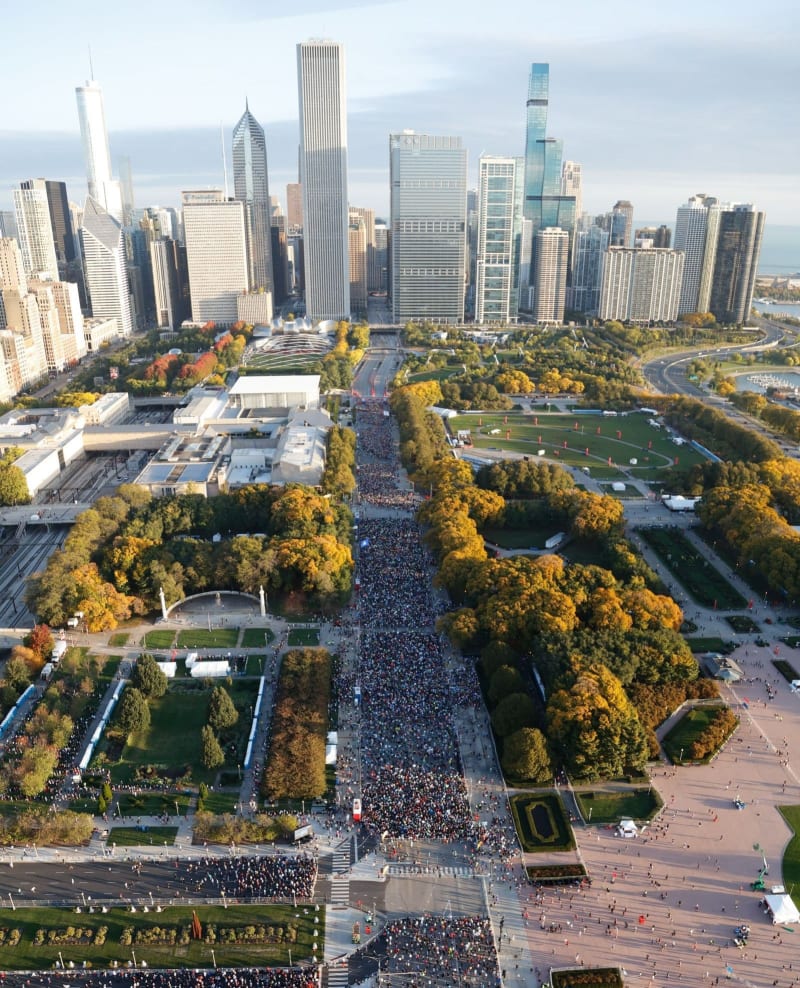 © Bank of America Chicago Marathon
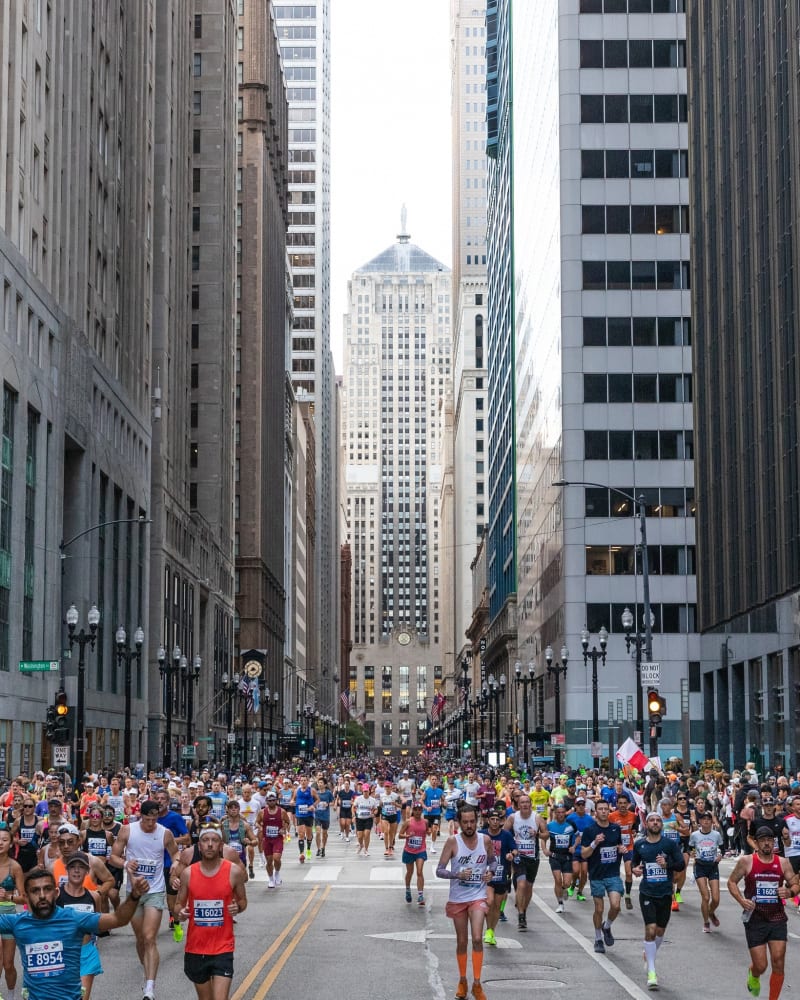 © Bank of America Chicago Marathon
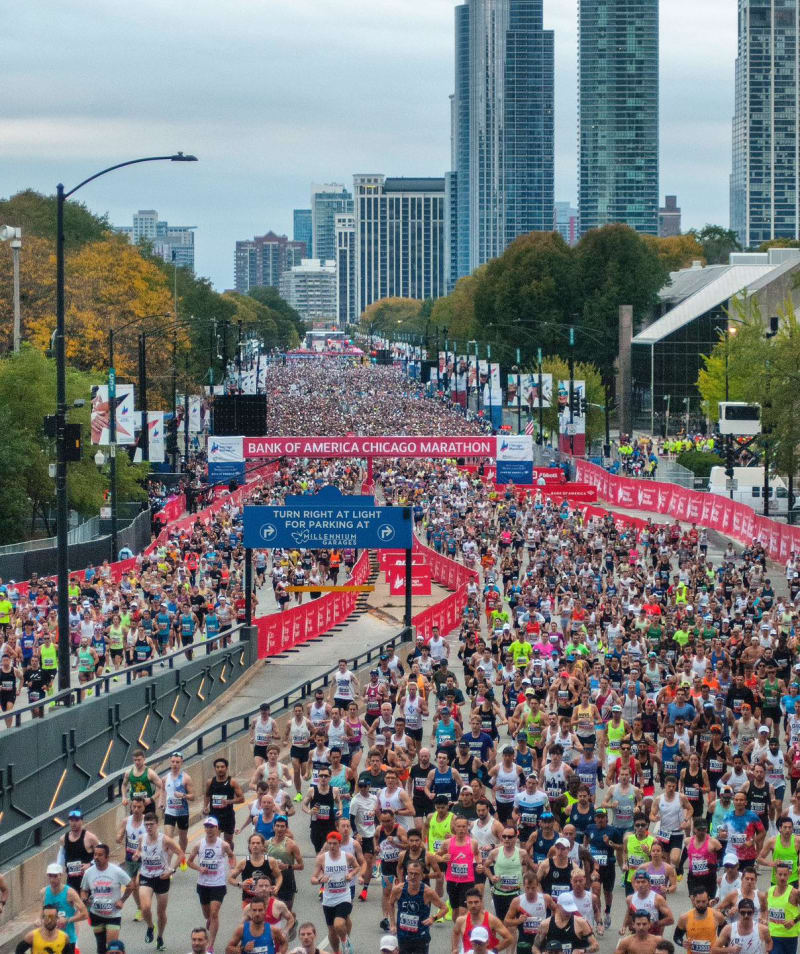 © Bank of America Chicago Marathon
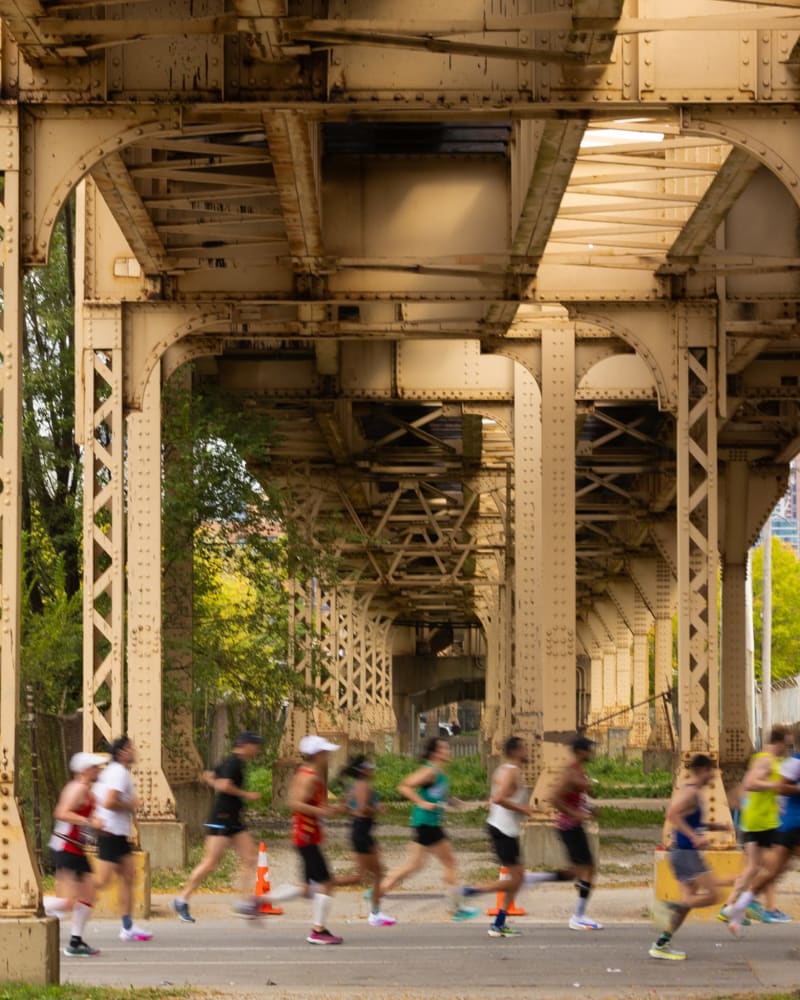 © Bank of America Chicago Marathon
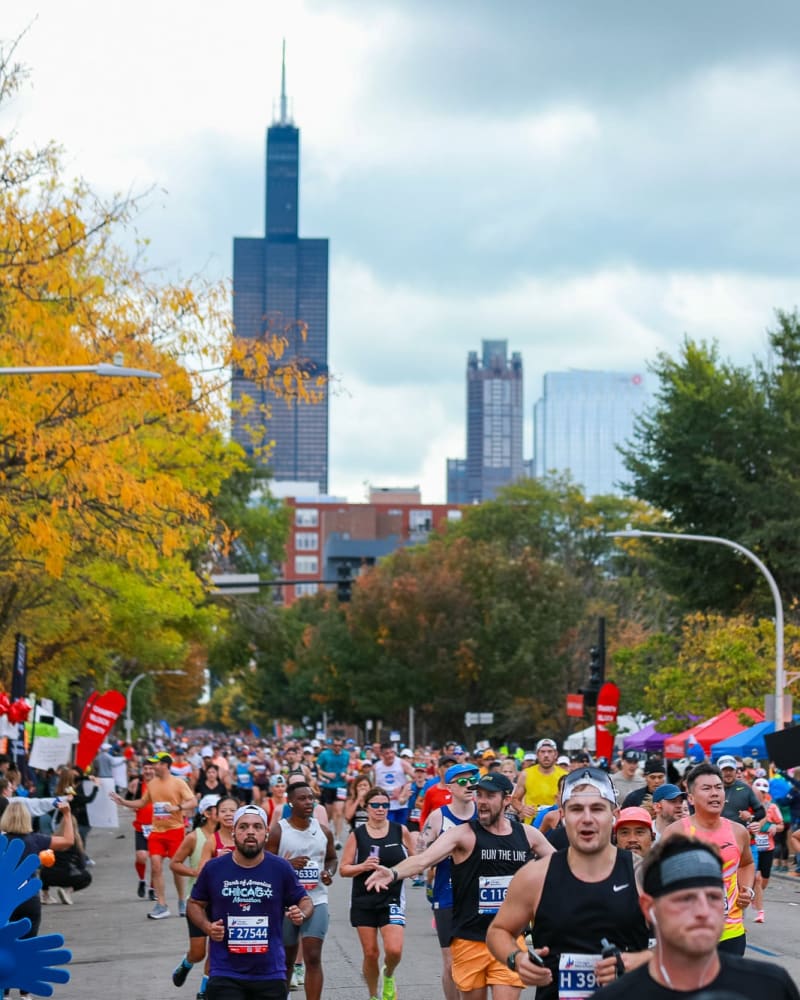 © Bank of America Chicago Marathon
A record finisher rate
| Chicago has one of the lowest DNF rates in the world: more than 99% of starters cross the finish line. How do you explain that?
Carey Pinkowski: I like to talk about collective momentum, because everything flows from that energy. There are now huge numbers of training groups, not to mention advances in shoes, clothing, nutrition, hydration and the way runners are supported. They are smarter, better prepared and more aware of their pace.
In the past, people trained in greater isolation, often alone, and reliable information was harder to find. Today there is a wealth of resources: specialist websites, training plans and running groups. And it is not only about the physical side. Mental and psychological preparation matter too.
The overall experience has improved. We have also adapted our programme to educate runners about hydration, weather conditions and more. All of that contributes to this exceptional finisher rate.
Michael Nishi: Runners are better informed today. But one major challenge for the marathon is age: the sport is getting older. Our priority is therefore to attract younger runners. We are starting to see that shift, both in communities and across the industry.
There is real energy and enthusiasm coming from running clubs and crews. Recruitment now happens largely through social media, which appeals to younger people and highlights the health benefits. That is a key part of the sport’s success.
The result is fewer DNFs. Social media makes people want to show up, take part and share their experience. These new groups use the marathon as a place to meet and connect.
Carey Pinkowski: It is a social phenomenon. In the past, people got together over a beer. Today, they get together for a run. People are rediscovering physical activity and supporting one another. They share advice and improve together.
The social side matters too: what you do after training or a race, such as going out for dinner. We organise a half marathon that runs through different neighbourhoods, and we involve local residents in the planning. They tell us what they would like to see, hear and experience. We listen so we can improve the race and make it more accessible.
People who never ran start by walking, then run a 5K, a half marathon and eventually begin thinking about the marathon. The important thing is to move. Moving builds confidence and makes people stronger.
Michael Nishi: It is an authentic event. It began in a community with limited resources and became something truly meaningful. We are lucky to see how it has changed lives. Running changes lives.
You see it on the start lines, with people who never imagined they would be there. In Garfield Park, for example, life expectancy in West Garfield is 67. Four miles away, it is 85. Movement changes everything, for the community and for society.
The economic and social impact
The course passes through 29 neighbourhoods, revealing Chicago’s extraordinary cultural and architectural diversity. What is the marathon’s economic and social impact on the city?
Carey Pinkowski: The route passes through 29 Chicago neighbourhoods, perfectly reflecting the city’s richness and local character. For years, we have worked hand in hand with volunteers and residents, with a clear vision for the event. Building on what works and making improvements is our ongoing challenge.
The key is listening to people: residents, business owners and community organisations. We bring everyone together, and each person feels part of the collective. It is an incredible ecosystem, the ultimate example of a shared effort.
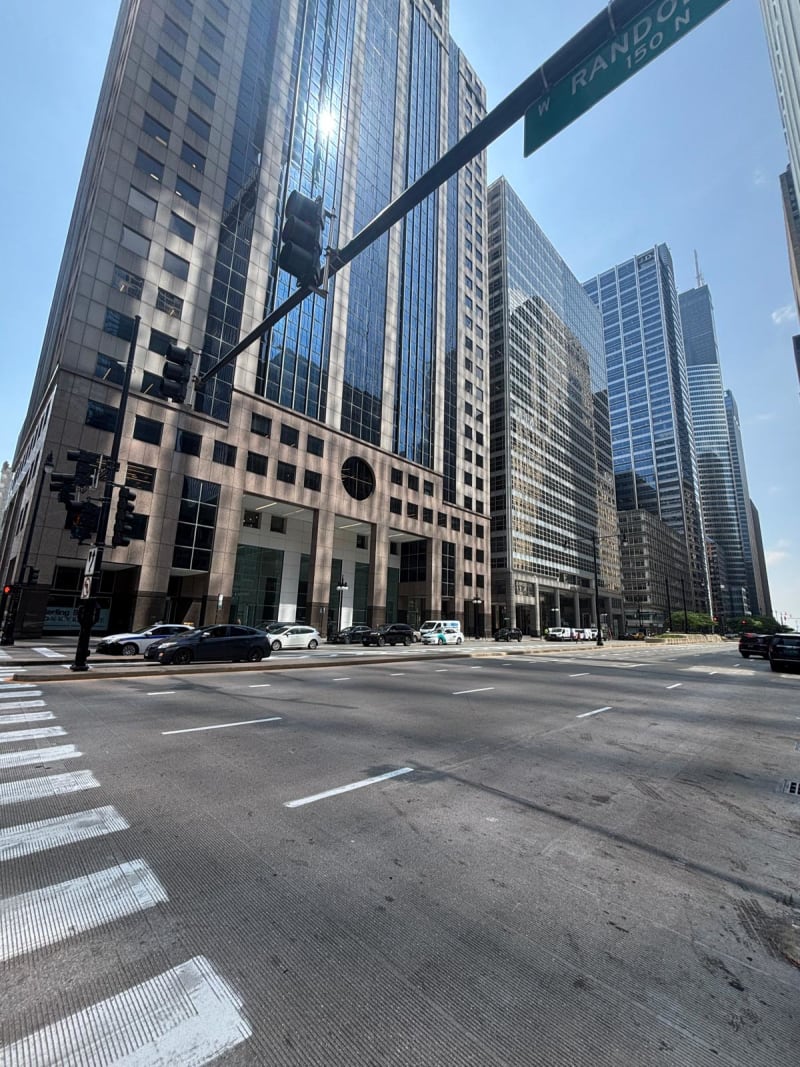
It takes an enormous number of people to make this work. Residents open their streets to us, while the police and the Park District provide their support. We also benefit from extraordinary infrastructure in the heart of the city. The event is accepted and embraced by the community. Runners are welcomed into the neighbourhoods, and volunteers reinforce that feeling. It is also a terrific showcase for the city.
Many participants had never been to Chicago before. For them, it is a unique experience. Every year, we learn something new. The marathon is part of the city’s history. Through it, residents have a responsibility for its development. It is a constant learning process.
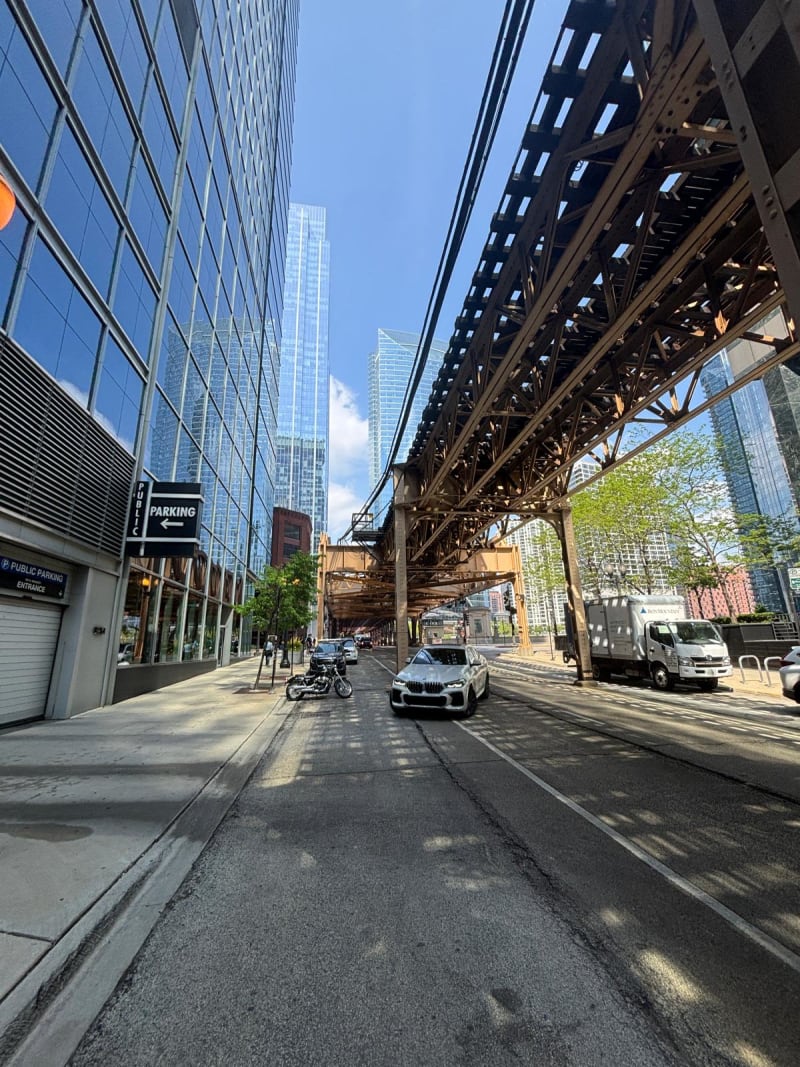
Our race has a historical dimension: every street and every building tells a story. The course of the Chicago Half Marathon, for example, passes through less frequently visited neighbourhoods and by the very spot where Abraham Lincoln was nominated as his party’s presidential candidate. Chicago is a city of many sides, and every edition reveals a little more of it.
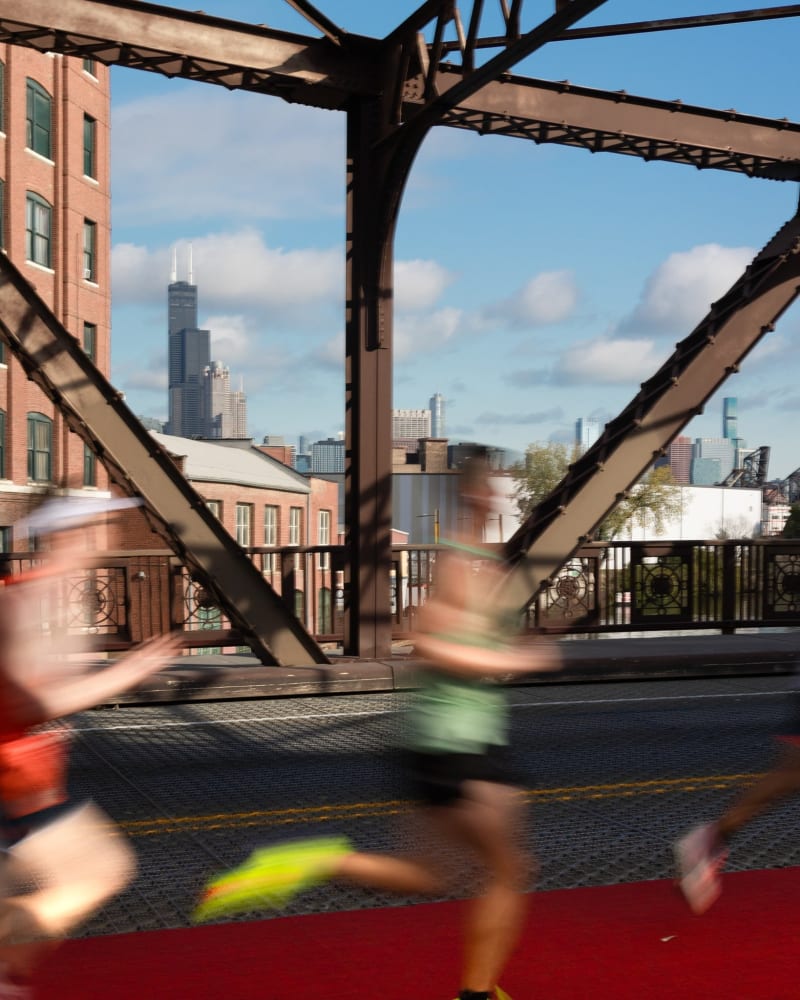
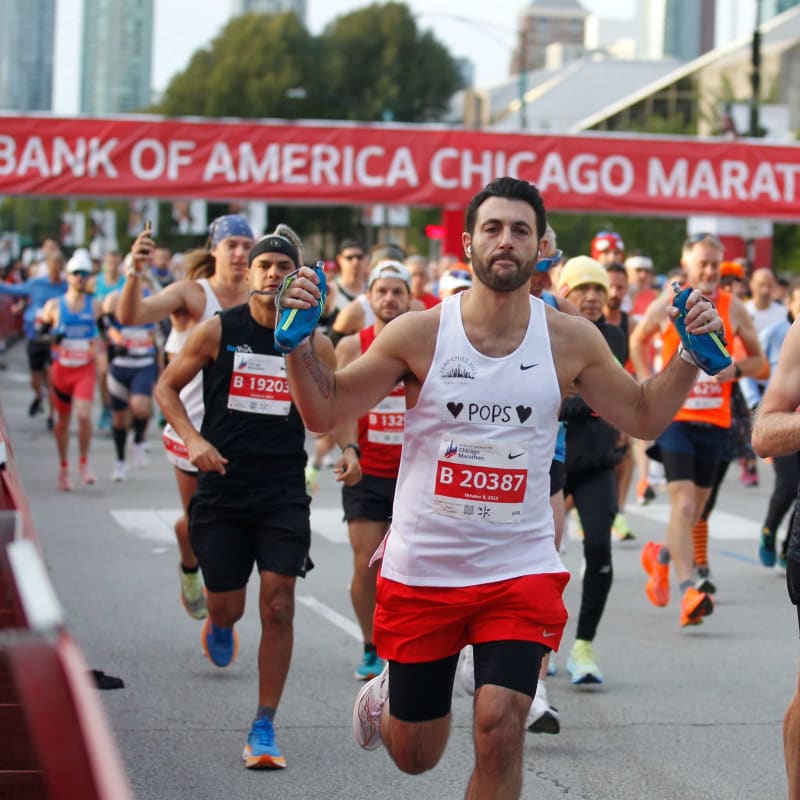 © Bank of America Chicago Marathon
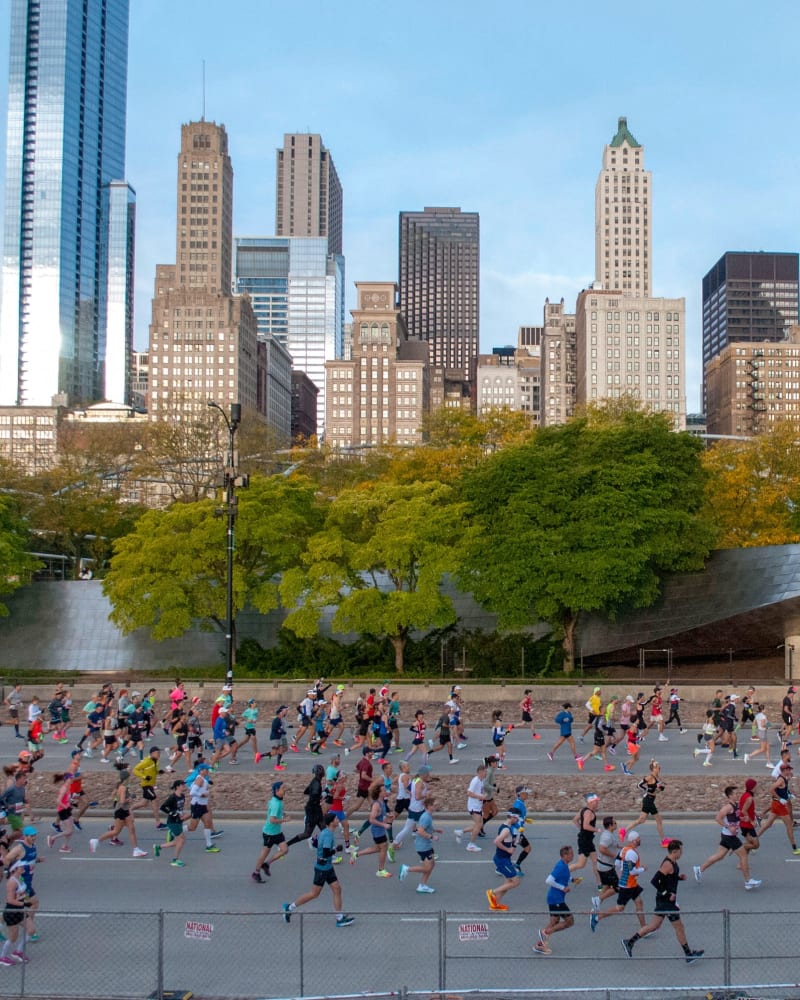 © Bank of America Chicago Marathon
 © Bank of America Chicago Marathon
 © Bank of America Chicago Marathon
 © Bank of America Chicago Marathon
Safety and organisation: a colossal challenge
| Organising an event on this scale is a huge logistical achievement, especially since the 2013 Boston Marathon bombing. What are your biggest safety and organisational challenges?
Carey Pinkowski : There are several factors to consider: the weather, the environment and, of course, safety. Our teams do an incredible job. Everyone mobilises to anticipate the challenges. In my view, Chicago is the best city event in the world because we are part of the community and benefit from tremendous support. We built all of this from the ground up.
I see the work that is done every day: everyone is committed. We place great importance on communication, answering questions and explaining things. I do not think runners realise the scale of the organisation. It takes time and hard work.
Chicago relies on a collective effort involving every city agency, including the Chicago Police Department. It is a genuine relationship of trust. They grant us permits because we are completely transparent about what we do and what we are going to do. Everyone feels part of the plan, and that is a source of great pride.
Everyone knows someone running the Bank of America Chicago Marathon: a cousin, a niece, a friend... Sometimes even a police officer or a neighbour. The marathon is woven into the city, and that connection is what allows it to thrive.
Michael Nishi: Thirty years ago, safety was already a concern, but not at the level it is today, particularly after 2001. Suddenly, it became a priority, and that focus intensified year after year. Then came the Boston bombing, around a decade later. Since then, safety has remained our absolute priority. We must constantly improve our emergency systems, because you never know what might happen.
There is also the weather, which we cannot control. In 2007, we should have stopped the race because of the extreme heat. That is probably one of the biggest challenges today, affecting everyone, alongside legal and insurance considerations. We learned a great deal from that edition, but we must keep improving.
| You mentioned the 2007 heatwave. Do you often think back to that episode, and do you still discuss it more than ten years later?
Michael Nishi: Absolutely. It became the foundation of our organisation. The programme evolves every year, but we always look back. We want to learn from the unexpected situations we have had to face. Fortunately, we now have experienced teams and a great deal of support. But we must always be better prepared. Those experiences shape us and help us move forward.
Carey Pinkowski: That day affected everyone, including other event organisers in Chicago and elsewhere. It led to the creation of a unified race-management organisation. It was the first major event to be cancelled. We still had 26,000 finishers, but the weather conditions were an enormous challenge: we even had to divert runners away from the finish line.
We still think about that day and rely on that unified organisation. When instant decisions have to be made, everyone falls in line. Other events such as Lollapalooza and even NASCAR learned from it.
It was a major lesson: at mass-participation events, we have to work together, firefighters, police and neighbourhoods, to build a collective plan that improves with every edition. The following year, when faced with almost identical conditions, we responded much better.
Michael Nishi: We changed everything, even creating an Event Alert system. It was the hottest day ever recorded in the race’s history. Many people thought 2006 had been an anomaly, but the same conditions returned the following year. We had to call in ambulances from outside Chicago. Half of the medical interventions involved heatstroke.
The first time, Carey and I said to each other that we might have to stop, that we could not handle it all. But the following year, we managed everything with private services, without using a single city ambulance.
Carey Pinkowski: Our coordinators, suppliers and the public all supported us. It showed the resilience of the city and our team. We rose to the challenge. Since then, other events have come to learn from our model. We even hold conferences to share our practices, analyse our operations in real-world conditions and help other cities.
A fast course with a rich history
| The Bank of America Chicago Marathon is known as one of the fastest in the world. How do you ensure the best possible conditions year after year, both for record attempts and for the event as a whole?
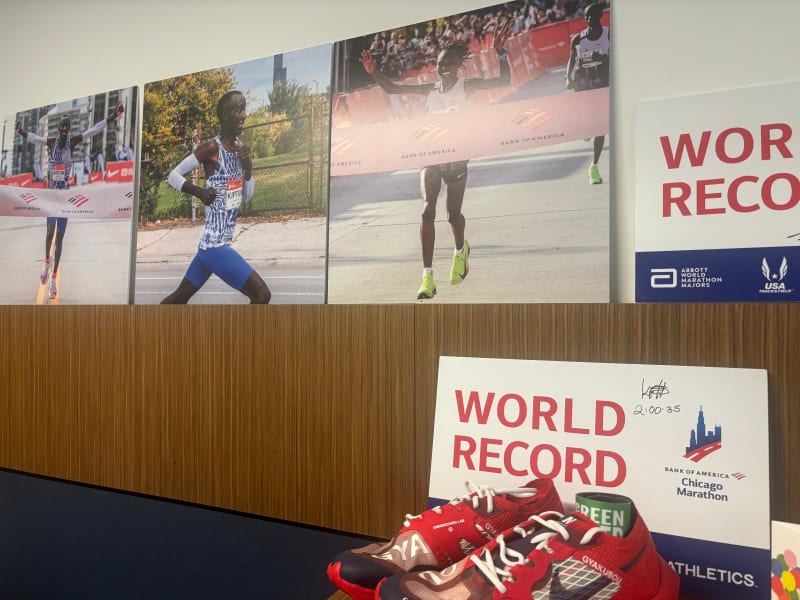
Carey Pinkowski: The course is not completely flat; there are a few small rises. But Chicago has long been a place for outstanding performances. More recently, Kelvin Kiptum and Ruth Chepngetich set historic times here. Everyone sees Chicago as a fast race, alongside Berlin and Valencia. Two of the fastest times ever recorded were run here.
We have always believed strongly in elite competition. Top athletes are a major asset for the event, and we make sure they are in the best possible conditions. From the moment they arrive, they have time to rest, train and prepare. Everything is organised to reduce their stress, from the hotel to the start, with secure three-minute shuttles. Our dedicated team works closely with coaches and managers so the athletes feel welcome.
It has become a tradition: many come back, including Steve Jones, Rosa Mota and Khalid Khannouchi. The marathon took on another dimension when Kiptum broke the world record in 2023 at just 23. I remember him asking me who Khannouchi was, as he was in the stands. I explained that Khalid represented peace. Kelvin thanked him for everything he had done for the sport. Khannouchi had even said he hoped that if someone broke the record in Chicago, it would be Kelvin.
There is history, tradition and responsibility. Athletes come here well prepared, with high expectations, and often success is within reach.
 © Bank of America Chicago Marathon
World records and the mythical two-hour barrier
| In Chicago, the men’s and women’s world records fell in quick succession: Kelvin Kiptum in 2:00:35 in 2023 and Ruth Chepngetich in 2:09:57 in 2024 (the interview took place before her provisional suspension following a positive test for a diuretic in July). Does that change the marathon’s image, and do you think the mythical two-hour barrier will one day fall here?
Carey Pinkowski: Absolutely. It is only a matter of time. I think Kelvin Kiptum could have done it in Chicago. As we say in the United States, he was still “holding back” during his record. Just look at his second half, run in 59 minutes and 40 seconds: you could sense that he had been cautious early on. He missed two hours by just 35 seconds. To me, he would have broken it in his next race under the right conditions. Sadly, he left us far too soon.
Diversity and inclusion: the marathon’s DNA
| When it comes to inclusion, diversity seems to be part of the Bank of America Chicago Marathon’s DNA. How are you supporting that growing openness, and what are your ambitions for the next ten years?
Carey Pinkowski: Inclusion and diversity are at the heart of the vision of our organisation, CEM, together with Bank of America and our sponsors. Our imagery and posters reflect that diversity and highlight people such as Mary Beth. We want to reach every community.
We receive strong support from clubs on the West Coast and in the South, particularly Black running clubs. Many people are discovering running and launching support programmes. Michael has been a real champion of equity, making it easier for clubs to take part. We also invite passionate runners who cannot afford the entry fee to participate. The idea is that everyone should be able to make the event their own.
Michael Nishi: Accessibility is essential. We have designed medals for visually impaired runners and bibs adapted for deaf runners to signal hazardous areas. We also highlight neurodivergent people, so they can be seen and inspire others. That is an important part of our work.
Carey Pinkowski: Janet, from our team, recruited artists from different communities to create artwork. Chicago is a diverse, athletic and proud city, made up of neighbourhoods and cultures. This is not a challenge for us; it is who we are.
It is not only about stars such as Chepngetich or Kiptum. It is also about those who run three- or four-hour marathons, people from all kinds of backgrounds. They are all part of this global community. That is the essence of our message.
Looking ahead to 2028 and the 50th anniversary
| In 2025, new challenges are emerging. What innovations are you preparing? Do you already have time to think about the next five editions?
Michael Nishi : We had a meeting just yesterday to prepare for our 50th anniversary in 2028. If you are only thinking about next year, you are already behind.
Carey Pinkowski: Nobody was looking at their phone during that meeting. It was a genuine moment of exchange, eye contact and conversation. A celebration of humanity. People run side by side with strangers from elsewhere, helping one another regardless of nationality. All of that comes from running, which is so simple.
We work and live stressful lives. Running takes time, but it is rewarding. It creates team spirit, memories and relationships. We know a 70-year-old runner named Randy who has already run 47 marathons and wants to reach 50 by 2028. For many people, this will be their first marathon, and we want to keep them coming back until then.
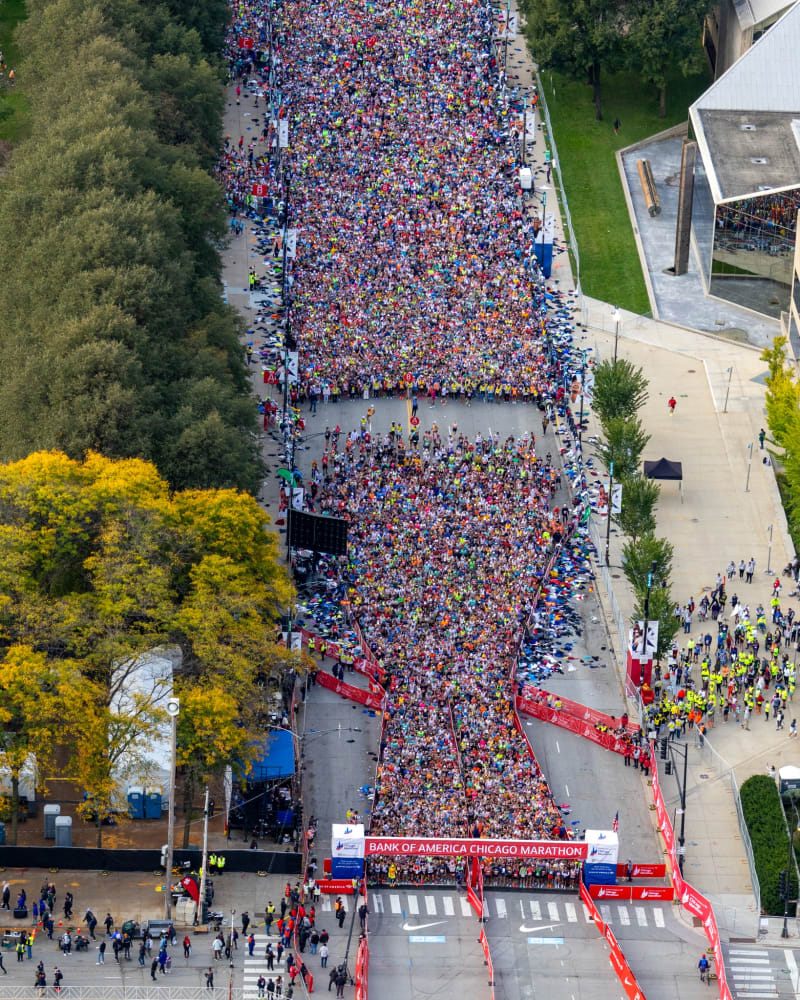
The energy in Chicago is unique. Organising the race is stressful, but when it takes place, the emotion is immense. Runners come from all over the world. Thirty or 35 years ago, I said to Michael: “If we ever have 10,000 participants, we won’t have any problems.” Today there are 55,000, and we still welcome them.
 © Bank of America Chicago Marathon
The marathons closest to their hearts
| Outside Chicago, which marathons are your favourites?
Carey Pinkowski: I love Boston for its tradition. They know how to honour history and pay tribute to runners who have pushed themselves to the limit. It is the world’s oldest marathon. I remember watching it as a child, fascinated. It is a tough race, with the famous Newton Hills. I love the atmosphere of the city, its energy and its history.
Michael Nishi: I would say Boston too. That is where I set my personal best. Every race is a unique experience. I also enjoyed New York, even in the rain. It was harder, but incredible. I remember running through Central Park, then tackling the final climb on 57th Street, where I cramped up. The crowd pushed me to finish. It was fantastic.
The Bank of America Chicago Marathon is much more than a race. It is a celebration of running, bringing together elite performances, a mass-participation atmosphere and a spectacular setting. With meticulous organisation, a passionate community and a vibrant city, the event remains unmissable for runners of every level, from amateurs to professionals.
Kudos to Carey Pinkowski and Michael Nishi, whose passion and commitment continue to fuel the legend. As the 2025 edition approaches, Chicago continues to write its history, ever richer and more inspiring, to the rhythm of thousands of runners’ footsteps.
➜ The 2025 Bank of America Chicago Marathon will take place on 12 October. Find out everything you need to know!
More articles
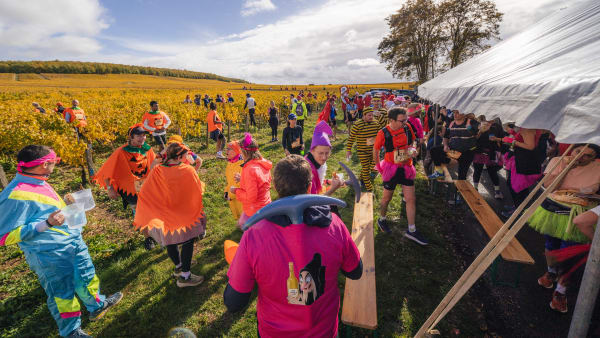
Marathon de Chablis set to welcome 4,400 runners among the vines
The Marathon de Chablis returns on Saturday, October 24, with races, hikes and a festive atmosphere among the vineyards.
Wed, October 21, 2026

Avignon Marathon makes a winning debut with more than 3,450 runners
More than 3,450 finishers turned out for the successful first edition of the Avignon Marathon on Sunday, September 27, 2026.
Wed, September 30, 2026

Night races: why does everyone want to run while everyone else is asleep?
From Glow Runs to low-key trail races, night running is taking off, offering a more festive experience and a different relationship with the clock.
Thu, September 10, 2026