
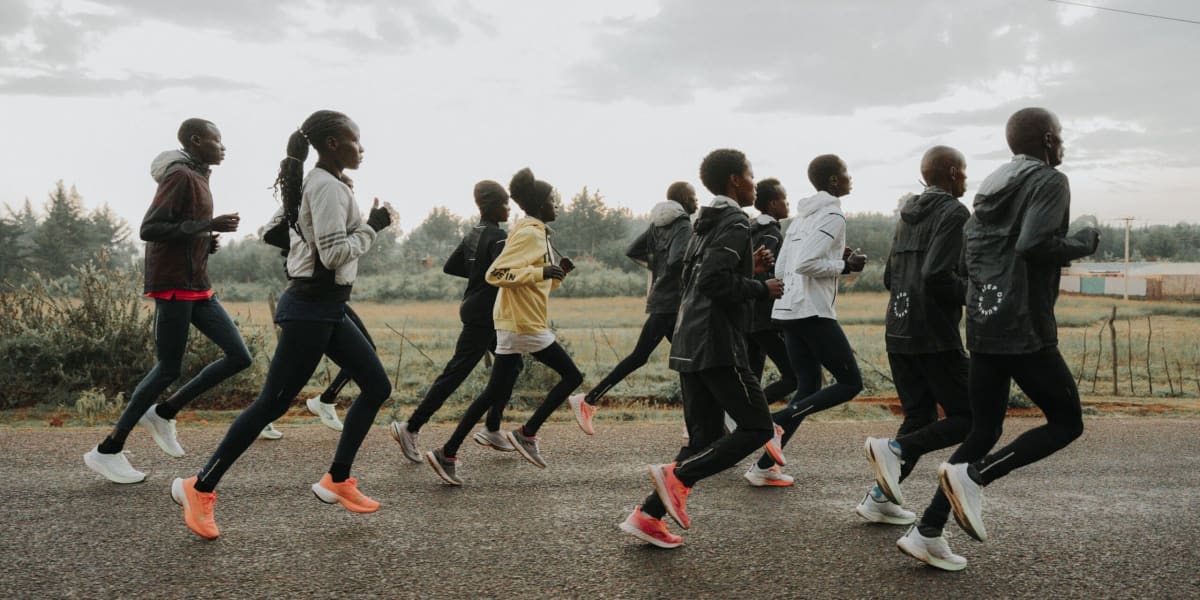
Kenya, the world’s 26th most populous nation, has dominated distance running for decades. Where does that dominance come from, and how has the country’s history shaped generation after generation of champions? The first instalment in our summer series on the nation of Eliud Kipchoge…
If there is one country that embodies running like no other, it is Kenya. Even those with only a passing interest in the sport know the name. The story goes back decades, beginning in the 1960s with Kipchoge Keino and his Olympic 1,500m gold at the 1968 Mexico City Games. He finished his career with two Olympic golds and two silvers, and is still regarded as one of the greatest African athletes in history. More than that, he opened the door to Kenya’s winning culture, which has never faded. Let’s rewind.
A brilliant story forged in a complex history
Independent since 1963 after a long colonial period, first under the Germans and then the British, Kenya has forged a complex history. The roots of Kenyan athletics can indeed be traced back to the British colonial period. From the 1930s onwards, British institutions organised competitions for workers in the various branches of the state, including the army, railways and postal service. Local culture, the harshness of everyday life and the habit of Kenyan youngsters running to school also played a part. British sporting culture merely revealed the full potential of Kenyan athletes. It was nevertheless the sporting events organised by the British colonial authorities that brought the first national talents to the fore.
The Kenya Amateur Athletics Association (KAAA) was founded in 1951. Its aim was to enable Kenya to compete officially in major international events. The country made its Olympic debut in Melbourne in 1956, but it was at the Tokyo Games in 1964, and above all in Mexico City in 1968, that the first major breakthroughs arrived. The steeplechase, a discipline long dominated by Europeans, quickly became a Kenyan stronghold, with athletes such as Amos Biwott and Benjamin Kogo. It was Kipchoge Keino, Olympic 1,500m champion in 1968 and a medallist over 5,000m and 3,000m steeplechase, who truly launched a lineage of champions that would continue to grow. Kenyan dominance would then spread across every road-running discipline. A dominance no one can deny to this day.
 © KIPRUN
 © KIPRUN
 © KIPRUN
 © KIPRUN
 © KIPRUN
 © KIPRUN
Building a system after independence in 1963
The rise of Kenyan athletics is not down to raw talent alone. It also rests on a progressive system designed to last. After independence in 1963, the KAAA became the driving force behind national athletics. It was renamed Athletics Kenya (AK) in 2002. For decades, the organisation has coordinated national competitions and selections for major events, including the Olympic Games and World Championships, across a range of disciplines: road running, cross-country, trail and mountain running.
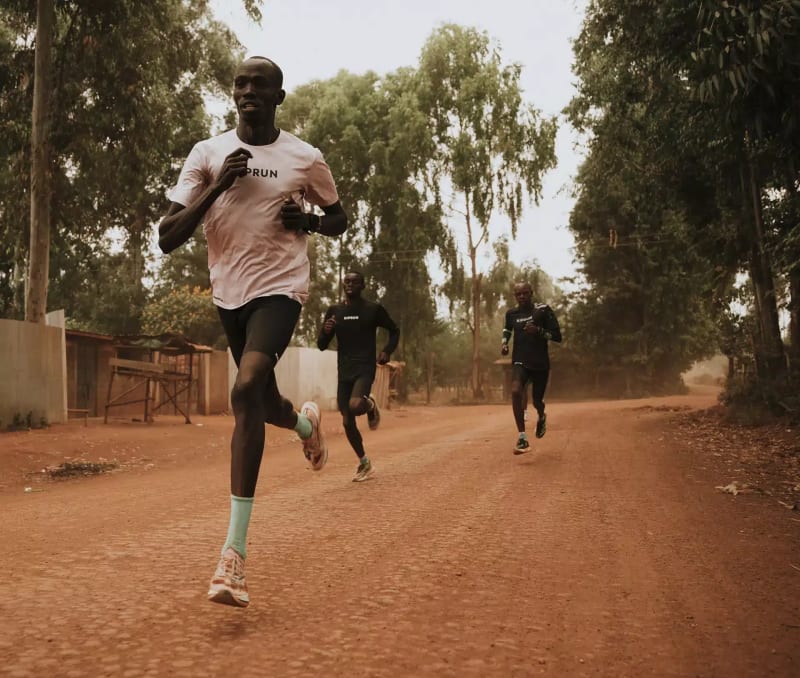
The federation centrally manages youth development and licences, and works with international partners. The sector became increasingly professional during the 1990s. Many Kenyan runners received university scholarships in the United States before moving into professional racing circuits in Europe and Asia. As the elite scene grew, high-level training centres emerged, notably in Iten, Kaptagat (where Eliud Kipchoge trains) and Nyahururu, all located more than 2,000m above sea level. These camps became the crucible of a genuine running “industry”. It has proved a virtuous cycle for performance. So much so that some athletes choose to represent countries other than Kenya, where competition is so fierce.
A gallery of giants
 © Nike
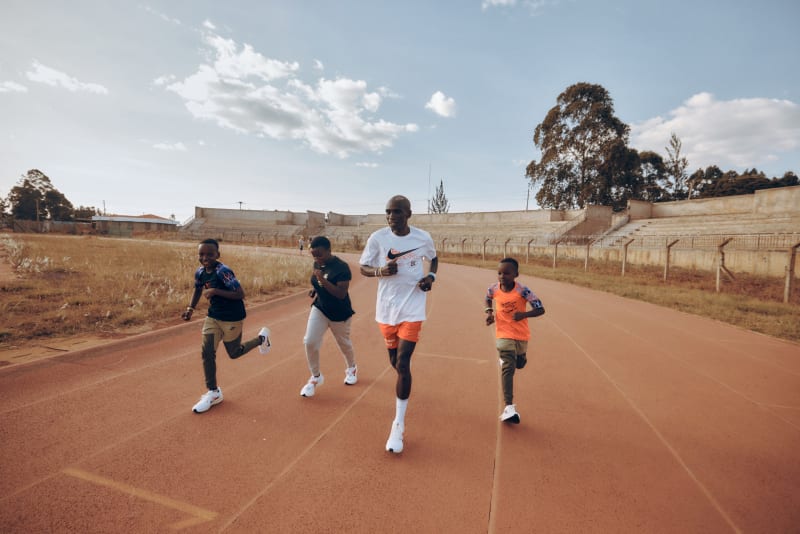
Since the 1990s, Kenya has ruled the marathon world. The runners from the Rift Valley first made their mark on the track, but over the decades it has been on the roads that they have built their legend. The country’s most iconic figure is, of course, Eliud Kipchoge. He moved from the track to the roads in 2013 and has been making history ever since. A three-time Olympic champion, in Rio in 2016, Tokyo in 2020 and Paris in 2024, he is the only man to win three Olympic titles over the marathon distance. In 2022, in Berlin, he set a ratified world record of 2:01:09, a performance that remains one of the greatest athletic achievements of the modern era. Born in 1999, Kelvin Kiptum was expected to lead the next generation after Kipchoge. In October 2023, in Chicago, he lowered the world record to 2:00:35, hinting at the possibility of an official sub-two-hour marathon. His career was tragically cut short in February 2024 when he died in a road accident, aged just 24. His death was felt as a devastating loss across the country. Before Kipchoge, other historic figures had already shaped the story of Kenyan marathon running. Paul Tergat, a five-time world cross-country champion and former rival of Ethiopia’s Gebrselassie, became the first man to break 2:05, running 2:04:55 in Berlin in 2003 and opening the way to today’s times.
On the women’s side, Kenya was long overshadowed by its great Ethiopian rival, but several athletes have since turned the tide. Catherine Ndereba was the first to establish lasting Kenyan dominance. A two-time world champion, in 2003 and 2007, and a two-time Olympic silver medallist, in 2004 and 2008, she was also the first woman to break 2:19, setting a world record of 2:18:47 in Chicago in 2001. Today, Brigid Kosgei still embodies the modern era of Kenyan women’s marathon running. In October 2019, in Chicago, she set a world record of 2:14:04, erasing the legendary mark set by Paula Radcliffe in 2003, 2:15:25. Kosgei has also won London twice and remains a serious contender whenever she lines up. Another Kenyan has secured her place in recent history: Peres Jepchirchir. Olympic marathon champion in Tokyo in 2020, she is also a two-time world half-marathon champion.
What about today?
Kenya remains a running superpower, but that dominance comes with complex challenges. Athletics Kenya retains a central role, yet its operation is regularly criticised. For Kenya, bridging the gap between sporting success and the extreme poverty prevailing in the country is difficult. There are many aspiring athletes and few places at the top. That creates a level of human insecurity that is difficult to contain. Even so, the country continues to organise itself around performance. The network of training camps, particularly in Iten, has expanded considerably. World-class stars, emerging athletes and overseas amateurs looking to train at 2,400m above sea level all cross paths there. This running “tourism” has become a source of income and a driver of the region’s profile. But it is not without its dangers. The case of Agnes Tirop, a two-time world 10,000m bronze medallist, in 2017 and 2019, and fourth in the 5,000m at the Tokyo Olympics, who was murdered in 2021, highlighted the dangers facing female athletes. The “Tirop’s Angels” initiative now works to prevent domestic violence and protect female athletes, but the problem runs deep. Poverty and the hope of building a better life through running continue to produce real insecurity within the sport.
Technically, Kenyan runners now benefit from the best equipment and more scientific training plans. But they must also contend with growing global competition, particularly from Ethiopia, Uganda, Morocco and Europe. The future of the Kenyan model rests on a fragile balance between a deeply rooted cultural heritage, an increasingly individualistic approach to careers and the need to maintain a sustainable national sports policy.
More articles

Marathon de Chablis set to welcome 4,400 runners among the vines
The Marathon de Chablis returns on Saturday, October 24, with races, hikes and a festive atmosphere among the vineyards.
Wed, October 21, 2026

Avignon Marathon makes a winning debut with more than 3,450 runners
More than 3,450 finishers turned out for the successful first edition of the Avignon Marathon on Sunday, September 27, 2026.
Wed, September 30, 2026

Night races: why does everyone want to run while everyone else is asleep?
From Glow Runs to low-key trail races, night running is taking off, offering a more festive experience and a different relationship with the clock.
Thu, September 10, 2026