
 © © European Marathon Classics
Mountains, coastlines and cities: Europe’s finest point-to-point marathons
A marathon is never just 42.195 km. It is an adventure, an unforgettable journey, made even more special when the course is not a loop but connects two distinct places. Across Europe, iconic races and more under-the-radar events offer the point-to-point format. Forget predictable, repetitive courses. These races deliver something different, combining history with spectacular scenery.
Whether they are chasing a performance, an experience or spectacular scenery, every runner can find a marathon that matches their goals. When the setting matters, point-to-point races are the perfect opportunity to push yourself while covering 42.195 km through constantly changing surroundings. Here is a look at several point-to-point marathons in Europe that combine travel with a distinctive atmosphere.
Athens Marathon The Authentic: the most iconic
 © The Authentic
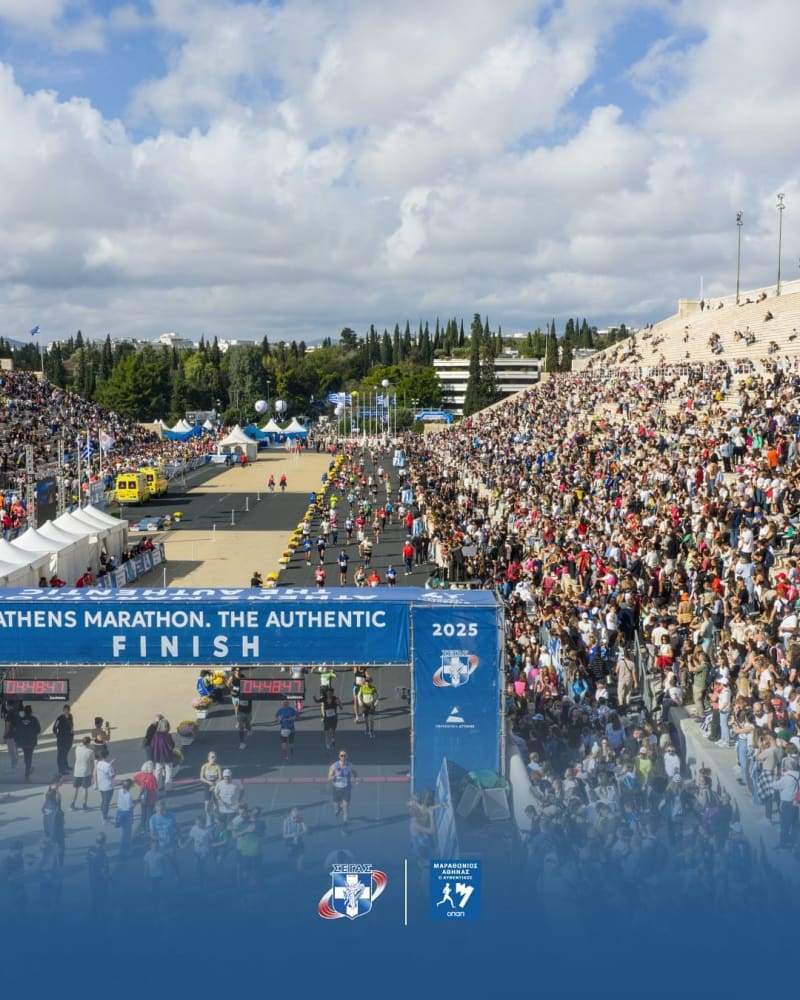
History buffs, Ancient Greece enthusiasts and fans of Mediterranean landscapes will find plenty to tempt them in the Athens Marathon, the birthplace of the event. Some 40,000 participants line up each year for a course that follows the legend of the soldier Pheidippides. Around 2,500 years ago, the messenger is said to have run roughly 40 kilometres from Marathon to Athens to announce the Greek victory over the Persians during the First Persian War. An immense effort that supposedly cost him his life.
As demanding as it is impressive, the course starts near the battlefield where the Athenians defeated the Persians, whose forces were three times larger. The finish comes in the heart of the Panathenaic Stadium, after runners have crossed several villages and neighbourhoods. It is a spectacular finale inside the ancient 80,000-seat venue, renovated for the first modern Olympic Games in 1896. Enough to stir powerful emotions, as if you were an Olympic champion yourself.
The race is above all an adventure. Marathoners face 550 metres of elevation gain, with climbs, descents and even rolling sections around Pallini between kilometres 27 and 28. The road pitches upward from kilometre 20 through kilometres 30 and 31, before dropping back towards the capital. The views are superb, with the Aegean Sea in the distance, along with the quintessential olive groves and vineyards.
Next date: early November 2026
Baxters Loch Ness Marathon: the wildest
 © Baxters Loch Ness Marathon
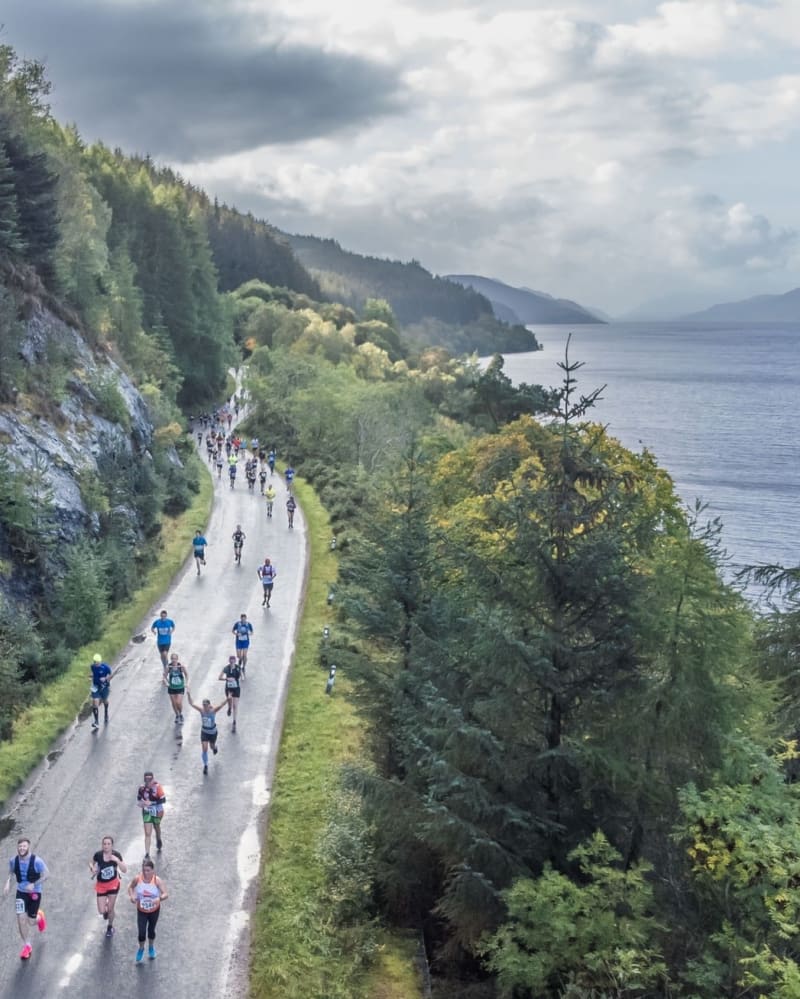
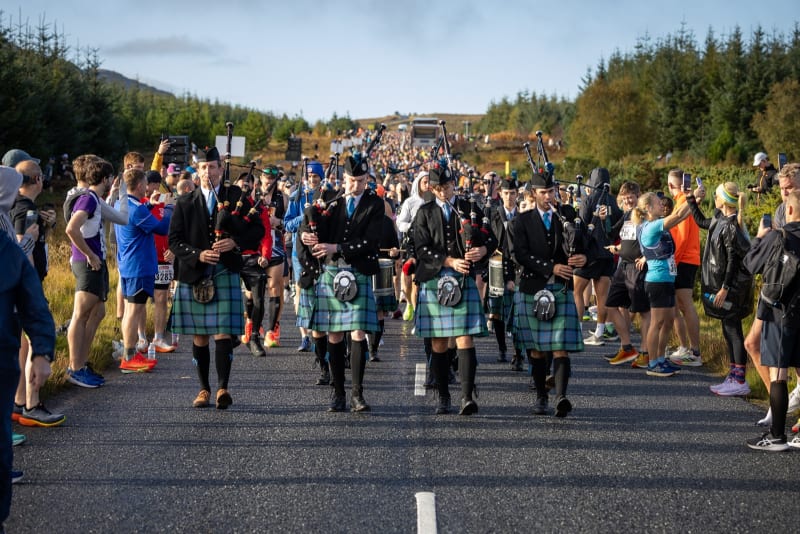
Mists, wild moorland and Scottish folklore reaching back through the ages: welcome to the Highlands. The Baxters Loch Ness Marathon is an event like no other. One glance at the starting line, set on a narrow country road in the middle of nowhere, is enough to understand the race’s magnetic appeal. From the opening kilometres all the way to the centre of Inverness, you feel as though you are running far from civilisation.
The loch, said to be home to the legendary creature known as Nessie, has fascinated people since 565, when an Irish monk claimed to have encountered the monster. The fantastic tale gained fresh momentum in 1933 and 1934, when a new road was built along the loch, and later when a photograph, eventually exposed as a hoax, travelled around the world.
This event attracts nearly 6,000 marathon runners each year and more than 10,000 participants across all distances, in a picture-postcard setting. The vast, dark and mysterious loch stretches between green moors, heather-covered hills and Scottish pine forests. In this landscape steeped in mystery, mist and shifting light often join the race to complete the atmosphere. The profile is relatively accessible, with 250 metres of elevation gain. The first half is mostly downhill, taking runners to the south-eastern shore. The rest of the course remains fairly fast and runnable all the way to Inverness, which comes alive for the occasion.
Next date: 27 September 2026
 © Baxters Loch Ness Marathon / Paul Campbell
Rennsteiglauf Marathon: the most mountainous
 © Rennsteiglauf Marathon
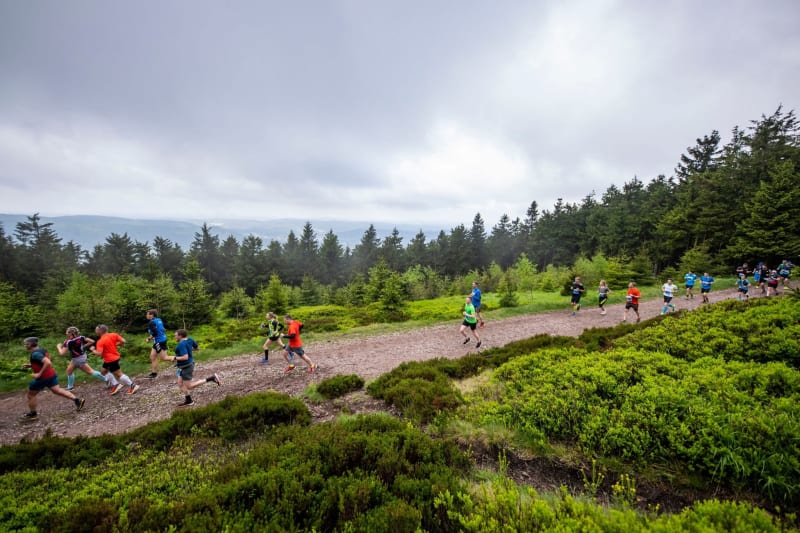
Deep in the forests of Thuringia, far removed from the usual city marathons, the Rennsteiglauf Marathon is one of Europe’s biggest trail-running events. Starting in Neuhaus am Rennweg and finishing in Schmiedefeld am Rennsteig, the linear course follows the ridge of the Thuringian Forest through untouched countryside. It is a true point-to-point race of around 43.5 kilometres, deep inside a protected nature park and almost entirely on scenic trails. The mid-mountain landscape, made up of coniferous and deciduous forests, alternates between dense vegetation, alpine meadows, streams and ponds. The historic trail follows the mountain ridge, with runners spending most of the race between 500 and 900 metres above sea level. It is a setting worthy of a Lord of the Rings film.
The race has taken place every year in mid-May since 1973, at a time when the vegetation is particularly varied and colourful. Between 10,000 and 15,000 participants head into the forest for each edition across all the available distances. The course is as breathtaking as it is demanding, with around 637 metres of elevation gain spread across a succession of climbs and descents. The highest point comes around Eselsberg, at roughly 841 metres above sea level.
The Rennsteiglauf Marathon is also so popular because of its traditional, welcoming atmosphere. The race starts to the sound of the “Schneewalzer”, a folk song hugely popular in Germany and Austria, which participants hear and sing along to before setting off. It is a local tradition and a symbolic ritual. The crowds are thick, providing warm encouragement all along the course. Even the aid stations reinforce the event’s identity, with broth, oat porridge and local Köstritzer beer available to runners. The festive weekend ends with a large public celebration.
Next date: May 2026
Venice Marathon: the most spectacular
Running across a floating bridge above the Grand Canal, in the heart of Venice. The Venice Marathon has taken place at the end of October every year since 1986. The distance is exactly 42.195 km, starting west of the city in Strà, on the banks of the Riviera del Brenta. The spectacular finish is in the historic centre of the city known as La Serenissima. A city of art and culture, this Italian jewel has everything going for it.
The route begins at the foot of beautiful 18th-century Venetian villas, before moving through more urban areas and then Parco San Giuliano. Participants cover around 30 km before Venice comes into view. The four-kilometre Ponte della Libertà marks the entrance to the capital of the Veneto region, taking runners from the mainland onto the island of Venice. The scenery helps you dig deep over the final kilometres along the Giudecca Canal, before crossing the Grand Canal on a 170-metre floating bridge installed specially for the race, followed by a series of typically Venetian bridges. Temporary ramps are installed to avoid the steps. The finish near St Mark’s Square, facing the lagoon, looks like a scene from an enchanting film.
The course is accessible and fairly flat despite its 14 bridges. Needless to say, the many historic monuments lining the route will delight history lovers. The atmosphere is warm too. The marathon is a genuine celebration, with an entire village dedicated to the event: the Venice Marathon Expo Village.
Next date: 25 October 2026
Marathon des Alpes-Maritimes Nice-Cannes: the sunniest
This is one of France’s most scenic marathons. The renowned Marathon des Alpes-Maritimes Nice-Cannes, which follows the Mediterranean coastline for virtually the full 42.195 km, is a superb point-to-point course. The race starts in Nice in November on the famous Promenade des Anglais and heads to Cannes, finishing on the Boulevard de la Croisette in front of the Palais des Festivals. The grand finale makes you feel like a true star.
More than 10,000 participants from every nationality head to the Côte d’Azur each year to run the legendary coastal road between the two cities. The setting attracts plenty of international runners, from those chasing a personal best to relay teams looking for an unforgettable weekend. It is the perfect mix of performance and sightseeing.
Saint-Laurent-du-Var, Cagnes-sur-Mer and Antibes are among the towns on the route, brought to life by bands and marching musicians. Beaches, coves and rocky coastline unfold along the course, with the imposing Alps providing the backdrop. Palm trees, sunshine and music accompany runners on this mostly fast course, which has around 173 metres of elevation gain. All of it comes with a Riviera seaside atmosphere and usually ideal November weather. Some years bring strong sea winds, which can have an impact on performances.
Next date: 8 November 2026
Oberelbe Marathon: the most under-the-radar and elegant
After the Rennsteiglauf Marathon, which takes place deep in the countryside, the Oberelbe Marathon in Germany offers a blend of city and nature, following the famous Elbe cycling route. Regarded as one of Europe’s finest cycle paths, it runs alongside the river on the section used by runners in late April.
The marathon starts in Königstein, in the heart of Saxon Switzerland National Park, with magnificent views of the Elbe and its sandstone mountains. Far from monotonous, the route is one of the most beautiful in the country, following the water, passing beneath cliffs and cutting through the countryside. The gently downhill course alternates between wild landscapes and the typical towns of eastern Germany.
Runners pass through Rathen, Stadt Wehlen, Obervogelgesang and the historic old town of Pirna before reaching the cultural city of Dresden and the Heinz-Steyer-Stadion track. It is a fitting finale for a major race, with large crowds and a picturesque atmosphere all along the route.
Several iconic landmarks line the marathon, including the famous Blaues Wunder, the blue steel bridge, as well as the region’s castles. The finish takes place not far from Dresden’s historic centre, with its Baroque architecture, Semper Opera House and Frauenkirche.
Next date: late April 2026
Det Norske Fjellmaraton: the most northerly
 © Det Norske Fjellmaraton
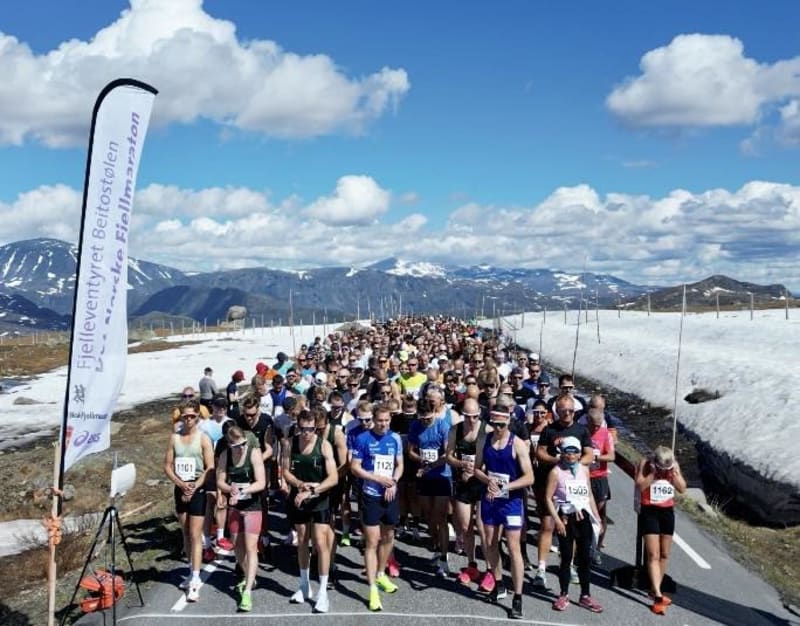
For anyone passionate about nature and Scandinavia, Det Norske Fjellmaraton offers the chance to discover inland Norway, its mountains and its wild expanses stretching as far as the eye can see. It is an almost meditative race, a chance to reconnect with yourself in a vast country of nearly 400,000 km² and just five million inhabitants.
The race starts near Bygdin, beside a huge high-altitude lake surrounded by peaks and heather-covered plateaus. From the opening kilometres, the wide-open landscape is enhanced by moss, lichen and shrubs. This distinctive, almost lunar alpine-tundra setting is impossible to ignore. Runners can marvel at vast mountain plateaus dotted with lakes and glacial rivers. The calm is a world away from the atmosphere of the major city marathons. In the distance rise the mountains of the Jotunheimen range.
The second half of the course descends gradually towards the Valdres valley, where the scenery becomes more colourful. Pines and birches intertwine to create forests straight out of Nordic folk tales, where trolls and other fantastical creatures might live. Traditional red Norwegian cabins scattered across the meadows complete the authentic setting. In the final section, the marathon follows rural valleys and rushing rivers before finishing in Fagernes, on the shores of Lake Strondafjorden.
This 42.195 km point-to-point race is a journey into silence, across vast natural spaces bathed in soft light. Held in June, Det Norske Fjellmaraton is not an event at extreme altitude but an immersion in Norway’s mid-mountain landscape. Less well known than races in the fjords or near the Arctic Circle, this marathon reveals a more intimate and wilder side of the country. The course alternates between alpine trails, tracks and minor roads, somewhere between a road marathon and an accessible trail race.
Next edition: late May 2026
Running a point-to-point marathon requires careful logistics and organisation. But it is also a chance to experience 42.195 km of constantly changing scenery, whether along a river, beside the sea or deep in wild, protected countryside. From France to Germany, via Greece, Scotland and Italy, Europe is packed with races both famous and overlooked, all worth considering for runners looking for adventure and new horizons.
➜ Explore the marathon calendar
More articles

Euro Marathon Metz 2026 is scaling up with more than 9,000 runners
Euro Marathon Metz 2026 is gathering serious momentum, with more than 9,000 runners entered one month before race day.
Thu, September 10, 2026

Single-loop marathons: 8 unusual and under-the-radar races to discover in Europe
Forget courses that send you past the same spot several times. These unusual European marathons offer one continuous loop.
Thu, September 10, 2026
Avignon Marathon set for inaugural race on September 27, 2026
Avignon
Thu, September 10, 2026