
 © European Marathon Classics
Single-loop marathons: 8 unusual and under-the-radar races to discover in Europe
Forget 42.195 km courses where you pass the same spot several times. Across Europe, some lesser-known and often unusual marathons offer one continuous loop. From Norway to France, in the mountains or through city streets, these events come in all shapes and sizes and attract runners looking for a truly unique route.
A marathon as an exploration, where every kilometre brings something new. After point-to-point races, Marathons.com presents courses laid out as one grand loop, without ever retracing the same roads. The chance to cover 42.195 km on mountain roads, around a city or even across an entire region. Here is our selection of Europe’s more unusual and under-the-radar races.
Tromso Polar Night Marathon: the most Scandinavian
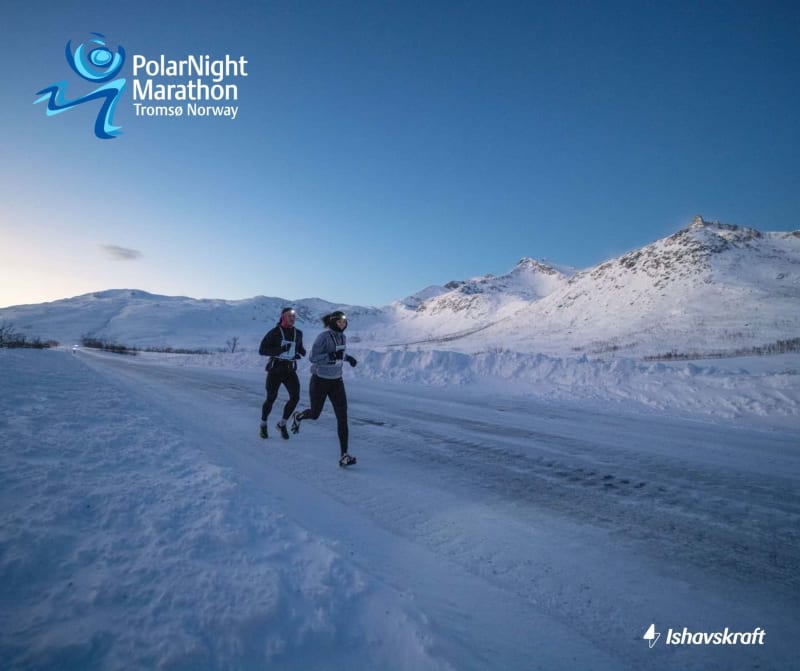 © Polar Night Marathon
The Arctic Circle and its frozen fjords, surrounded by snow-covered mountains and the northern lights. The Tromso Polar Night Marathon is more than a race: it is an immersion in the heart of the polar night. This winter event takes place during the day, but at a time of year when the sun remains below the horizon for weeks on end. Snow takes over the breathtaking landscape, while the light casts striking blue hues and creates an unforgettable experience.
The route winds through Tromso’s colourful streets, lit by candles, torches and, at times, the northern lights. The result is a magical atmosphere on the icy roads of the Far North. Almost 2,000 runners take part each year in this event held in the “Gateway to the Arctic”, a city known for its warm welcome.
The first half is fairly rural, following a mountain road, while the second is more urban. The route crosses several bridges, including the iconic Tromso Bridge linking the main island to the mainland. Watch out for bitterly cold winds on these exposed sections. Some long stretches run far from civilisation, in pitch darkness. With temperatures often between -5°C and -15°C, conditions are tough and make runners feel like explorers. The roads are frequently snow-covered and icy, so studs or suitable footwear are strongly recommended. The profile is fairly runnable, but the weather makes it particularly demanding.
There is also a summer version of the race, the Midnight Sun Marathon, held when the sun never sets. It is a chance to experience the midnight sun, bathing the sky and land in yellow and red light. This exceptional, almost otherworldly atmosphere makes for a truly extraordinary race.
Next date: early January 2027
and 20 June 2026 for the summer edition
Björn Borg Helsinki Marathon: the most historic
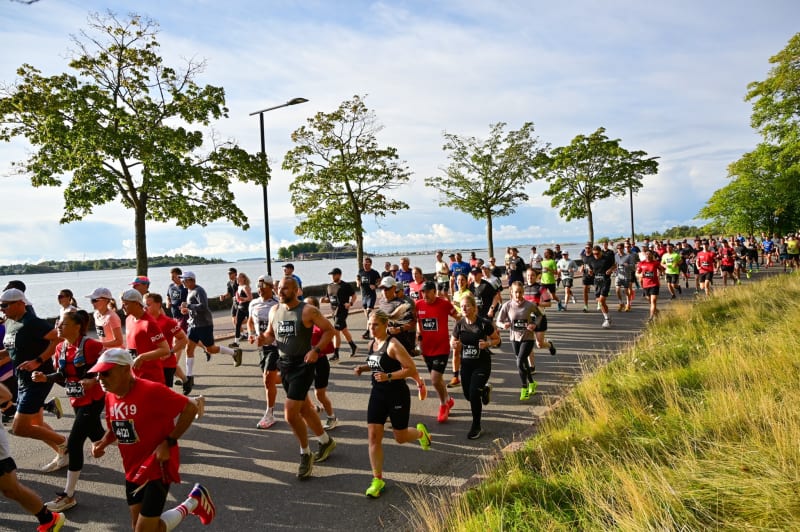 © Helsinki Marathon
The Helsinki Marathon takes place south of the Finnish capital. Picturesque neighbourhoods and small Baltic Sea harbours reveal the White City of the North, with a blend of tradition and modernity. This loop is ideal for discovering architecture that combines classicism and Art Deco. The marathon is held in August, when temperatures in Finland are pleasant. The mercury often barely reaches 20°C, although rainy and windy editions are not uncommon. Like the Tromso Midnight Sun Marathon, the race takes place during the midnight sun period, adding to the Nordic experience.
With views over the Gulf of Finland, the urban setting will appeal to runners looking for an unexpected route. Starting at Merispuito, the course heads through the city centre before venturing inland towards Kulosaari Island and the outskirts of Helsinki. The start line is near the statue of Paavo Nurmi, the legendary figure of Finnish athletics and a national hero. The route then passes iconic landmarks including Parliament and the Museum of Contemporary Art, before finishing inside the Olympic Stadium. A symbolic finish in a venue steeped in history.
This marathon offers the perfect blend of city and nature. Forests, hills, lakes and small islands create a varied backdrop. Founded in 1981, it is one of Scandinavia’s oldest marathons. It is also reputed to be Europe’s greenest.
With plenty of cheering stations, DJs and cheerleaders, the race attracts 6,000 runners and 50,000 spectators from around the world each year.
Next date: 22 August 2026
Marathon du Vercors: the most mountainous
If the mountains are calling, the Marathon du Vercors deserves your full attention. The first road marathon in Europe held above 1,000 metres, it winds through forests of fir, spruce and beech, as well as flower-filled meadows. The scenery is wonderfully peaceful, especially in June when the race takes place. Gorges, open plateaus, forest sections and views of the Vercors ridgelines make this a memorable experience. These landscapes lie within France’s largest regional nature park, known both for its history with the Resistance and its vast cross-country ski areas.
The setting may look like something from The Lord of the Rings, but the race is no fantasy, with 550 metres of elevation gain and a passage over the Col de la Croix Perrin at 1,218 metres. This is the main difficulty: 5.4 km with 216 metres of climbing and an average gradient of 4%.
Starting in Villard-de-Lans, the route passes through Lans-en-Vercors, Autrans and Méaudre. It is 100% road and trail, but entirely immersed in nature.
The race is a peaceful escape, surrounded by the scent of trees and birdsong in a unique, protected natural environment. The inaugural 2025 edition was a success, with 3,850 participants, 49% of them women. The marathon can also be run as a four-person relay.
Next date: 27 June 2026
Munich Marathon by Brooks 2026: the liveliest
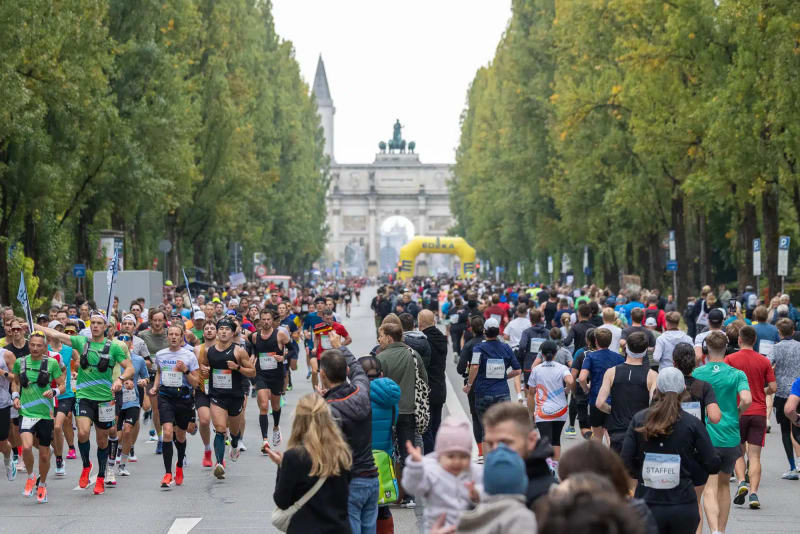 © Munich Marathon
The Munich Marathon is undoubtedly the liveliest and most popular race in this article. The Bavarian capital offers a historic route, starting near the Olympic Stadium built in 1972 and finishing inside it. The course reveals the city from a different angle, one week after Oktoberfest, the famous beer festival. Every year, 20,000 runners flock to Munich to cover the classic distance through streets buzzing with spectators.
The event is a full weekend of celebrations, including the International Costume Run held the day before the marathon, a colourful showcase of Bavarian tradition. Music, concerts and dense crowds accompany runners throughout the course. Sport, culture and community define an event built on a strong team of dedicated volunteers.
The route showcases Munich’s main landmarks, including the Art Nouveau villas of Bogenhausen, the Gasteig cultural centre, Englischer Garten, the Isar Bridge and the National Theatre, as well as Marienplatz, Siegestor and Odeonsplatz. The city’s architectural heritage is particularly rich, from St Peter’s Church, dating back to the 12th century, to the neo-Gothic Neues Rathaus. Munich is admired for its historic charm and imposing modern architecture alike.
Rich in culture and history, the event is one of Germany’s oldest and largest marathons, having been held since 1972. Most importantly, the course is a Boston Marathon qualifying race and is relatively fast.
Next date: October 2026
Snowdonia Eyri Marathon: the toughest
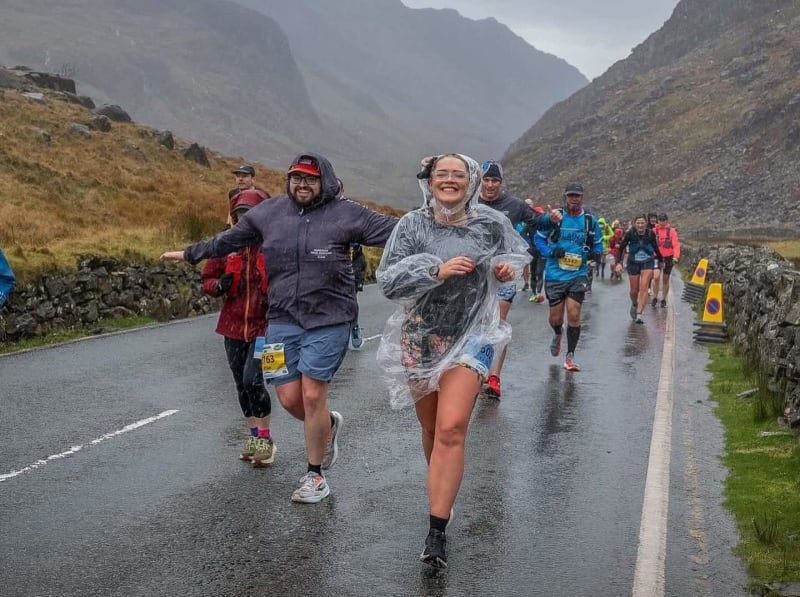 © Snowdonia Eyri Marathon
Wales offers remarkably well-preserved wild landscapes. The Snowdonia Eyri Marathon is known for its scenic, spectacular route, but also for its extreme difficulty. Nature here is raw, sublime and demanding in equal measure. The course takes runners through glacial valleys, over steep mountains and along narrow country roads overlooking the peaks and lakes of the national park. It is one of the most beautiful marathons in Europe.
The race starts in Llanberis, in the north of the country, at the heart of a former mining region and close to Llyn Padarn. The area is renowned for outdoor activities. The route is entirely on roads, through a high-mountain environment around Snowdon, the highest peak in Wales. The climb to Pen-y-Pass, around the 30 km mark, is particularly feared: the gradients steepen just as the finish begins to loom. Runners can see the long climb stretching into the distance.
With around 1,000 metres of elevation gain and a succession of long climbs and descents, this is no ordinary marathon. The famously changeable Welsh weather makes it even harder. Strong winds, fog and icy rain add to the challenge. Narrow roads, rugged terrain and long isolated sections test even the bravest runners. The relentless sequence of climbs and descents is especially taxing on the legs.
Here, the clock takes a back seat: reaching the finish in Llanberis is an achievement in itself. These characteristics have built the reputation of the Snowdonia Eyri Marathon since 1982. Over the years, it has become a major fixture on the British racing calendar.
Next date: 24 October 2026
Enschede Marathon: the most pastoral
At the opposite end of the spectrum from the formidable Snowdonia Eyri Marathon, the Enschede Marathon in the Netherlands is far more accessible. This urban course runs through a city with a rich heritage. Picturesque streets and architectural landmarks line the route. A classic marathon, it is well suited to a first attempt at the distance.
The roads are smooth and wide, with long, straight stretches. The course is also cross-border, entering Germany before returning to the Netherlands. Conditions vary with the wind, which is common in the region. The finish in the city centre draws large crowds, helping runners all the way to the line.
Founded in 1947, this is one of the world’s oldest marathons after the Boston Marathon, and the oldest in Europe. Created after the Second World War, its aim was to support reconstruction and reconciliation after years of conflict. The Enschede Marathon is known for its warm crowds lining the course and its efficient organisation. Often seen as an alternative to the major city marathons, it is popular with runners targeting a personal best.
Next date: 12 April 2026
Marathon des Vins de Blaye: the most surprising
 © Marathon des Vins de Blaye
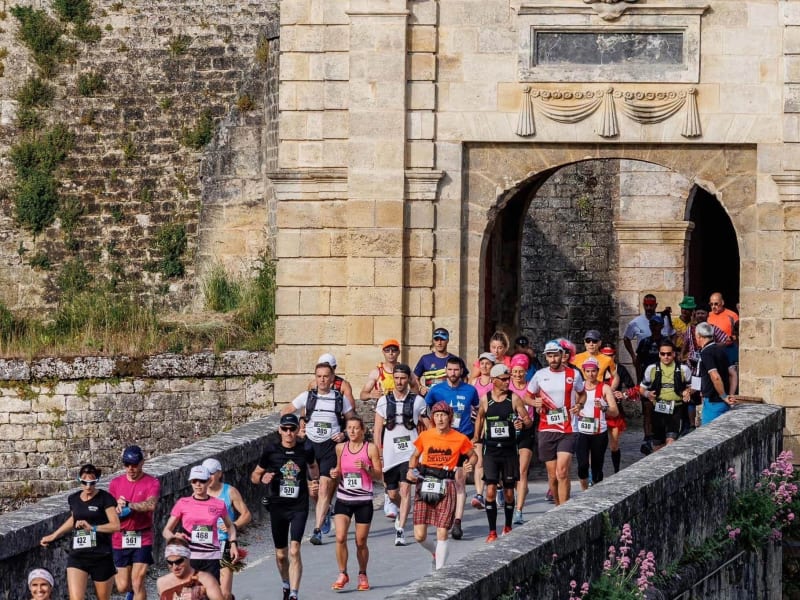
France offers plenty of unusual races. The Marathon des Vins de Blaye in Gironde is one of them. A 42.195 km loop through wine country around Blaye, between vineyards and rolling hills. The goal is not simply to race hard: since 2004, the event has blended sport, wine, celebration and heritage in a festive atmosphere.
The start and finish are inside Blaye Citadel, a UNESCO World Heritage Site. The course then climbs 438 metres through typical local villages including Berson, Cars, Saint-Serin-de-Cursac, Fours, Eyrans, Saint-Androny and Saint-Martin-Lacaussade. The profile is rolling, with false flats, climbs and vineyard tracks. Most of the main difficulties come in the first half.
The views are superb, stretching across the wine-growing hills and the Gironde Estuary. The 6,000-hectare vineyard region also has a rich history. Merchants stopped here before travelling on to Bordeaux, Spain or Portugal. The strategically located town has been fortified since antiquity, with defensive works controlling the estuary and the surrounding area. To complete the scenery, runners can also catch sight of the region’s iconic châteaux. Landscapes that make this loop truly exceptional.
The race’s defining feature is its wine tasting stops, offered to runners as part of the on-course refreshments. Tastings, entertainment and fancy dress all contribute to the event’s warm, convivial reputation. More intimate than the Marathon du Médoc, the Marathon des Vins de Blaye wins people over with its authenticity.
Next edition: 9 May 2026
Marathon International de Biarritz: the most oceanfront
 © Marathon de Biarritz
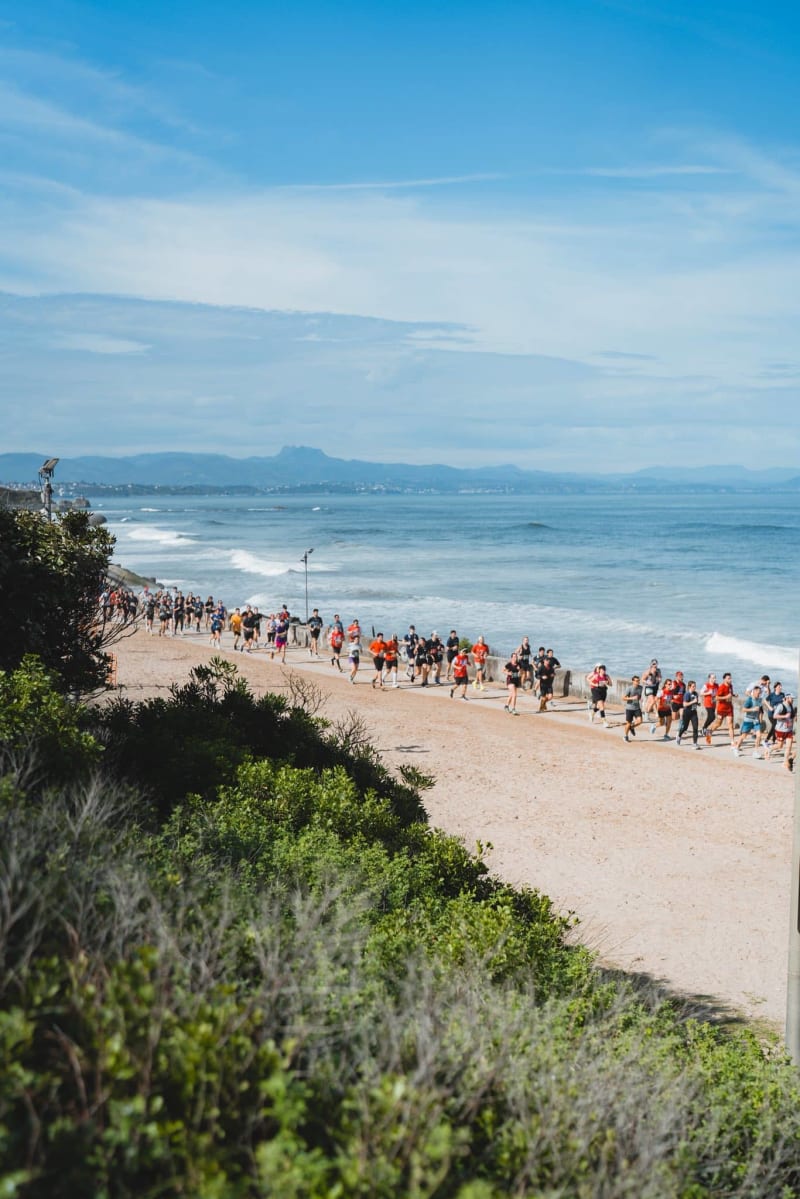
Continuing in the same spirit, the Marathon International de Biarritz celebrates the Basque coast and its heritage. The route is highly varied, combining protected natural spaces with the seafront. Historic centre, old harbour, cliffs, iconic landmarks and ocean views: this race in the land of surfing has been held since 2022.
The race starts at Aguilera Stadium before heading along Parc du Lac Marion, a five-hectare green space managed by the coastal protection agency. The route then reaches Lake Mouriscot, surrounded by woodland and green water. From the city into nature, passing through typical Basque coastal villages such as Bassussarry and the regional nature reserve, the loop never gets boring. The profile is rolling near the villages, with 480 metres of elevation gain, before becoming faster in the second half. The atmosphere changes constantly, moving between urban, coastal and rural Basque landscapes.
The course then crosses the Arcangues golf course, with the majestic Pyrenees in the background, before reaching the village of Arbonne. Arbonne is known for its stone houses and the Church of Saint Lawrence, listed as a historic monument. The route then winds through Bidart, a coastal village and the highest village on the Basque Coast, once a whaling port.
The final section offers the most striking views. Runners follow seaside roads overlooking the ocean and its beaches before reaching the finish. Along the way, they can admire Villa Belza, built in 1880 and used as a filming location, as well as the Old Harbour and Biarritz Lighthouse, which stands 73 metres high. The finish at Aguilera Stadium brings this extraordinary loop to a close. Across all race formats, 16,000 participants gather each year, with women accounting for almost 50%.
Next edition: 3 May 2026
Picturesque, surprising, demanding and steeped in history, Europe offers an extraordinary range of single-loop marathons. For fans of unusual races, these events deliver genuinely original experiences. The classic distance is an adventure, so you might as well embrace it fully, with routes ranging from the mountains to the Arctic and the coast.
More articles

Euro Marathon Metz 2026 is scaling up with more than 9,000 runners
Euro Marathon Metz 2026 is gathering serious momentum, with more than 9,000 runners entered one month before race day.
Thu, September 10, 2026

Mountains, coastlines and cities: Europe’s finest point-to-point marathons
From Athens to the Highlands, discover Europe’s most memorable point-to-point marathons, blending history, wild landscapes and unforgettable finishes.
Thu, September 10, 2026
Avignon Marathon set for inaugural race on September 27, 2026
Avignon
Thu, September 10, 2026