

The Marathon as a Diplomatic Tool: When Running Brings Cultures Together

You don't need a passport or a pompous speech to bring people closer. Sometimes all it takes is a shared starting line, 42 kilometres to grind through and plenty of sweat. Around the world, the marathon is becoming an unlikely ambassador, bringing people together where summits fall short. What if running side by side were already the beginning of understanding one another?
In a world where international summits sometimes turn into contests of ego, there is another, far simpler and more human form of dialogue: the language of running. Far from polished speeches and calculated handshakes, some marathons, quietly play a role many embassies would envy. A way to connect. A bridge. A silent translator between cultures that, on paper, have nothing to say to one another. Turns out a pair of running shoes can sometimes get more done than a suit and tie.
A shared effort, a universal language
There is something deeply egalitarian about running. You don't need to speak the same language to know that 42.195 kilometres is a long way. A very long way. The marathon has no accent and no borders. Just a starting line, a finish line and, in between, one epic struggle shared with strangers from every corner of the globe.
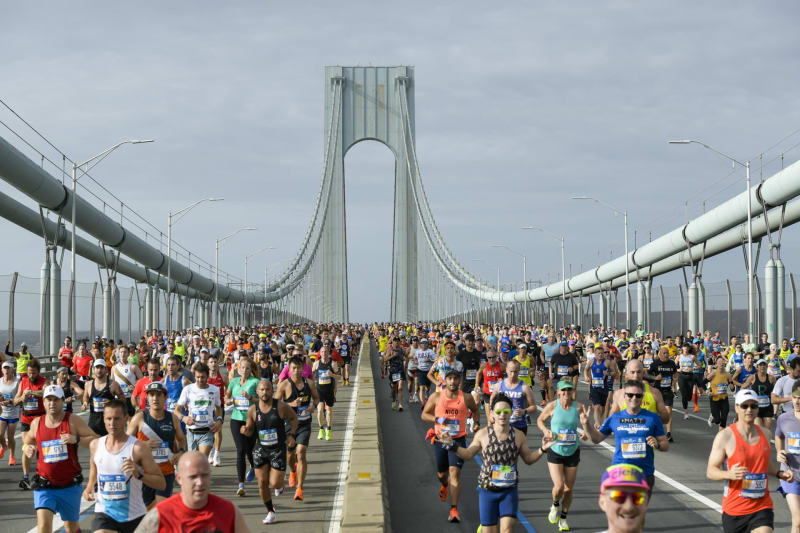 © More than 150 nationalities take part in the New York City Marathon © Scott McDermott
Take New York, for example. Its marathon brings together more than 50,000 runners from nearly 150 countries every year. Beginners, pros, anonymous runners and stars. People who would never have crossed paths anywhere else, sweating together on the streets of Brooklyn or through Central Park. A fleeting fraternity, perhaps, but a real one. A suspended moment when differences fade into the collective effort.
Running for peace: races loaded with symbolism
Some marathons go beyond simply bringing people together. They are designed as messages. Calls for unity in tense, sometimes explosive situations. In Jerusalem, for example, the marathon passes through both the modern city and the Palestinian neighbourhoods of East Jerusalem. It is a controversial Israeli-designed route, certainly, but also a way of bringing together, if only for a moment, populations living radically different realities. The same goes for Beirut: in the Lebanese capital, the race was born in response to the 2006 war. The goal? To show that Lebanon, despite its political and religious divisions, can move forward together. It isn't always perfect, but it's already a step, or rather a few thousand of them.
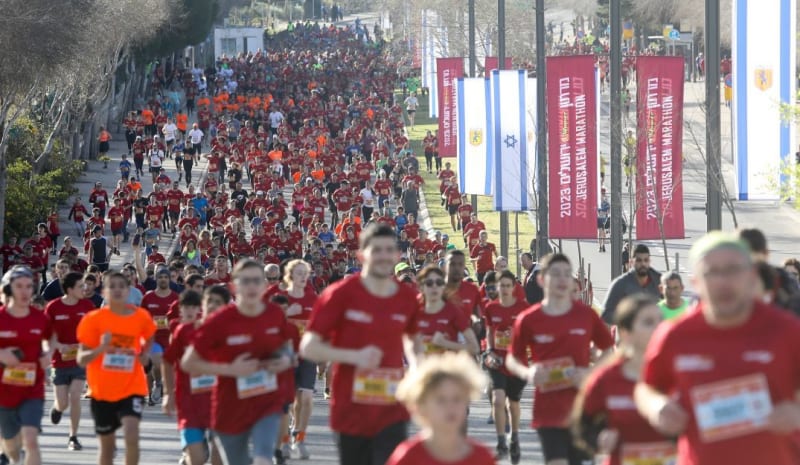 © Sportphotgraphy
And then there is Pyongyang, in North Korea. One of the most closed-off marathons in the world, in one of the world's most closed-off countries. Yet this year, a handful of foreign runners were allowed to take part. A way for the regime to symbolically open itself up, just a little, to the world. And for the participants, a unique chance to discover a society through something other than the unsettling documentaries on Arte.
Neutral ground, open to everyone
The marathon also has this almost magical power to create neutral ground. You don't need to belong to a nation, a religion or an ideology to line up at the start. All you need is the courage to enter, to train (a bit) and to be ready for a long, painful slog. That's what makes it beautiful: everyone is in the same boat. In Tokyo, Paris, London or Chicago, you see the same scenes: high-fives between strangers, “let's go” shouted in accents from the other side of the world, runners in radically different kits patting one another on the back.
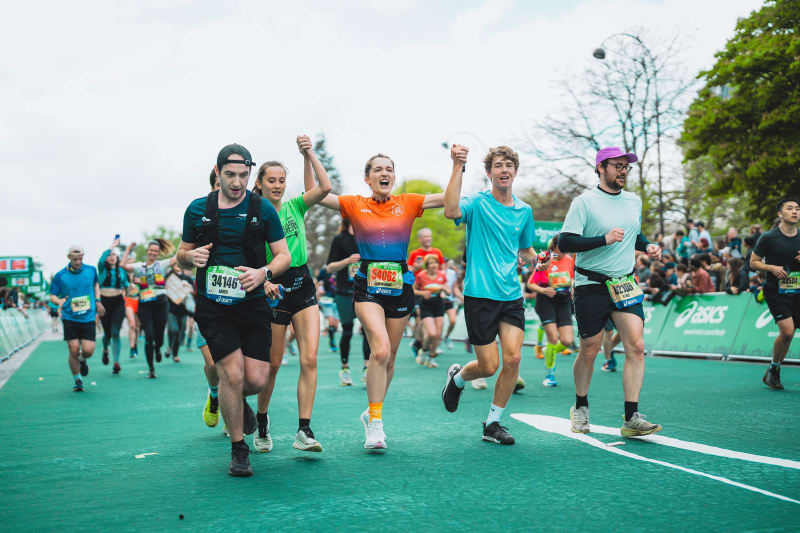 © French and international runners support one another along the Paris Marathon course © ASO
And beyond the race itself, marathons are also places for cultural exchange. In the fan zones, at the stands and around the expo villages, people talk about food, music, traditions and training. You discover other people without even setting out to do so. All over a banana-flavoured energy gel that tastes like chemicals.
When geopolitics joins the race
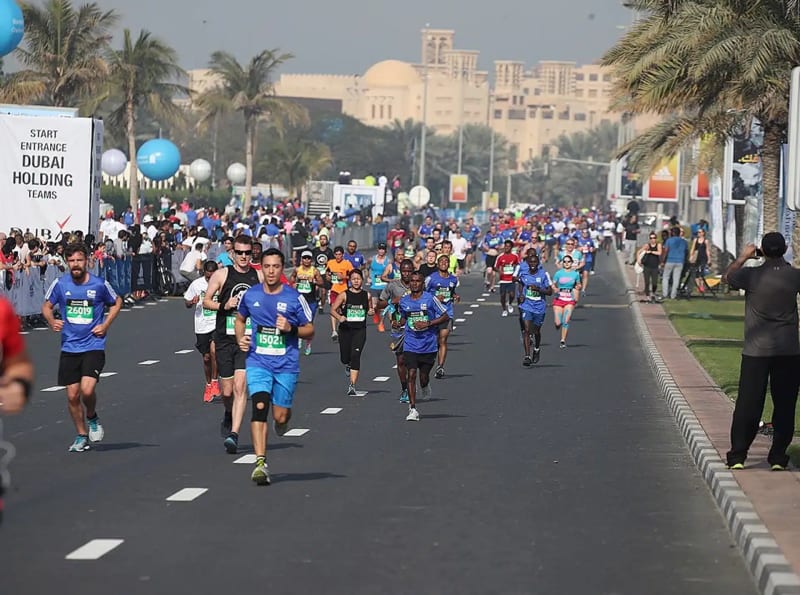
We shouldn't be naive either: sometimes states also use these marathons as soft-power tools. The Dubai Marathon, for example, is a useful way for the UAE to showcase its modernity and openness. Beijing's race is staged as a sporting showcase for China, with every detail carefully controlled. But even there, beneath the layer of PR, human interactions still happen. And perhaps that's the most important part: what escapes control, what emerges spontaneously between the participants.
Running together, thinking together?
So no, a marathon won't resolve an international conflict or produce a peace treaty. But it can contribute to something more diffuse, more intimate: mutual understanding. Respect. Perhaps even the desire to see other people differently. Because when you run alongside someone for four hours, suffer together, encourage one another and laugh through the pain, you can no longer reduce them to their country, religion or opinions. They simply become another human being struggling, just like you, to reach the finish line. And that may be the beginning of something.
Yes, it sounds a little idealistic. But in a world sprinting off in every direction, it feels good to believe that a simple race bib can sometimes be worth more than a long speech. And between two nations that ignore one another, a shared stride is already a small step in the right direction.
More articles
Running Health: Foot Injuries and Care
Blisters, black toenails and hot spots: learn how to prevent and treat common foot problems so you can keep running comfortably.
Wed, September 9, 2026
From cycling pelotons to running packs: Mathieu van der Poel, Tony Martin, Nacer Bouhanni and the cyclists turning to running
Each winter, cyclists and triathletes take to the roads, testing their endurance and chasing new goals after life in the peloton.
Wed, September 9, 2026

Inside the Kiprun Pacer community: what a study of 224,000 runners reveals
Kiprun Pacer studied 224,000 runners: 37 million kilometres, trail’s rise, 10K and half-marathon dominance, and a more connected sport.
Wed, September 9, 2026