

Why So Many People Run Their First Marathon After 40
Turning 40 does not always come with a midlife crisis. For many, it becomes an opportunity to turn age into an XXL challenge: running a first marathon. Driven by the search for meaning, a desire to defy time and inspired by role models leading the way, more and more runners in their forties are taking on 42.195 km, proving that this iconic distance is not reserved for the young.
Forty years old. A major milestone for some. But for many, it becomes a positive turning point, an opportunity to take on a symbolic, defining challenge. Nicolas, 42, had never run farther than 15 km. Then one day, he came across a 65-year-old runner out on a training run for the Paris Marathon. “If he can do it, why can’t I?” recalls the dedicated night runner. A few months later, Nicolas completed the 42.195 km in exactly four hours. Not a world-beating time, but an unforgettable memory, and the feeling that he had etched his 42 years into the asphalt of the capital. Like him, more and more runners in their forties are taking the plunge. At the 2024 Paris Marathon, finishers averaged 38 years old, down from around 41 in 2015, and nearly half the participants were running their first marathon in 2025. These trends show that your forties remain a key age, not for stepping back, but for getting started.
An age of clarity, resources and discipline
Running a marathon at 40 makes perfect sense. By that age, many people have reached a degree of stability: an established career, older children and, in many cases, the income to invest in a serious training plan. Gone are the improvised Sunday morning workouts. In their place come carefully structured plans, the latest shoes and physio appointments to keep niggles at bay. But beyond financial resources, there is also clarity. Nicholas Thompson, editor-in-chief of Wired and an accomplished marathoner despite a demanding schedule, often explained that age forces you to listen more closely to your body: “After 40, recovery is no longer optional. It becomes strategic.” The discipline imposed by time paradoxically becomes an advantage. Runners taking on marathons in their forties are not looking only for performance. They are building a solid, considered and sustainable project.
A challenge that gives meaning to a new stage of life
If so many people turn to the marathon in their forties, it is also because running becomes a meaningful ritual. In Elle, a Parisian runner said she had long kept her outings to a few kilometres around the Canal de l’Ourcq. As she approached 40, she felt “the need to push herself a little” and mark the occasion by signing up for the Paris Marathon. The result? She experienced the race as a rebirth. She was not chasing a time, but an emotion and a personal achievement. Sports psychology backs this up: at this age, the marathon is less about raw performance than about proving you can cross a major threshold. It is a “rite of passage” that brings fresh meaning to everyday life, concrete proof that body and mind can still push beyond their limits.
They waited until their forties to get started
And this is not a phenomenon limited to anonymous runners. Some well-known French figures also discovered the marathon after turning 40, both men and women. One example is Nathalie Mauclair, the 2013 and 2015 trail running world champion, who had never run a marathon before her 40th birthday. Her journey illustrates the fact that there is no “ideal” age to start. Even at the highest level, curiosity and desire can emerge later in life and transform an athletic career.
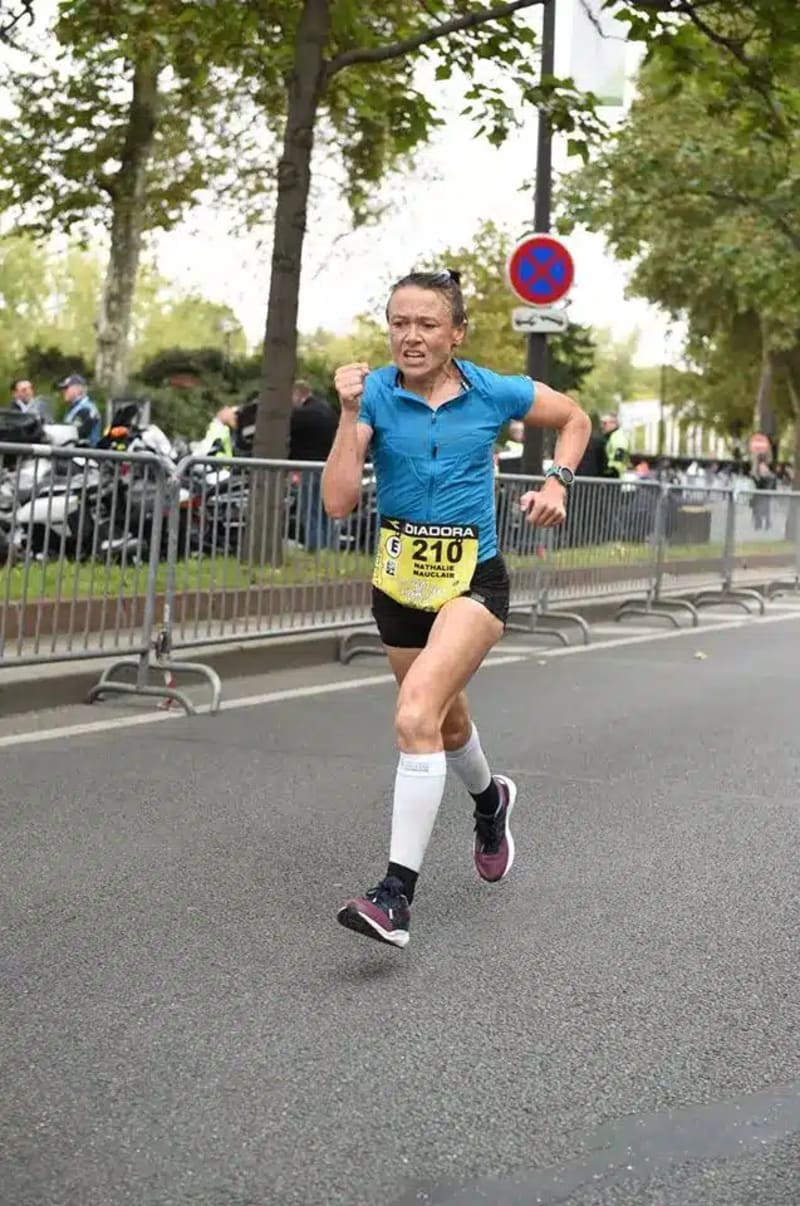
Another striking example is Barbara Humbert. The masters 9 world-record holder for the 24-hour run did not put on her marathon shoes until she was 43. No background as an elite athlete, just the desire to test herself. Since then, the oldest finisher at the 2024 Paris Marathon has lined up for race after race, proving that it is never too late to write your own story over 42.195 km. Her story has inspired thousands of runners, convinced that their forties can mark not the end of a cycle, but the beginning of an adventure.
Role models inspiring runners everywhere
The stories circulating online and in the media have played their part. France has its share of inspiring examples too. Former professional cyclist Laurent Jalabert discovered the marathon after retiring and continues to excel on the road in his fifties through Ironman. Eliud Kipchoge, meanwhile, has never stopped insisting that “only the mind sets limits”, a maxim that resonates even more with those who see their forties not as a ceiling, but as a springboard. These examples feed a collective imagination in which turning 40 becomes synonymous with a fresh start.
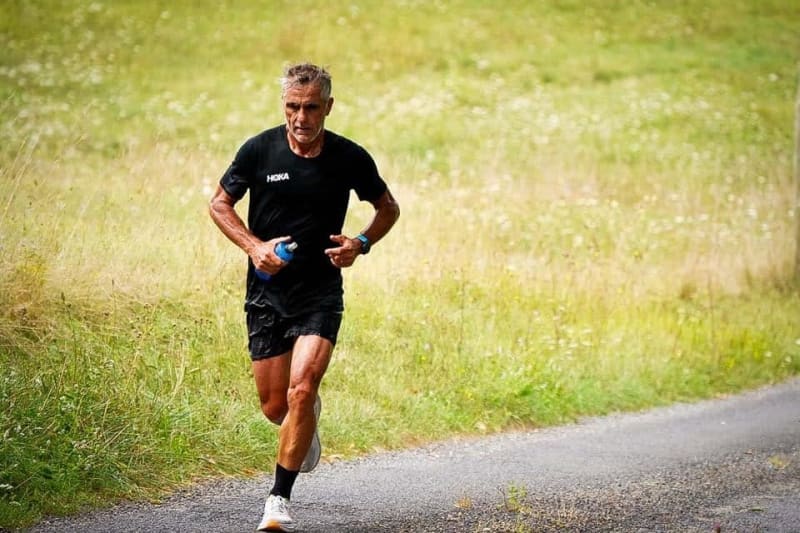 © Former cycling champion Laurent Jalabert took up running seriously after retiring. (©Facebook Laurent Jalabert)
A chance to reclaim time and prove something to yourself
Behind a first marathon run at 40, there is often a desire to reclaim something. Time that has passed, doubts that have built up, sometimes even a few kilos accumulated over the years. Training imposes structure and discipline, while bringing you back to yourself. At the finish, the medal is more than a symbol. It crystallises months of effort, a body at peace with itself and regained confidence. Several studies, including “The effects of physical activity on self-esteem in older adults: a systematic review” show that, among masters runners aged 40 and over, running is about more than the clock. Health, improved body image and higher self-esteem frequently appear in surveys of older runners as key motivations. Comparative studies and surveys of recreational runners confirm that runners in their forties report a better overall perception of their health and improved psychological well-being after committing to long-term training for a half marathon or marathon. Many say their first marathon made them feel younger, as if a second, more conscious and self-assured sporting youth had opened up.
A first marathon remains a unique memory, whether you run it at 25, 35 or 45. But after 40, it takes on a particular flavour. It is not just a sporting achievement, but also a lifestyle choice. Finishing a marathon at 42 means proving to yourself that thousands of kilometres still lie ahead. In a world where turning 40 is sometimes seen as the start of decline, those 42.195 km tell a very different story: one of vitality, an appetite for future challenges and an age that, far from slowing down, can still pick up the pace.
More articles
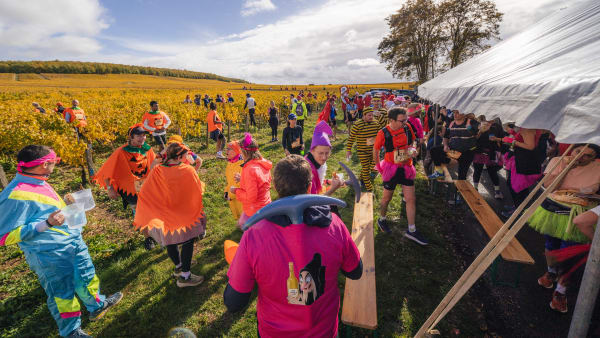
Marathon de Chablis set to welcome 4,400 runners among the vines
The Marathon de Chablis returns on Saturday, October 24, with races, hikes and a festive atmosphere among the vineyards.
Wed, October 21, 2026

Avignon Marathon makes a winning debut with more than 3,450 runners
More than 3,450 finishers turned out for the successful first edition of the Avignon Marathon on Sunday, September 27, 2026.
Wed, September 30, 2026

Night races: why does everyone want to run while everyone else is asleep?
From Glow Runs to low-key trail races, night running is taking off, offering a more festive experience and a different relationship with the clock.
Thu, September 10, 2026