
 © New York Road Runners
Inside the New York City Marathon course, five bridges and the traps to avoid
Published on Wed, October 28, 2026
The New York City Marathon is not like any other marathon. The crowd energy is off the charts, the skyscrapers make your head spin, and the difficulty is unavoidable. It's pure Big Apple, and its prestige matches the challenge. Before you cross the finish line in Central Park, a full adventure awaits. These 42.195 km are no walk in the park. With five bridges and real elevation gain, New York is a race you run with your legs, but also with your heart. For the nearly 60,000 lucky runners who hit the city's pavement every year in early November, the course is as tough as it is magical. Here is our in-depth breakdown: the elevation profile, the highlights, the difficulties sector by sector and the traps to avoid if you want the New York City Marathon to be the race of your life.
New York and the marathon, a story of passion and madness
If you could run only one marathon in your life, this would probably be the one. The New York City Marathon is the best of what running has to offer: an electric atmosphere with more than two million spectators cheering on the runners, an iconic course through the city's five boroughs, and tens of thousands of runners following in the footsteps of the world's best marathoners, who go off first. Running New York means realizing how lucky you are to do this sport. Every emotion meets here. When the madness of the Big Apple collides with the passion of the marathon, you get an unforgettable experience that goes beyond sport.
 © New York Road Runners
Run by the historic New York Road Runners club, the race is steeped in history. It all began on September 13, 1970, in Central Park: 127 runners paid a $1 entry fee to complete four laps of the park, and only 55 made it to the finish. The winner, Gary Muhrcke, was a New York firefighter fresh off a night shift. In 1976, the race left Central Park to cross the five boroughs, and that route turns 50 in 2026. Nice touch. A founding member of the World Marathon Majors, the New York City Marathon has a huge influence on running worldwide. Its economic weight is staggering too: the 2025 edition generated nearly $1 billion for the city. The race quite literally puts New York on the world map.
Part of the magic is also its singularity and its difficulty. The course runs point to point, from one end of the city to the other. It's not a classic loop, and nobody comes here to run their fastest time. The idea is to show runners the best New York has to offer. What better way to showcase the city's heritage than a tour through all five boroughs? With a start on Staten Island and a finish in Central Park, in the heart of Manhattan, runners explore every corner of the city. At a time when every race chases faster and faster times, New York stays true to its DNA: authentic, festive, iconic. Welcome to New York.
 © New York Road Runners
 © New York Road Runners
 © New York Road Runners
The course in detail
The first thing to know, and most runners already do, is that New York is not a flat marathon. The course has about 250 m of elevation gain, but it isn't spread evenly. It's concentrated on the bridges and the last 10 kilometers. With so many changes of rhythm, this is a race you run by effort, not by pace.
Km 0 to 3: the start on the Verrazzano Bridge
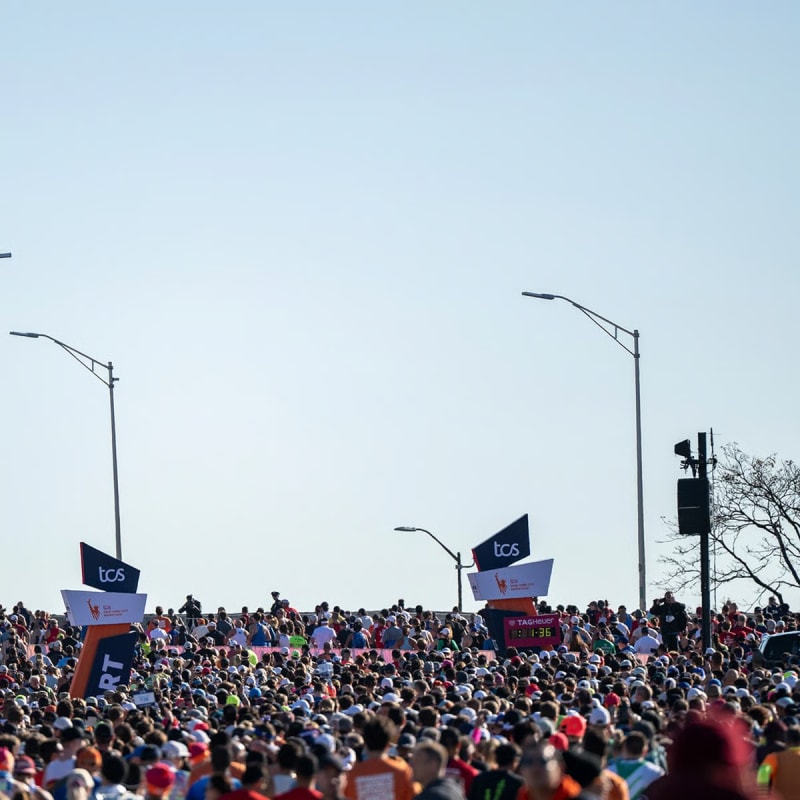
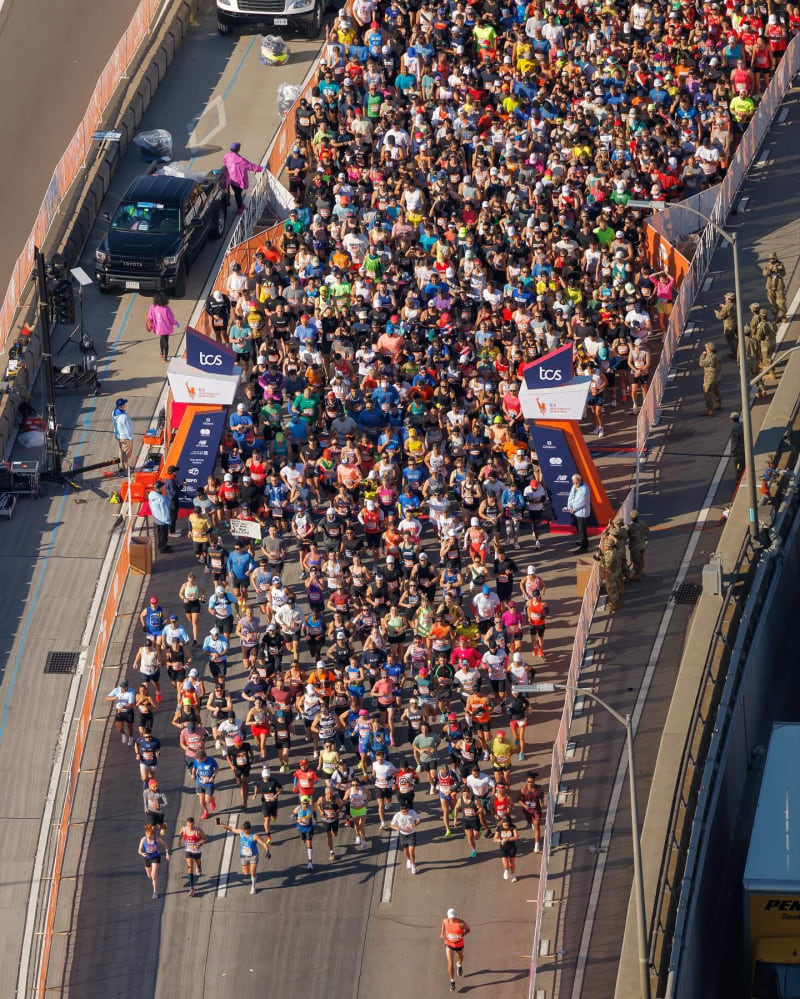
The race starts well before the cannon fires. Logistics have a huge impact on your morning and on your start. Fort Wadsworth is split into three giant start areas (blue, orange and green). With close to 60,000 runners, it's a genuine anthill. Find out ahead of time which color and wave are printed on your bib: the color sets your village and start line, the wave sets your start time. The elite women go off around 8:35 a.m., the elite men around 9:05 a.m., and the amateur waves follow until about 11:30 a.m.
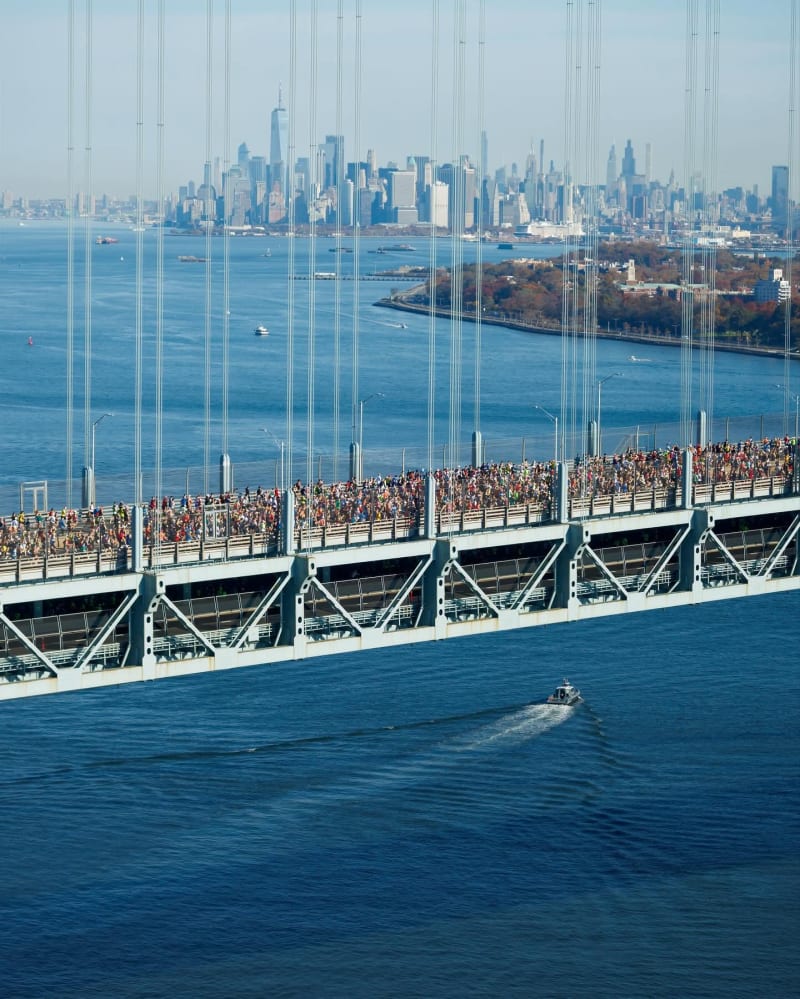
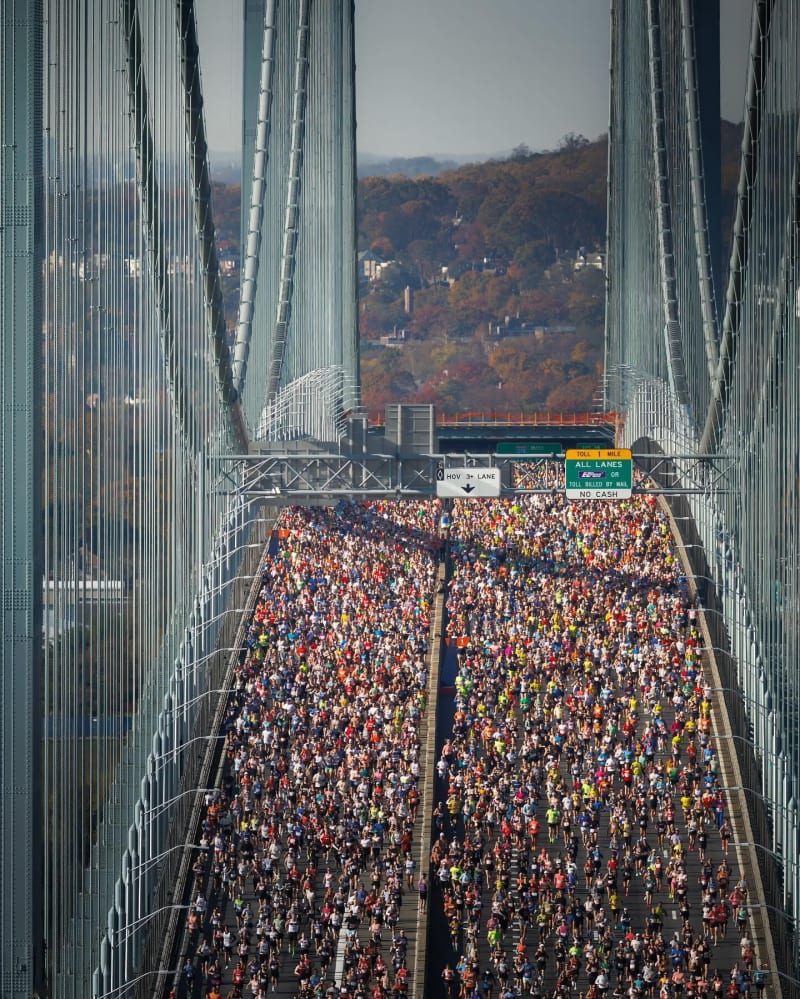
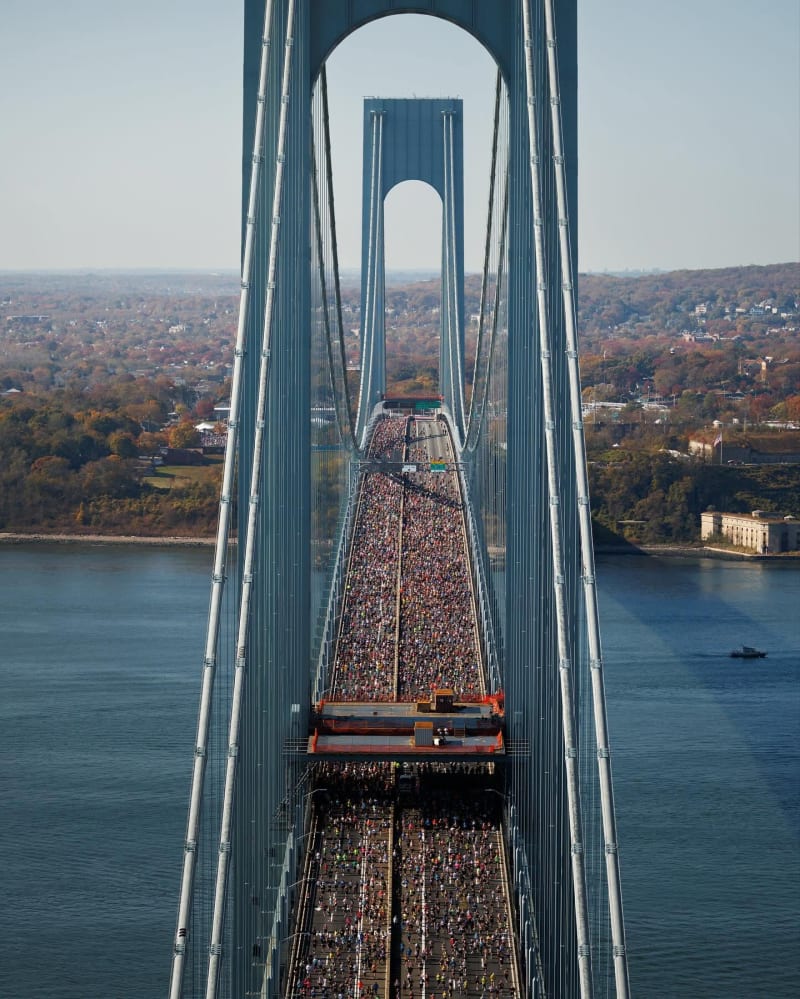
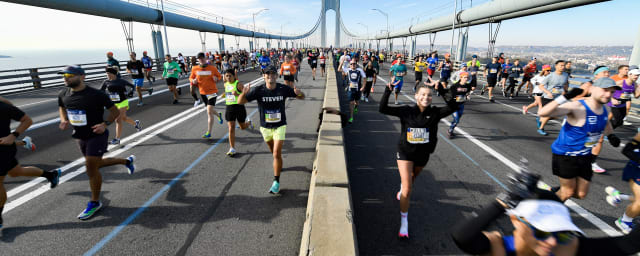
The start is right on the Verrazzano Bridge. Helicopters overhead, the national anthem, then the cannon and Frank Sinatra's voice launching into "New York, New York" create a magical atmosphere. Goosebumps guaranteed. Then, once you're on the bridge, all that gives way to silence and the sound of thousands of runners' footsteps.
 © New York Road Runners
 © New York Road Runners
 © New York Road Runners
 © New York Road Runners
The Verrazzano Bridge is the first difficulty on the course. The incline adds up to nearly 45 m of climbing over about 1.6 km. Treat it as your marathon warm-up. There's no point going too fast and burning energy now. The view from the bridge, with the Manhattan skyline in the distance, is gorgeous... but it also reminds you how far there is to go. The next mile or so drops 60 m toward Brooklyn, a chance to loosen the legs and bring your heart rate down. Note that blue and orange bibs generally run on the upper deck, and green on the lower deck, where your watch's GPS can get thrown off. Don't trust the pace on your wrist too much in the first few kilometers.
Km 3 to 13: Brooklyn and the long straight of Fourth Avenue
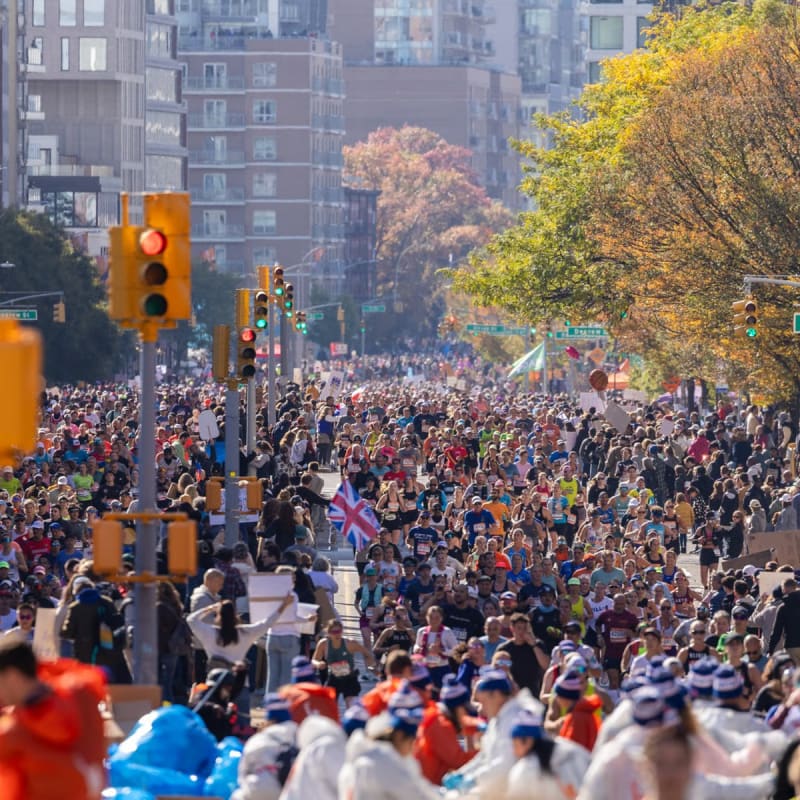
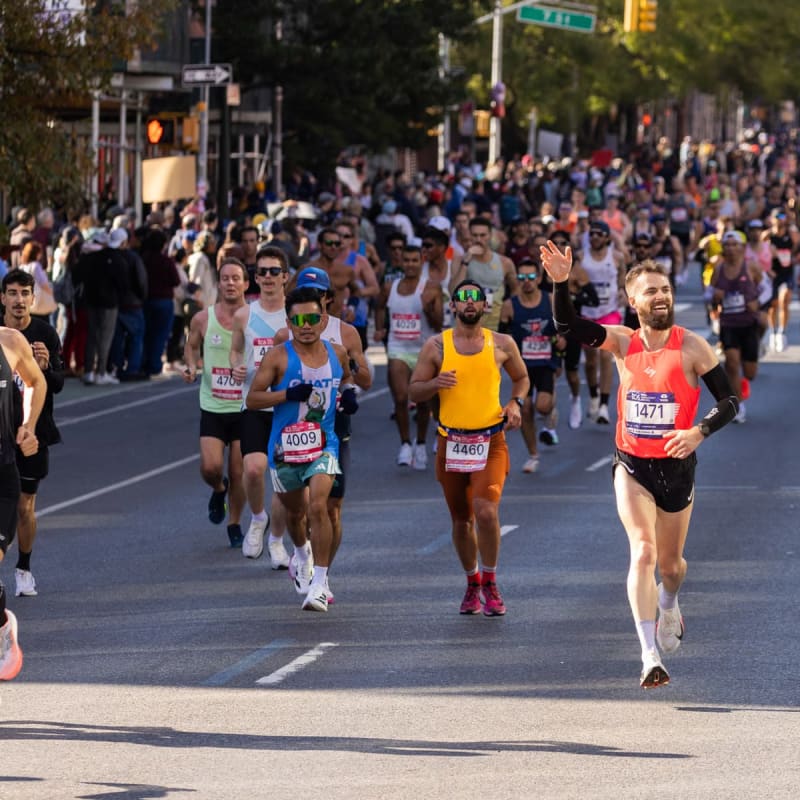
After the descent, you cross Bay Ridge and then hit Fourth Avenue, a long, straight boulevard that's almost completely flat. It's ideal for finding your rhythm and settling into marathon pace. The three colored routes take slightly different paths through Bay Ridge before coming together on Fourth Avenue around km 5, each in its own lane. Along this stretch the streets are packed with spectators. This is where the New York atmosphere first hits you head-on. Don't get carried away: plenty of runners go out too fast in these opening kilometers through Brooklyn.
 © New York Road Runners
 © New York Road Runners
 © New York Road Runners
Km 13 to 21: crowd energy on Lafayette Avenue, then the calm of Williamsburg
At km 13, near the Brooklyn Academy of Music, the three streams of runners finally merge into one. Here you leave a major artery for Lafayette Avenue, a narrower street where spectators are packed ultra-dense along both sides. This is your first shot of adrenaline, and the atmosphere is wild. New Yorkers line the curbs, perch in trees, on window ledges and on rooftops. Everyone is out to cheer for the runners. The brick façades act like an amphitheater, trapping the noise of the cheering and the bands and throwing it straight back at you. This is the epicenter of Brooklyn's giant block party. Runners often describe a whirlwind of emotions, because the crowd is close enough to look you in the eye, hand you cups and scream your name a few centimeters from your face. It feels a lot like the Tour de France. One warning, though: the merging of the three streams and the narrowing street can create a bottleneck. This is a place to soak up the atmosphere, not to weave past everyone around you.
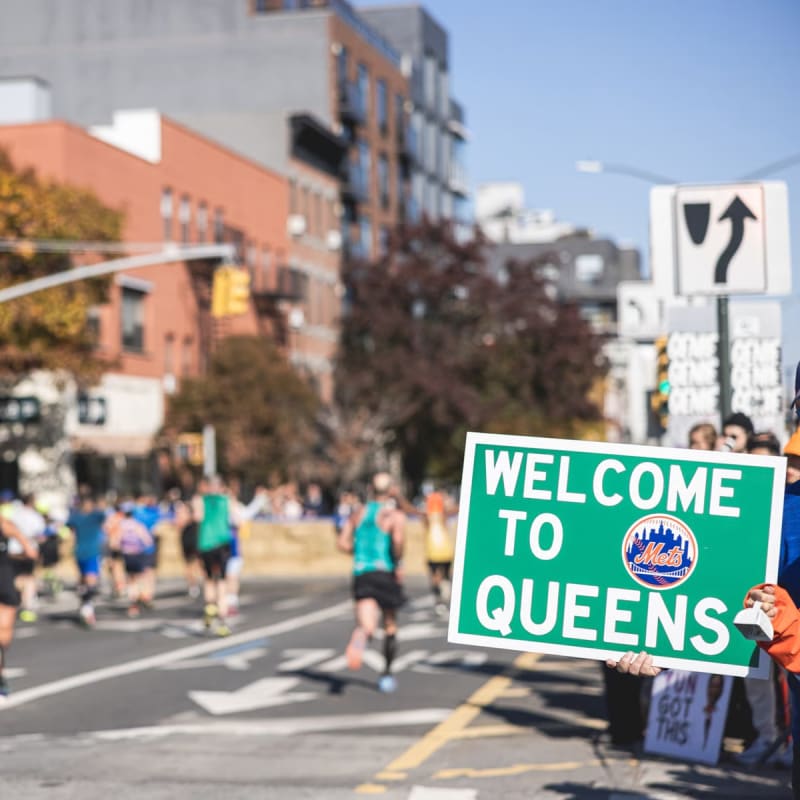
Through Fort Greene and Clinton Hill, Lafayette throws in a small bump. Then you roll onto Bedford Avenue through Williamsburg. Around km 18, the course crosses the Hasidic neighborhood, where residents traditionally watch the race in silence, before the livelier part of Williamsburg picks back up around km 19. After Greenpoint, the Pulaski Bridge marks the halfway point. A short climb, and you're in Queens.
Km 21 to 26: Queens and the silence of the Queensboro Bridge
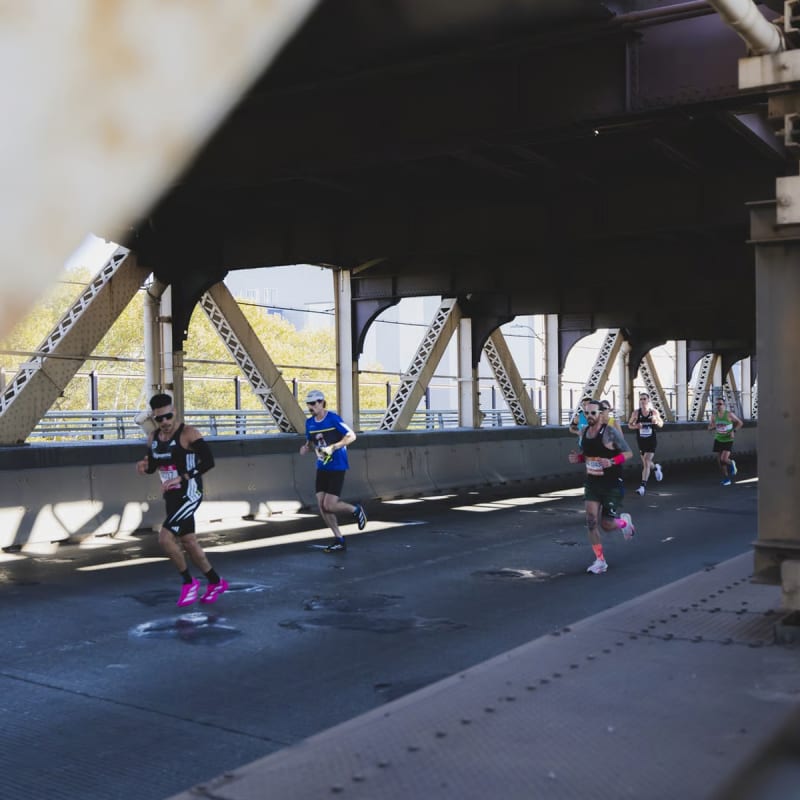
The stretch through Long Island City is short, and it leads to one of the most unusual moments on the course: the Queensboro Bridge. It's the longest section without an aid station since the start. On the bridge you run on the lower level, with no spectators. The noise of the crowd vanishes at once, and all you hear is your footsteps and your breathing. The climb lasts about a kilometer, with nearly 30 m of gain, before the descent into Manhattan. It arrives around km 24, just as fatigue starts to creep in... Run by effort rather than pace. Accept losing a few seconds. On the lower deck, your watch's GPS may also go haywire. Don't panic.
This bridge has something special about it. Away from the crowd, it gives you a chance to refocus, check in on how you feel and start to get an idea of how far your body can push today. With the Manhattan skyline appearing between the steel girders, it's one of the most iconic stretches of the race, and you have to live it to believe it. Above all, this pause prepares you for the next jolt of adrenaline waiting in the coming kilometers…
 © New York Road Runners
 © New York Road Runners
 © New York Road Runners
Km 26 to 32: the wall of sound on First Avenue
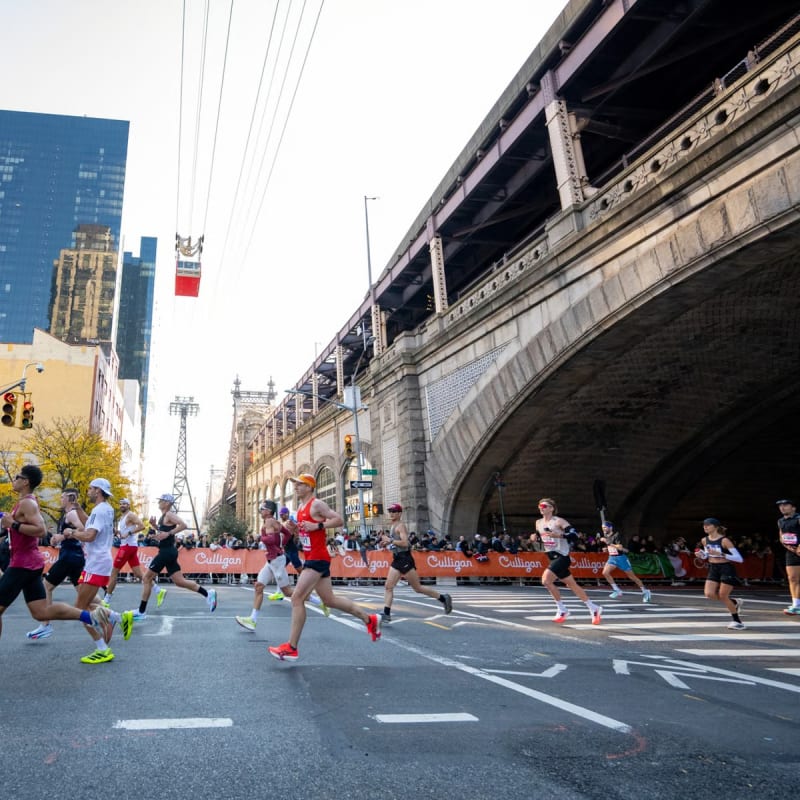
At the bottom of the bridge you turn onto First Avenue, and the silence gives way to the famous wall of sound. It's easily one of the loudest stretches of the course. Thousands of people are waiting for you, shouting at the top of their lungs. After the turn, you head north for about 5 km on a very wide avenue among the skyscrapers, through the Upper East Side and then East Harlem, on a rolling profile. Around km 29, a stand hands out Maurten gels. It's the last one on the course, so plan to grab one or carry your own.
This is a strategic section, and also one of the most dangerous for your race. The classic mistake is to get swept up in the atmosphere and speed up. After the silence of the Queensboro, it's easy to be overwhelmed by the crowd's emotion. That's why you need lucidity right here, to stay focused and hold a steady rhythm. This is no time to get carried away. There's still a long way to go, 16 km to be exact, and the hardest part is yet to come.
Km 32 to 34: the Bronx, with a reworked course for 2026
You enter the Bronx over the Willis Avenue Bridge at km 32. This is where the marathon starts to lay down the law. All around you, runners who went out too fast hit the wall and gels become hard to stomach. But you have to keep moving. The bridge ramp is short, a dozen meters of climbing, yet at this stage it feels far steeper than it is. The legs get heavy, the mind starts to wobble, but you have to hold your course.
This year the course changes for the first time in 15 years, with a new version that has fewer turns. The organizers' aim was simply to make life easier for local residents during the event.
Here in the Bronx, the crowd is far thinner and the atmosphere contrasts sharply with First Avenue, even if some groups of residents liven things up at times. The good news is that, apart from the two bridges, the profile is flat. The real challenge is mental, holding the effort as fatigue sets in. At km 34, the Madison Avenue Bridge brings you back to Manhattan. Spectators often hold up "Last Damn Bridge" signs, and it is indeed the fifth and final bridge on the course. You're almost there.
 © New York Road Runners
 © New York Road Runners
 © New York Road Runners
 © New York Road Runners
Km 34 to 38.5: Harlem and the Fifth Avenue climb
Back in Manhattan, you cross Harlem before heading due south on Fifth Avenue, alongside Central Park. The finish line is getting closer, but it's still far, and this stretch is a difficulty many people underestimate: the Fifth Avenue climb weighs heavily on the legs. With about 30 m of gain over roughly 1.5 km, it's long and mentally demanding. Worse, it arrives around km 37, when the legs are already battered and your head is telling you to stop. This is where the energy you saved on First Avenue earlier makes all the difference. Fortunately, the crowd turns out in force to push runners beyond their limits, and the backdrop of buildings on one side and Central Park on the other, on one of the city's most beautiful avenues, gives you the strength to keep going.
Km 38.5 to 42.195: Central Park
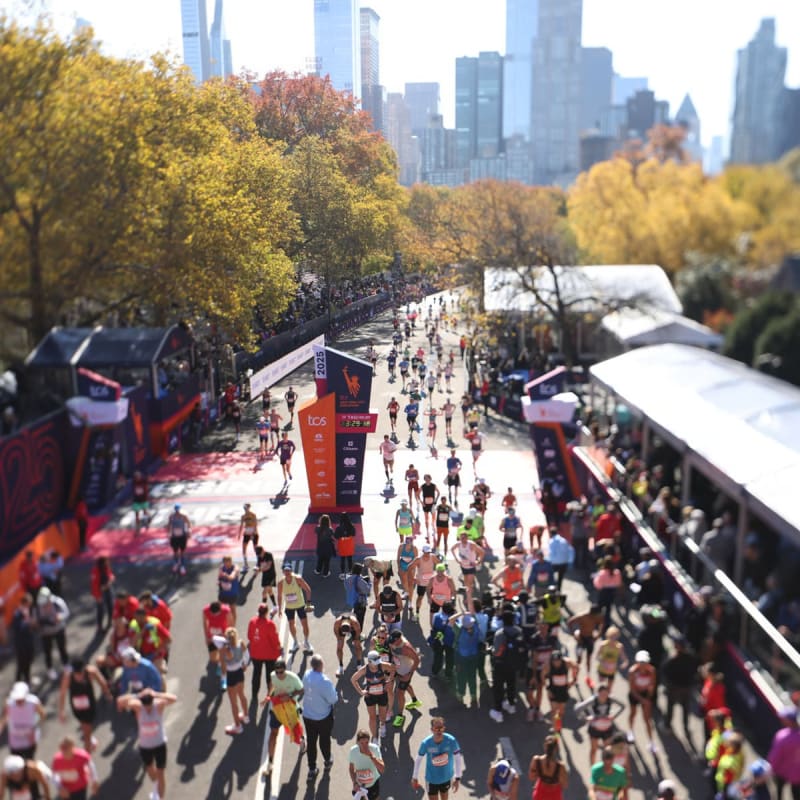
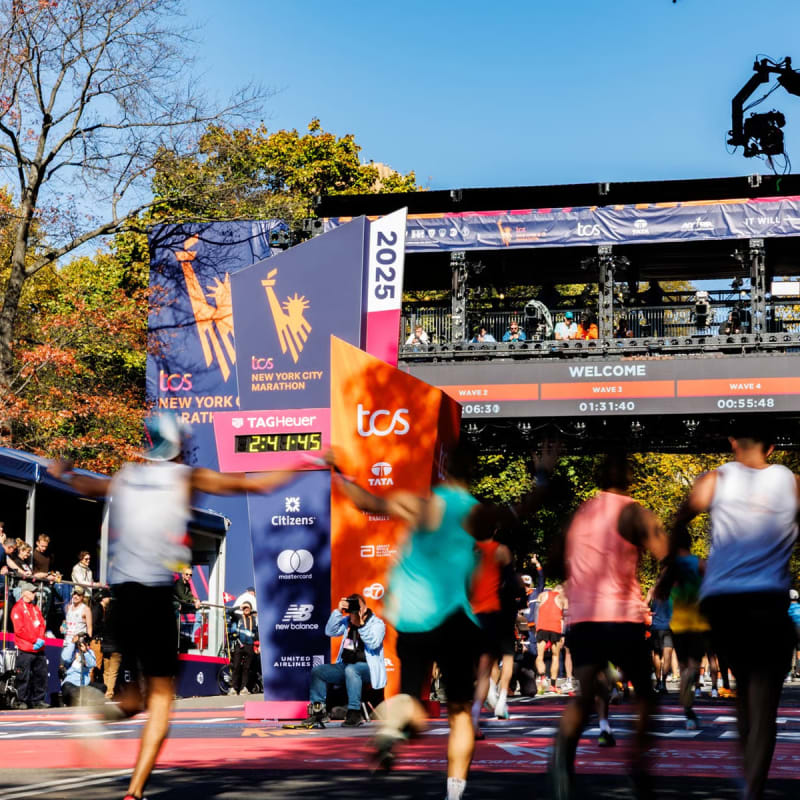
Around km 38.5, you finally enter Central Park at 90th Street. It's a big moment in the race. The finish line has never been so close, but one obstacle remains. The park trends downhill overall, but the road is dotted with short rises that break your rhythm, including two of about a dozen meters each. These changes of pace are very hard on the body and the head, since you have to get going again several times. Not easy when the tank is nearly empty. As you exit the park, around km 40, you run along Central Park South to Columbus Circle, then re-enter the park for the final 400 meters. This time it's for real. The finish arch is on the horizon, and the feeling of a job done washes over you. The taste of a marathon finish is always magical, but in New York it has a flavor all its own.
 © New York Road Runners
 © New York Road Runners
 © New York Road Runners
The 5 traps to avoid
Crossing five boroughs, conquering the bridges, feeding off the crowd's energy: New York has no equal. It's a special energy, a special marathon. You come to run 42.195 km, but it goes well beyond the race. People come to push their limits, to honor a loved one lost too soon, to fight illness, to help others, to share a moment of joy, to celebrate life and humanity. The New York City Marathon belongs to every runner and every New Yorker, and the day is a symbol of life and freedom. But in this whirlwind of emotions, the traps are many. The course can push you to flare up at the wrong moment. To enjoy your race fully, keep a cool head. Here are the five traps to avoid.
Wearing yourself out before the start. Plan for the long wait in the start village and time your breakfast to your wave. Bring an easily digestible snack to keep your glycogen stores topped up, in the official clear bag, the only one allowed in the village. And wear throwaway clothes to stay warm before the start. They are collected and donated.
Going out too fast. Three euphoric moments can trap you: the Verrazzano descent, Brooklyn and First Avenue. Stay focused and keep a clear head when the adrenaline rises. Fifth Avenue and the finish in Central Park are very demanding, so save some energy for the end.
Running by pace instead of effort. On the bridges and on Fifth Avenue, you have to accept losing a few seconds per kilometer, especially as the wind can also play a part. What you lose on the climbs, you'll win back on the descents without forcing.
Trusting your watch blindly. On the bridges and between Manhattan's skyscrapers, GPS often drifts, and your watch will typically read longer than 42.195 km at the finish in New York. Rely on the course markers instead. Note that the course is marked every mile, but kilometer markers appear only every 5 km.
Neglecting your nutrition. Maurten gels are handed out around km 19 and 29, but the stations will be crowded. Be self-sufficient and carry your own gels. And if you plan to use the ones on course, test them in training before race day.
In New York, you don't just run 42.195 km. You cross a legendary city and its five boroughs, carried by two million spectators. Manage your effort, stay lucid in the moments of euphoria, and the New York City Marathon may well become the race of your life. As we said in the intro, New York is run with the legs, but also with the heart. It's running, yes, but here the marathon goes far beyond sport. “If you can make it there, you'll make it anywhere.”
Find all the information on the New York City Marathon on Finishers.com
More articles

Yeman Crippa opens up ahead of the 2026 New York City Marathon: “I know I’m getting stronger”
Yeman Crippa discusses his progress, ambitions and confidence ahead of the prestigious New York City Marathon.
Thu, October 15, 2026

New York City Marathon 2026 course to change in the Bronx for the first time in 15 years
The New York City Marathon will change its course in 2026 for the first time in 15 years, with a new section in the Bronx.
Tue, September 22, 2026
New York City Marathon 2025: Hellen Obiri and Benson Kipruto Triumph, Eliud Kipchoge in Tears at the Finish Line
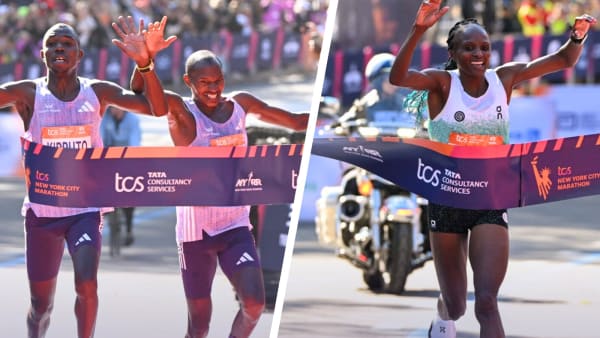
This Sunday, more than 59,000 runners crossed New York City’s five boroughs to wrap up the 2025 World Marathon Majors season. The 54th edition of the New York City Marathon was a true display of Kenyan dominance: Hellen Obiri won the women’s race in 2:19:51, shattering the course record, while Benson Kipruto claimed victory in the men’s race in 2:08:09 after an epic sprint finish — the closest in the event’s history.
Sun, November 2, 2025